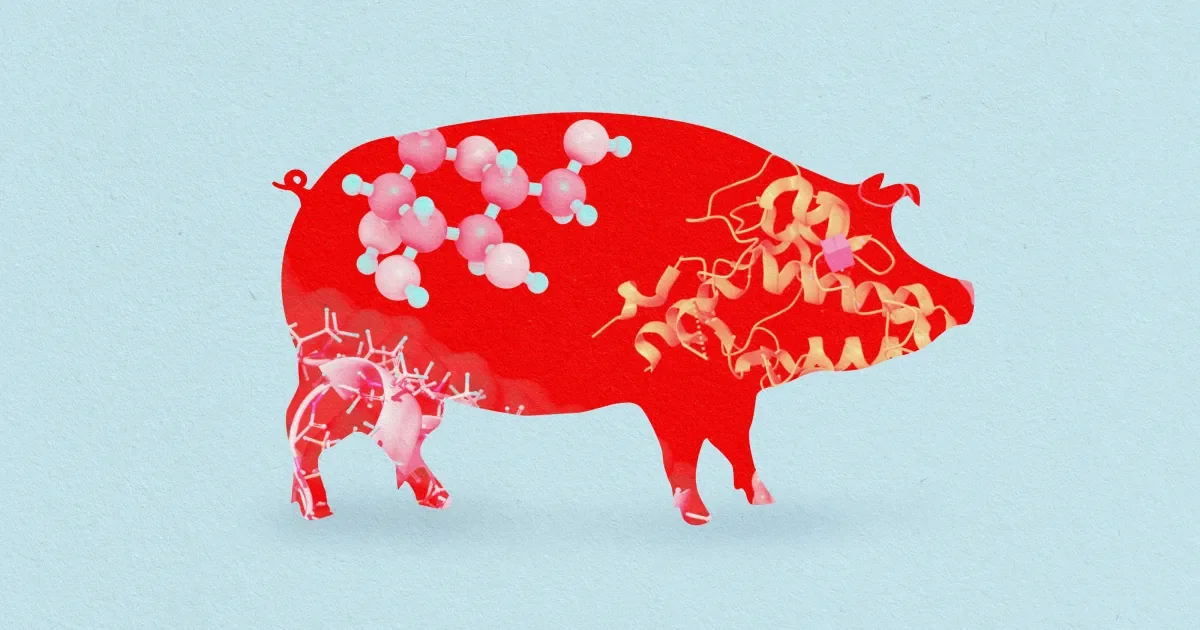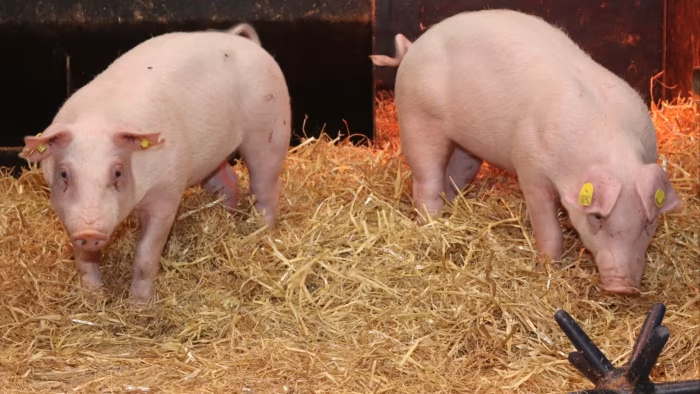
Scientists from the University of Edinburgh have used CRISPR-Cas9 to genetically engineer pigs that are completely resistant to classical swine fever, a disease that causes significant economic losses in the global pork industry. This breakthrough could enhance disease control strategies, especially in regions heavily affected by the disease, and may be applicable to other livestock species, although adoption may face regulatory and societal challenges.
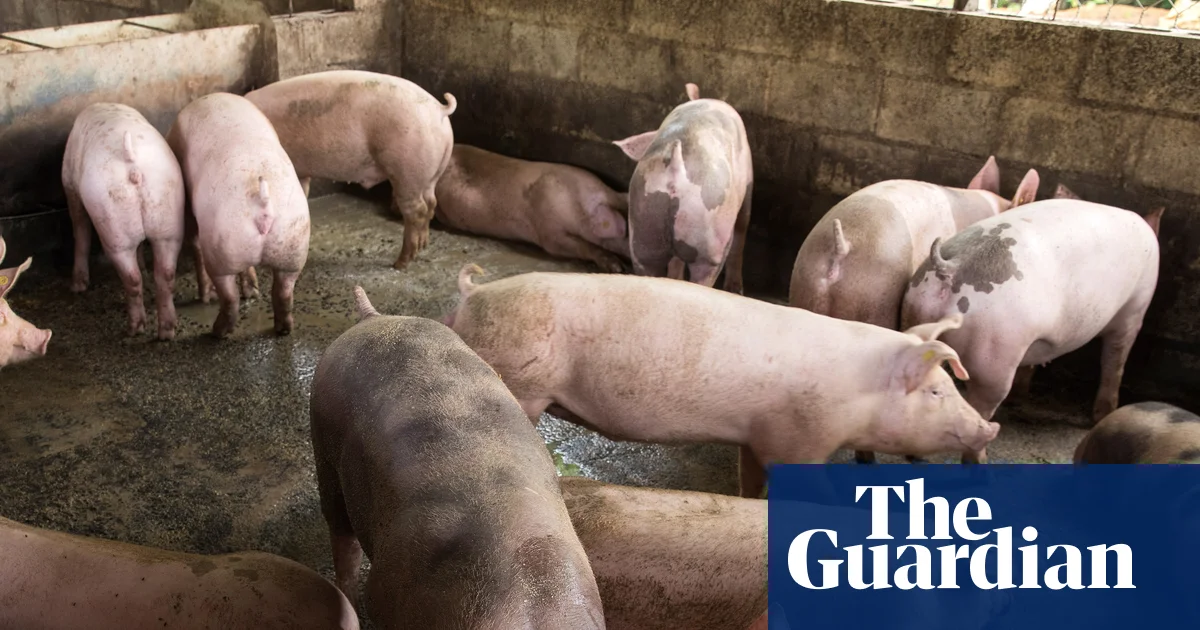
Scientists at Edinburgh’s Roslin Institute have created gene-edited pigs resistant to classical swine fever, a highly contagious and often fatal disease, by targeting a gene involved in viral replication, potentially offering a new tool for disease control in livestock.
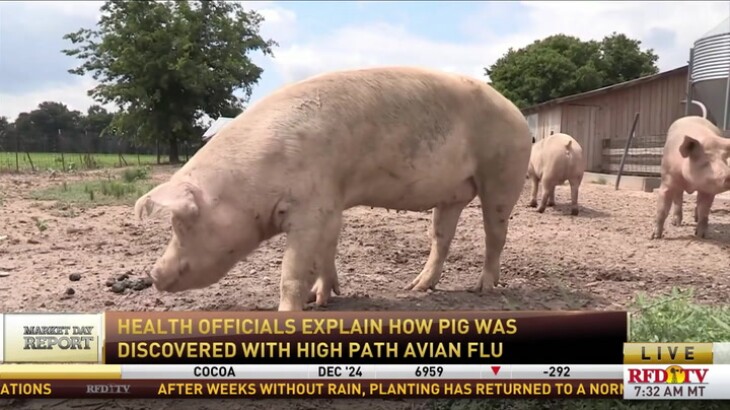
A case of High-Path Avian Influenza (HPAI) was confirmed in a pig at a multi-animal facility, marking the first detection of the virus in swine. Although the pigs showed no clinical signs, one tested positive, leading to the euthanization of all five pigs for further analysis. This discovery coincides with Utah's Agriculture Department reporting HPAI cases in eight commercial dairies, prompting quarantines and increased biosecurity measures.
The detection of bird flu (A/H5N1) in a pig on a farm in Oregon signals a concerning development in the virus's trajectory, as pigs can serve as a mixing vessel for avian and human flu viruses, potentially leading to a human pandemic strain. The virus's ability to infect pigs more readily increases the risk, especially with the onset of winter flu season. Enhanced surveillance and rapid testing are crucial to mitigate this risk, as the probability of a pandemic is higher than ever due to the virus's widespread presence in animals.
A U.K.-based company, Genus, has developed a gene-edited pig that is resistant to the devastating PRRS virus, potentially becoming the first genetically modified animal approved for wide human consumption by the FDA. The altered pig, created through a technique that disables a receptor necessary for the virus to establish infection, aims to address the $2.7 billion annual cost to the pork industry and improve animal welfare. While the approval process is complex, this development marks a shift in the GMO debate to include meat, though reducing pork consumption for environmental reasons remains a consideration.
A person in the UK has been diagnosed with a strain of flu similar to viruses found in pigs, marking the first time this particular strain has been detected in the country. The infected individual had a mild illness and has fully recovered, with no evidence of the flu spreading from person to person. Investigations are underway to determine the source of the infection and trace close contacts. In the past 20 years, there have been 50 reported cases of this flu strain in humans worldwide, with a recent case reported in the United States. The UK Health Security Agency and Chief Veterinary Officer emphasize the importance of animal health, welfare, and biosecurity.
Britain has reported its first human case of flu strain A(H1N2)v, similar to a virus circulating in pigs. The individual experienced a mild illness and has fully recovered. The source of infection is unknown, and close contacts are being monitored. The UK Health Security Agency (UKHSA) stated that this is the first time the virus has been detected in humans in the UK, although it resembles viruses found in pigs. Increased surveillance is being conducted in North Yorkshire, and the UKHSA noted that this recent infection is different from other cases reported globally since 2005.
Astronomers from the Pristine Inner Galaxy Survey (PIGS) have discovered a large group of ancient stars circling the center of the Milky Way in an orderly fashion. These metal-poor stars likely formed less than a billion years after the Big Bang and provide insights into the early Universe. The study of these stars, hampered by interstellar dust, could help unravel the evolution of our galaxy and others like it.
The Pristine Inner Galaxy Survey (PIGS) team has discovered a group of ancient stars in the center of the Milky Way that are slowly spinning around the galactic center. These stars, which formed less than a billion years after the Big Bang, have a pristine chemical composition and spend most of their lives near the Galactic center. The PIGS project used special imaging filters and spectroscopic observations to obtain the largest set of detailed observations for these ancient stars. The findings provide valuable insights into galaxy formation and the early Universe.
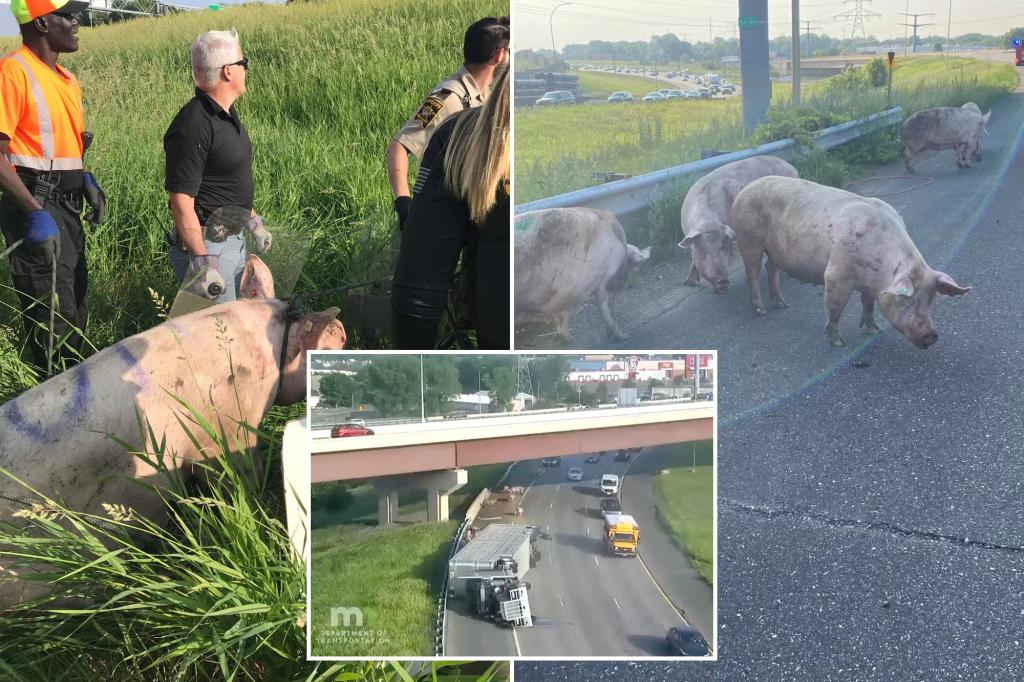
A semi-truck carrying 50 hogs overturned on a Minnesota highway, causing the pigs to scatter and take over all four lanes of traffic on the northbound side. It took officers from four departments nearly four hours to corral the swines, several of which were injured and 10 were killed in the crash. The cause of the accident is still under investigation.
Agricultural scientists specializing in swine nutrition have pointed out that pigs could teach humans a thing or two about maintaining a healthy weight. Pigs generally don't have obesity problems and eat smaller meals numerous times throughout the day, concentrated mostly in the early morning and late afternoon. Studies conducted on pigs are quite rigorous, and from these experiments, we have learned that consuming carbohydrates that are digested slowly by the body rather than ones digested quickly, thus preventing blood sugar levels from spiking, results in leaner pigs.