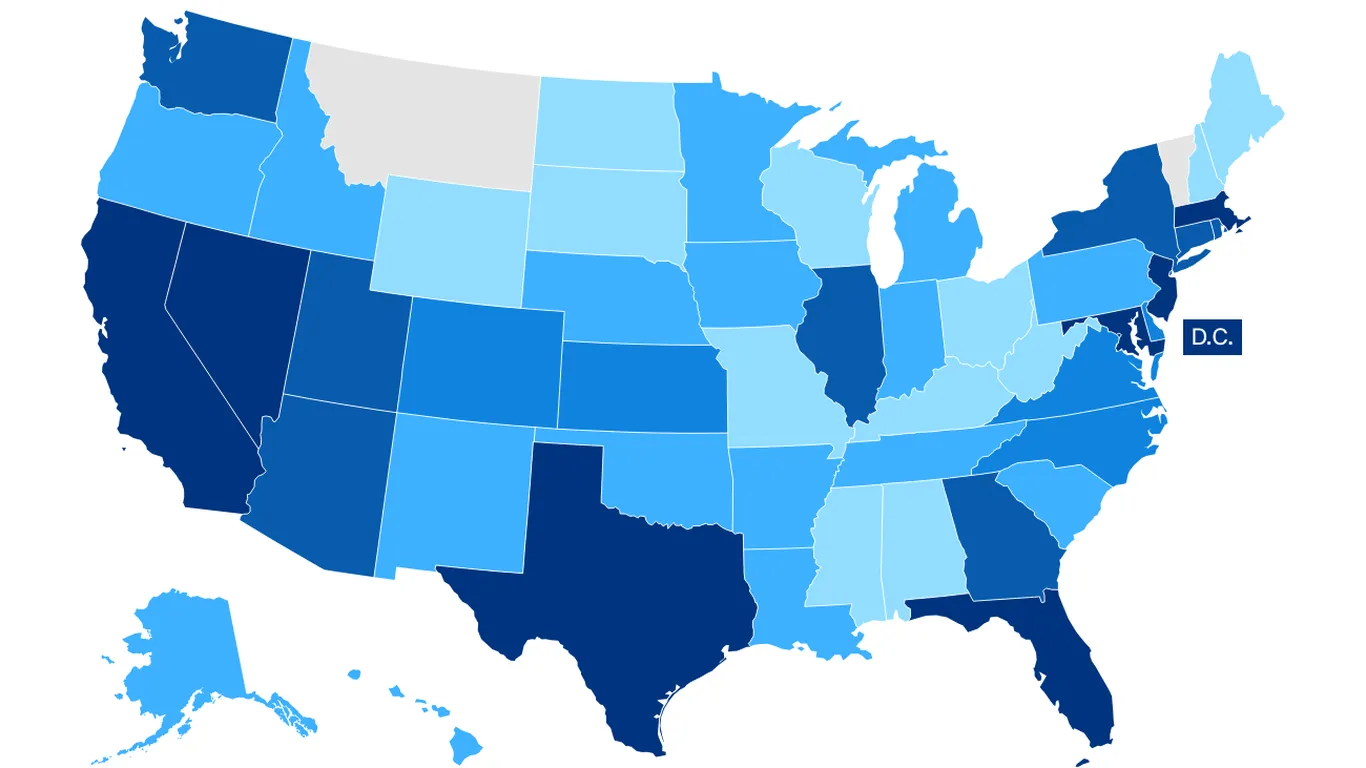
A Pew study reports that California and Texas remain the top states with the most unauthorized immigrants, but the population is increasingly spreading across 32 states due to economic shifts and new migration networks, with the total number reaching a record 14 million in 2023, driven by global upheavals and policy changes.
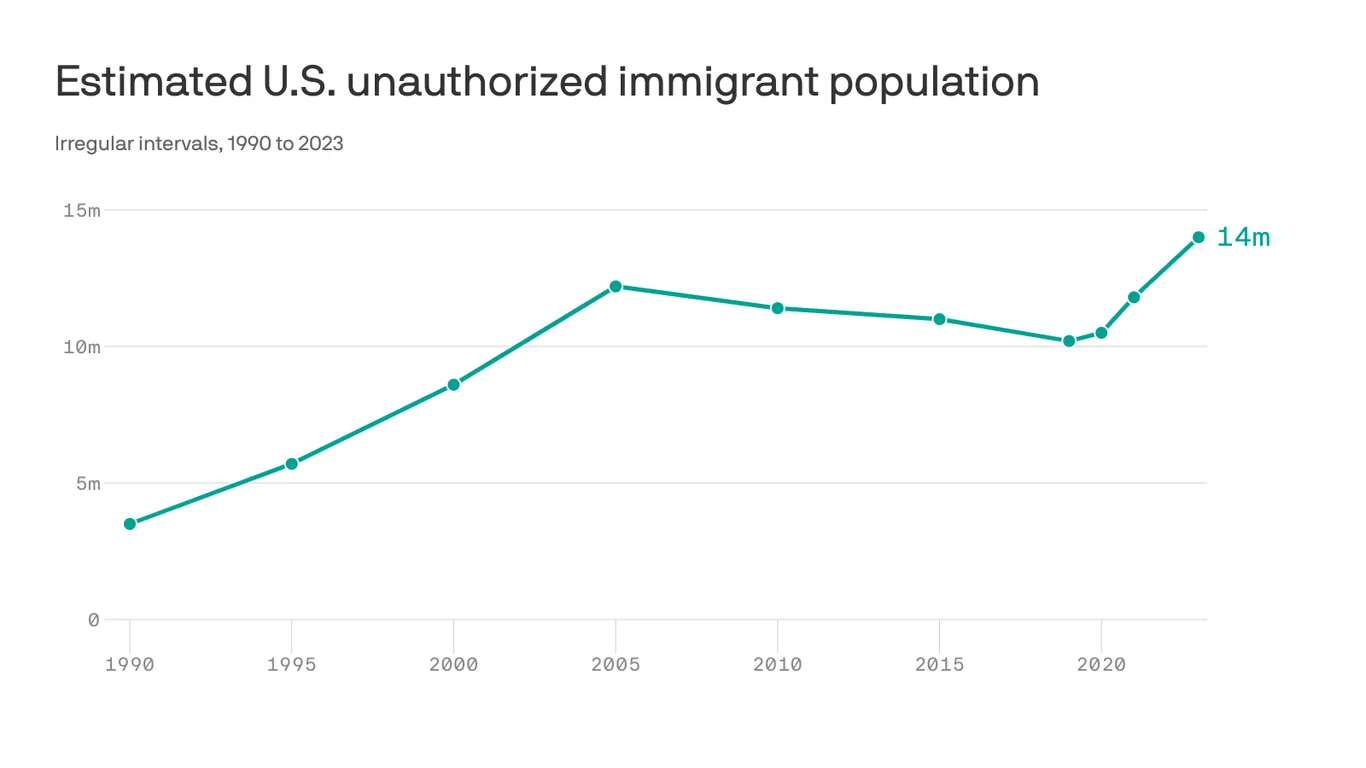
The unauthorized immigrant population in the U.S. reached a record 14 million in 2023, driven by migration from countries beyond Mexico, following the easing of Trump-era restrictions by the Biden administration, which led to increased border crossings and a political backlash as the number continues to rise into 2024.
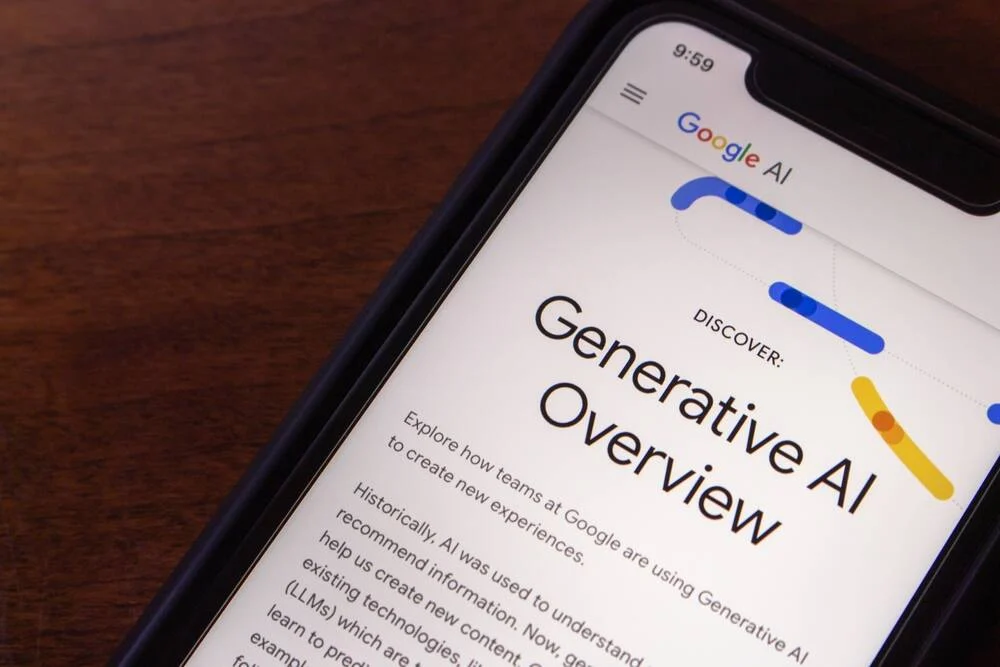
A Pew Research Center study shows that Google's AI Overviews in search results reduce user clicks on traditional links and increase the likelihood of ending browsing sessions, raising concerns about the impact on website traffic and revenue, despite Google's dispute of the findings.
A Pew Research Center report reveals that Donald Trump's 2024 victory was driven by a more diverse voter coalition and increased turnout among certain voter groups, with notable shifts among Hispanic, Asian, and Black voters, as well as changes in turnout among nonvoters and demographic groups like education and age. The analysis highlights the importance of voter turnout and demographic changes in shaping the election outcome.
A Pew Research Center survey across 24 countries shows that while Trump is viewed as a strong leader, he is also seen as dangerous and arrogant, with low global confidence in his judgment, especially in Mexico, Sweden, Turkey, and Germany. However, some countries like Nigeria, Israel, Hungary, and India hold him in higher regard. Overall, Trump's global reputation is mixed, with more favorable views than Chinese or Russian leaders, but significant skepticism remains.
A Pew Research Center study from 2010 to 2020 shows that Muslims are the fastest-growing religious group due to higher birth rates, while the number of people with no religious affiliation has also increased significantly, making it the third largest group globally. Christianity remains the largest religion, but its share has slightly decreased, and Buddhism is the only religion to decline in population during this period.
A Pew Research Center study shows that Islam is the fastest-growing religion globally, mainly due to natural demographic growth, with Muslims increasing by 347 million over a decade, while Christianity remains the largest religion but is declining slightly, and the religiously unaffiliated are the third largest group.
A Pew Research Center survey of 1,391 U.S. teens aged 13 to 17 reveals that YouTube, TikTok, Instagram, and Snapchat are the most popular social media platforms, with many teens using them almost constantly. The study highlights demographic differences in platform usage, with girls more likely to use TikTok and Instagram, while boys favor YouTube. Black and Hispanic teens report higher usage of TikTok and Instagram compared to White teens. The survey also notes that nearly all teens have access to smartphones, and internet use is nearly universal, with almost half of teens online almost constantly.
A Pew Knight Initiative study reveals that news influencers, individuals with large followings on platforms like Facebook, Instagram, TikTok, X, and YouTube, tend to lean more towards the political right than the left. These influencers, who are increasingly shaping public opinion, especially among younger audiences, often lack formal journalism backgrounds. The study found that male influencers outnumber females two to one, and platforms like Facebook have a higher concentration of right-leaning influencers, while TikTok is the only platform where left-leaning influencers are more prevalent.
A Pew Research study reveals that three-fifths of parents with adult children provided financial assistance in the past year, highlighting the ongoing financial support parents provide to their grown-up kids. With economic challenges facing young adults, including rising college costs and house prices, many parents are dipping into their retirement savings to help their children with expenses such as groceries, utilities, rent, and education. While this support can be a blessing in some cases, financial planners caution that parents need to ensure their own financial needs are met and avoid jeopardizing their retirement savings.
According to a new study from Pew Research, religiously unaffiliated individuals, known as "Nones," now make up 28% of U.S. adults, surpassing Catholics and evangelical Protestants. This group, comprising atheists, agnostics, and those with no specific religious affiliation, holds diverse beliefs and is more politically liberal, but less civically engaged than religiously affiliated individuals. Nones tend to rely on logic and reason for moral decision-making and are predominantly young, white, and male, with distinct demographic differences based on their specific self-identification within the group.
A new Pew Research Center report reveals that a significant number of American teens use social media platforms "almost constantly," with YouTube being the most widely used platform for the second year in a row, followed by TikTok, Snapchat, Instagram, and Facebook. The report also highlights the doubling of teens reporting almost constant internet use over the past eight years. Despite concerns about the impact of social media on teen mental health and safety, young people continue to heavily engage with these platforms. The report also notes a decline in Facebook and Twitter usage among teens, while Instagram and Snapchat usage has grown. Online safety features have been implemented by social media platforms in response to scrutiny. Additionally, the report highlights a disparity in access to technology, with 10% of teens lacking access to a desktop or laptop computer at home.
A new study from SmartAsset shows that middle class income ranges vary widely across the largest 100 U.S. cities. Fremont, California, has the highest-earning middle class with those earning up to $311,936 still falling in the middle-income range there. SmartAsset used a variation of Pew’s middle class calculation to determine where middle class Americans are making the most money. High local median incomes tend to correlate with high costs of living.