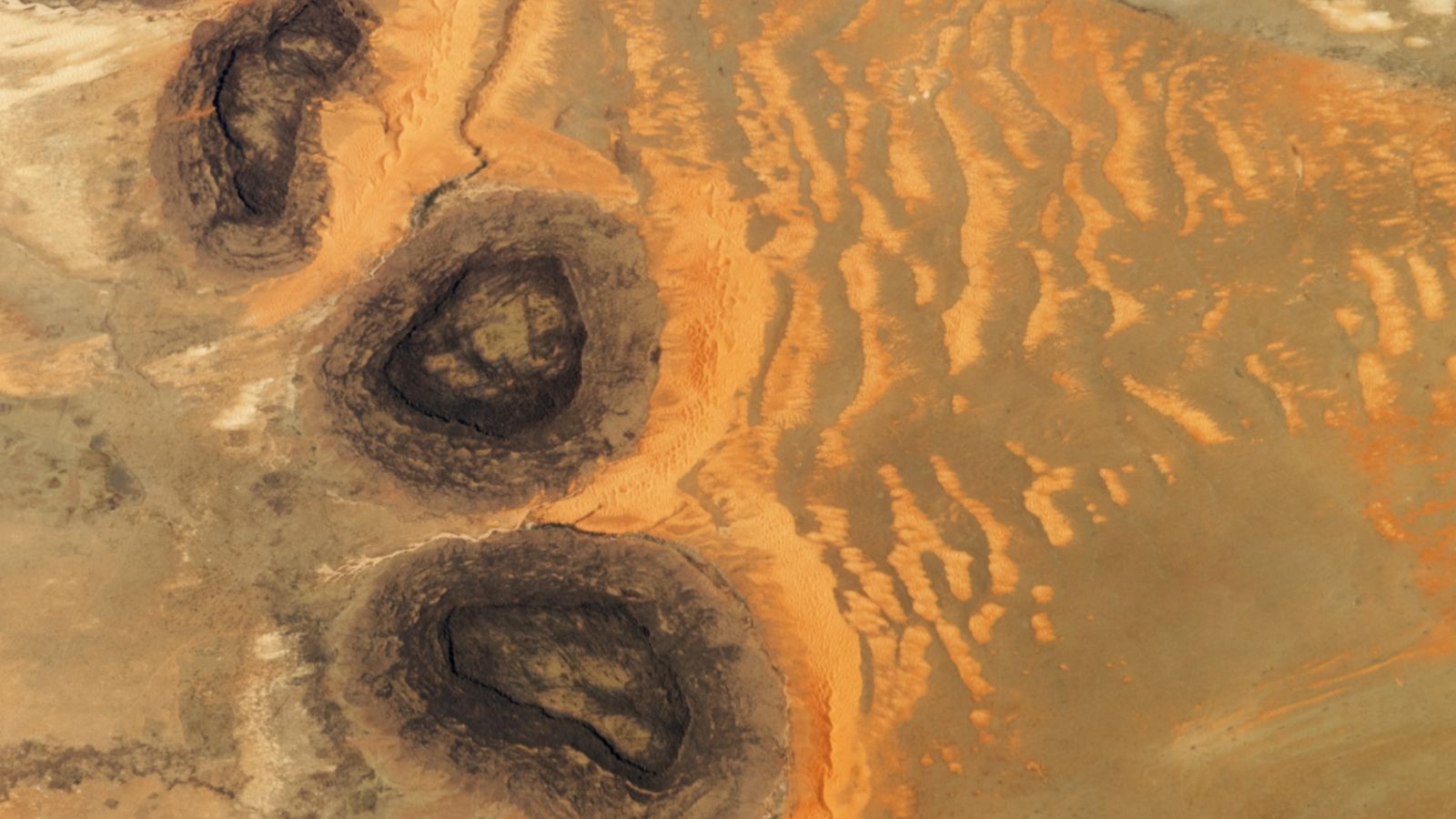
An astronaut photograph from 2023 captures a trio of ancient black mesas in the Sahara, surrounded by unique sand dunes formed by wind patterns, remnants of a Paleozoic-era geological system possibly similar to the 'Eye of the Sahara'.
Prehistoric worms and other invertebrates played a crucial role in the Great Ordovician Biodiversification Event by burrowing and mixing sediments, which increased oxygen levels in the ocean and atmosphere, leading to a significant rise in biodiversity. Researchers from Johns Hopkins University found that the formation and burial of pyrite in mixed sediments were key to this oxygen buildup, challenging previous assumptions about sediment mixing and oxygen levels.
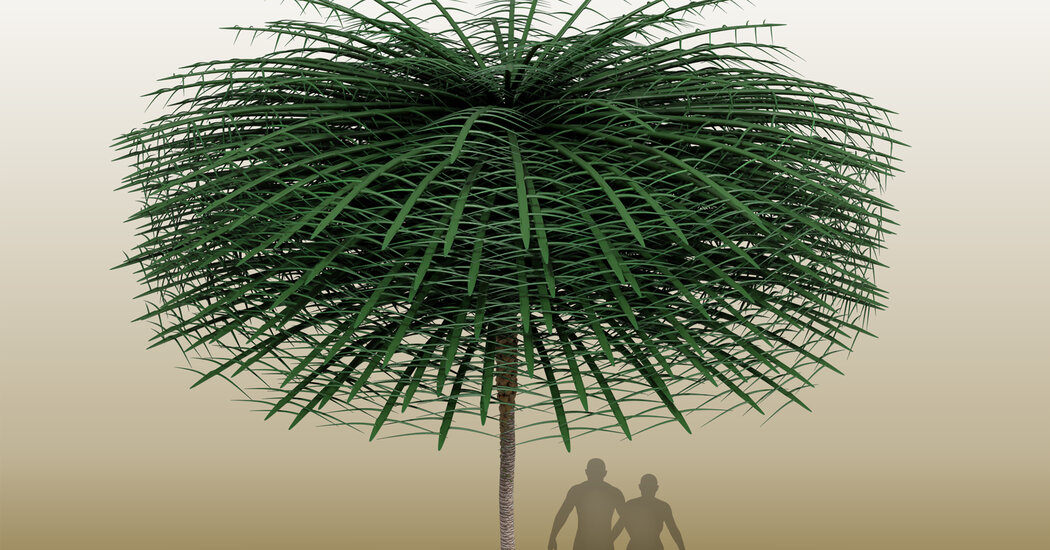
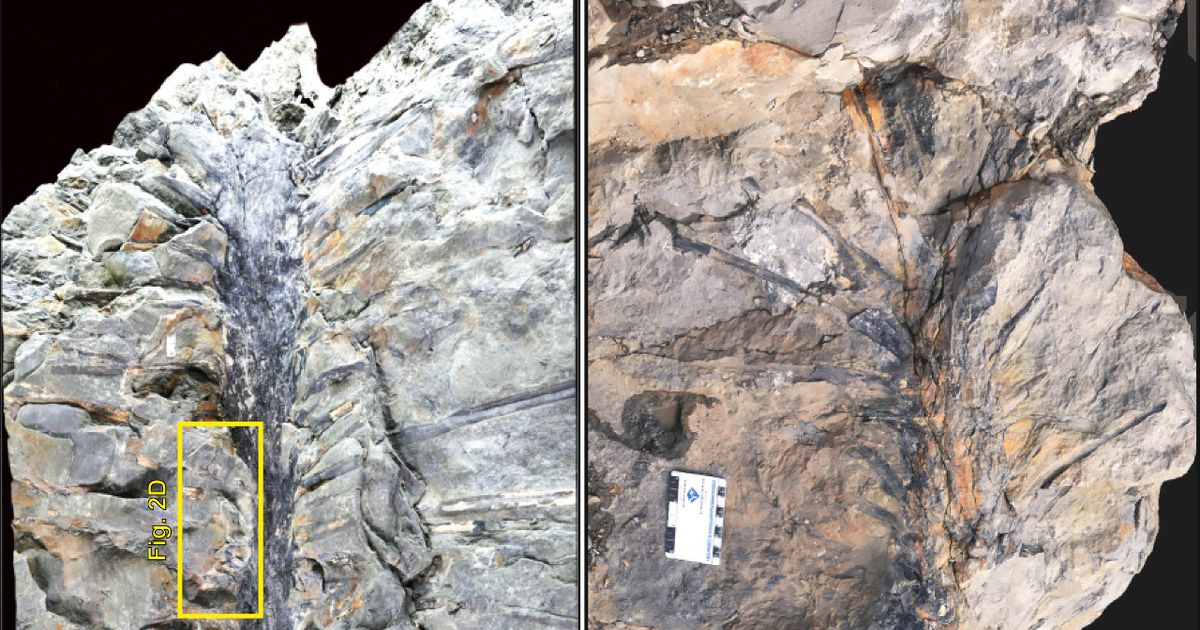
A 352-million-year-old fossilized tree, Sanfordiacaulis densifolia, has been discovered in present-day New Brunswick, Canada, shedding light on the evolutionary experiments that occurred during a 15-million-year gap in the fossil record known as Romer’s Gap. The tree, resembling an upside-down toilet brush with a comically top-heavy and Seussian appearance, had a trunk composed of vascular plant material and more than 200 finely striated, compound leaves. This discovery provides valuable insights into the plant life of the Late Paleozoic Era, offering a rare opportunity to reconstruct a whole plant from that time period.
Rare 3D fossils of ancient "Dr. Seuss trees" have left scientists amazed, providing a snapshot of the world from 350 million years ago when the planet's early forests were evolving. The fossils, found in a Canadian quarry, are incredibly rare and well-preserved, shedding light on secrets from the Paleozoic era. Named "Sanfordiacaulis," the trees were likely fossilized due to a catastrophic landslide caused by an earthquake, and their discovery has provided valuable insights into early forest ecosystems, despite the plant's short-lived existence in the fossil record.
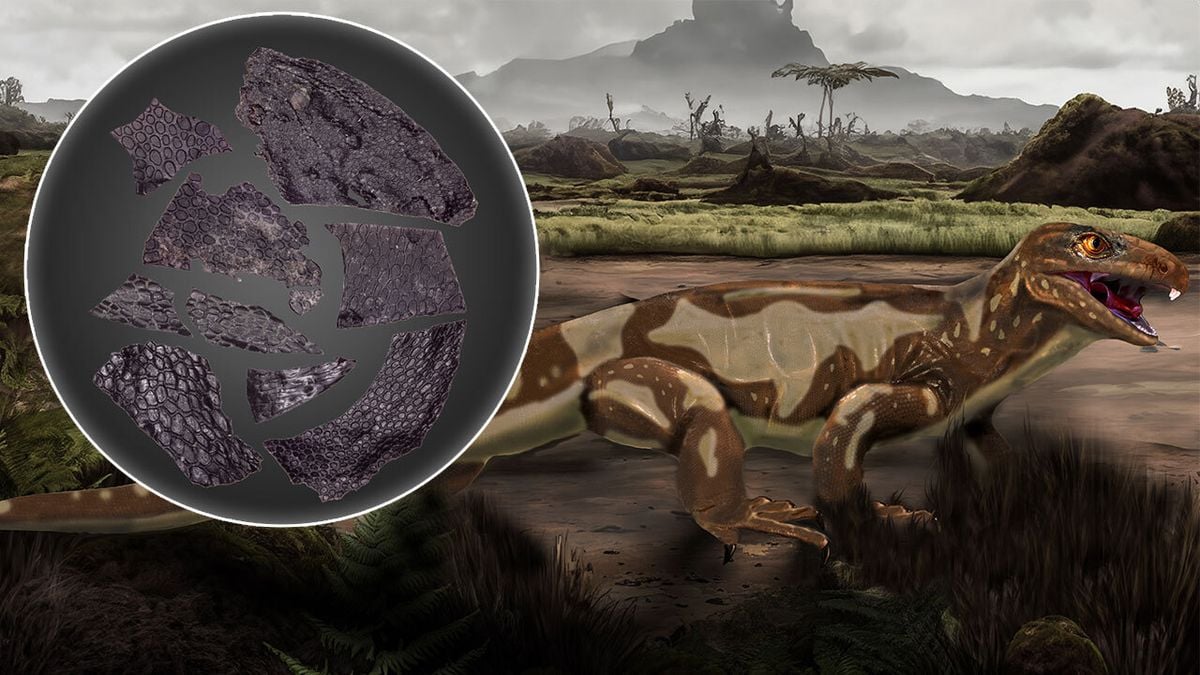
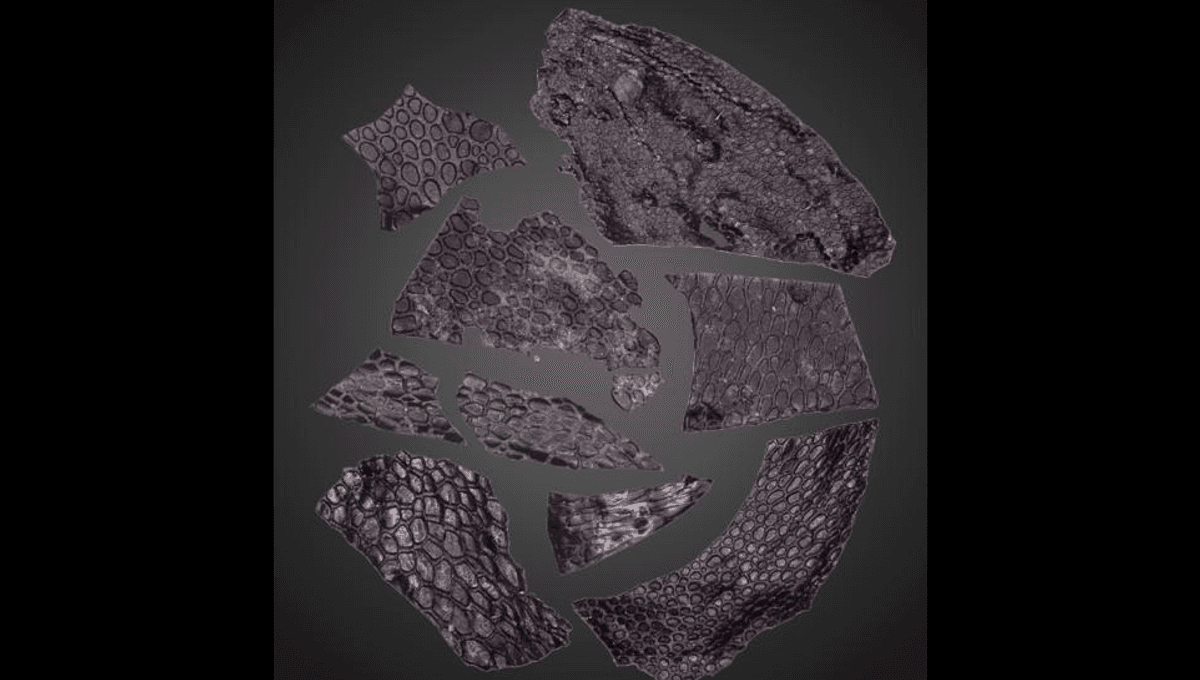
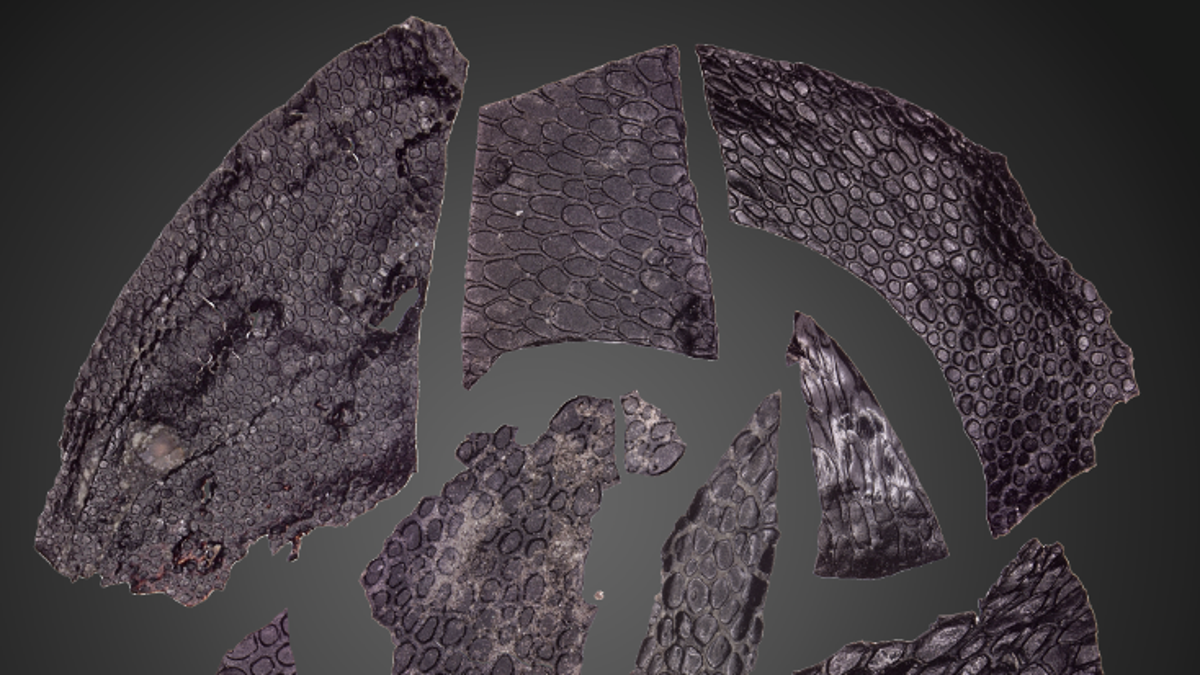
Scientists have discovered mummified skin in Oklahoma that dates back at least 290 million years, making it older than the dinosaurs. The skin, likely from a reptile, exhibits a pebble-like scale design resembling ancient reptile species and has hinged regions similar to modern snakes and worm lizards. This finding, published in Current Biology, provides insight into prehistoric creatures and their transition from aquatic to terrestrial environments.
The discovery of mummified skin from a reptile-like creature that lived 290 million years ago, predating the dinosaurs, has set a new record as the oldest fossilized skin ever found. The skin, with pebble-like scales and hinged regions, resembles features of ancient reptiles, dinosaurs, and crocodiles. Preserved in clay sediments in Oklahoma, the skin fossil provides insight into the transition of species from aquatic to terrestrial environments and the evolution of terrestrial vertebrates. Although the species and body part of origin remain unidentified, the discovery sheds light on the critical role of skin in the success of early terrestrial vertebrates.
The oldest known fossilized skin, dating back at least 45 million years before the first dinosaurs, has been discovered in Oklahoma's Richards Spur limestone cave system. Preserved by a combination of low oxygen levels, clay sediments, and oil seepage, the skin belonged to a lizard-like creature from around 288 million years ago. The discovery sheds light on the early evolution of skin and reveals striking variation in dermal scales, indicating that they were standard at the time. This exceptional find provides valuable insights into the ancient aspects of modern reptile skin and enriches our understanding of pioneering animals from deep time.
Researchers have discovered the oldest known fossilized skin, dating back to the early Permian Period, in a limestone cave system in Oklahoma. Belonging to an ancient reptile, the epidermis sample is smaller than a fingernail and is the first-known skin-cast fossil from the Paleozoic Era. Preserved by interactions between hydrocarbons in petroleum and tar, the skin bears similarities to crocodile skin and provides insight into the initial stages of amniote diversification.