Modern cosmology reveals that only about 5% of the universe is visible matter, while 27% is dark matter and 68% is dark energy, making most of the universe invisible and beyond current observational reach.
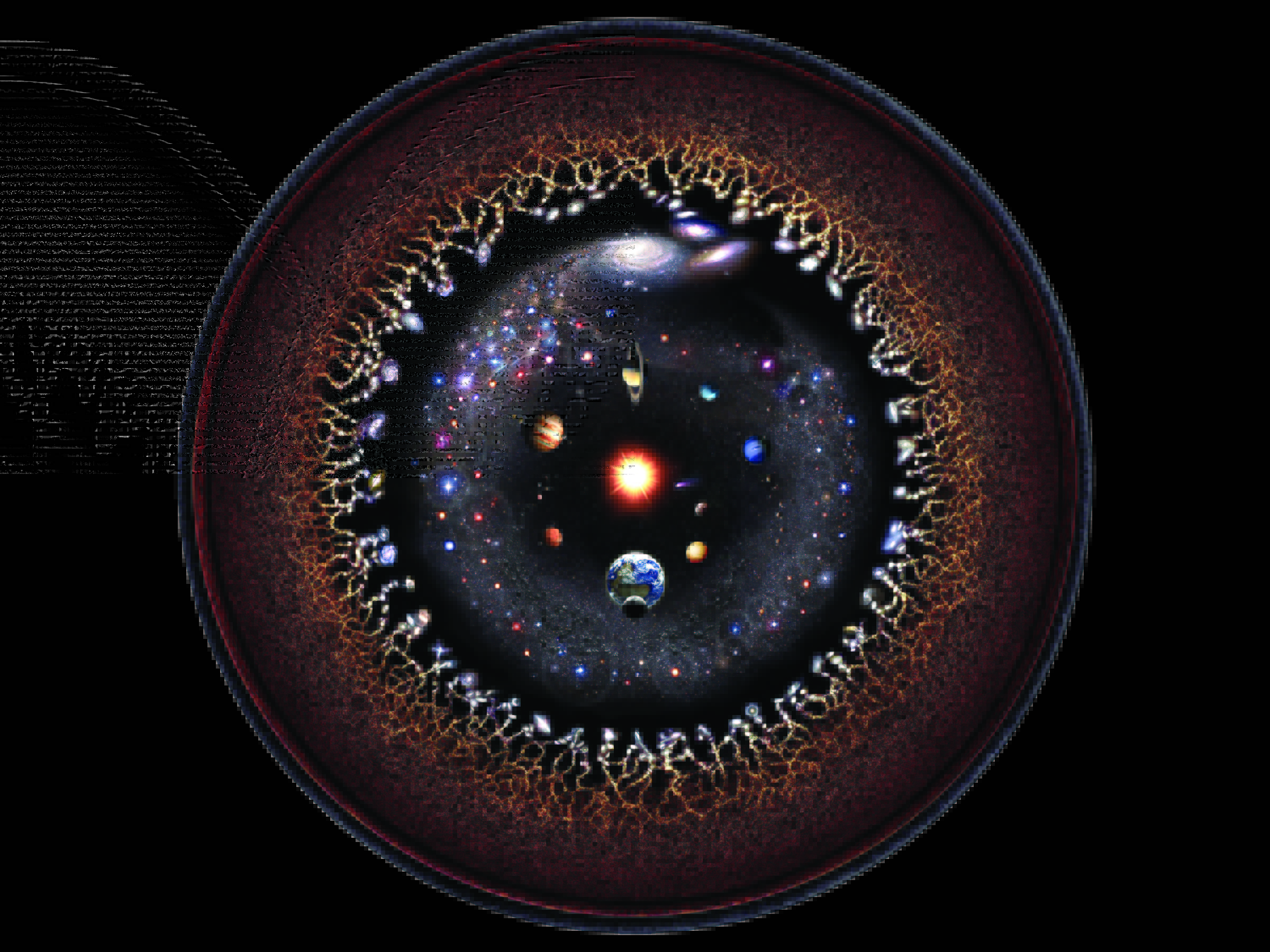
Scientists explore whether the universe is infinite or just unimaginably large, highlighting that the observable universe spans about 93 billion light years, but the true extent may be infinite or beyond human comprehension, with current evidence suggesting a flat and possibly infinite cosmos.
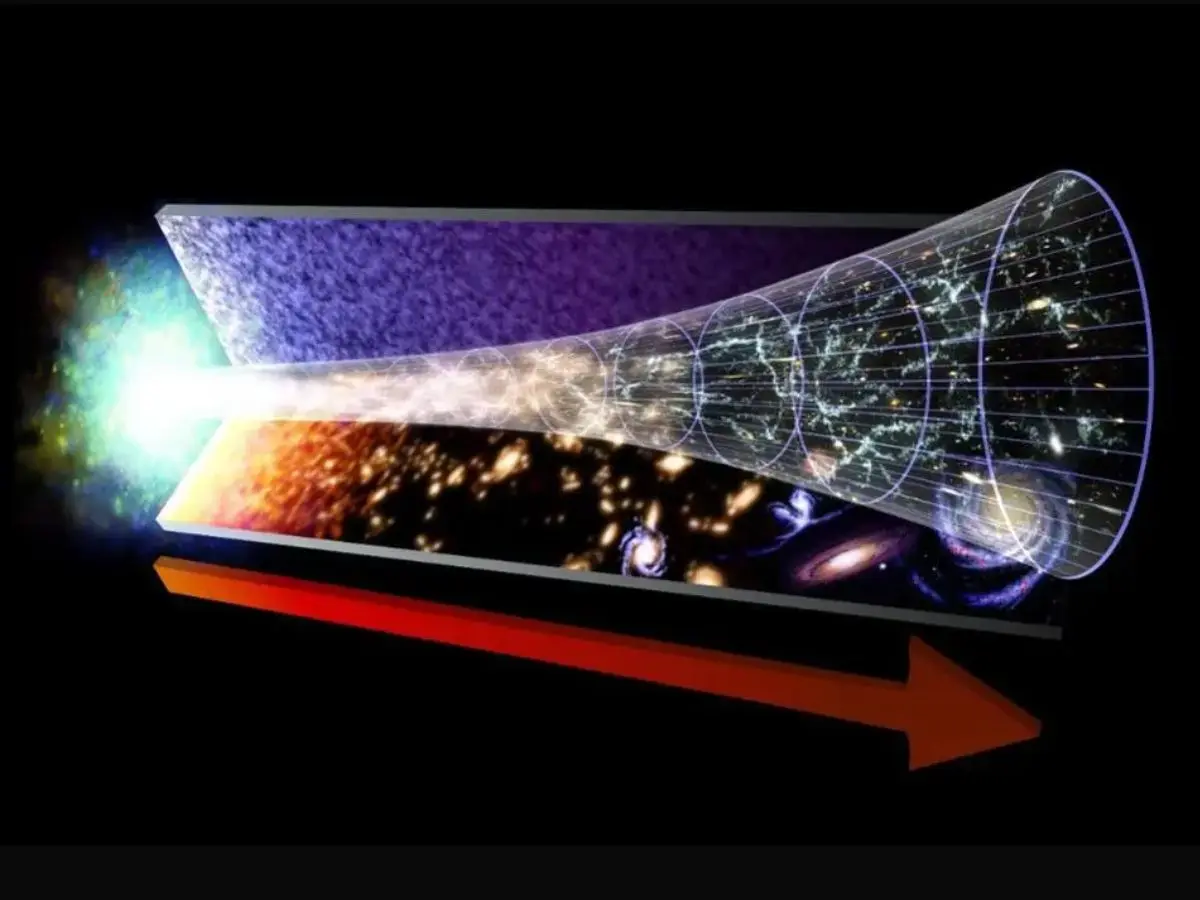
The concept of the Universe's edge is explored through the lens of the observable Universe, which spans 93 billion light-years. Our understanding is limited by the speed of light and the nature of cosmic expansion, which causes the observable Universe to grow over time. Theories about what lies beyond include an infinite Universe, a multiverse, curved space, and the possibility of our Universe existing within a black hole. As the Universe expands, some regions become unobservable, challenging our perception of cosmic boundaries and the Universe's ultimate fate.
The Universe's expansion is accelerating due to dark energy, causing most of it to be disappearing from our reach. Only about 6% of the observable Universe is presently reachable, with the remaining 94% visible only as they were in the past. As time progresses, the percentage of the observable Universe that's reachable will continue to decrease, with galaxies moving farther apart. After another 112 billion years, only our Local Group of galaxies will remain within our cosmic reach.
Astronomers have discovered a massive gravitational anomaly called the Great Attractor, which is pulling our galaxy and neighboring galaxies towards it at a speed of 1.3 million miles per hour. This force is located in the "Zone of Avoidance," an area obscured by our own galaxy's galactic plane and cosmic dust. Although we cannot see it, the Great Attractor is where our local galaxies are heading, and it is not a threat to swallow us. However, the expansion of the universe will eventually separate us from its influence, as is the fate of other superclusters.
The expansion of the universe is causing the observable universe to shrink over time, limiting our ability to see distant objects. While a static universe would allow us to observe more and more light from distant objects as time goes on, the expansion of the universe means that we will only be able to see a smaller and smaller part of it. As the universe expands, the distance between us and other stars increases, resulting in a shrinking observable universe. Despite theories suggesting that the observable universe could be bigger than the universe itself, no evidence has been found to support this idea.
A chart created by Dr. Charles Lineweaver and graduate student Vihan Patel plots everything in the universe, from subatomic particles to superclusters, on a log-log graph of mass and radius. The chart reveals a black line that separates the area forbidden by gravity from the space populated by familiar objects, with black holes dotted along the line. Interestingly, the entire observable universe, within the Hubble radius, falls on this line, suggesting that if a black hole were as large as the observable universe, it would have the same density. This raises the question of whether the universe itself is a black hole. However, the assumption that everything outside the Hubble radius is a zero density Minkowski space complicates the implications of the chart, leaving the question open for further exploration.
A new study challenges the prevailing belief that the Universe is much larger than what we can observe. Most cosmologists think the observable universe is just a small part of an unimaginably vast or infinite creation. However, this study proposes that the observable universe is mostly all there is. By considering higher-dimensional structures within string theory, the authors suggest that the Universe may only be a hundred or a thousand times larger than what we can observe. While speculative, this alternative model avoids the theoretical "swampland" and questions the need for early cosmic inflation. Further research and observations are needed to confirm or refute these ideas.