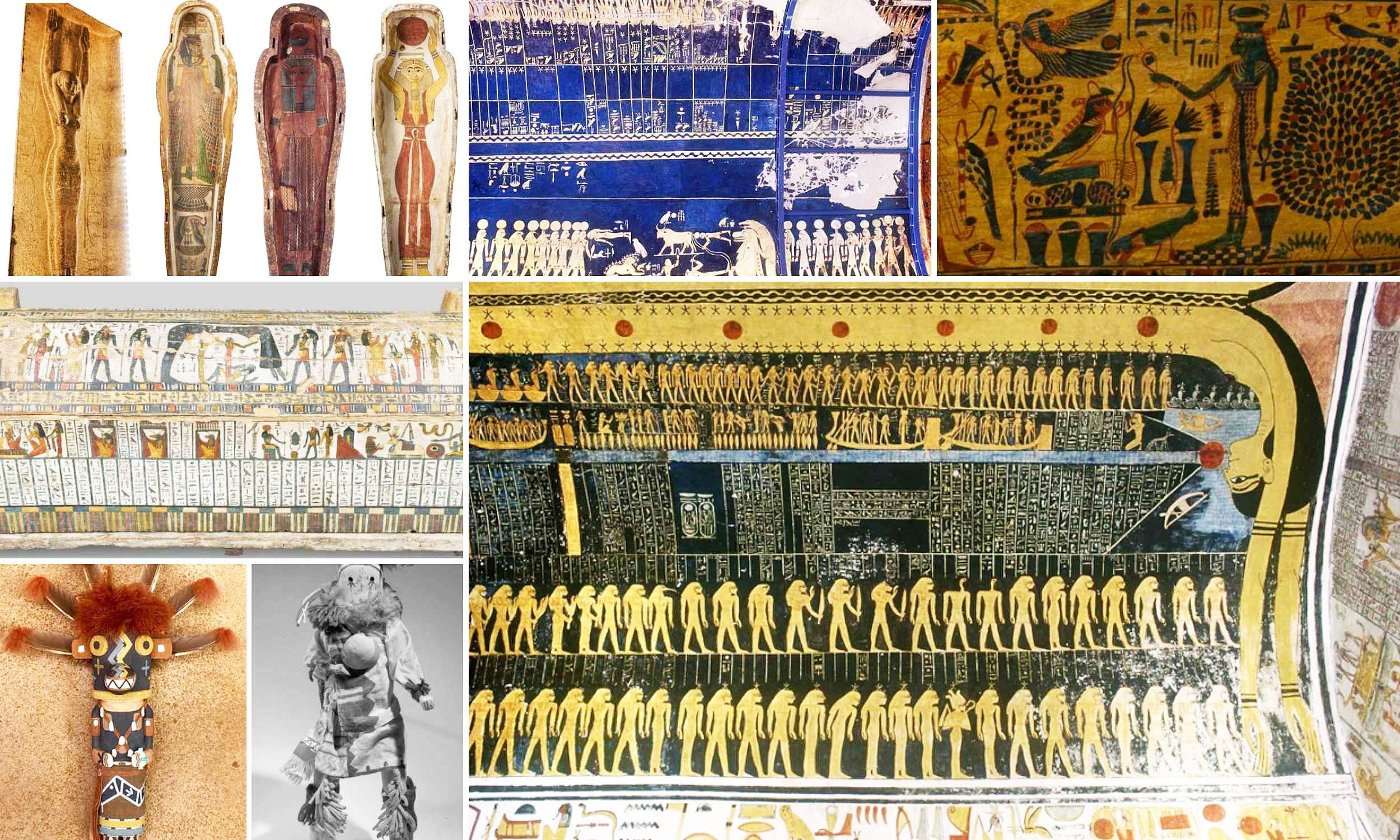
Researchers have identified the oldest known depiction of the Milky Way in an Egyptian sarcophagus, where the goddess Nut's figure and a dark, wavy curve likely represent the galaxy's Great Rift, highlighting ancient Egyptians' sophisticated observations of the night sky and their integration of astronomy with religious symbolism.
A new study explores the connection between the Milky Way and the Egyptian sky-goddess Nut, suggesting that the celestial phenomenon may have accentuated Nut's role in ancient Egyptian mythology. The research draws from ancient texts and simulations to propose that the Milky Way highlighted Nut's presence in the sky, shedding light on her significance in the Egyptian belief system. Additionally, the study compares Egyptian beliefs with those of other cultures, revealing similarities in how different societies interpret the Milky Way and highlighting the universal significance of celestial phenomena across cultures and time.
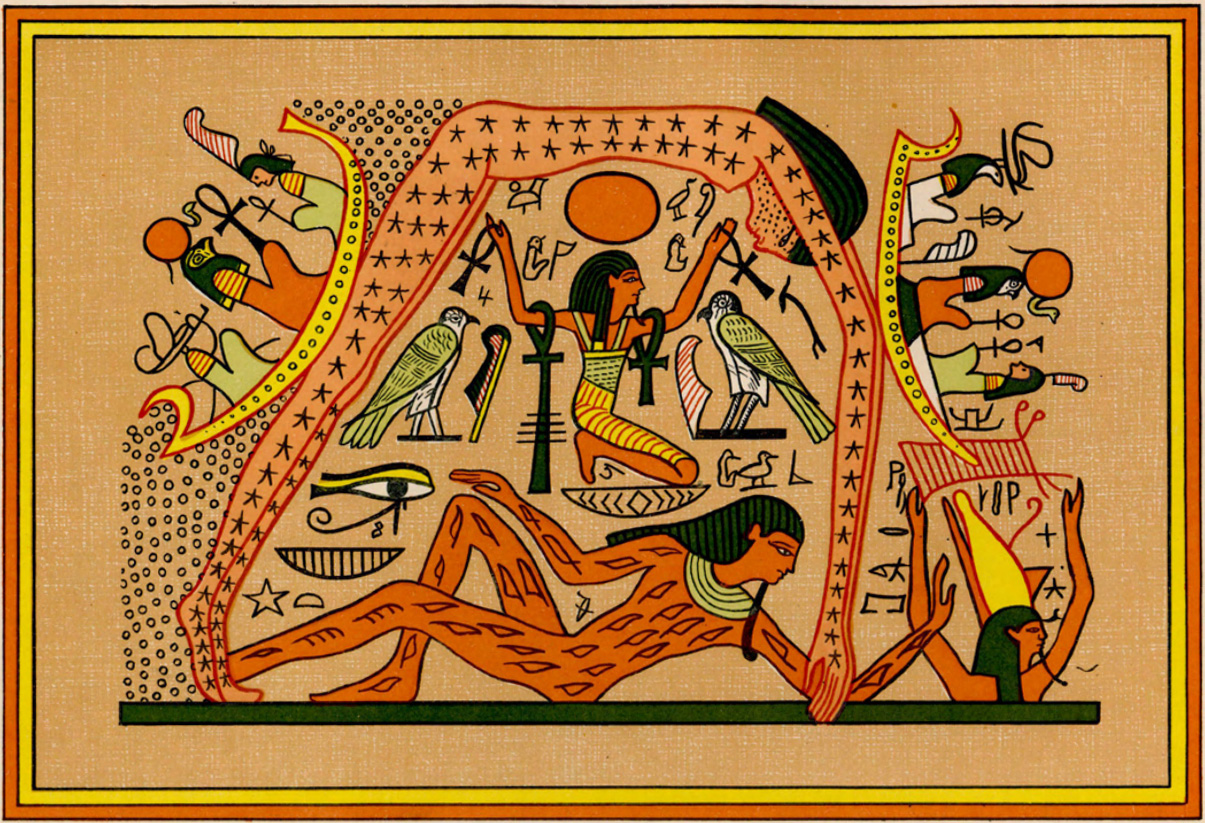
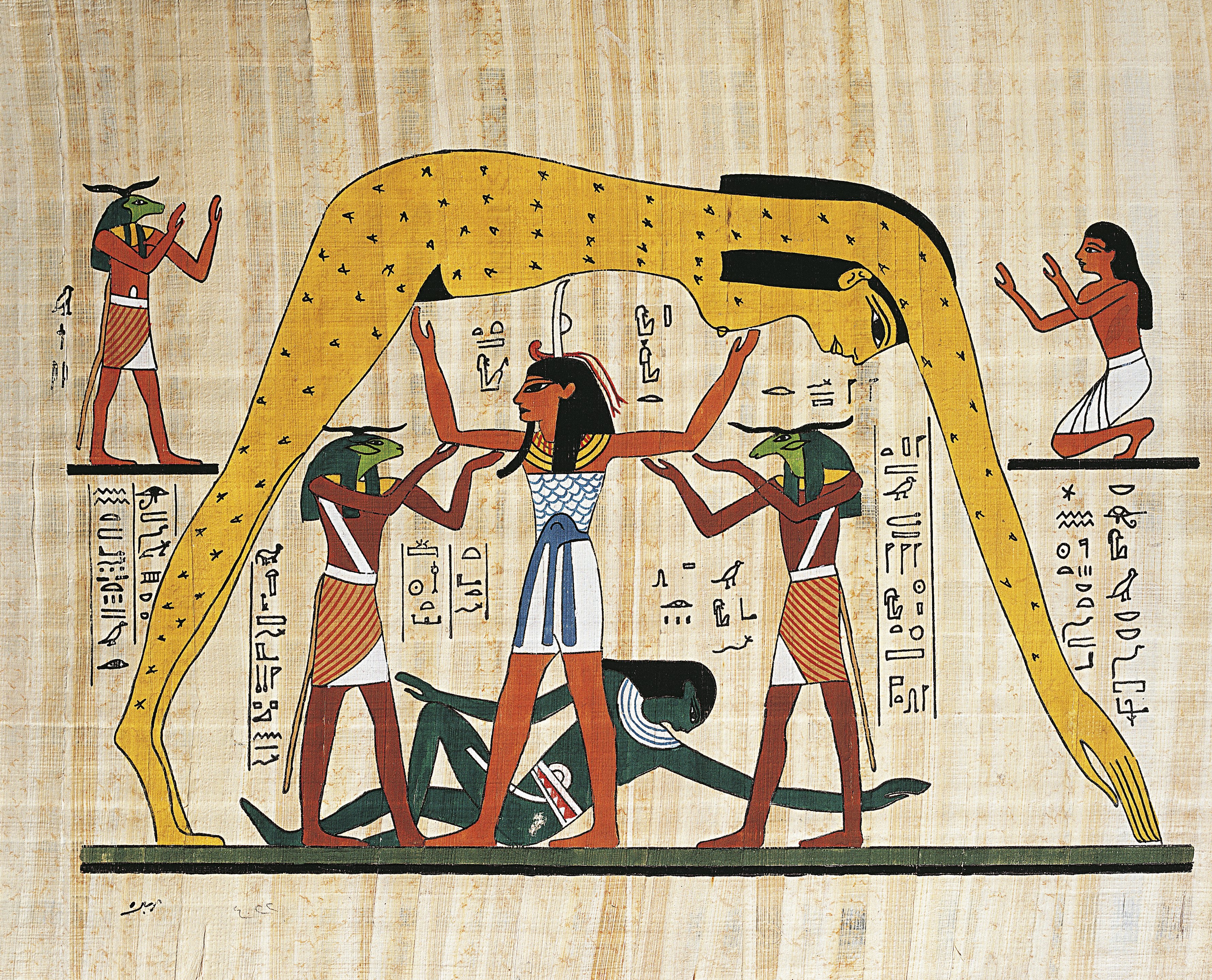
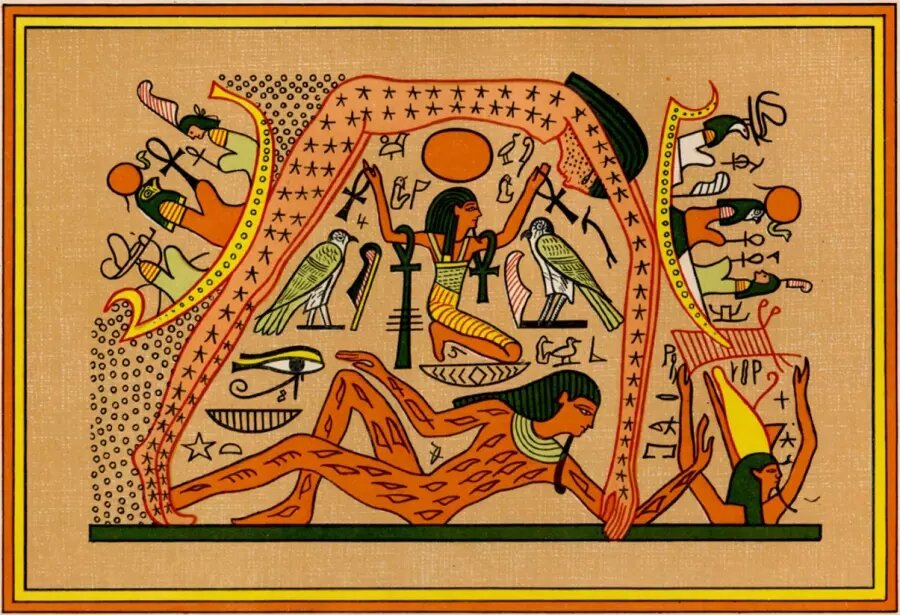
Ancient Egyptians viewed the Milky Way as the deity Nut, goddess of the sky, mothers, fertility, and the universe, according to a study from the University of Portsmouth. Associate Professor Dr. Or Graur drew on ancient texts to establish the connection between the sky and religion for ancient Egyptians, highlighting the depiction of Nut as stretched across the sky. Nut's influence is still felt today in modern African belief systems, and her story as a powerful and cunning deity continues to resonate in Egyptian culture.
Astrophysicist Or Graur's study suggests a potential link between the ancient Egyptian sky goddess Nut and the Milky Way, shedding new light on how the ancient Egyptians viewed our galaxy. By combining modern astronomical simulations with ancient Egyptian texts, Graur proposes that the appearance of the Milky Way in the night sky aligns with the description of Nut in the Book of Nut, indicating a symbolic connection. While not providing definitive proof, the study offers an intriguing interpretation and fits into a larger framework of Milky Way creation stories across cultures.
A new study by a University of Portsmouth astrophysicist explores the relationship between the Milky Way and the Egyptian sky-goddess Nut, shedding light on her role in ancient Egyptian mythology. Drawing from ancient Egyptian texts and simulations, the study proposes that the Milky Way may have highlighted Nut's divine presence in the night sky, with different seasonal alignments emphasizing her significance. The research also connects Egyptian beliefs with those of other cultures, demonstrating similarities in how different societies interpret the Milky Way, and highlights the potential for combining disciplines to offer new insights into ancient beliefs.