Scientists have discovered a new 'Island of Inversion' in the symmetric nucleus Mo-84, where traditional nuclear shell rules break down, challenging previous beliefs that such effects only occur in neutron-rich nuclei. This finding provides new insights into nuclear forces and structure, especially in proton-neutron symmetric regions.
MIT researchers developed a novel molecule-based technique using radium monofluoride to probe the interior of atoms, allowing electrons to briefly enter the nucleus and reveal its internal structure, which could shed light on fundamental questions about matter and antimatter asymmetry in the universe.
A Chinese research team has confirmed that proton number 14 is a new magic number in nuclear physics by precisely measuring silicon-22, an exotic, short-lived nucleus, revealing new insights into nuclear stability and the fundamental building blocks of matter.
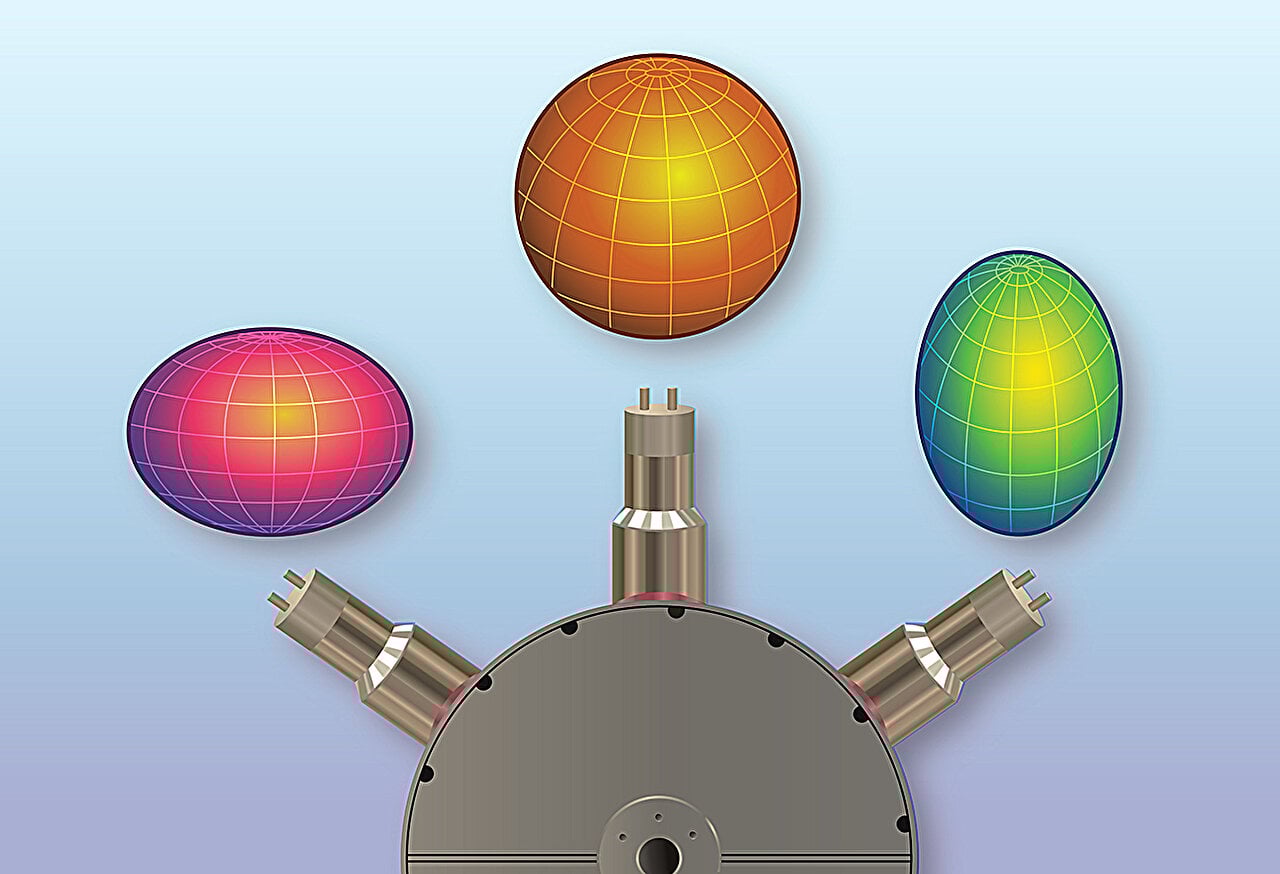
Researchers at FRIB discovered that cobalt-70 isotopes can exhibit two different shapes—spherical and deformed—at nearly the same energy levels, providing new insights into nuclear structure and shape coexistence phenomena.
Scientists in Japan have observed the super-heavy oxygen isotopes oxygen-27 and oxygen-28, with the latter being a candidate for "double magic" status due to its stability. However, researchers at the Tokyo Institute of Technology and RIKEN found that oxygen-28 did not meet the criteria for double magic. This discovery will contribute to improving current theories of nuclear structure and could have implications for understanding neutron stars.