A Chinese research team has confirmed that proton number 14 is a new magic number in nuclear physics by precisely measuring silicon-22, an exotic, short-lived nucleus, revealing new insights into nuclear stability and the fundamental building blocks of matter.
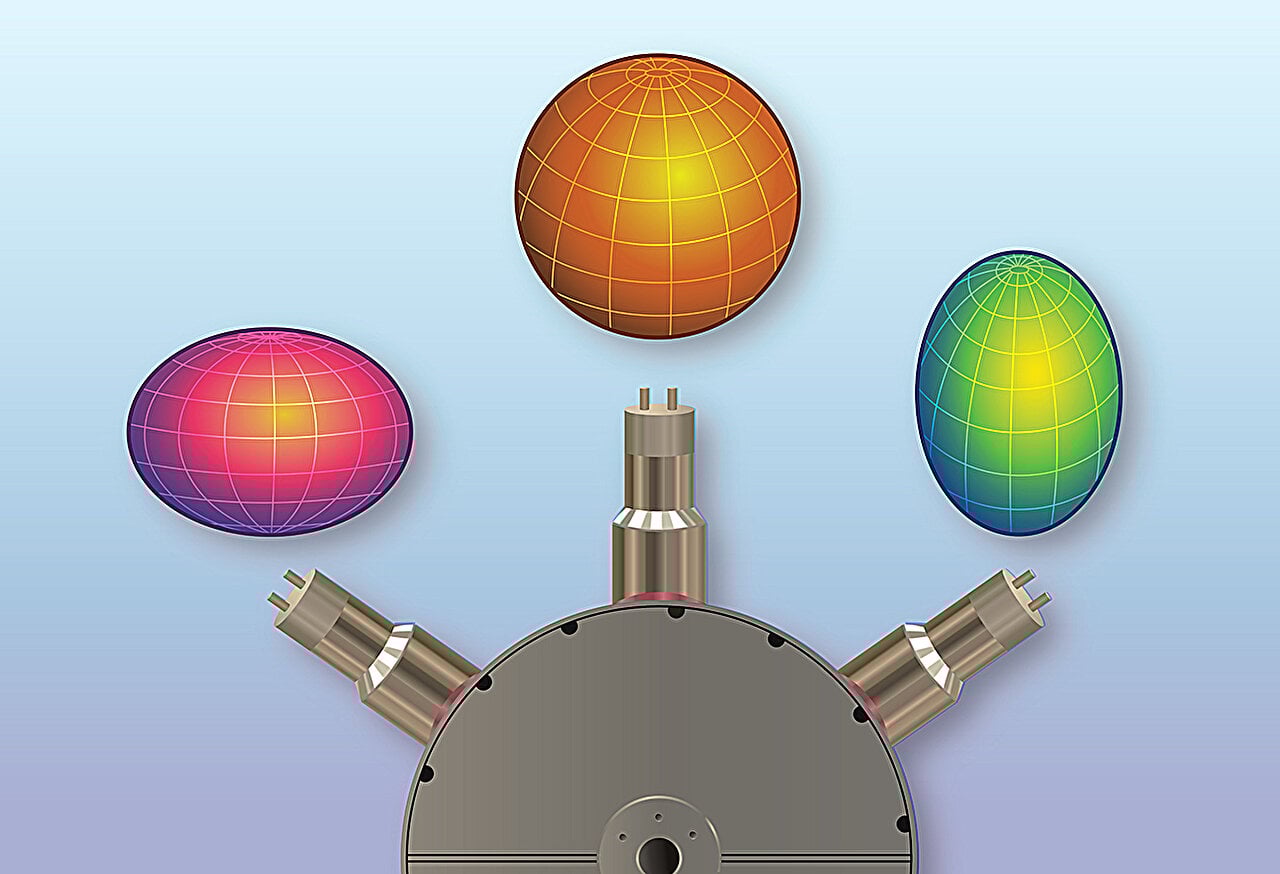
Researchers discovered a new, watermelon-shaped isotope of astatine that decays by emitting a proton, a rare form of radioactive decay, providing insights into the structure and behavior of unstable nuclei and expanding understanding of atomic stability.
Researchers at FRIB discovered that cobalt-70 isotopes can exhibit two different shapes—spherical and deformed—at nearly the same energy levels, providing new insights into nuclear structure and shape coexistence phenomena.
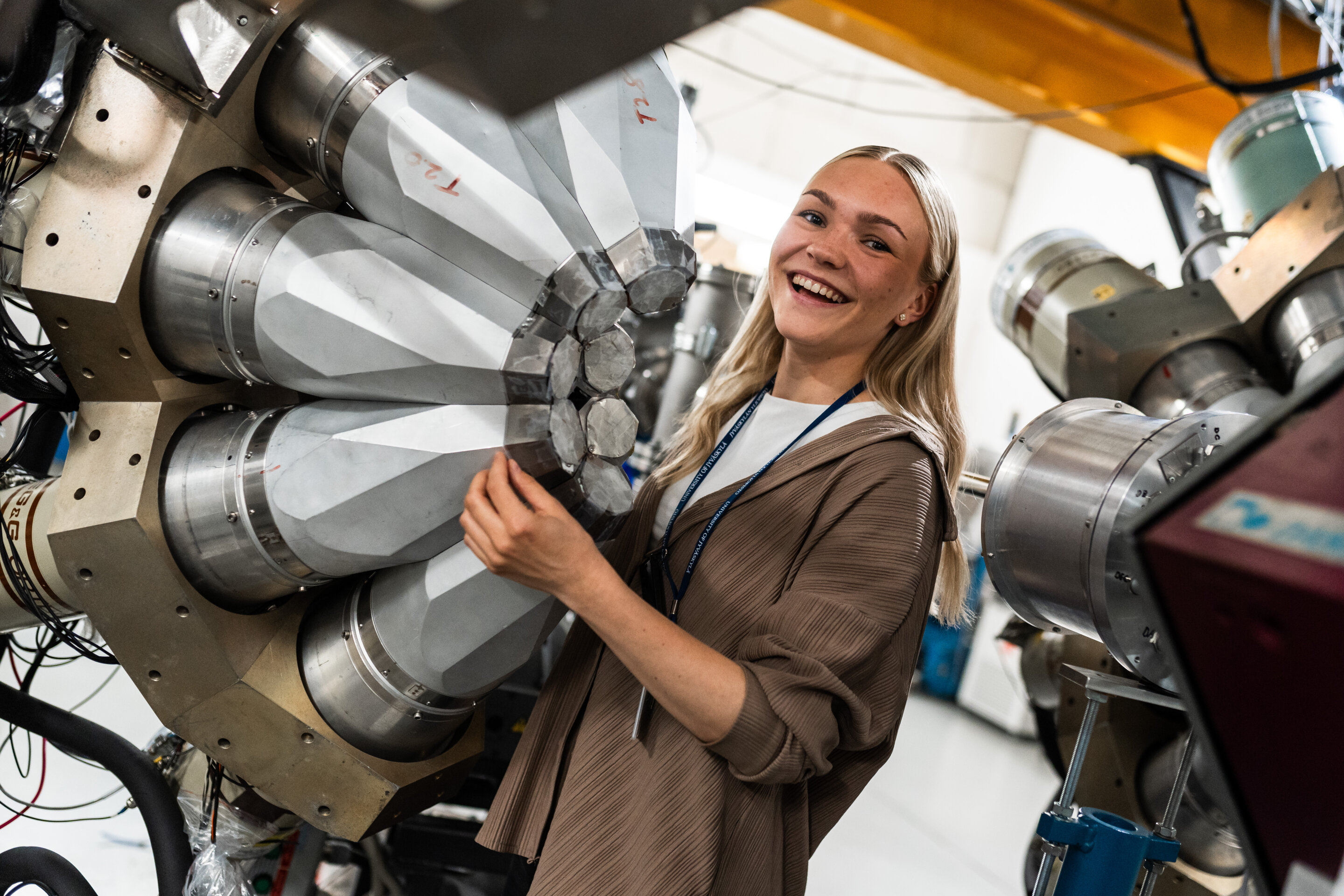
Researchers at the University of Jyväskylä have measured the decay of the heaviest nucleus emitting protons for the first time in nearly 30 years, identifying a new isotope of astatine (188At) and expanding understanding of nuclear structure and interactions.
Researchers at Peking University have observed the 02+ state in the neutron-rich nucleus 8He, confirming the existence of a predicted exotic cluster structure composed of two dineutron clusters and an alpha cluster. This structure, analogous to a Bose-Einstein condensate, challenges traditional nuclear models and has significant implications for understanding the properties of neutron stars, including the onset of neutron superfluidity. The findings, published in Physical Review Letters, highlight the need for advanced nuclear theories and could inform future research on neutron-rich systems.