Tag

Ngc 6822

All articles tagged with #ngc 6822

JWST Captures Stunning Image of Barnard's Galaxy
space2 years ago

JWST Captures Stunning Image of Barnard's Galaxy

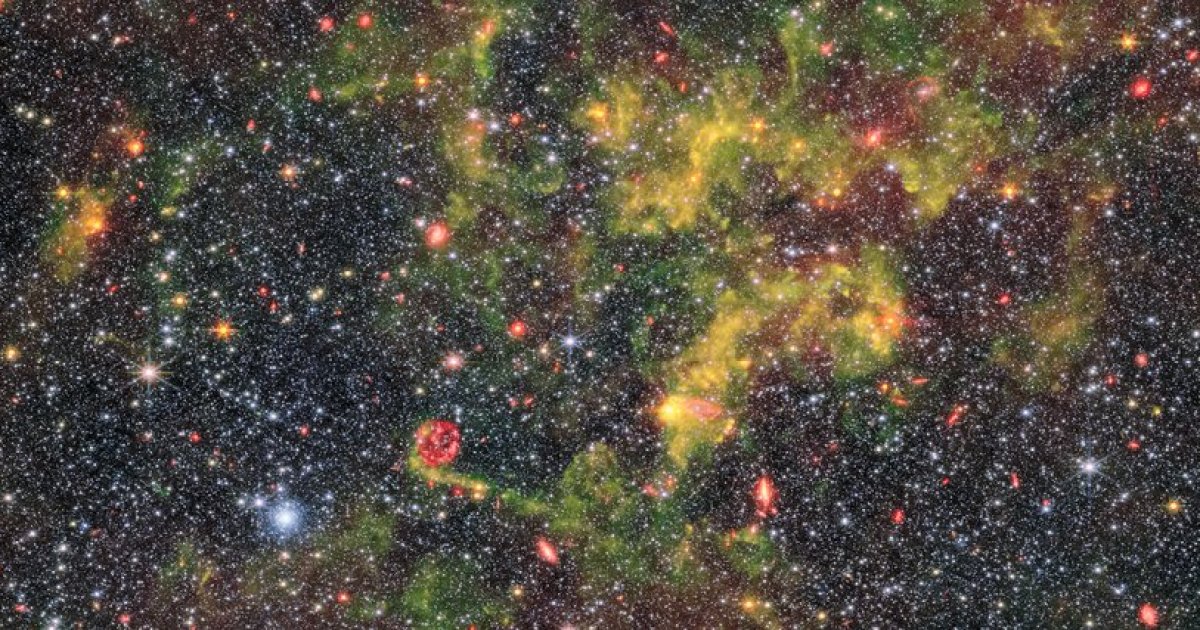
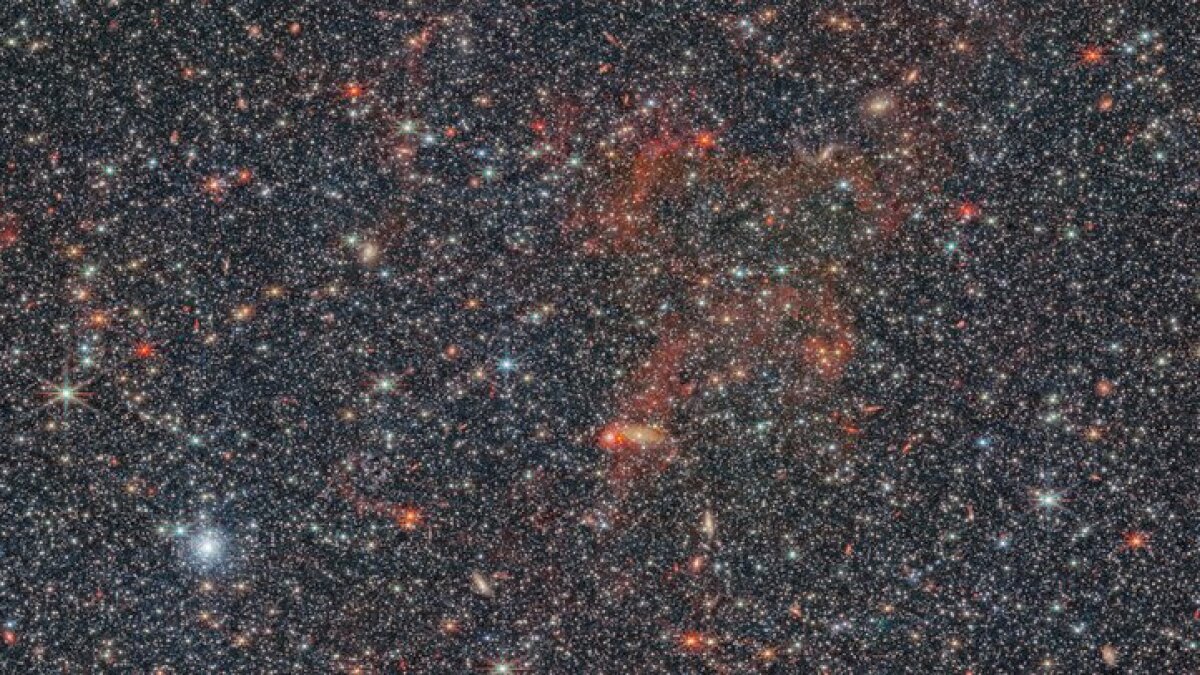
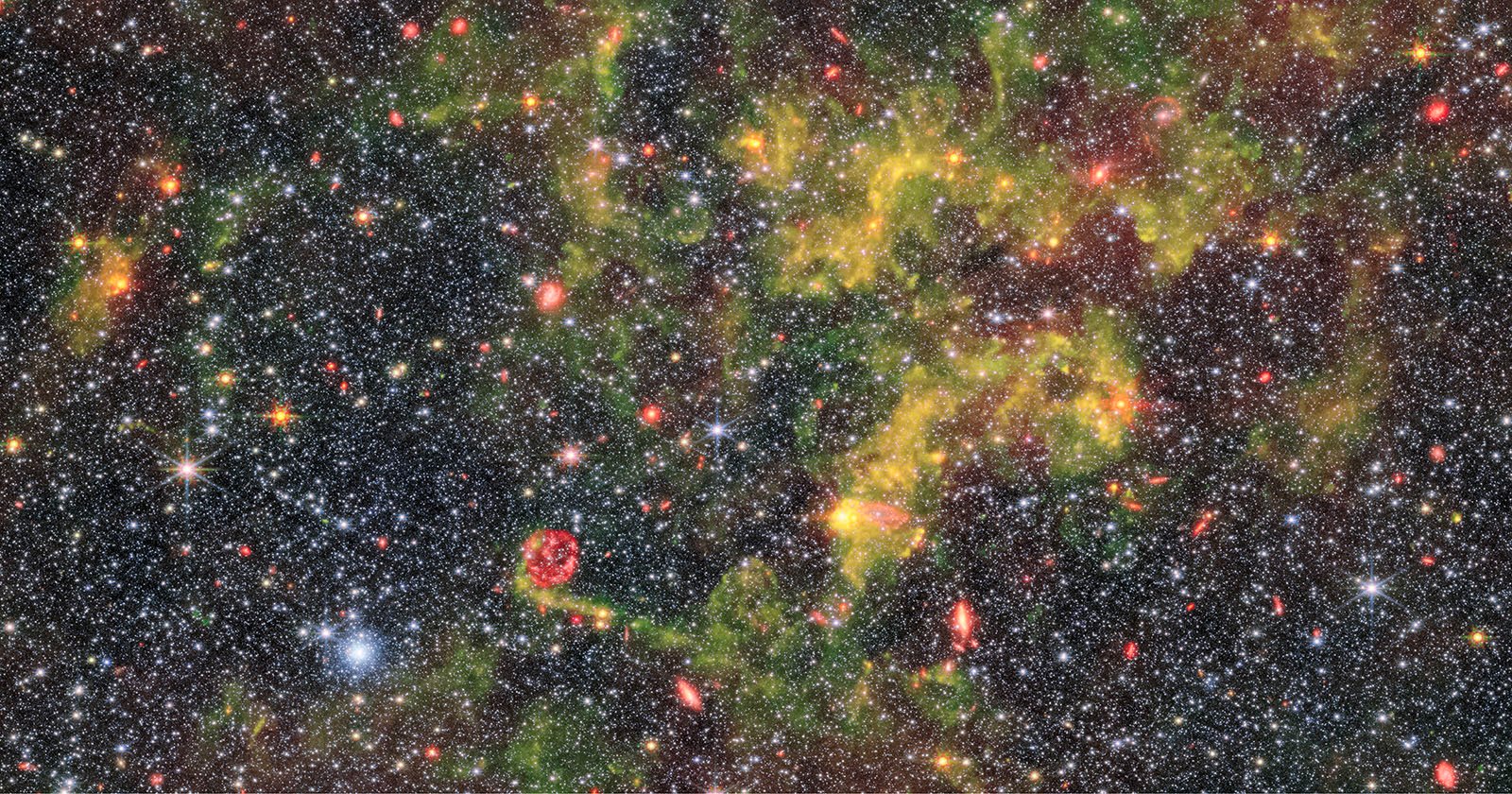
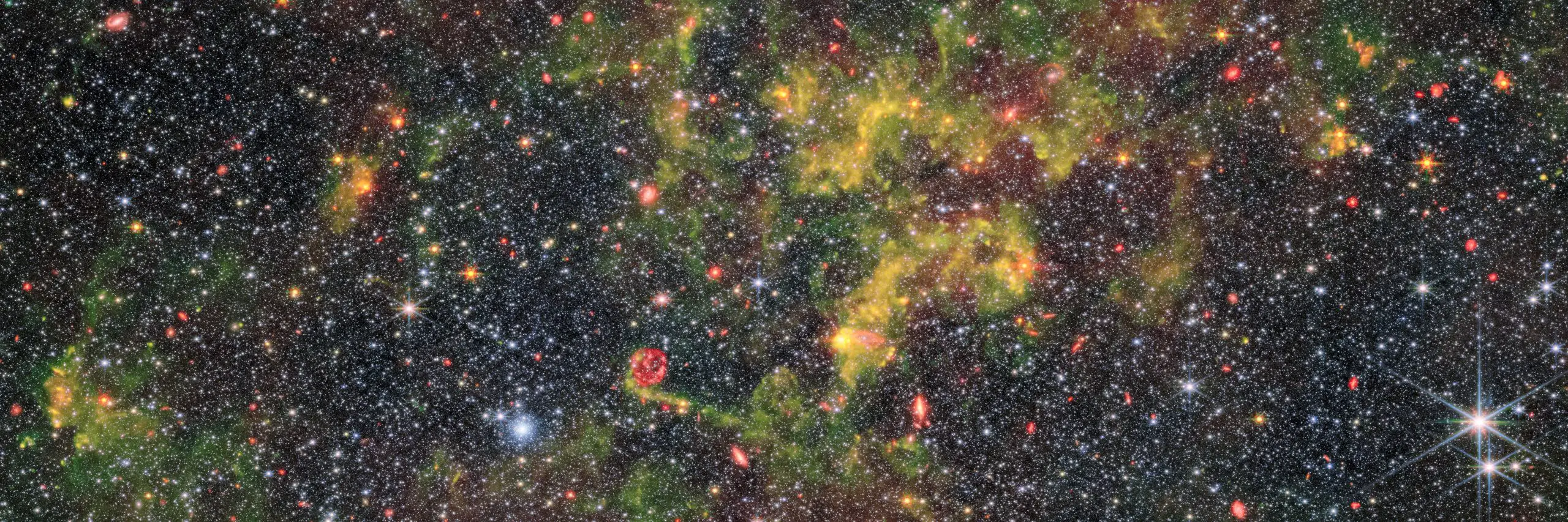
The James Webb Space Telescope captured a stunning image of the nearby galaxy NGC 6822, revealing a dense star field and hidden galaxies. The telescope's ice-cold infrared instruments and powerful resolution allowed it to examine stars hidden in dusty environments, providing spectacular results. NGC 6822, also known as Barnard's Galaxy, is a dwarf irregular galaxy with a unique shape. The Webb telescope's capabilities, including its giant mirror and infrared view, enable it to peer into the deepest cosmos, study exoplanets, and reveal new insights about the early universe.
Captivating Space Photographs Showcase Cosmic Dust and Ancient Galactic Wonders
astronomy2 years ago

Captivating Space Photographs Showcase Cosmic Dust and Ancient Galactic Wonders

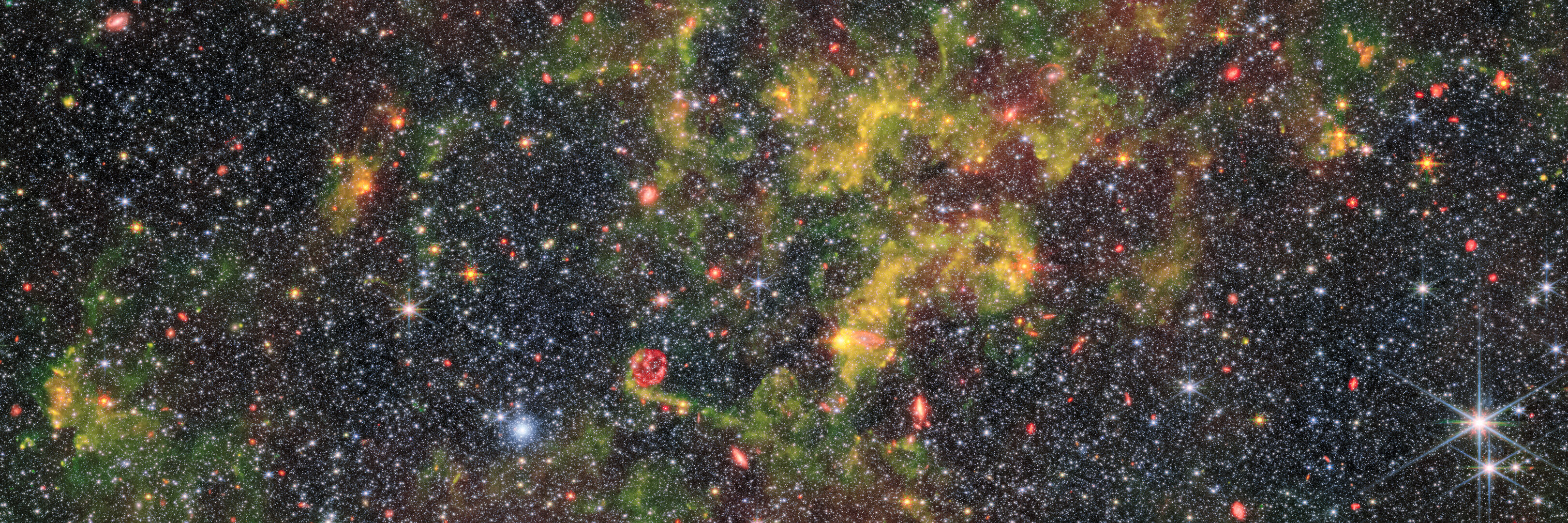
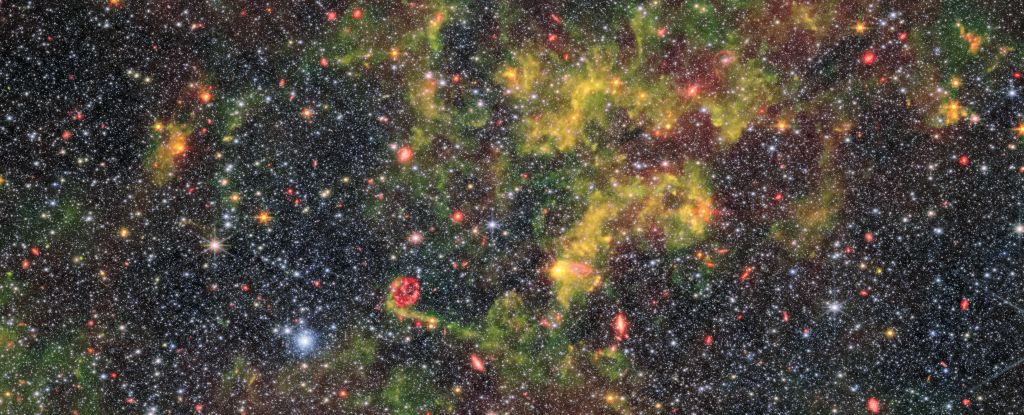
The James Webb Space Telescope has captured a stunning image of NGC 6822, also known as Barnard's Galaxy, revealing the ethereal beauty of dust and gas in space. This nearby dwarf galaxy, located 1.6 million light-years away from the Milky Way, provides a unique opportunity to study the evolution of galaxies in the early Universe due to its low metallicity and recent star formation. The image combines observations from the telescope's mid-infrared and near-infrared instruments, showcasing swirling gas and dust, regions of star formation, distant galaxies, and a field of glittering stars. The study of Barnard's Galaxy will contribute to our understanding of the origins of the Universe.

"Dust: Unveiling the Mysteries of the Early Universe"
astronomy2 years ago

"Dust: Unveiling the Mysteries of the Early Universe"

The James Webb Space Telescope's observation of the irregular galaxy NGC 6822 provides valuable insights into early Universe processes such as stellar evolution and the life cycle of interstellar dust. NGC 6822, discovered in 1884 by E. E. Barnard and later studied by Edwin Hubble, is the nearest galactic neighbor to the Milky Way that is not a satellite. With its low metallicity, NGC 6822 offers a glimpse into the conditions of the early Universe and helps scientists understand the formation of stars and the evolution of dust in low-metallicity environments.

"Synergy of James Webb Instruments: Unveiling Breathtaking Space Vistas"
space2 years ago

"Synergy of James Webb Instruments: Unveiling Breathtaking Space Vistas"

The James Webb Space Telescope has captured stunning images of the irregular galaxy NGC 6822 using its Near-InfraRed Camera (NIRCam) and Mid-InfraRed Instrument (MIRI). These instruments probe different parts of the electromagnetic spectrum, allowing them to observe different components of the galaxy. By combining the views from NIRCam and MIRI, scientists can create detailed images that highlight features like dust clouds and areas of active star formation. The images provide insights into the low metallicity of NGC 6822 and the distribution of heavy elements in the universe.

"Webb Telescope Uncovers Secrets of Intriguing Galaxy"
space-science2 years ago

"Webb Telescope Uncovers Secrets of Intriguing Galaxy"

The James Webb Space Telescope has captured detailed images of the galaxy NGC 6822, revealing countless stars and dense clouds of gas and dust. NGC 6822, located 1.5 million light-years away, has intrigued scientists due to its low metallicity, which is unusual for a younger galaxy. The Webb telescope's ability to view infrared light allows it to penetrate cosmic clouds and study stars and galaxies that formed over 13 billion years ago. It also carries spectrometers that can analyze the atmospheres of distant exoplanets, revolutionizing our understanding of these far-off worlds.

"Captivating Images: Webb's Photo of Influential Galaxy and Hubble's Glittering Disco Ball in the Early Universe"
space-science2 years ago

"Captivating Images: Webb's Photo of Influential Galaxy and Hubble's Glittering Disco Ball in the Early Universe"

The James Webb Space Telescope has captured a colorful image of the irregular galaxy NGC 6822, providing insights into the early universe. The telescope observed gas-rich regions and organic compounds critical for star and planetary formation. NGC 6822, also known as Barnard's Galaxy, is part of the "Local Group" of galaxies and is about 1.5 million light-years from Earth. Despite its smaller size, NGC 6822 is still about 7,000 light-years across. The galaxy's low metallicity makes it an interesting region for studying the early universe when there was less metal content. NGC 6822 has been studied by astronomers for over a century, and the James Webb Space Telescope continues the exploration of this influential galaxy.

"Dust: Unveiling the Enigmatic Journey of ESA"
astronomy2 years ago

"Dust: Unveiling the Enigmatic Journey of ESA"

The James Webb Space Telescope has observed the irregular galaxy NGC 6822, the Milky Way's nearest galactic neighbor that is not a satellite. NGC 6822 has low metallicity, making it an object of interest for understanding the early Universe. The study of this galaxy dates back to its discovery in 1884 and has contributed to our evolving understanding of the Universe. The observations with Webb aim to better understand star formation and the evolution of interstellar dust in low-metallicity environments.