The Hubble Space Telescope captured an image of galaxy NGC 2775, a peculiar galaxy exhibiting both spiral and elliptical features, possibly due to past mergers, providing insights into galaxy evolution.
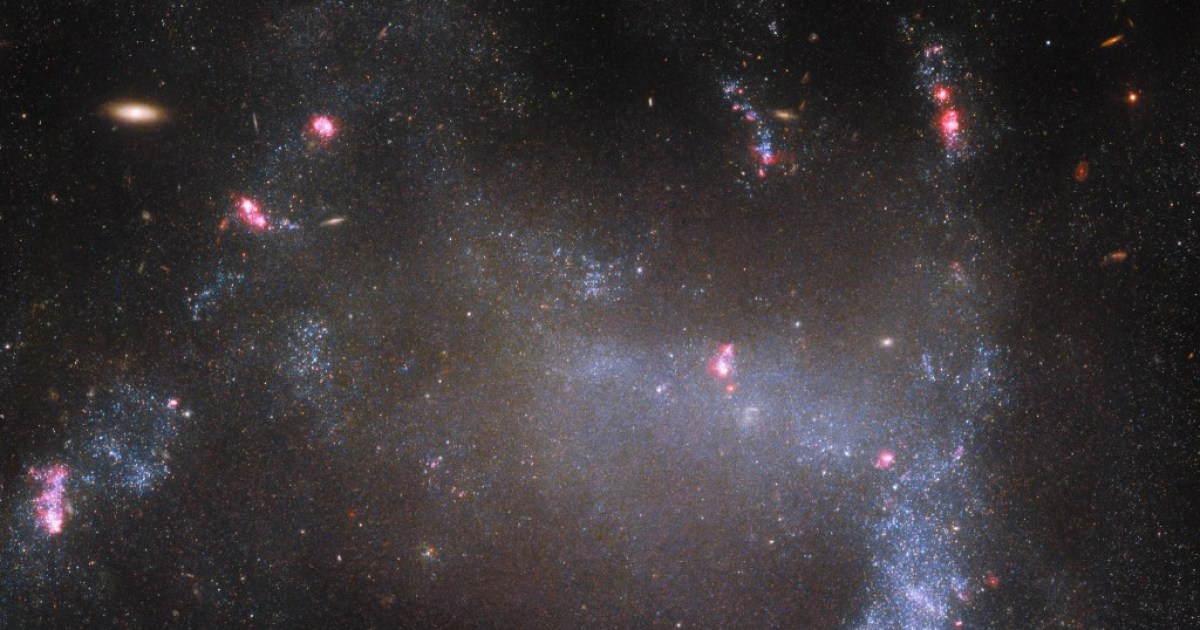
The Hubble Space Telescope has captured an image of the irregular Spider Galaxy, also known as UGC 5829, located 30 million light-years away, showcasing its spindly arms and clawed shape. This diffuse and faint galaxy, not often studied, was imaged using data from two Hubble observing programs, revealing its star-forming regions as bright-pink nebulae. Additionally, the Hubble Space Telescope also captured a hotbed of star formation in galaxy AM 1054-325, which has been distorted into an unusual shape due to the gravitational tugging of a nearby galaxy, resulting in newborn clusters of stars forming along a stretched-out tidal tail.
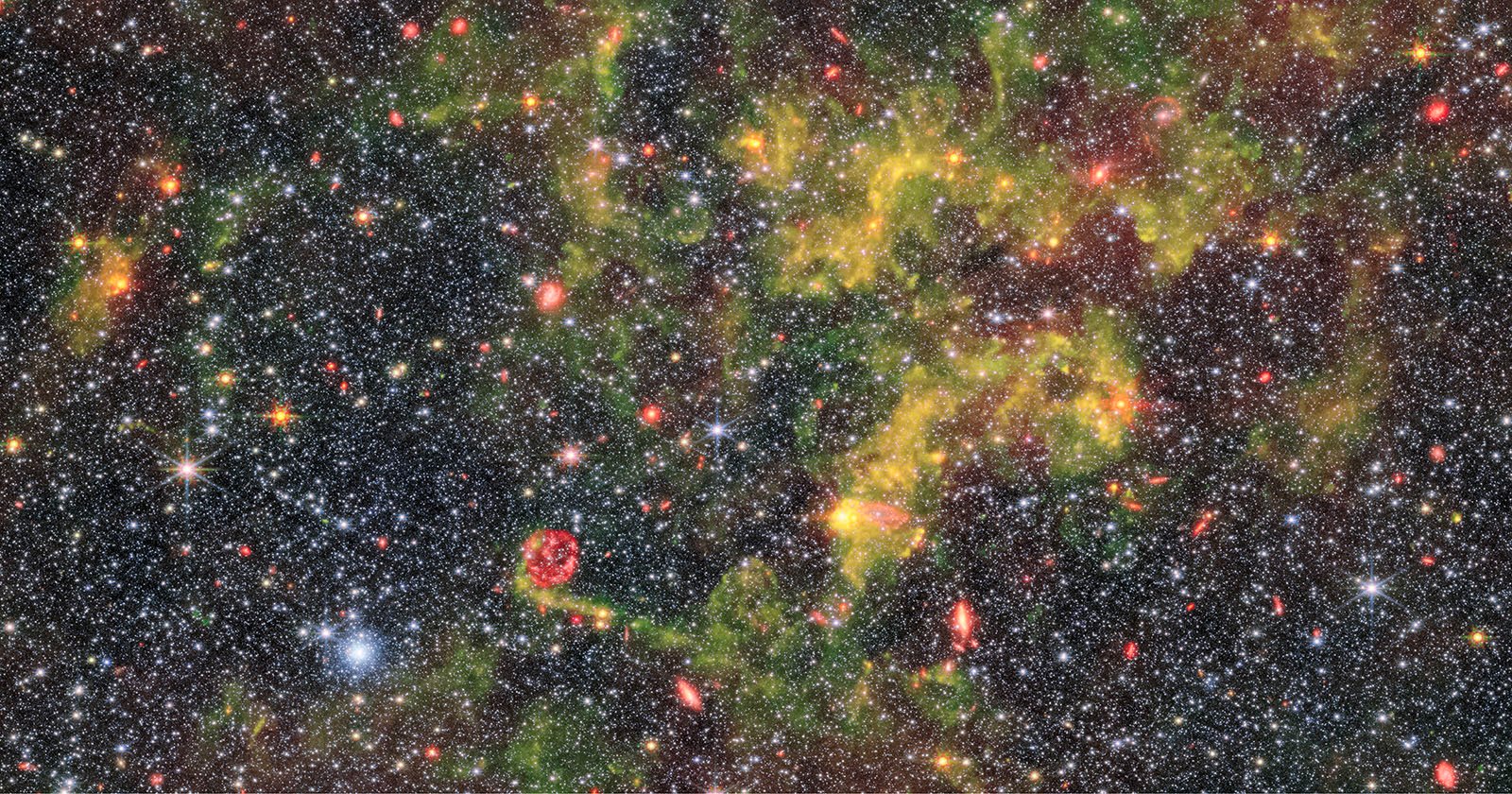
The James Webb Space Telescope has captured a colorful image of the irregular galaxy NGC 6822, providing insights into the early universe. The telescope observed gas-rich regions and organic compounds critical for star and planetary formation. NGC 6822, also known as Barnard's Galaxy, is part of the "Local Group" of galaxies and is about 1.5 million light-years from Earth. Despite its smaller size, NGC 6822 is still about 7,000 light-years across. The galaxy's low metallicity makes it an interesting region for studying the early universe when there was less metal content. NGC 6822 has been studied by astronomers for over a century, and the James Webb Space Telescope continues the exploration of this influential galaxy.
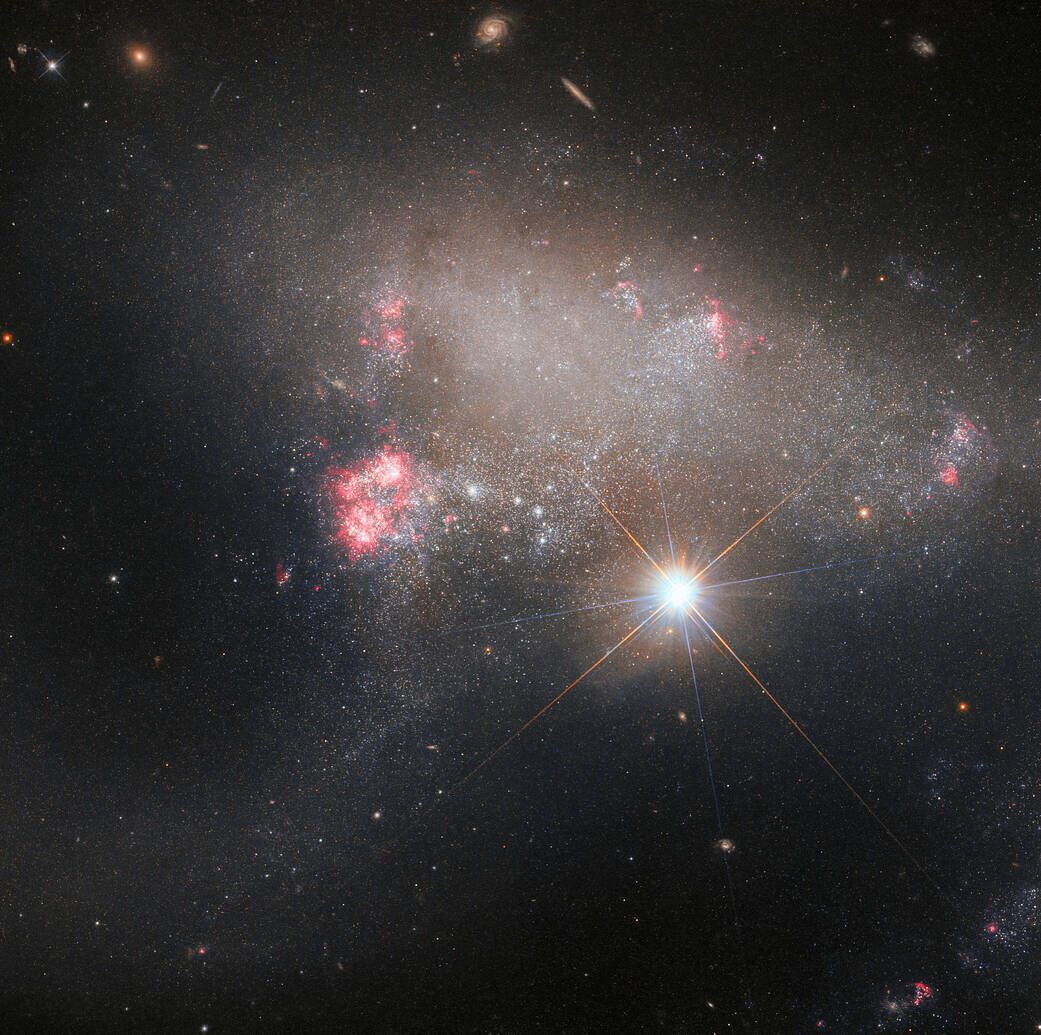
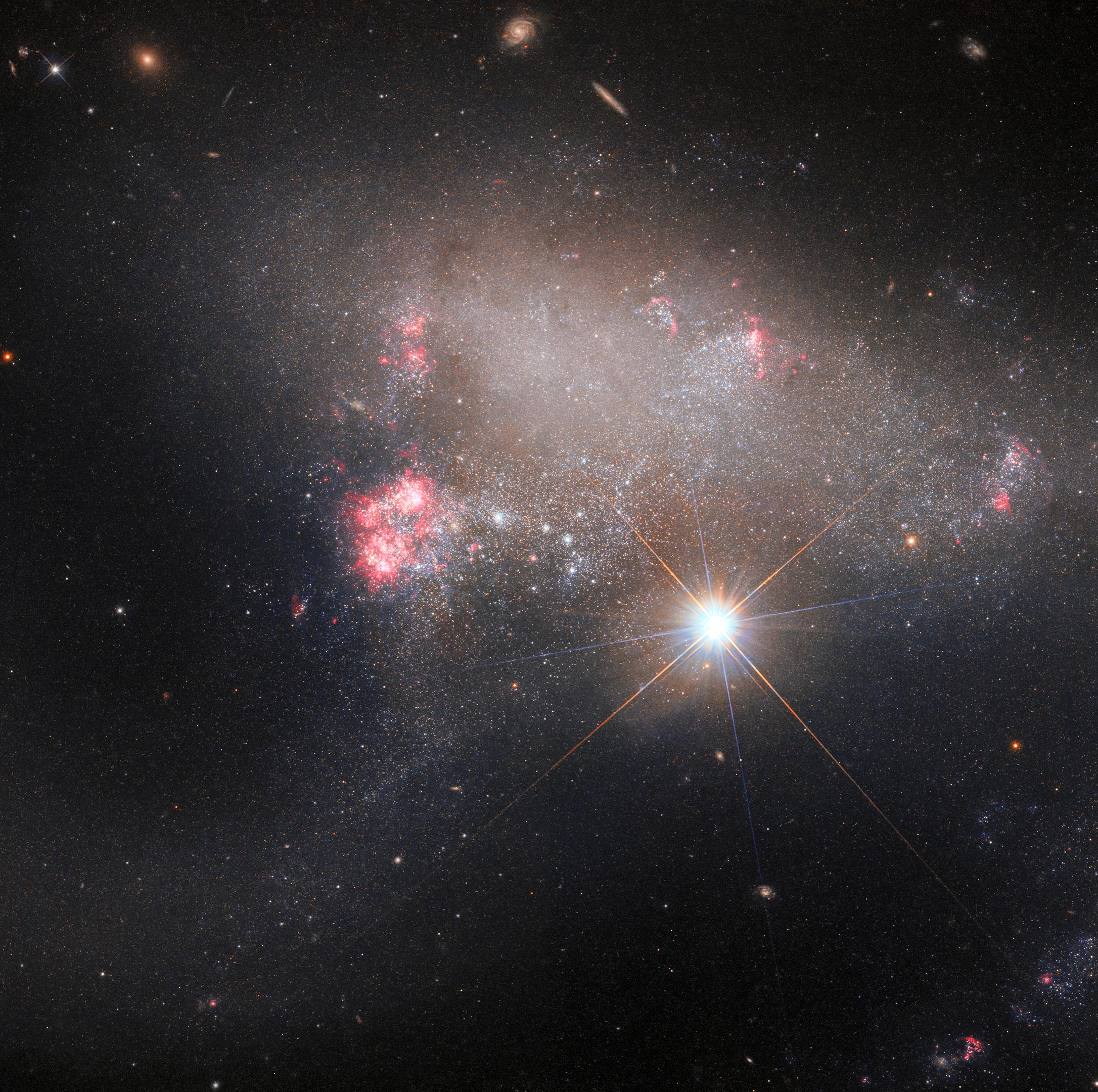
The Hubble Space Telescope has captured an image of the irregular galaxy Arp 263, which is believed to have formed from the merger of two galaxies. The image is dominated by the bright star BD+17 2217, which appears as a photobomber in the foreground. Two different investigations using Hubble's instruments contributed to the image, one searching for remnants of supernovae and the other imaging peculiar galaxies in the Arp catalog. The image showcases the unique diffraction spikes caused by Hubble's internal structure.
The Hubble Space Telescope has captured an image of the irregular galaxy Arp 263, featuring a stellar photobomber known as BD+17 2217. Arp 263 is believed to have formed from the merger of two galaxies and is located 25 million light-years away in the constellation Leo. Two different Hubble investigations contributed data to this image, one studying remnants of past supernovae and the other imaging unobserved peculiar galaxies in the Arp catalog. The image shows unique crisscrossing diffraction spikes around BD+17 2217 due to the interaction of light with Hubble's internal structure and different orientations during data collection.
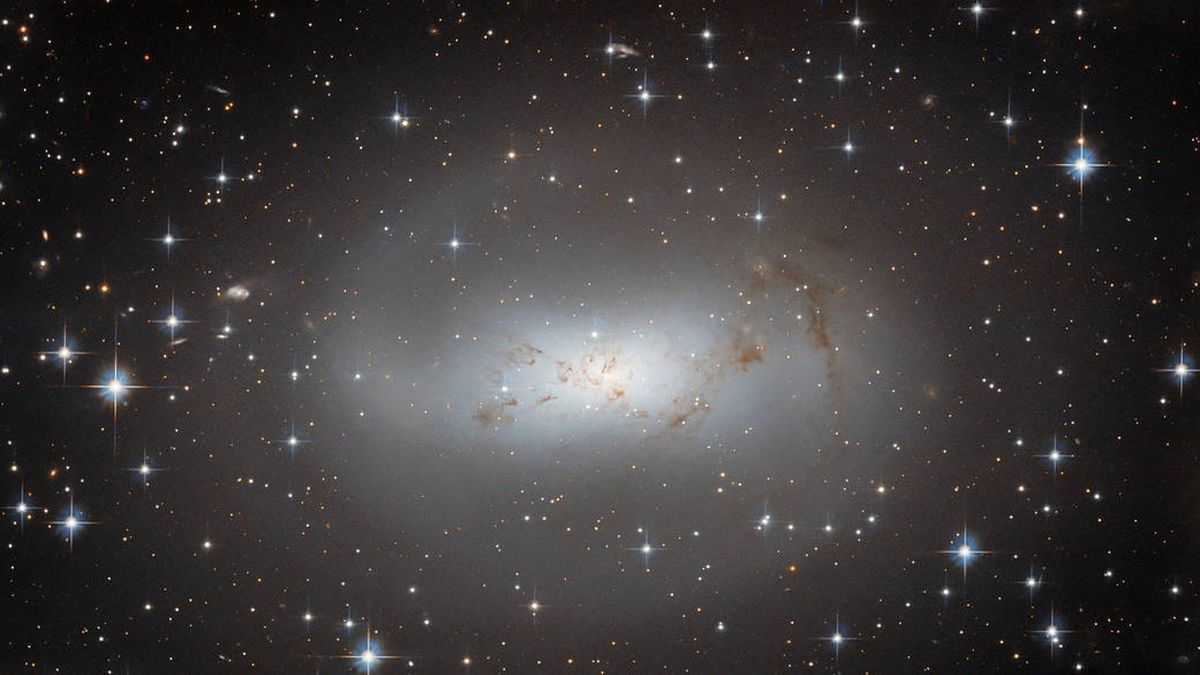
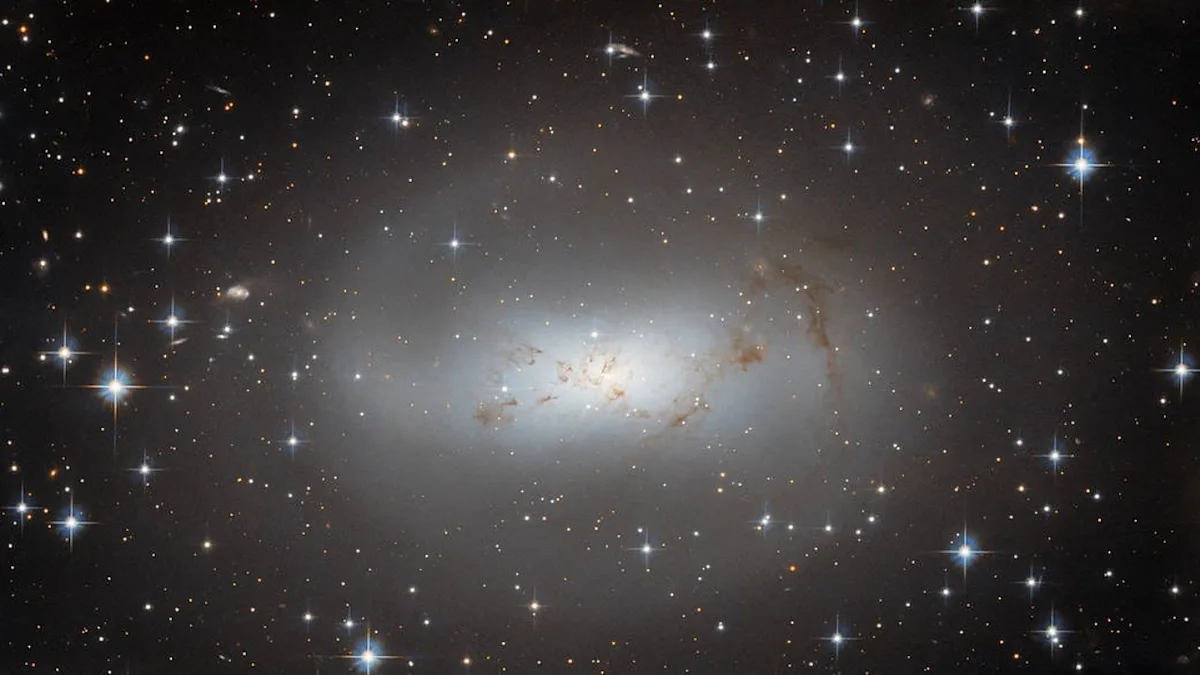
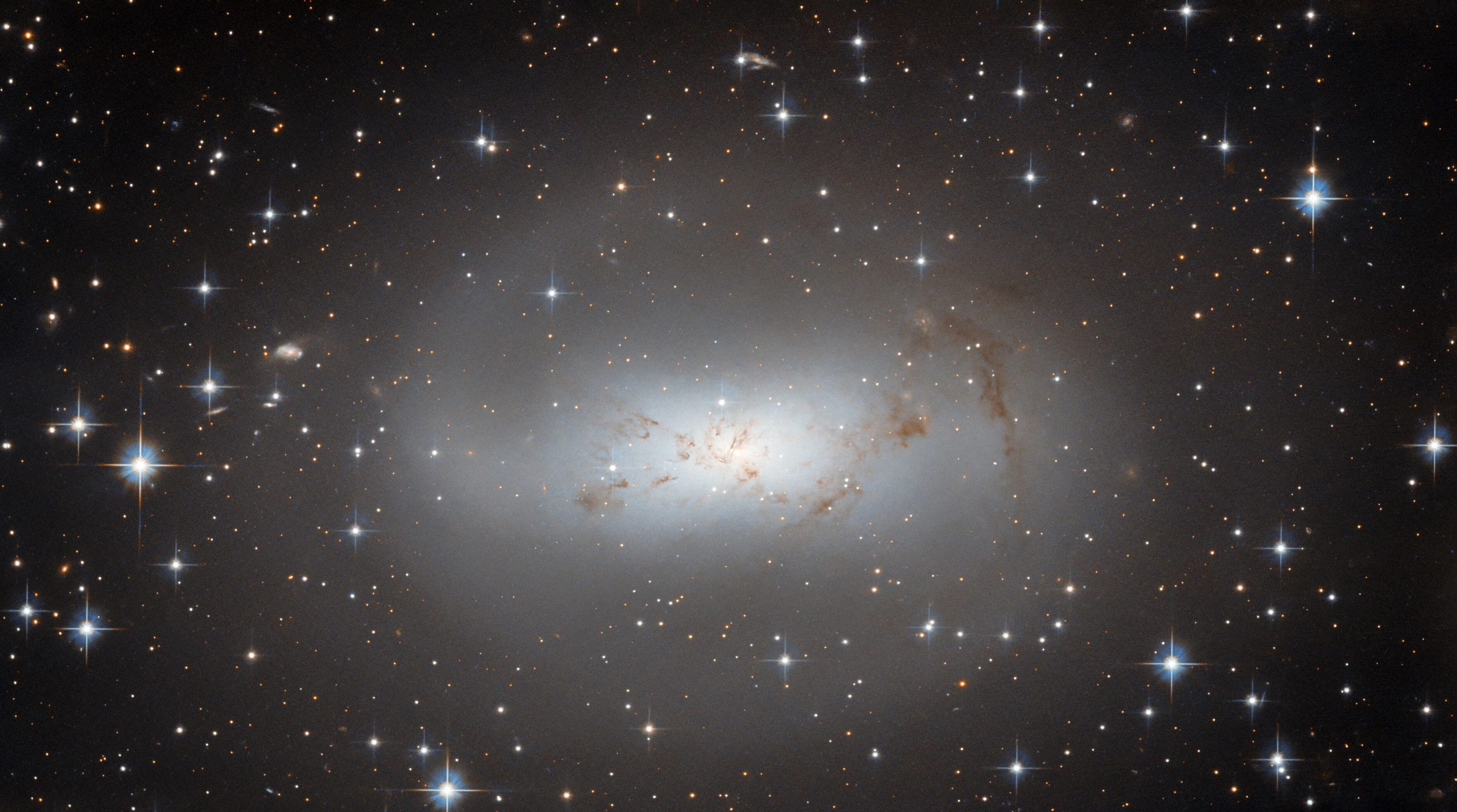
The Hubble Space Telescope has captured a detailed image of the irregular galaxy ESO 174–1, one of the Milky Way galaxy's closest neighbors. The image reveals a wispy cloud of milky white gas surrounded by bright stars, with other stars and a dark tendril of gas and dust visible within the galaxy. This observation is part of a program to better understand the galactic population of the Milky Way's surroundings. The irregular shape of ESO 174–1 is believed to be the result of interactions or collisions between galaxies, and studying neighboring galaxies can help scientists understand the basic characteristics of local galaxies.
The Hubble Space Telescope has captured a detailed image of the irregular galaxy ESO 174–1, one of the Milky Way galaxy's closest neighbors. The image reveals a wispy cloud of milky white gas surrounded by bright stars, with other stars and a dark tendril of gas and dust visible within the galaxy. This observation is part of a program to better understand the galactic population of the Milky Way's surroundings. The irregular shape of ESO 174–1 suggests it may have been formed through interactions or collisions with other galaxies. The program aims to study the brightest stars of every known galaxy within 32 million light-years of the Milky Way.
The Hubble Space Telescope has captured a detailed image of the irregular galaxy ESO 174-1, located 11 million light-years away. This image is part of a program to study all known galaxies within 32 million light-years, using the telescope's downtime for observing hard-to-schedule celestial bodies. ESO 174-1 appears as a bright cloud of stars with a faint, meandering tendril of dark gas and dust. The program aims to resolve the brightest stars and basic properties of every known galaxy within 10 megaparsecs, helping maximize Hubble's observing time.