Airlines including American, Southwest, Delta, United, and JetBlue are waiving flight-change fees and fare differences for flights in the mid-Atlantic and Northeast U.S. ahead of a major coastal storm, with minimal delays or cancellations reported.
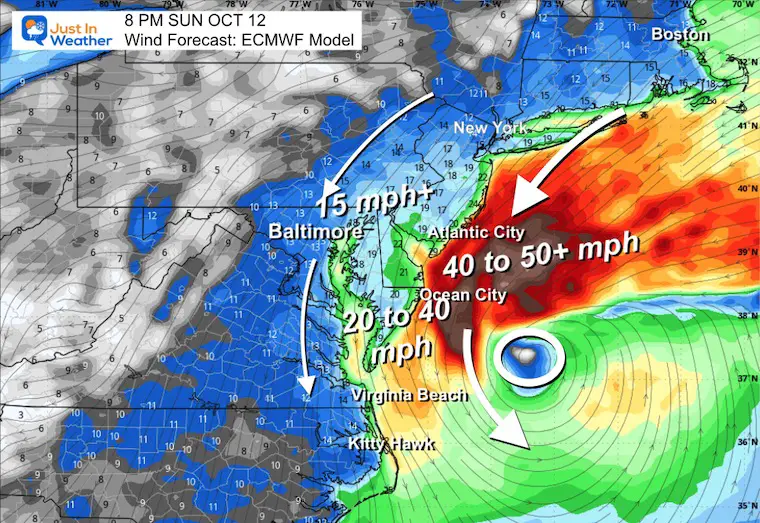
A rare coastal storm is developing with a looping track over the Mid-Atlantic, making rainfall predictions challenging. The storm involves the interaction of two short waves in the jet stream, potentially stalling or looping for days, with rain expected from Saturday through Tuesday. Multiple weather models show a wide range of possible rainfall totals, emphasizing the uncertainty in exact impacts.
A rocket launch from NASA's Wallops Island in Virginia is scheduled for Tuesday night, weather permitting, and may be visible in the skies of eastern Pennsylvania, New Jersey, and the Mid-Atlantic region, with vapor-tracing clouds enhancing visibility and tracking of atmospheric winds.
Hurricane Erin, a Category 3 storm in the Atlantic, has prompted the closure of beaches in New Jersey and Delaware due to dangerous rip currents, which have already caused at least one death, as the storm affects the East Coast despite moving away from it.
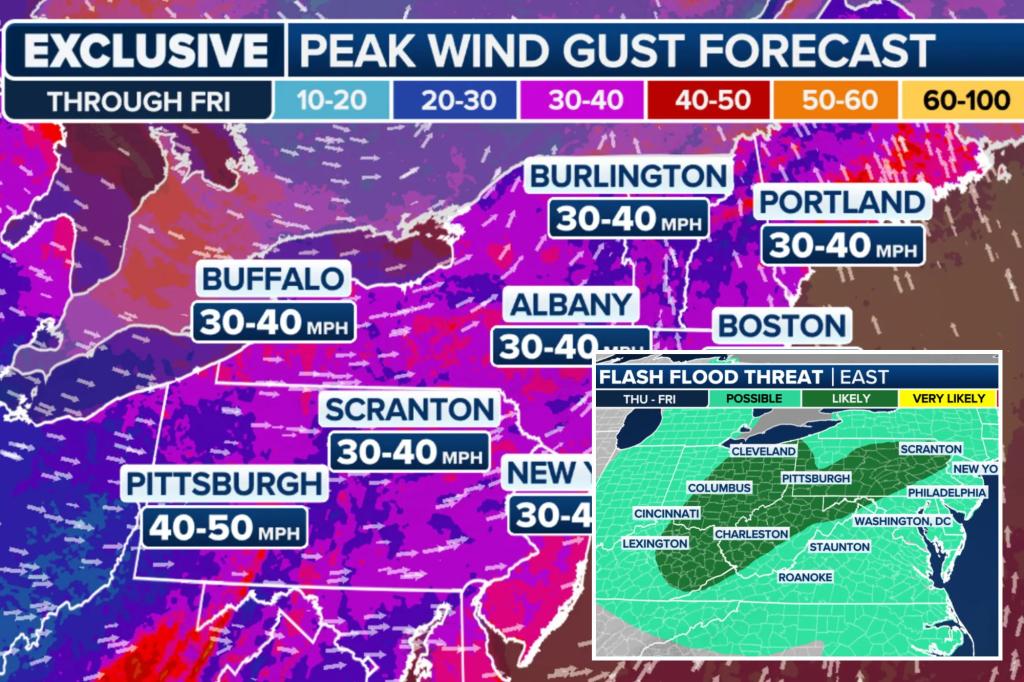
A severe weather system is threatening the Mid-Atlantic and Southeast regions of the US with heavy rainfall, flash floods, damaging winds, and isolated tornadoes, impacting major cities like Washington D.C., Philadelphia, Baltimore, and Richmond, amid ongoing catastrophic flooding in Texas and New Mexico.
Roy Rogers, once a dominant fast food chain in the Northeast and Mid-Atlantic with over 600 locations in the 1990s, is experiencing a resurgence with plans to reopen and expand in areas like South New Jersey and Northern Virginia, after years of decline following its acquisition by Hardee's. The brand is slowly regaining its presence, with around 40 locations now, signaling a hopeful revival for fans of its classic menu.
Researchers warn that babesiosis, a malaria-like disease spread by ticks, is spreading in the mid-Atlantic US due to climate change, and doctors may be unprepared for the rise in cases, highlighting the need for increased awareness and public health measures.
A severe heat wave continues to affect the eastern U.S., with peak conditions shifting to the Mid-Atlantic over the weekend. Cities like Philadelphia and Washington, D.C. could see temperatures reach 100 degrees, with heat indexes over 105. Over 200 million people are expected to experience highs of at least 90 degrees, posing significant health risks.
Severe storms in the mid-Atlantic region brought large hail, damaging winds, and heavy rain, with reports of golf ball-sized hail in Virginia and wind gusts of over 50 mph in Richmond. The storms led to power outages and a ground stop at Dulles International Airport. The threat of severe weather is expected to continue through Monday night but is likely to diminish as Tuesday approaches.
A powerful storm system is expected to bring heavy rain and the threat of flooding to the Northeast and mid-Atlantic regions, with 1-2 inches of rain forecasted for areas from the mid-Mississippi Valley to the Great Lakes. The ground is already saturated from relentless rain earlier in the year, increasing the risk of flash flooding. Coastal flood alerts have been issued along the East Coast, with onshore winds and higher tides threatening communities along the shore. Additionally, the risk of flooding due to rain and snowmelt continues in northern New England, Ohio, and Indiana.
A severe weather outbreak spanning from Texas to the Ohio Valley and the Southeast has now shifted to the East Coast, particularly affecting parts of Virginia and Florida. While the risk of severe weather has decreased from previous days, nearly 30 million people in the mid-Atlantic region and North and Central Florida still face the potential for damaging wind gusts, large hail, and a few tornadoes. The storm system is fast-moving, with thunderstorms moving east at over 50 mph, and is expected to move off the East Coast by sunset. Additionally, the article notes that April typically sees an increase in severe weather outbreaks, and this year's tornado activity is below average while hail and damaging wind reports are closer to average.
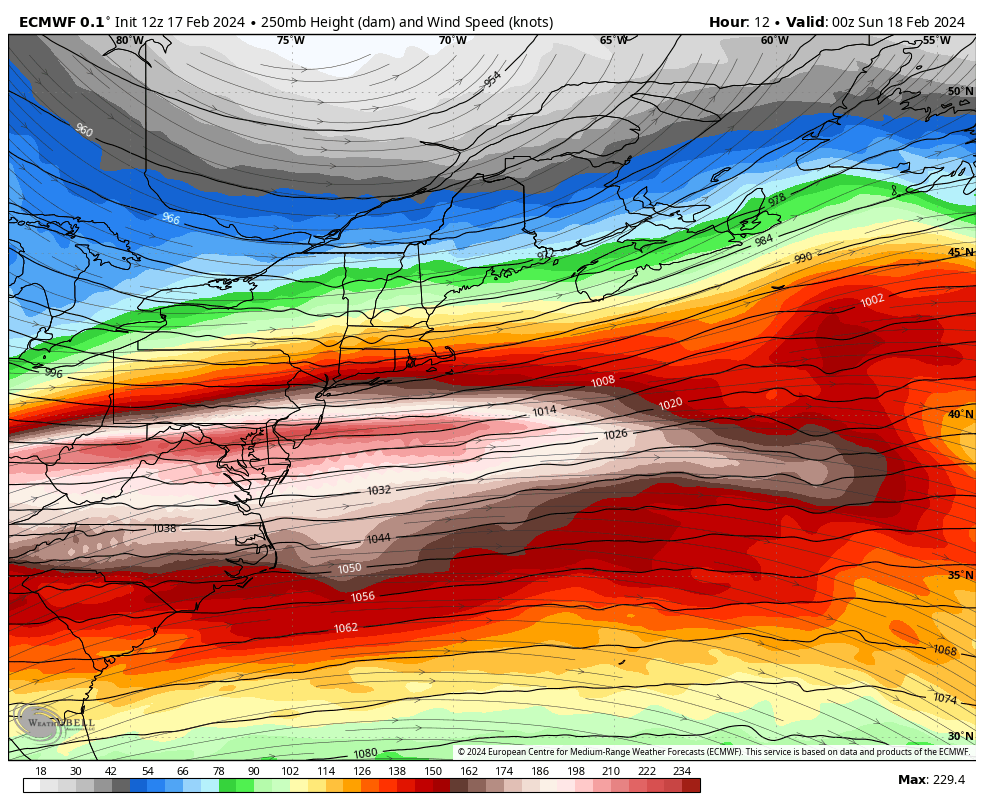
Near-record winds of 265 mph at 35,000 feet over the Mid-Atlantic allowed commercial flights to reach speeds over 800 mph, with one flight from Washington to London landing 45 minutes ahead of schedule. The high winds were caused by a powerful jet stream resulting from the contrast between cold air over the Northeast and warm air over the Southeast. The fast high-altitude flow also contributed to less snowfall than predicted in Washington.
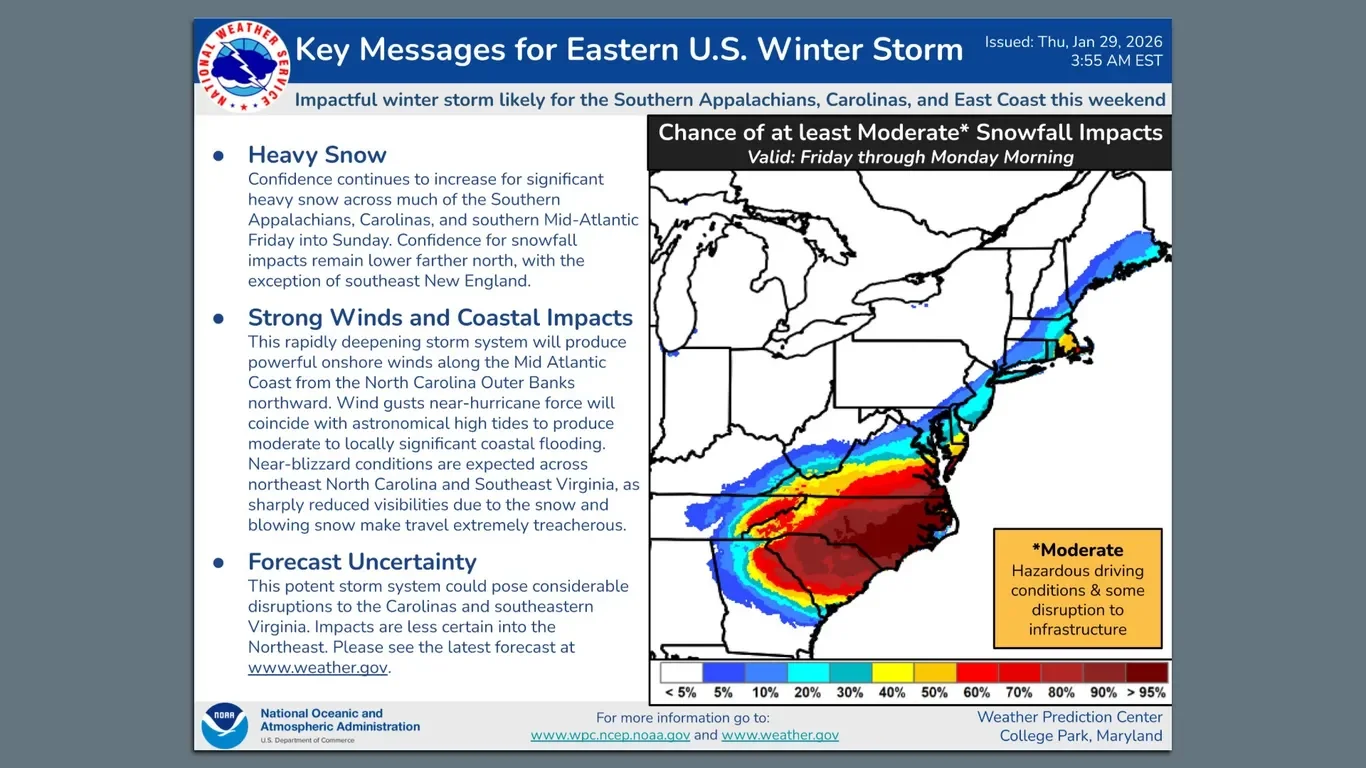
A fast-moving snowstorm surprised the Northeast and Mid-Atlantic, dumping several inches of snow over about a dozen states from Illinois to Connecticut, with some areas receiving a foot or more. The storm proved underwhelming in some areas that expected more snow, while others saw more than anticipated. Major hubs like New York City and Philadelphia were affected, with snow accumulations and hazardous travel conditions. The bulk of the snow is expected to exit the New York City region through Saturday.
A fast-moving storm system is expected to bring several inches of snow to the Northeast and Mid-Atlantic regions, with New York City expecting two to four inches overnight Friday into Saturday morning. Parts of West Virginia and Maryland could see up to 10 inches of snow, with travel impacts and reduced visibility likely. This storm follows a previous one earlier in the week, and temperatures are expected to result in a more powdery snow compared to the previous storm.
A new snowmaker is expected to bring significant snowfall to the mid-Atlantic region, including Washington, D.C., Baltimore, and Philadelphia, with potential travel disruptions and risky conditions. The storm will move across the Midwest on Friday and reach the mid-Atlantic Friday night, with areas like New Jersey and Maryland expected to see significant accumulation. Snowfall of 2-5 inches is forecast for Washington, D.C., Baltimore, and Philadelphia, with the possibility of heavier snow rates in some areas. The snow is expected to taper off by Saturday morning, with scattered snow showers continuing into the evening.