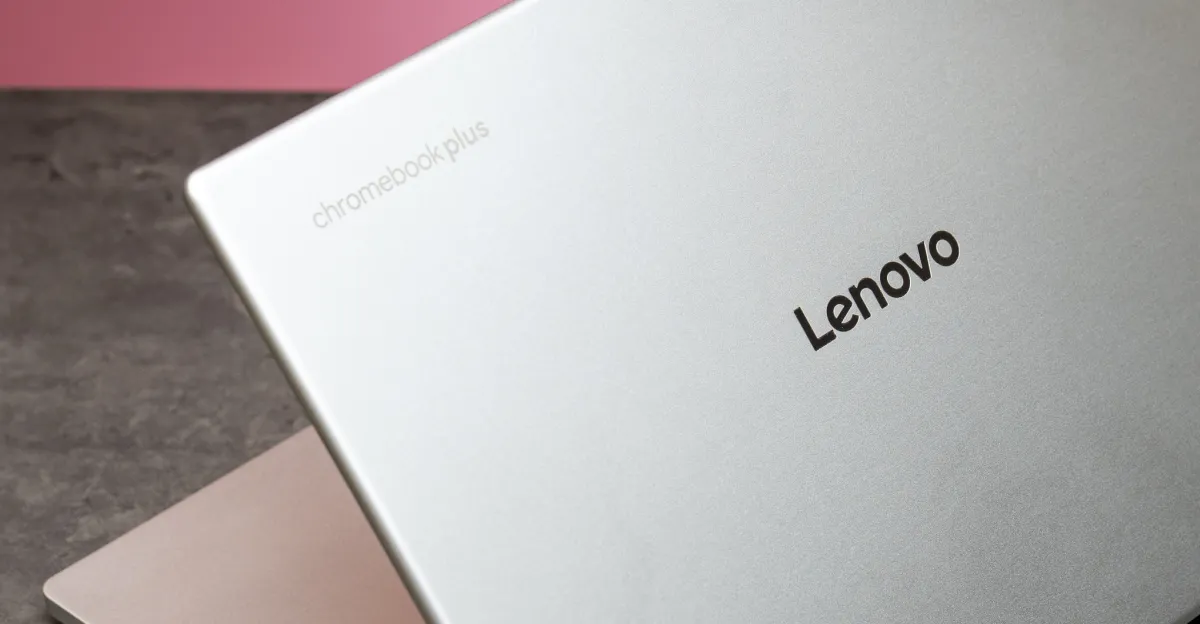
Google is merging ChromeOS and Android into a single platform to unify their strengths—Android's vast app ecosystem and ChromeOS's excellent window management—addressing compatibility issues and improving user experience on large screens like Chromebooks.
A study published in Nature reveals that the bright gamma-ray burst GRB 230307A was caused by the merging of two neutron stars, not from a collapsing massive star as previously believed. This finding challenges existing theories about the origins of gamma-ray bursts and provides insight into the creation of heavy elements in the universe. The study, which analyzed data from the Hubble Space Telescope and the James Webb Space Telescope, suggests that further research on the formation of these elements could enhance our understanding of the universe's origins.
The Iowa Department of Transportation released a video showing a scary crash on Interstate 380, where a car merging into the left lane caused a collision with a truck, resulting in damage to a trailer and a Highway Helper vehicle. Although there were no serious injuries, the incident serves as a reminder for drivers to be cautious when moving over for stopped vehicles and to be aware of their surroundings on the road. Iowa law requires drivers to make a lane change or reduce speed when approaching a stationary vehicle with flashing lights.
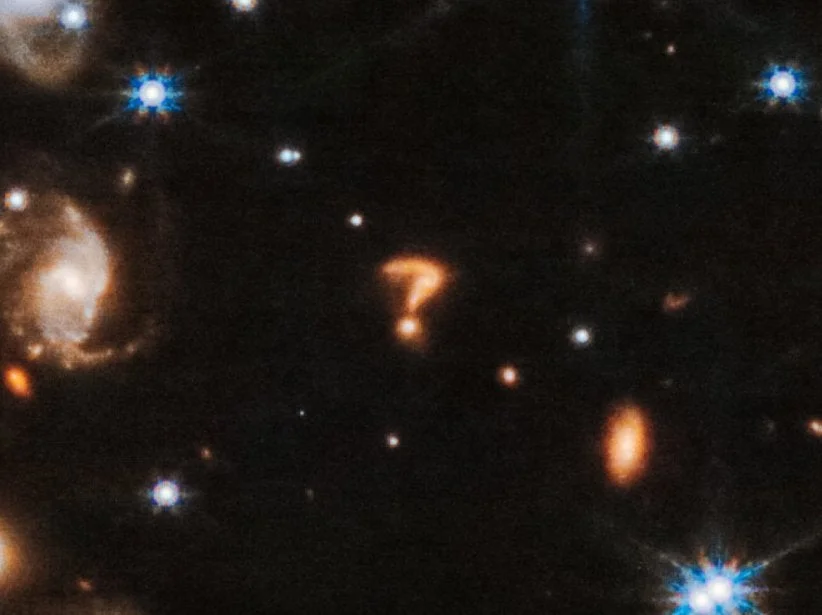
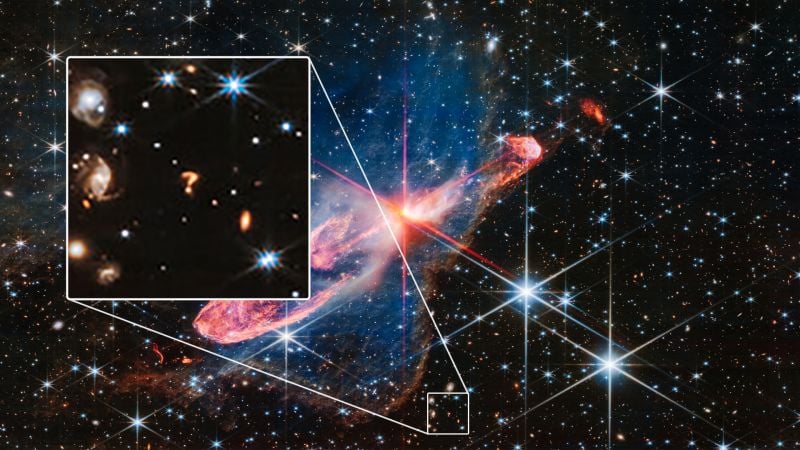
The James Webb Space Telescope captured an image of what appears to be a giant question mark floating in space, but experts at the European Space Agency have identified it as a pair of merging galaxies. The upper region of the galaxies is distorted, creating the question mark shape. The image, taken of stars named Herbig-Haro 46/47, reveals fiery orange material believed to be gasses and dust surrounding stars. The Webb telescope has exceeded expectations and is expected to make more stunning observations in the future.
The James Webb Space Telescope captured an image of a mysterious question mark shape in deep space, which has gone viral on social media. However, experts explain that this phenomenon is a result of pareidolia, where the human brain perceives recognizable shapes in random patterns. The shape is likely formed by merging galaxies, a common occurrence in the universe, which can create tidal tails that appear curved. The image, showing the star forming cloud Herbig-Haro 46/47, provides valuable insights for scientists studying these processes.
NASA's James Webb Space Telescope captured an image of a pair of young stars named Herbig-Haro 46/47, but it also revealed a cosmic object in the shape of a glowing question mark in the background. Scientists believe it could be a merger of two galaxies billions of light-years away, as galaxies often collide and distort into various shapes. While the specific object is new, similar shapes have been observed before. The question mark shape may indicate a gravitational interaction between the galaxies, and further spectroscopic data could provide more information about its distance and composition.
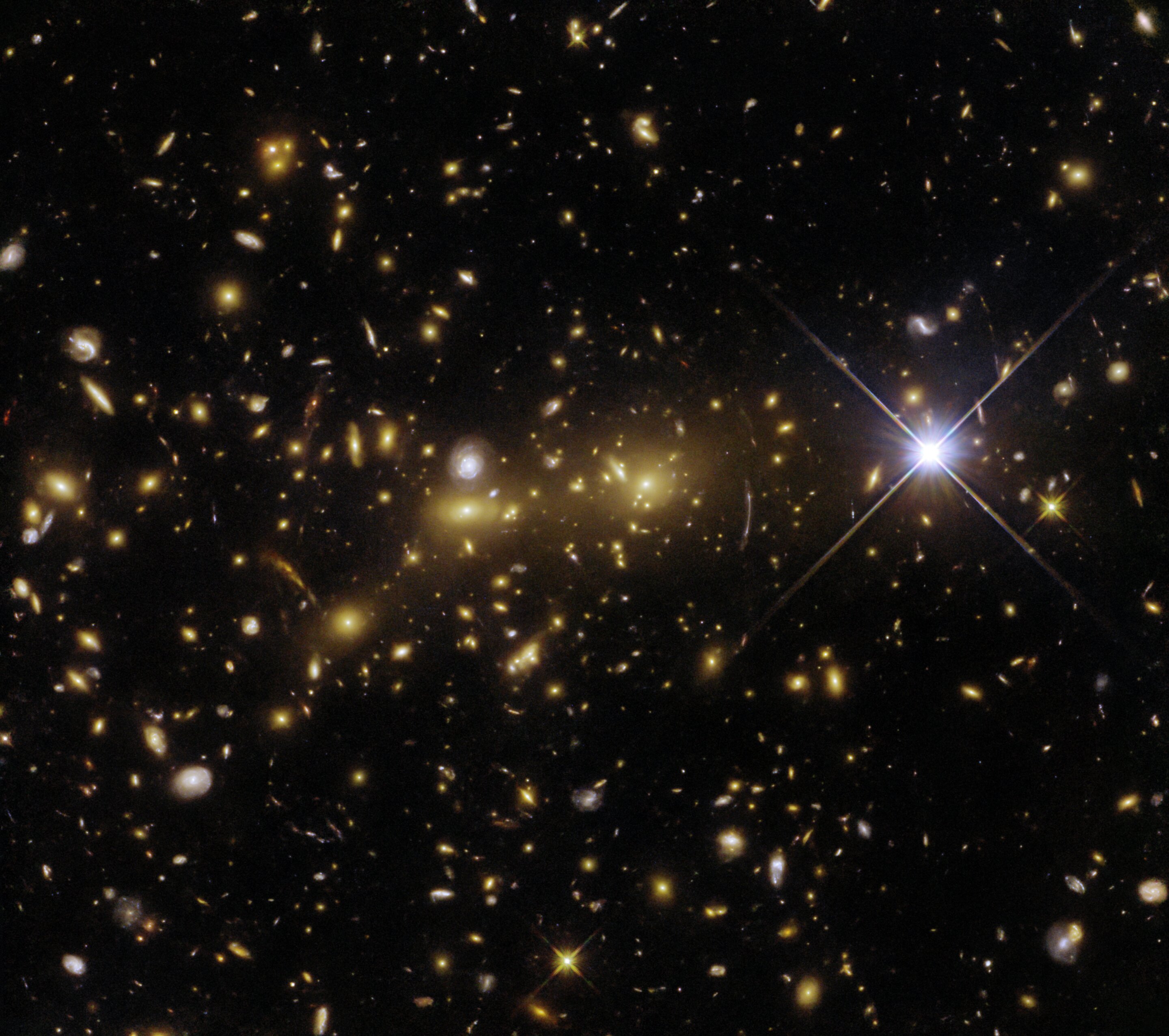
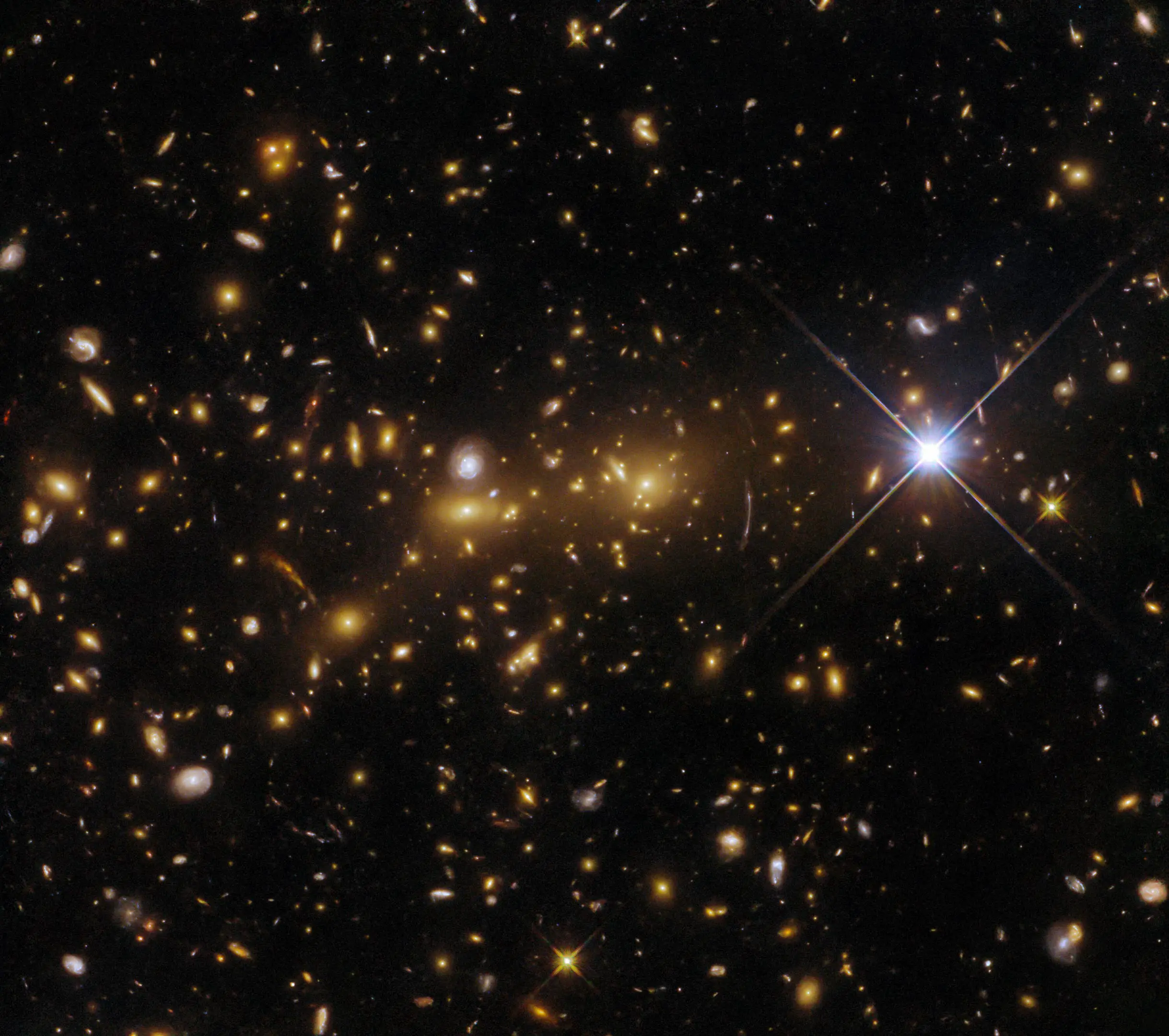
The Hubble Space Telescope has captured an exceptional galaxy cluster, eMACS J1353.7+4329, located eight billion light-years away. This cluster is in the process of merging to create a single gargantuan cluster, acting as a gravitational lens. Gravitational lensing, a phenomenon predicted by Einstein's theory of relativity, distorts spacetime and allows astronomers to observe faint and distant objects. The data from this observation will contribute to future studies of gravitational lenses using telescopes like the James Webb Space Telescope.
The Hubble Space Telescope has observed the galaxy cluster eMACS J1353.7+4329, located eight billion light-years away, as it merges to form a massive cluster acting as a gravitational lens. Gravitational lensing, a phenomenon predicted by Einstein's general theory of relativity, causes the path of light to be bent around massive celestial bodies. The observations of eMACS J1353.7+4329 provide valuable insights into the formation and behavior of galaxy clusters, and lay the groundwork for future studies using advanced telescopes like the James Webb Space Telescope.