Tag

Mantle Convection

All articles tagged with #mantle convection

Scientists Discover Mysterious Gravity Anomaly Under Indian Ocean

Originally Published 5 months ago — by The Daily Galaxy

Featured image for Scientists Discover Mysterious Gravity Anomaly Under Indian Ocean
Source: The Daily Galaxy

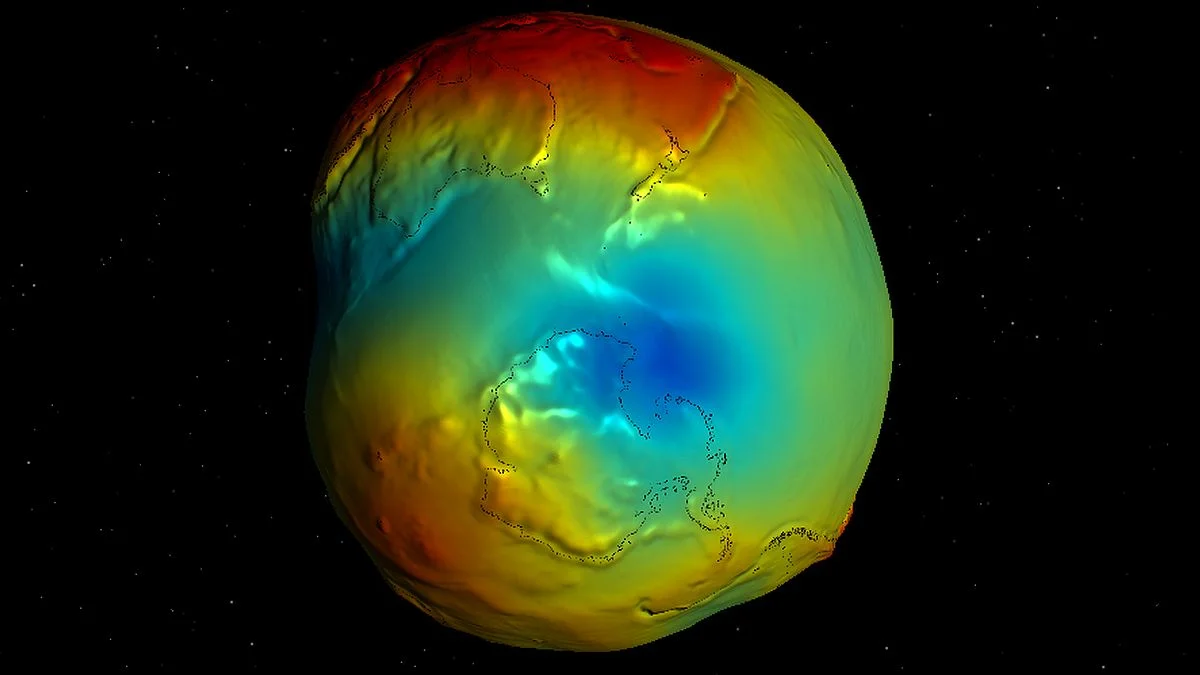
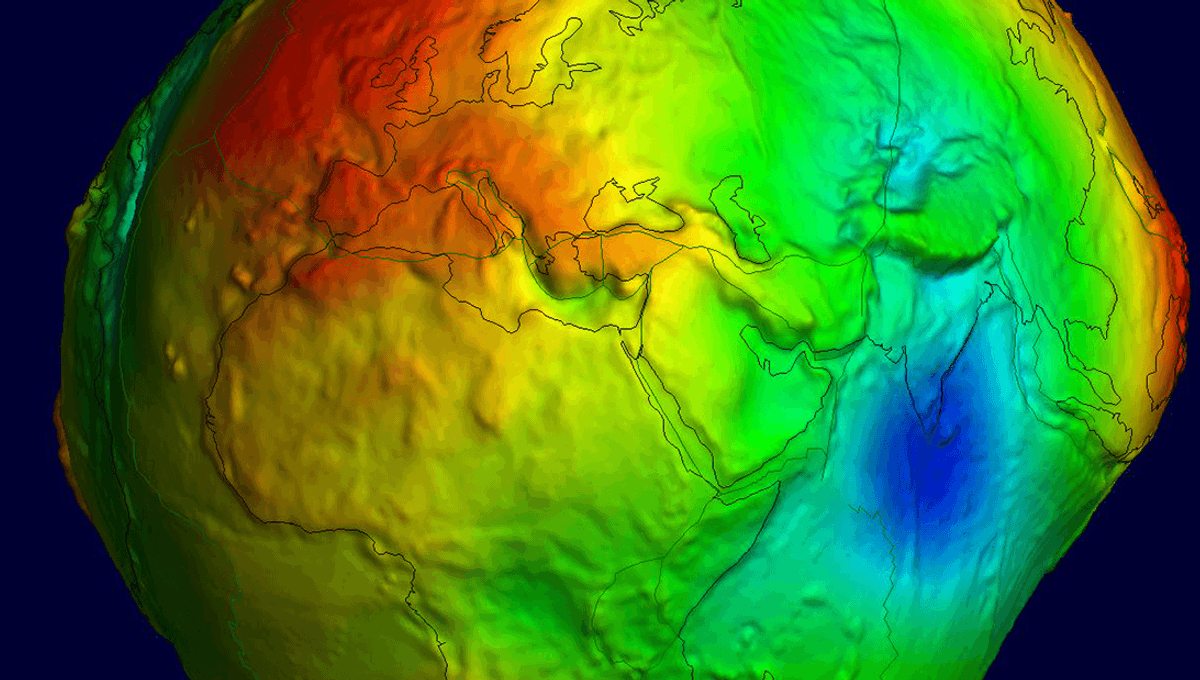
Scientists have uncovered that a massive gravity anomaly beneath the Indian Ocean, known as the Indian Ocean Geoid Low, is caused by ancient mantle convection processes and the influence of the African superplume, revealing a complex interaction between deep Earth processes and surface features.

Scientists Uncover 75-Year-Old Mystery of Indian Ocean's 'Gravity Hole'

Originally Published 5 months ago — by The Brighter Side of News

Featured image for Scientists Uncover 75-Year-Old Mystery of Indian Ocean's 'Gravity Hole'
Source: The Brighter Side of News

Scientists have solved the 75-year-old mystery of the Indian Ocean Geoid Low, a massive gravity anomaly, by demonstrating that mantle convection and hot, low-density material rising from the African superplume cause the gravity low, with simulations tracing its formation back 140 million years. This discovery enhances understanding of Earth's deep interior and its dynamic processes.

Hidden Deep Earth Blobs Could Trigger Future Extinctions and Volcanic Eruptions

Originally Published 5 months ago — by Yahoo

Featured image for Hidden Deep Earth Blobs Could Trigger Future Extinctions and Volcanic Eruptions
Source: Yahoo

A new study suggests that large basal structures in Earth's mantle, called BLOBS, are likely to move slowly over time, which could influence the location of massive volcanic eruptions and potentially impact future mass extinctions. Researchers reconstructed Earth's mantle dynamics over billions of years, finding that BLOBS drift at about one centimeter per year, affecting mantle plumes and volcanic activity.

Scientists Uncover Hidden Heat Plumes in Earth's Core After 50 Years

Originally Published 6 months ago — by The Daily Galaxy

Featured image for Scientists Uncover Hidden Heat Plumes in Earth's Core After 50 Years
Source: The Daily Galaxy

Scientists at ETH Zurich have solved the long-standing mystery of the Earth's D” layer by discovering that solid rock flows slowly inside the mantle, aligning minerals like post-perovskite, which accelerates seismic waves and confirms mantle convection at extreme depths, revealing dynamic processes deep within Earth.

Swift and Surprising: The Speed of Early Plate Tectonics

Originally Published 2 years ago — by Ars Technica

Featured image for Swift and Surprising: The Speed of Early Plate Tectonics
Source: Ars Technica

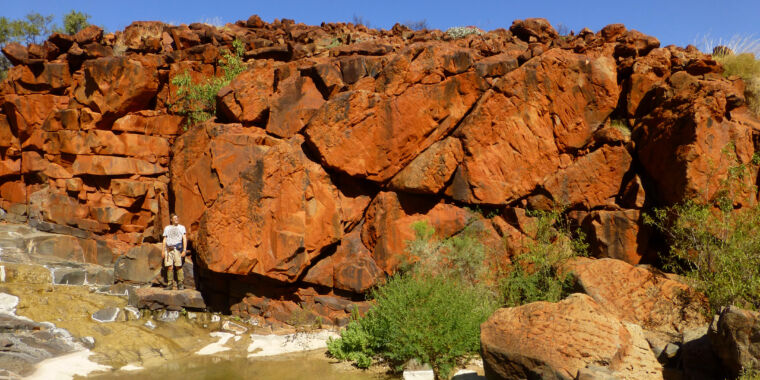
A new study led by Dr. Jennifer Kasbohm of Yale reveals that the Pilbara Craton, an early continent, moved at a rapid pace of up to 64 centimeters (25 inches) per year around 2.7 billion years ago. By analyzing ancient magnetic fields and dating rocks from Western Australia, the researchers aimed to understand the nature of plate tectonics during the Archean eon. The findings suggest that early plate tectonics may have been faster due to the hotter mantle and its impact on mantle convection. The study, which took a decade to complete, provides valuable insights into the movement of ancient continents and the evolution of Earth's tectonic processes.

Earth's Plate Tectonics: A Recent Fundamental Shift

Originally Published 2 years ago — by SciTechDaily

Featured image for Earth's Plate Tectonics: A Recent Fundamental Shift
Source: SciTechDaily

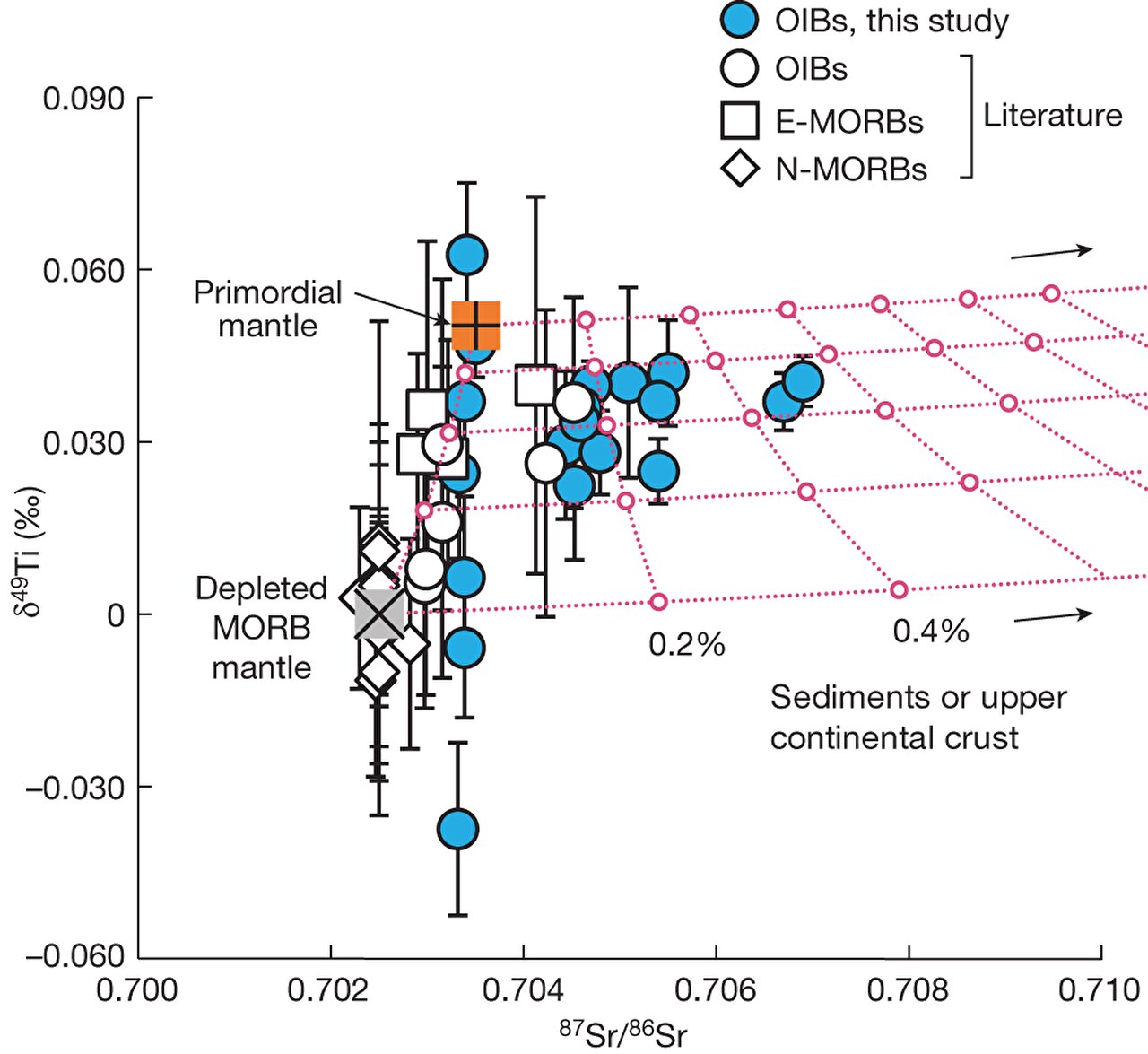
A recent study from the University of Copenhagen suggests that Earth's plate tectonics may be a more recent phenomenon, with the mantle previously stratified into upper and lower regions that were isolated from each other. The researchers developed a new method to measure the isotopic composition of titanium in rocks, which allowed them to trace the recycling of surface material in Earth's mantle over billions of years. The findings indicate that the lower mantle could contain undisturbed primordial material, potentially providing insights into Earth's original composition and the source of volatiles essential for life.

Earth's Plate Tectonics: Recent Shifts and Ancient Origins

Originally Published 2 years ago — by Phys.org

Featured image for Earth's Plate Tectonics: Recent Shifts and Ancient Origins
Source: Phys.org

A new study suggests that Earth's plate tectonics may be a more recent feature of its geologic history. Researchers from the University of Copenhagen found evidence that convection in the mantle was stratified into upper and lower mantle regions that were isolated from each other for most of Earth's history. This is in contrast to the current understanding of plate tectonics, where subducting plates sink to the lower mantle. By analyzing the isotopic composition of titanium in rocks, the scientists were able to trace the recycling and mixing of tectonic plates in Earth's mantle. The study also suggests the existence of a primordial mantle reservoir in the deep Earth, which could provide insights into Earth's original composition and the development of life.

Unraveling the Mystery of the Giant Gravity Hole in the Indian Ocean

Originally Published 2 years ago — by IFLScience

Featured image for Unraveling the Mystery of the Giant Gravity Hole in the Indian Ocean
Source: IFLScience

Researchers from the Indian Institute of Science believe they have discovered the cause of a gravity anomaly in the Indian Ocean. By modeling tectonic plate and global mantle convection over millions of years, they suggest that ancient tectonic plates sinking beneath the ocean have created a plume of hot mantle, which is less dense than the sunken crust. This plume, along with the mantle structure, is responsible for the lower gravity observed in the area.