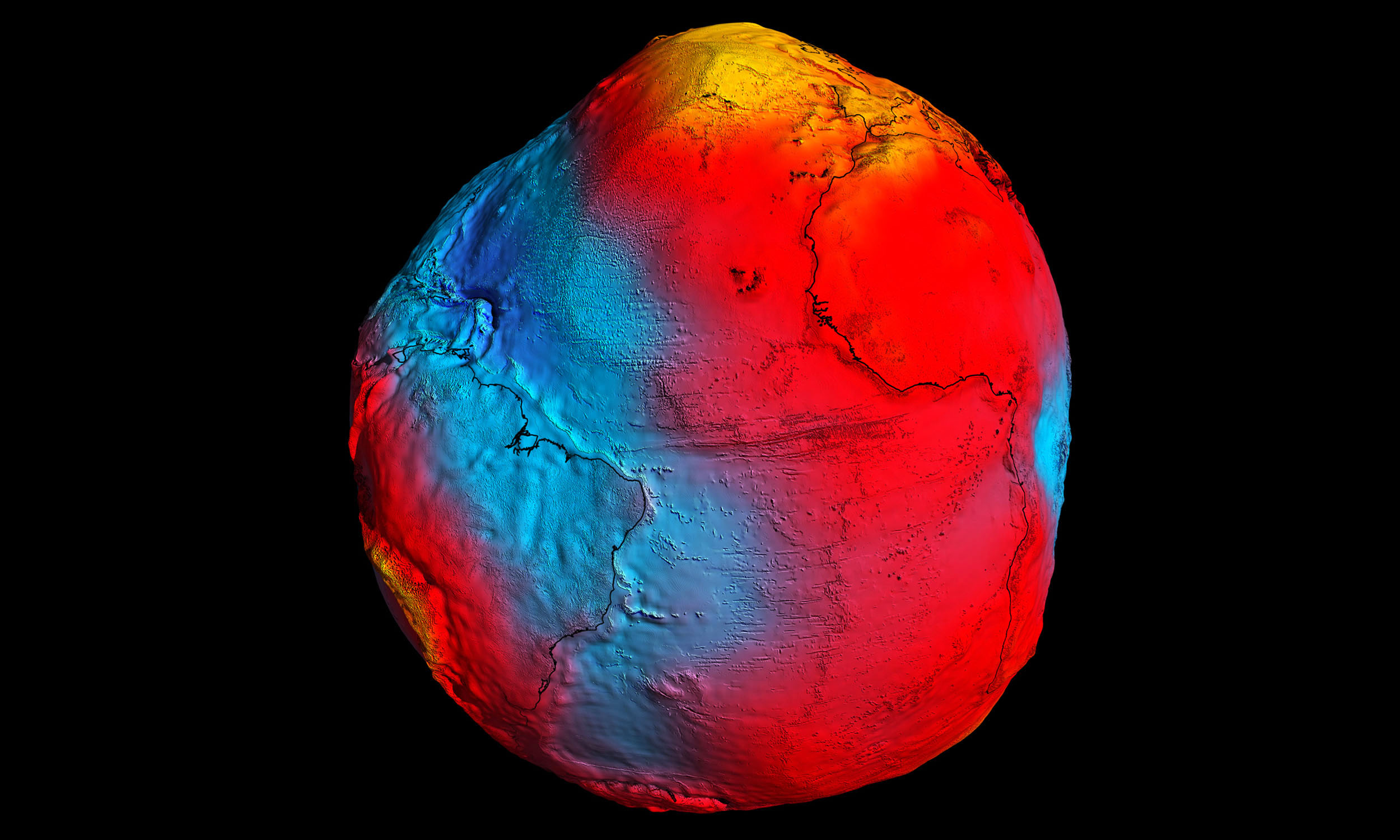
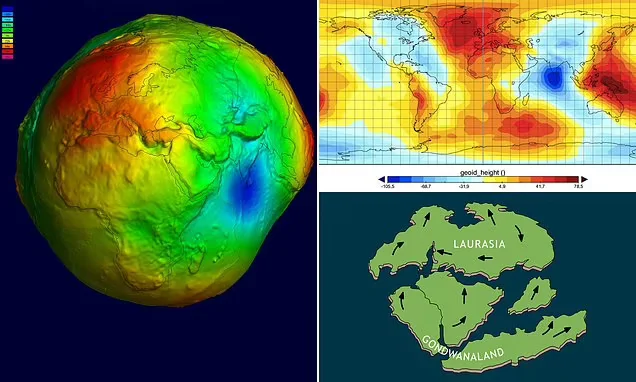
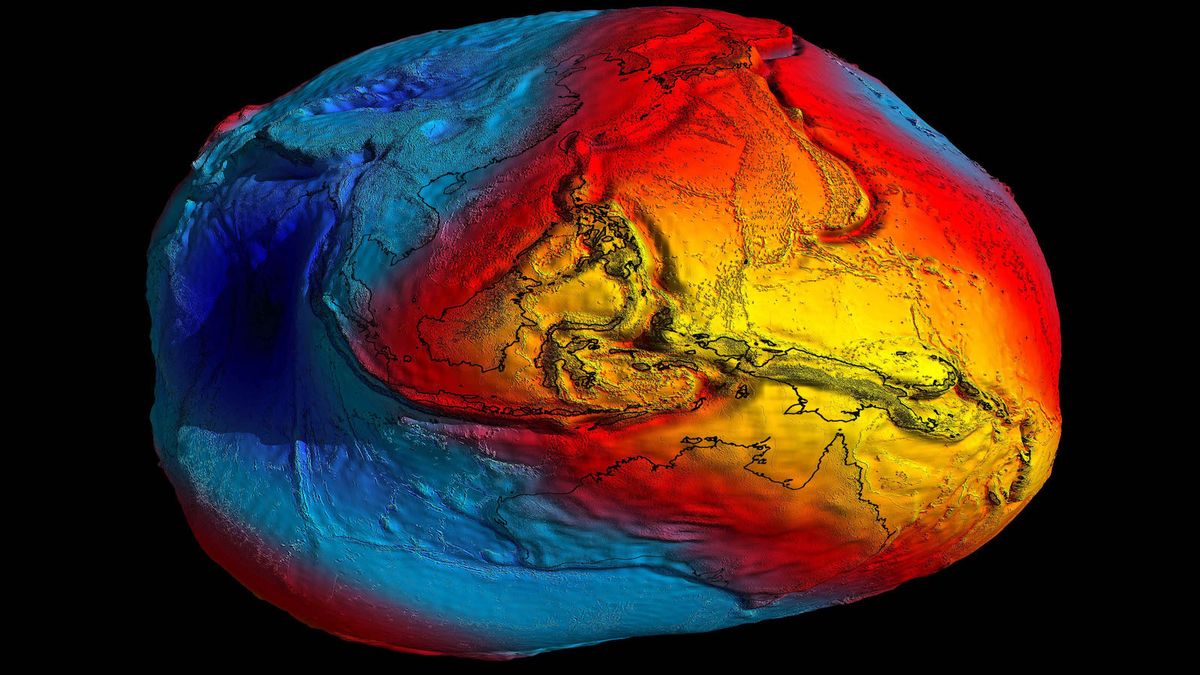
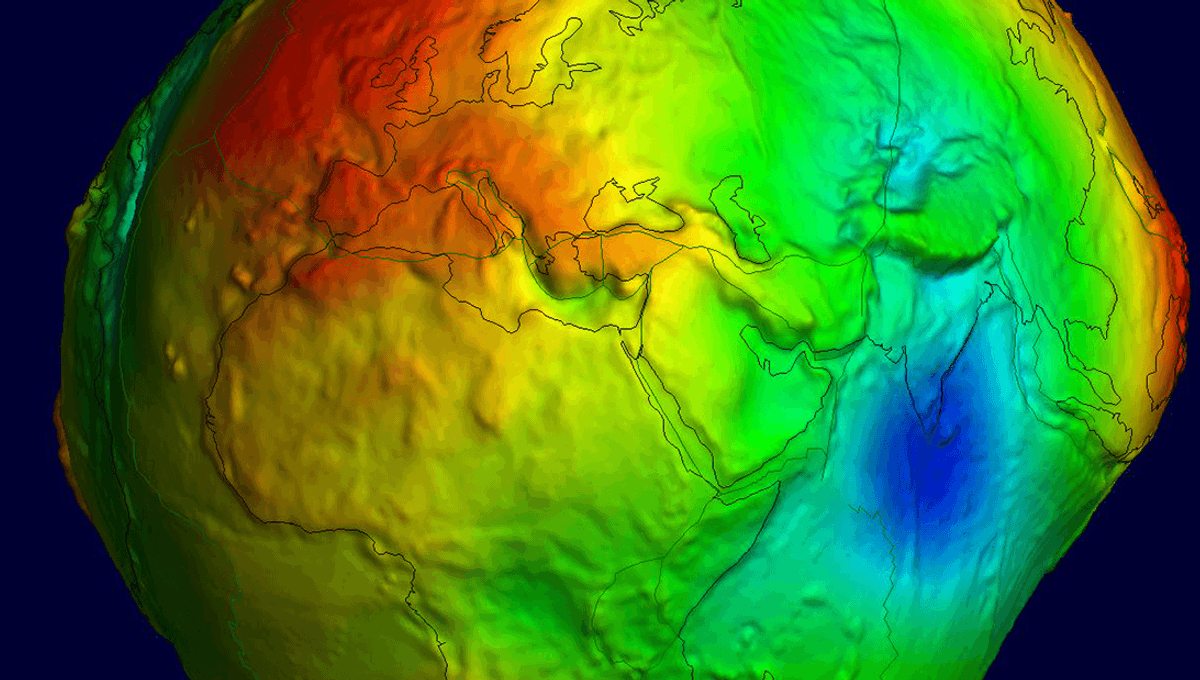
Scientists have identified the cause of the Indian Ocean Geoid Low, a large gravity anomaly, as deep mantle processes involving ancient subducted slabs and buoyant plumes beneath Africa, which have reshaped Earth's gravity field over the past 20 million years.
Scientists have uncovered that a massive gravity anomaly beneath the Indian Ocean, known as the Indian Ocean Geoid Low, is caused by ancient mantle convection processes and the influence of the African superplume, revealing a complex interaction between deep Earth processes and surface features.
Scientists have solved the 75-year-old mystery of the Indian Ocean Geoid Low, a massive gravity anomaly, by demonstrating that mantle convection and hot, low-density material rising from the African superplume cause the gravity low, with simulations tracing its formation back 140 million years. This discovery enhances understanding of Earth's deep interior and its dynamic processes.
Researchers from the Indian Institute of Science have used supercomputers to simulate the formation of the Indian Ocean Geoid Low, an area in the Indian Ocean with lower gravitational pull. They discovered that sinking slabs from a prehistoric ocean reaching the Earth's mantle formed plumes, creating the geoid low. The Earth's interior, including the mantle, undergoes convection similar to boiling water, resulting in lumps called geoids. While the study has limitations due to uncertainties about the Earth's past, understanding the planet's interior is crucial, as we know more about the surfaces of distant stars than our own planet's interior.
Scientists have discovered the cause of a massive 'gravity hole' in the Indian Ocean, which is an area with low gravitational pull causing the seafloor to sink. Researchers from the Indian Institute of Science have found that the hole was formed by plumes of hot, low-density magma rising up beneath the oceanic low. These plumes, along with a distinctive mantle structure, created the geoid low. However, further research is needed to fully understand the phenomenon.
Scientists have discovered a 'gravity hole' in the Indian Ocean, where the sea level is around 340 feet lower than the surrounding area. A team of researchers in India believe that this gravity hole was formed by plumes of low-density magma that rose up from Earth's mantle. These plumes were generated by the remains of a sunken tectonic plate called Tethys, lost when India became part of Asia 50 million years ago. The study used computer simulations to track the movement of tectonic plates and suggests that the violent interactions between these plates may hold clues to the existence of this gravitational anomaly.
Scientists have identified the cause of a deep "gravity hole" in the Indian Ocean, where Earth's gravitational pull is weaker. A study suggests that the low-density magma pushed into the Indian Ocean by sinking slabs of an ancient ocean is responsible for the anomaly. Computer models showed that plumes of hot, low-density magma rose up to displace higher-density material beneath the low, reducing the region's mass and weakening its gravity. These plumes originated from a disturbance under Africa, and remnants of seafloor from the ancient ocean of Tethys were pushed under the Indian plate, causing the formation of the plumes. Confirmation of the plumes' existence will require earthquake data collected from the area.
Scientists from India's Institute of Science have proposed a potential explanation for the mysterious gravity hole in the Indian Ocean. They believe that a cold and dense area, the remains of an old ocean plunged into a "slab graveyard" beneath Africa 30 million years ago, along with plumes of hot and low-density magma, are causing the gravity hole. However, further research is needed to confirm this theory.
Scientists have discovered the cause of a massive 'gravity hole' in the Indian Ocean, which is an area with low gravitational pull causing the seafloor to sink. Researchers from the Indian Institute of Science have found that the hole was formed by plumes of hot, low-density magma rising up beneath the oceanic low. These plumes, along with a distinctive mantle structure, created the geoid low. However, further research is needed to fully understand the phenomenon.
Researchers from the Indian Institute of Science believe they have discovered the cause of a gravity anomaly in the Indian Ocean. By modeling tectonic plate and global mantle convection over millions of years, they suggest that ancient tectonic plates sinking beneath the ocean have created a plume of hot mantle, which is less dense than the sunken crust. This plume, along with the mantle structure, is responsible for the lower gravity observed in the area.
Scientists have long been puzzled by a massive gravity 'hole' in the Indian Ocean, where the seafloor sinks into a depression. Two researchers from the Indian Institute of Science have proposed a new hypothesis, suggesting that the weakening of gravity in this region is caused by plumes of hot, low-density magma rising up from deep beneath the Earth's crust. Computer models of plate motion and mantle movements support this theory, indicating that these plumes, along with a distinctive mantle structure, created the geoid low. However, some researchers remain skeptical until more seismographic evidence is obtained.