

Tag

Archean Eon

All articles tagged with #archean eon

science1 year ago

Unveiling the Surprising Origins of Earth's First Continents

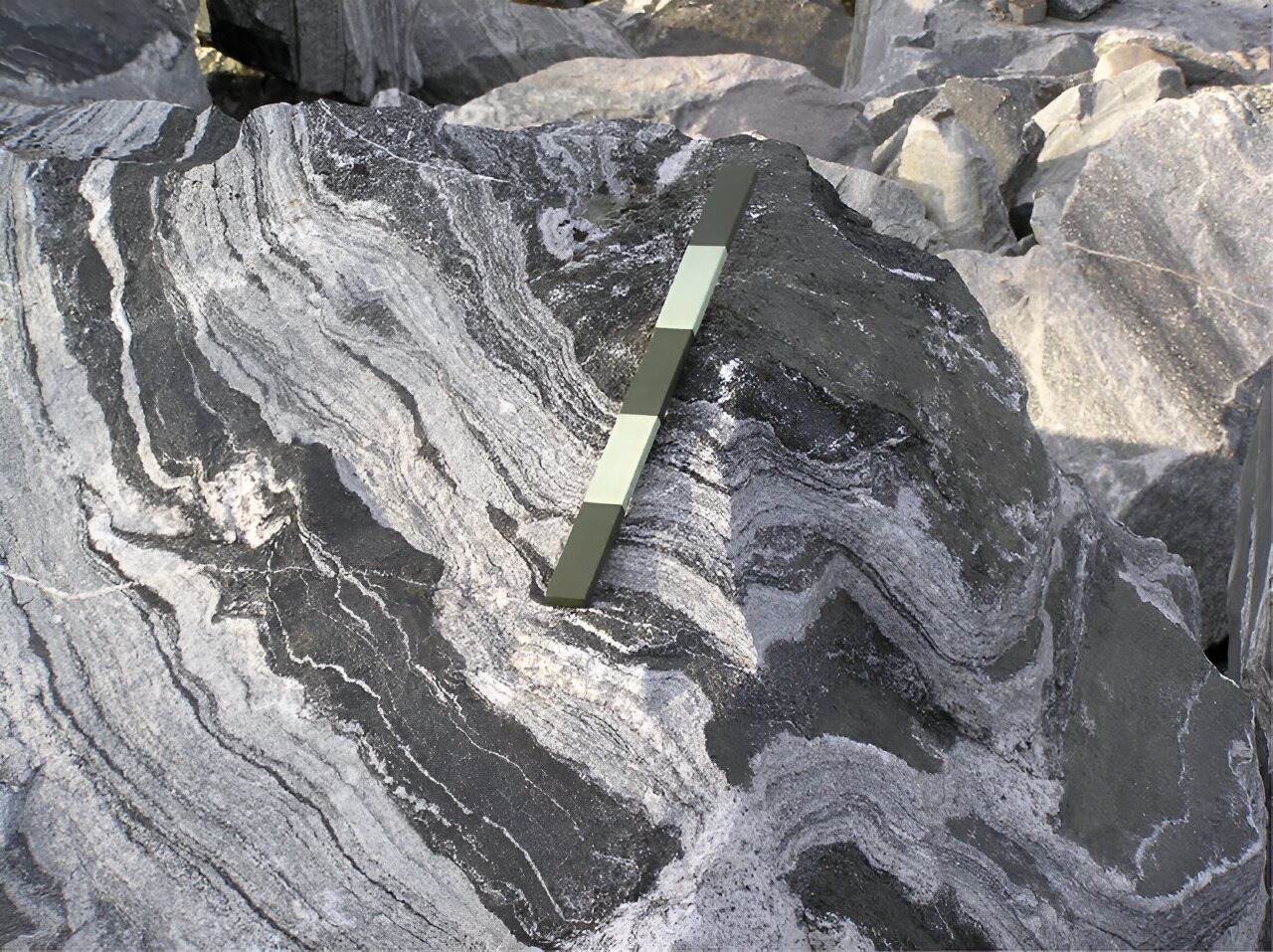
A new study from the University of British Columbia suggests that the first continents formed through the magmatism of Earth’s current crust’s precursor, known as TTGs, ruling out the need for meteorites or subduction zones. The research indicates that TTG rocks formed from a slow burial, thickening, and melting of precursor crust, disproving the idea that they could’ve formed from subduction zones. This discovery sheds light on the mysterious origin of Earth’s continents during the Archean Eon, challenging previous theories and providing new insights into the formation of the planet's early land masses.
geology1 year ago

"Unveiling the Origins of Earth's First Continents: Researchers Identify Source Rocks"

Geoscientists have discovered the source rocks of the first continents, revealing a revised origin story that relies solely on internal geological forces within oceanic plateaus during the Archean Eon. The study, published in Nature Communications, identifies a specific set of trace elements that allowed researchers to trace the melt compositions back to their initial state and source, likely a type of gabbro. This discovery challenges the long-standing theory that Archean granitoid rocks were formed in Earth's first subduction zones and marks the start of plate tectonics, providing a new understanding of how the continents developed.

earth-science2 years ago

Swift and Surprising: The Speed of Early Plate Tectonics

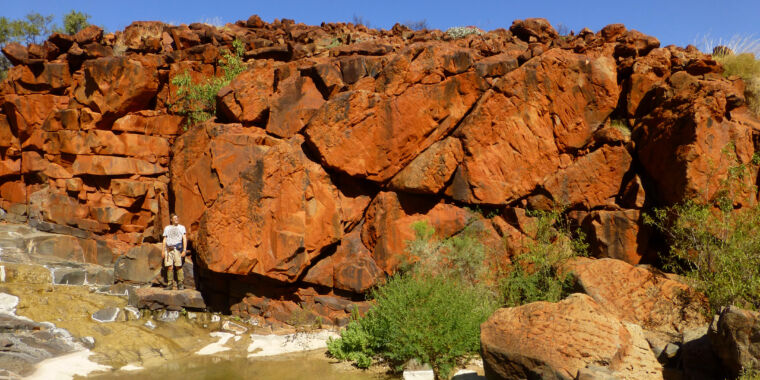
A new study led by Dr. Jennifer Kasbohm of Yale reveals that the Pilbara Craton, an early continent, moved at a rapid pace of up to 64 centimeters (25 inches) per year around 2.7 billion years ago. By analyzing ancient magnetic fields and dating rocks from Western Australia, the researchers aimed to understand the nature of plate tectonics during the Archean eon. The findings suggest that early plate tectonics may have been faster due to the hotter mantle and its impact on mantle convection. The study, which took a decade to complete, provides valuable insights into the movement of ancient continents and the evolution of Earth's tectonic processes.