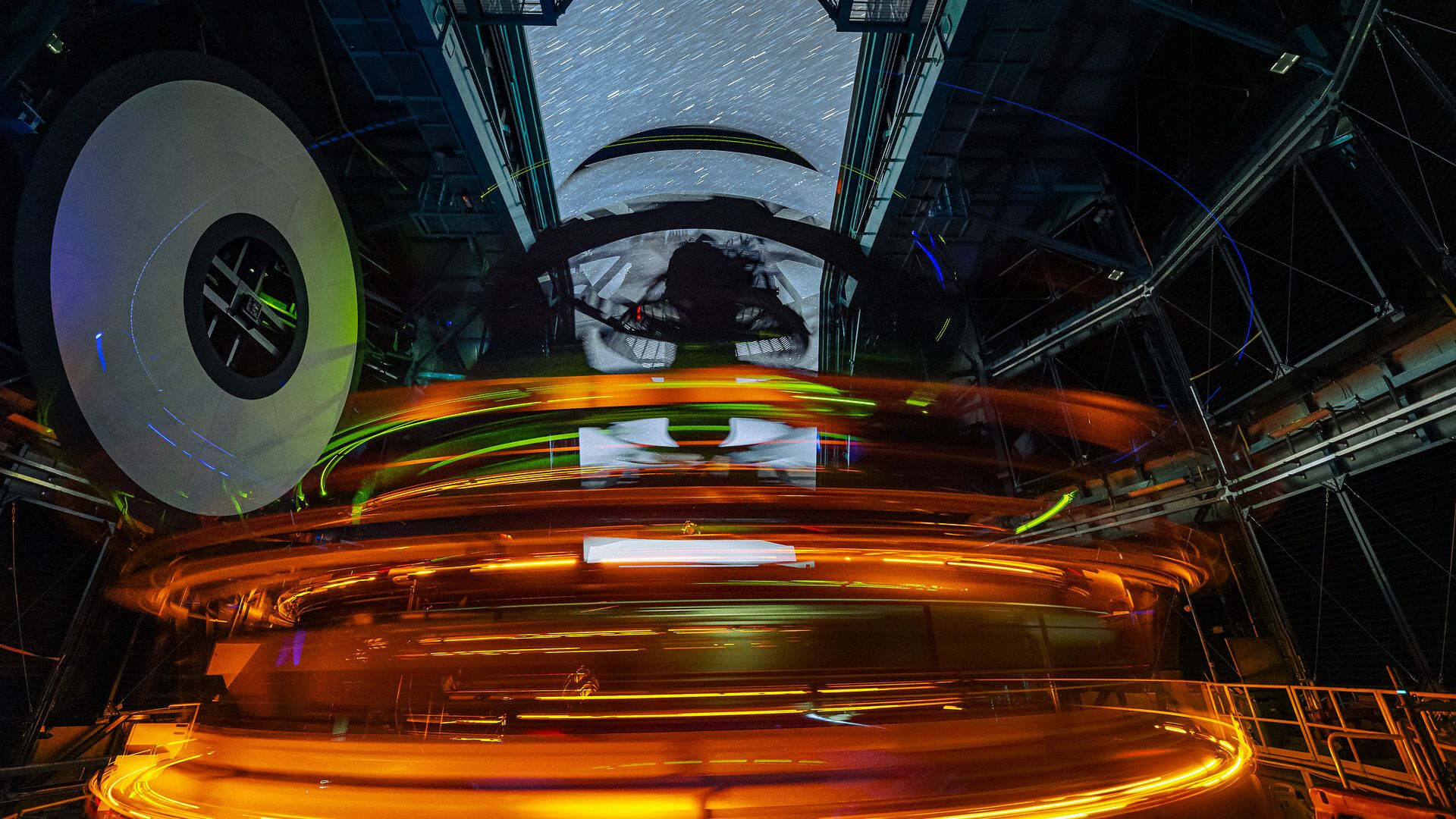
The Vera C. Rubin Observatory has started a decade-long sky survey using its advanced telescope and the world's largest digital camera, capturing rapid star scans and aiming to study cosmic phenomena like dark matter and near-Earth objects.
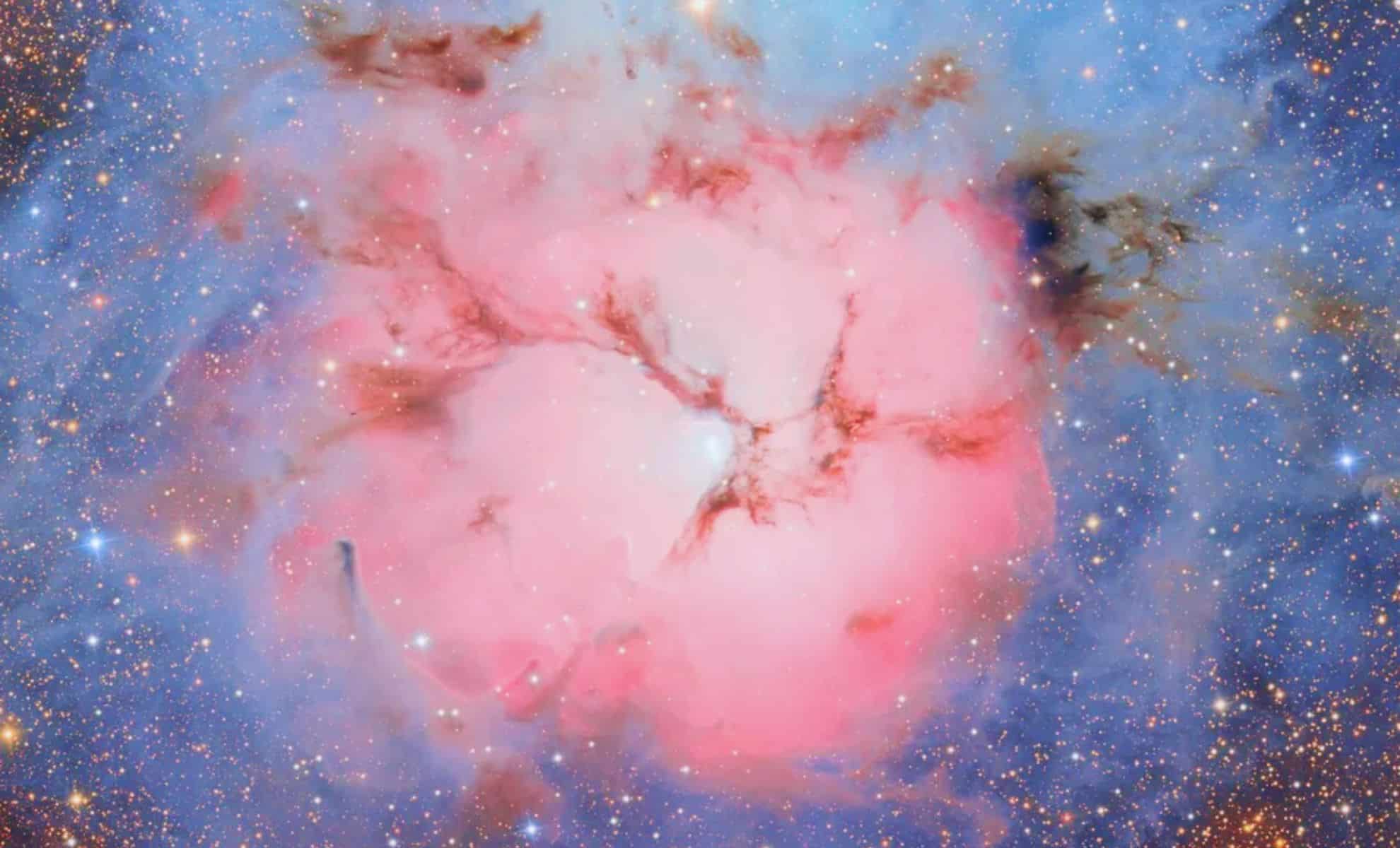
The Vera C. Rubin Observatory has released its first detailed image of the Trifid Nebula, showcasing its advanced imaging capabilities and marking the start of a decade-long survey that aims to revolutionize our understanding of the universe, including star formation, dark matter, and near-Earth objects.
The LSST Camera, the largest ever built with 3,200 megapixels, is set to revolutionize astronomy by capturing detailed images of the universe from the Vera Rubin Observatory in Chile, enabling new insights into dark matter, dark energy, and cosmic evolution, with first images to be unveiled on June 23.
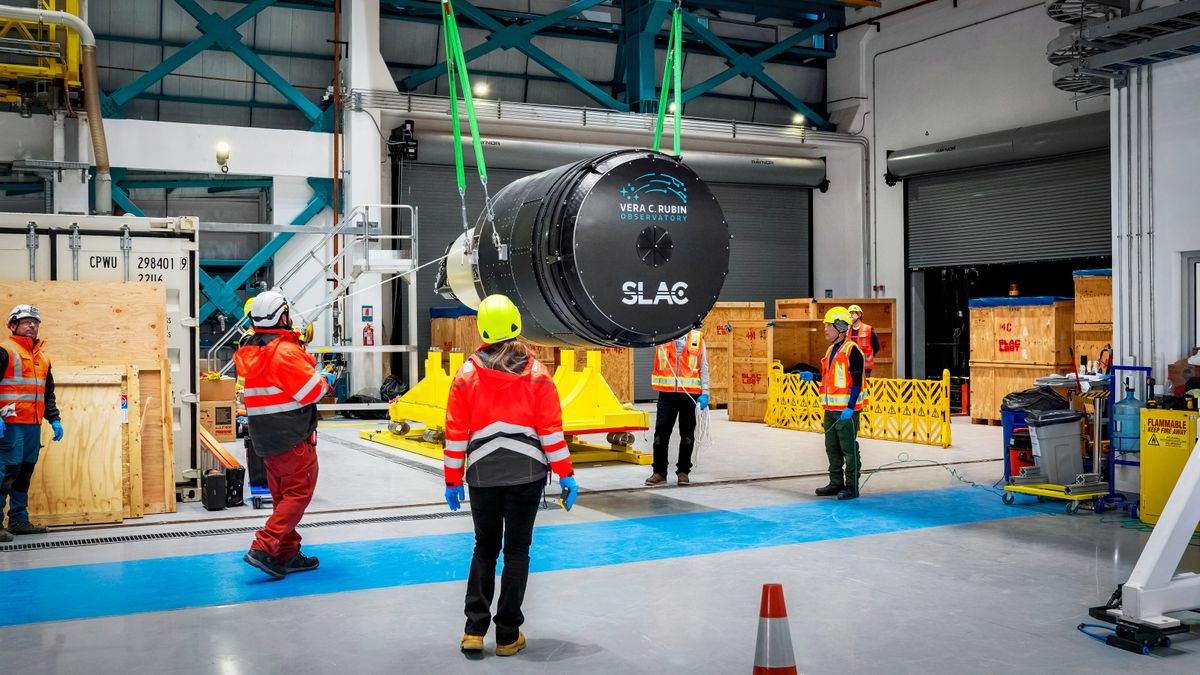
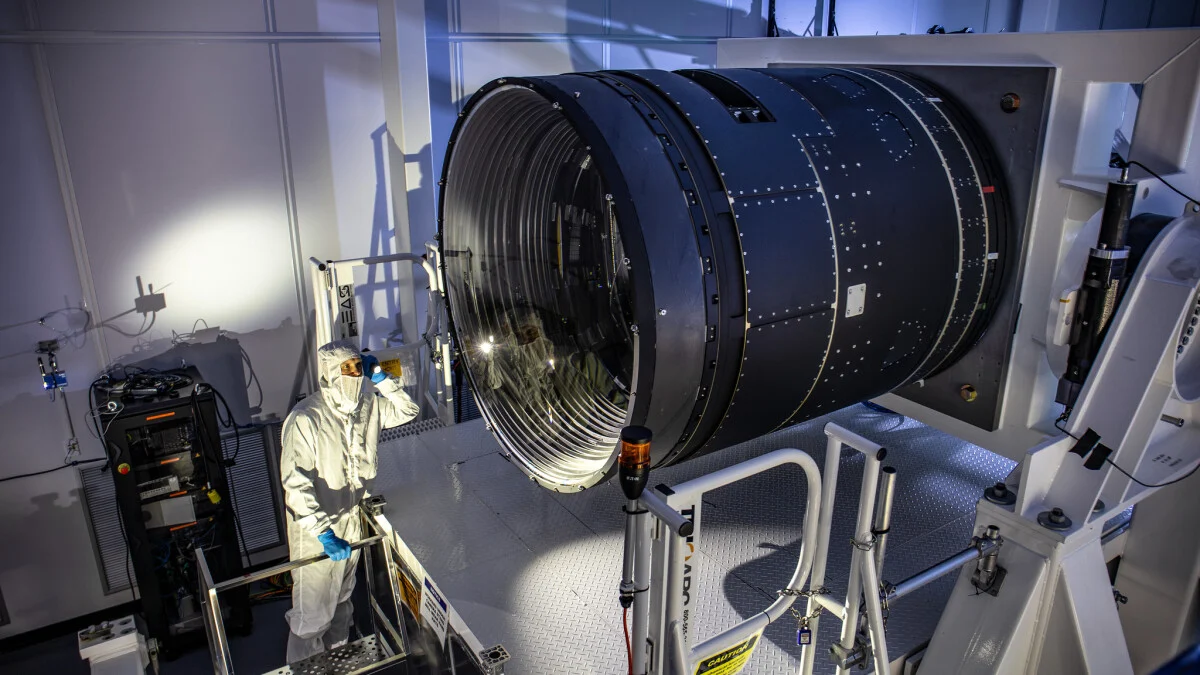
After two decades of development, the 6,600-pound LSST Camera has been successfully transported from California to the Vera C. Rubin Observatory in Chile. This massive camera, the largest ever built for astronomy, will undergo several months of testing before being installed on the Simonyi Survey Telescope. The camera's arrival marks a significant milestone for the observatory, which aims to conduct a decade-long survey of the universe, providing crucial data on dark matter and dark energy.
The LSST Camera, the largest camera ever built, has safely arrived at the Vera C Rubin Observatory in Chile after a two-decade-long development. This groundbreaking instrument will help unlock the mysteries of the universe.
The 3200-megapixel LSST Camera, designed for astrophysics discoveries, has arrived at the Vera C. Rubin Observatory in Chile after a 20-year development. This marks a significant milestone towards the observatory's completion, with the camera set to undergo testing before being installed on the Simonyi Survey Telescope. The observatory aims to conduct a decade-long survey of the sky, contributing to the study of dark matter, transient objects, and the formation of the Milky Way.
The Legacy Survey of Space and Time (LSST) Camera, the largest digital camera ever made for astronomy, has been completed and is set to be mounted on the Simonyi Survey Telescope at the Vera C. Rubin Observatory in Chile. With 3,200 megapixels and a field of view seven times wider than the full Moon, it is expected to provide new insights into dark energy, dark matter, the Milky Way, and more over its 10-year survey of the sky.
The LSST Camera, the largest digital camera on Earth, has been completed at the SLAC National Accelerator Laboratory and will soon be integrated with the Vera C. Rubin Observatory in Chile to capture deep space images. With its high resolution and ability to capture a wide swath of the sky, the camera aims to create an unprecedented catalog of the cosmos, potentially revolutionizing our understanding of space by identifying more asteroids, icy worlds, interstellar comets, and possibly even a speculative "Planet X." This marks a significant advancement in space exploration, with other futuristic telescopes like the Giant Magellan Telescope and the Extremely Large Telescope also set to contribute to our understanding of the universe.
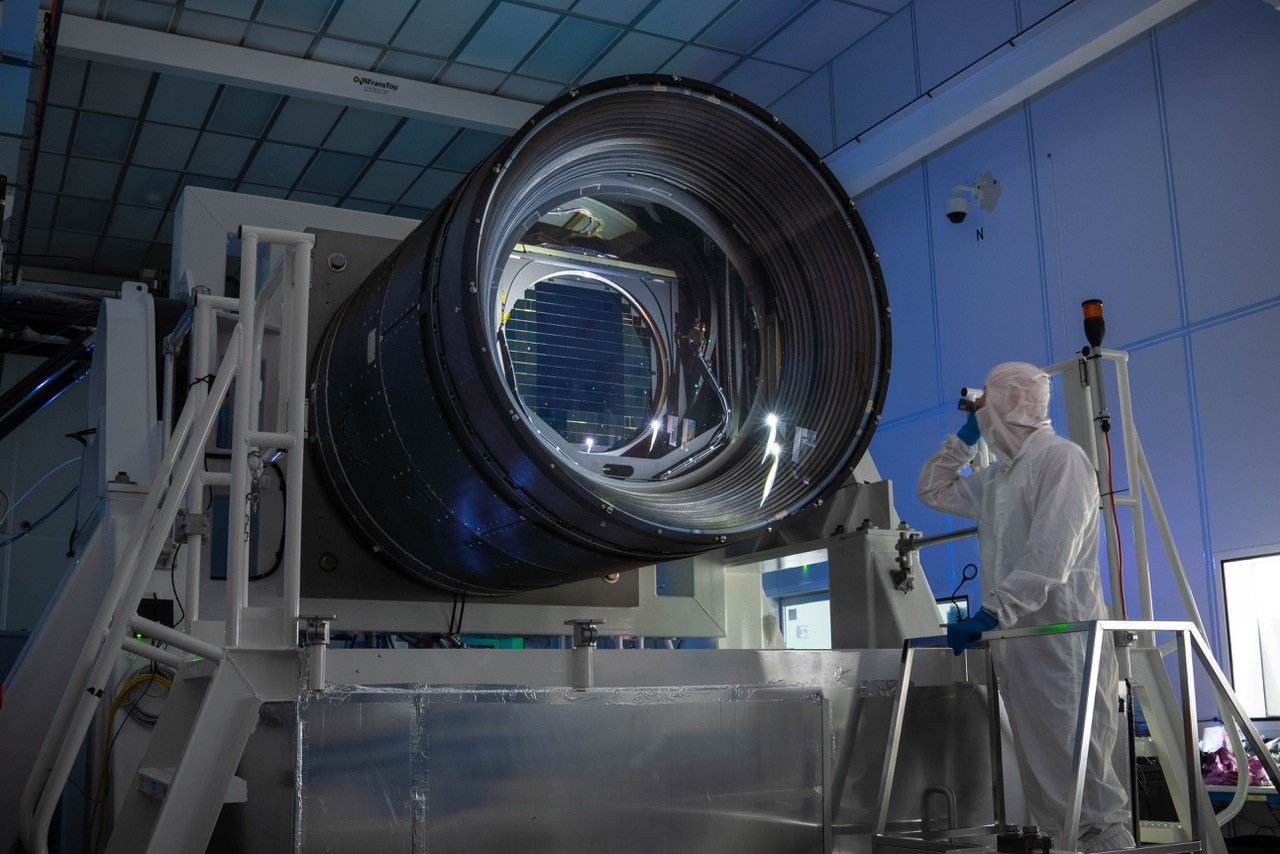
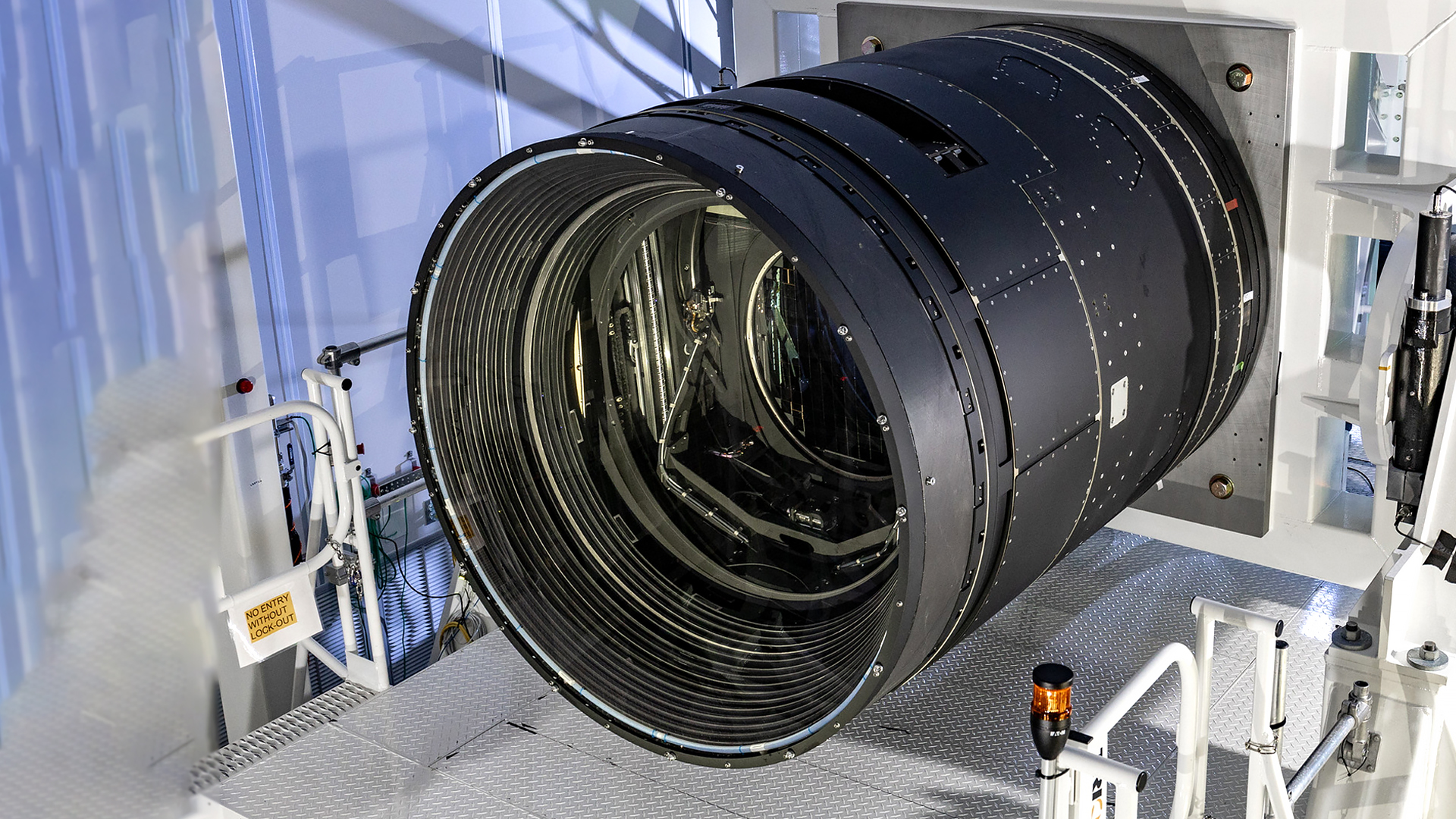
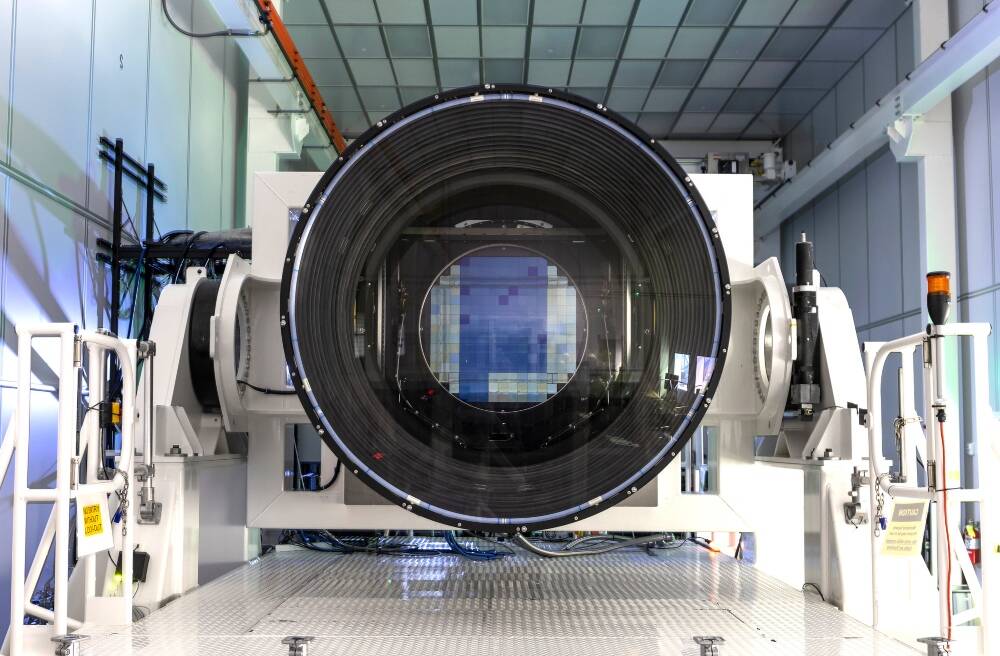
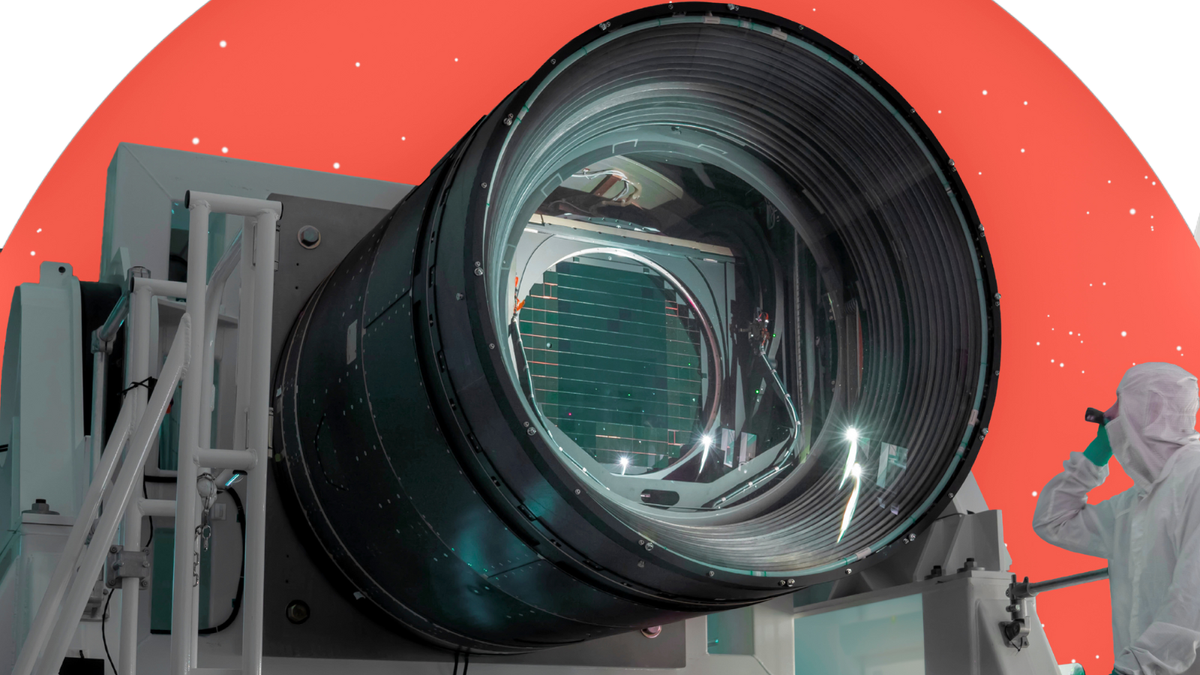
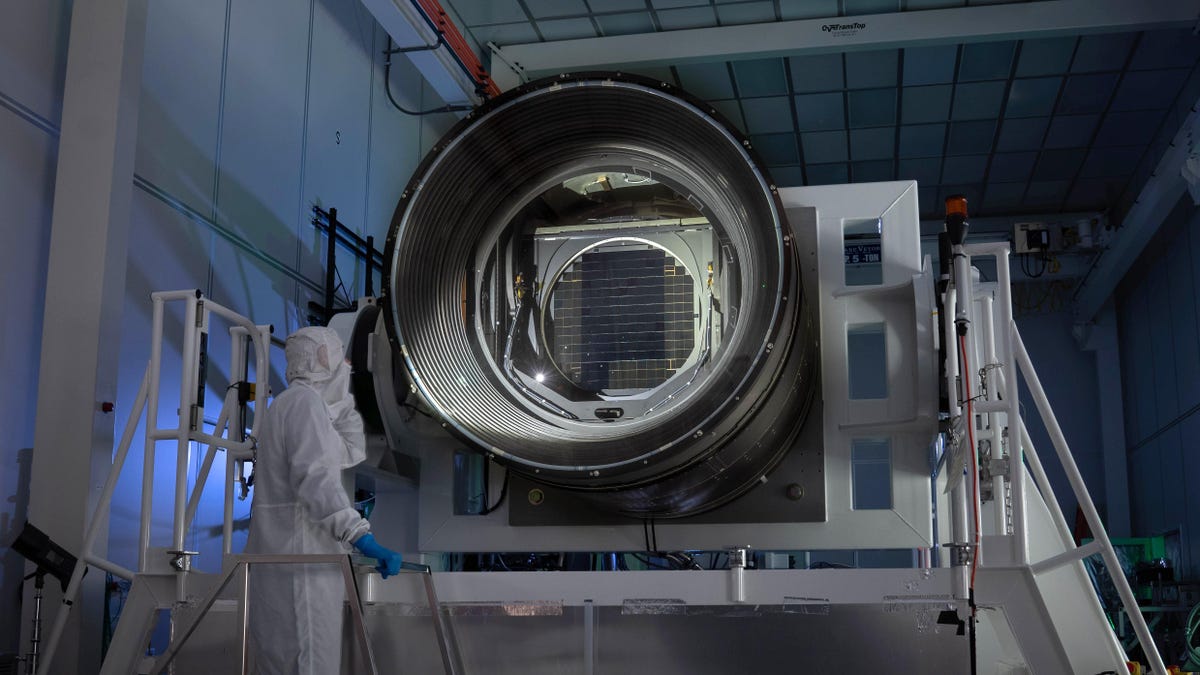
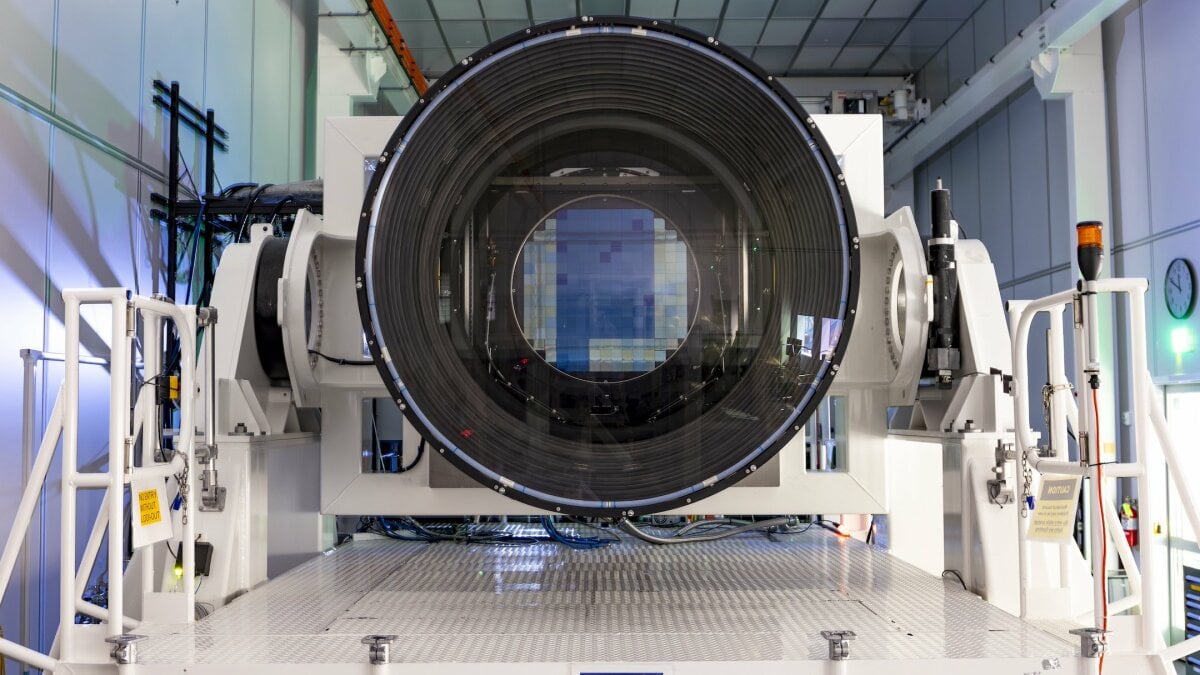
The world's largest digital camera, the Legacy Survey of Space and Time (LSST) Camera, has been assembled in California and will soon be moved to Chile's Vera C. Rubin Observatory. Weighing 6,600 pounds with a front lens measuring over five feet across, the 3,200-megapixel camera is designed to map the night sky and help uncover the mysteries of dark matter and dark energy. It can capture incredibly detailed images, with the ability to resolve a golf ball from 15 miles away and cover a swath of the sky seven times wider than the full moon. The camera's main task will be to map and measure the brightness of objects in the night sky, particularly looking for weak gravitational lensing to reveal more about the universe's expansion and its link to dark energy.
The construction of the LSST Camera, the world's largest astronomical digital camera, has been completed at the SLAC National Accelerator Laboratory in Silicon Valley. Capable of taking photos with a resolution of 3,200 megapixels, the camera will be mounted on the Simonyi Survey Telescope at the Vera C Rubin Observatory in Chile to capture high-quality images of the southern hemisphere's sky. Its purpose is to further the study of dark energy and dark matter, as well as to map out the Milky Way in superb detail, potentially increasing the number of known objects in the sky tenfold.
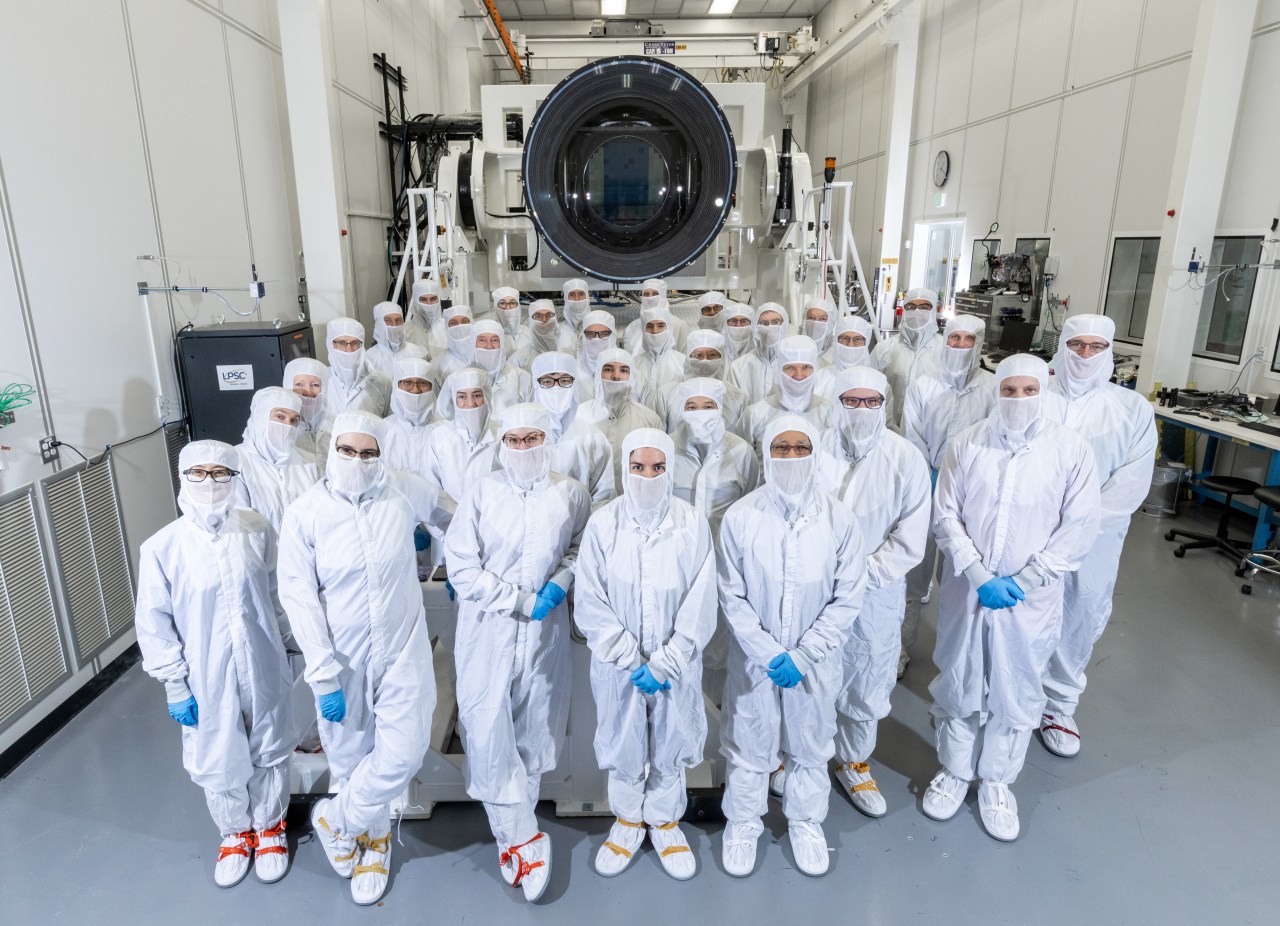
Scientists and engineers at SLAC National Accelerator Laboratory have completed the world's largest digital camera, the Legacy Survey of Space and Time (LSST) Camera, after two decades of work. Roughly the size of a small car and weighing three tons, the camera features a five-foot wide front lens and a 3,200-megapixel sensor. Once installed atop the Vera C. Rubin Observatory’s Simonyi Survey Telescope in Chile, it will survey the southern night sky for a decade, generating a trove of data to better understand dark energy, dark matter, the Milky Way, and small objects in our solar system.
The Vera C. Rubin Observatory is set to embark on a decade-long Legacy Survey of Space and Time using the world's largest digital camera, the 3,200-megapixel LSST Camera, which weighs 3 metric tons and is the size of a compact car. This camera will monitor the southern hemisphere sky, aiming to unravel mysteries surrounding dark energy and dark matter, and create the most comprehensive map of the night sky ever assembled. The LSST survey will allow for detailed monitoring of transient events and the expansion of the universe, providing groundbreaking insights into cosmic phenomena.
After nine years and 3.2 billion pixels, the LSST Camera, the largest digital camera for astronomy, is complete and will be the centerpiece of the Vera Rubin Observatory. The camera's 10-year Legacy Survey of Space and Time (LSST) will yield 60 petabytes of data on the universe's composition, dark matter, dark energy, and more. With its 5.1-foot-wide optical lens, the camera will capture a timelapse of the heavens and monitor changes in the southern sky, providing valuable insights into the expansion of the universe and other celestial phenomena. Despite challenges such as light pollution from satellites, the camera is poised to revolutionize our understanding of the cosmos when it begins its exploration of the southern skies in 2025.
The SLAC National Accelerator Laboratory is completing the construction of the LSST Camera, an SUV-sized camera that will be mounted on the Vera C. Rubin Observatory's revolutionary telescope in 2025. This camera, the largest ever built for astronomy, will capture extraordinary cosmic images, allowing astronomers to rapidly investigate objects in our solar system, Milky Way galaxy, and beyond. The telescope's unprecedented capabilities will significantly expand our understanding of space, potentially leading to the discovery of new asteroids, icy worlds, interstellar comets, and even a speculative "Planet X."