Tag

Lofar

All articles tagged with #lofar

Astronomers Uncover Massive Radio Jet in Quasar J1601+3102
science1 year ago

Astronomers Uncover Massive Radio Jet in Quasar J1601+3102

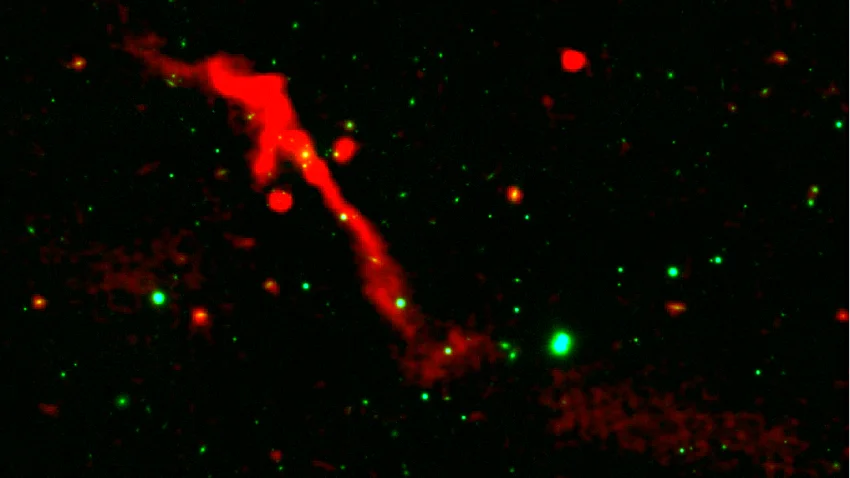
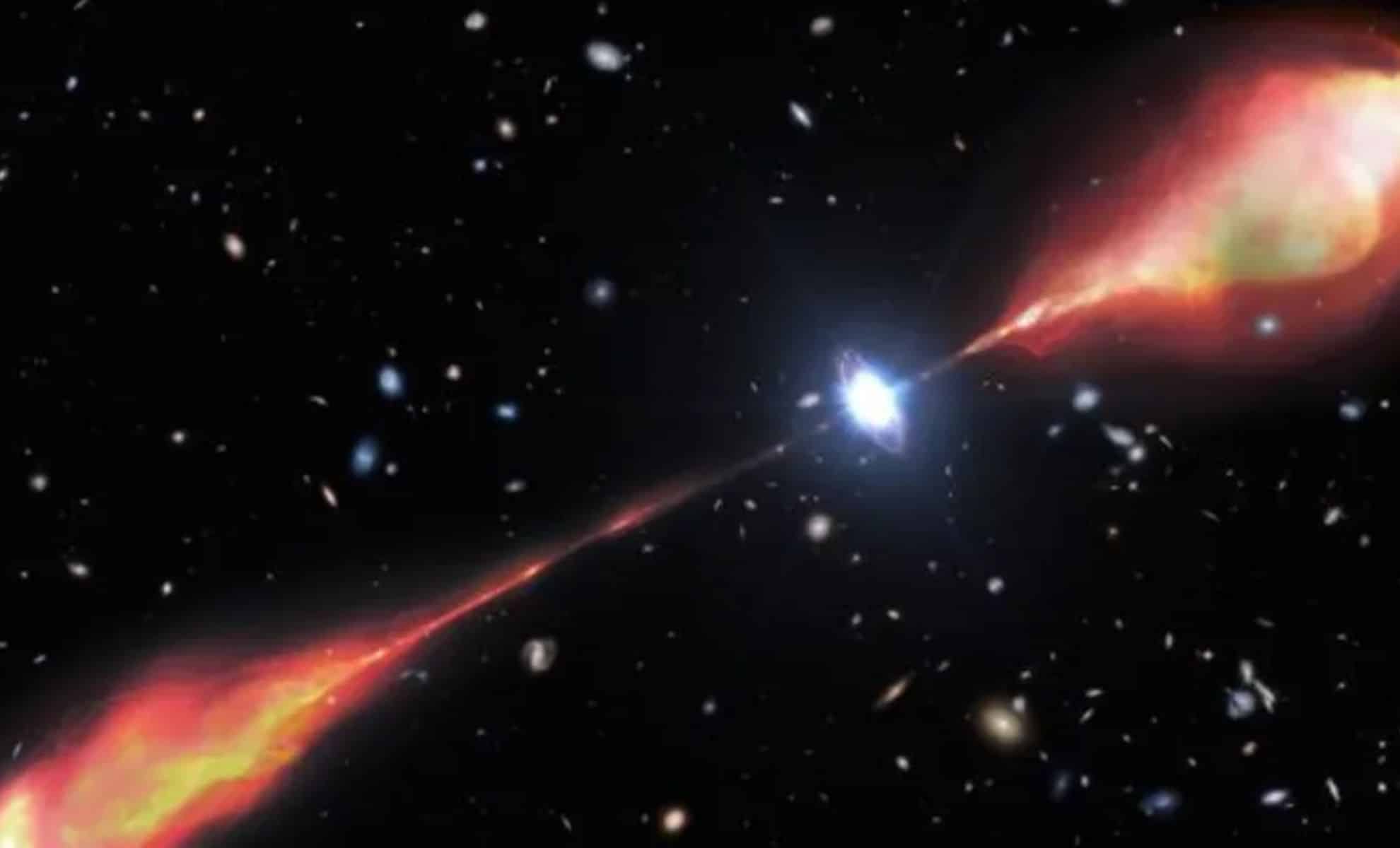
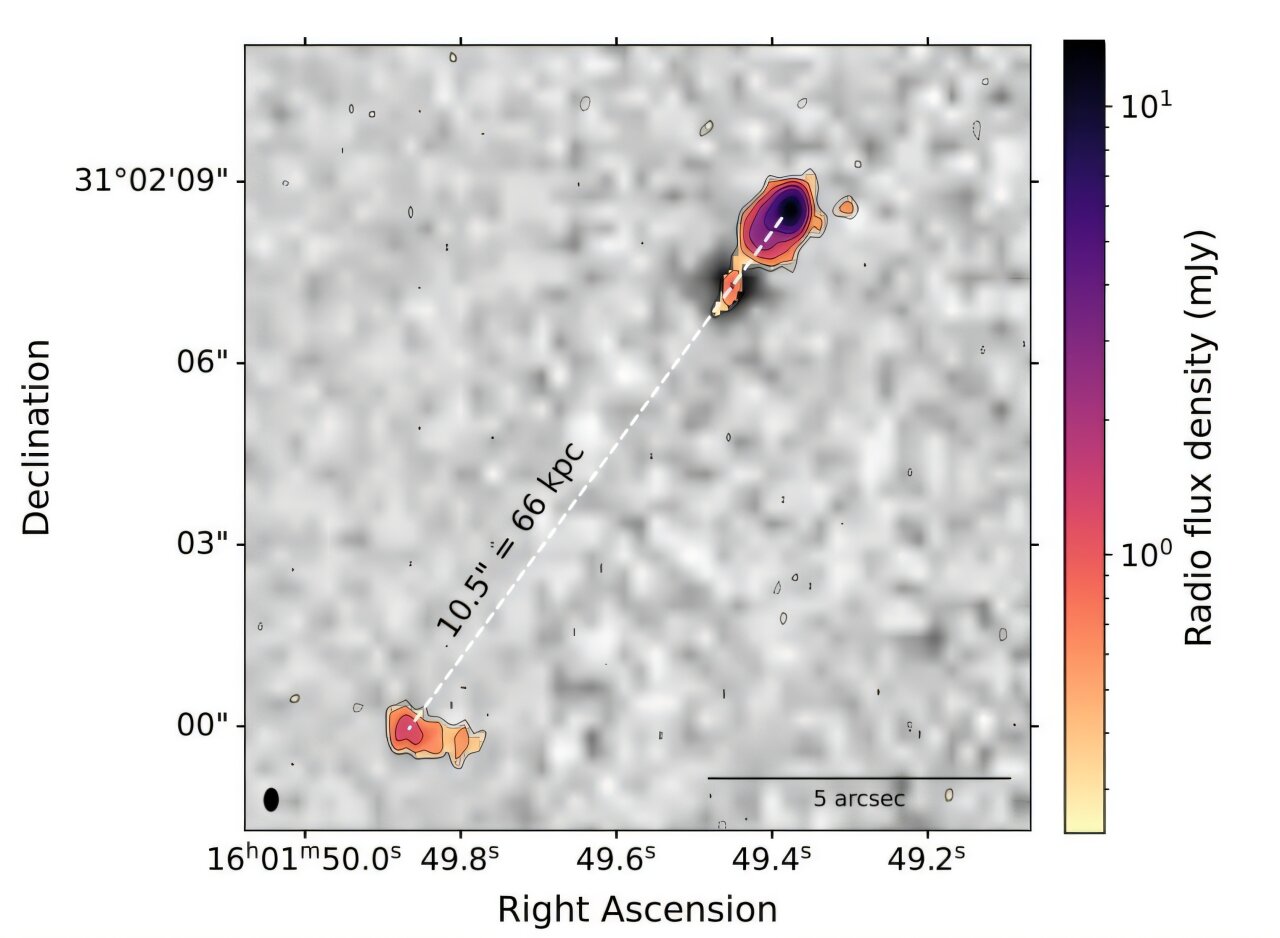
Astronomers have discovered a large extended radio jet in the quasar J1601+3102, located at a redshift of 4.9. Using the Low Frequency Array (LOFAR) and Gemini Near-Infrared Spectrograph (GNIRS), they found the jet spans at least 215,000 light years, making it the most extended radio jet observed at such a high redshift. The quasar's supermassive black hole is about 450 million solar masses, suggesting that exceptionally massive black holes are not necessary to produce powerful jets.

"Unveiling the Mysteries of Galaxy Cluster G113: European Astronomers Lead the Way"
astronomy2 years ago

"Unveiling the Mysteries of Galaxy Cluster G113: European Astronomers Lead the Way"

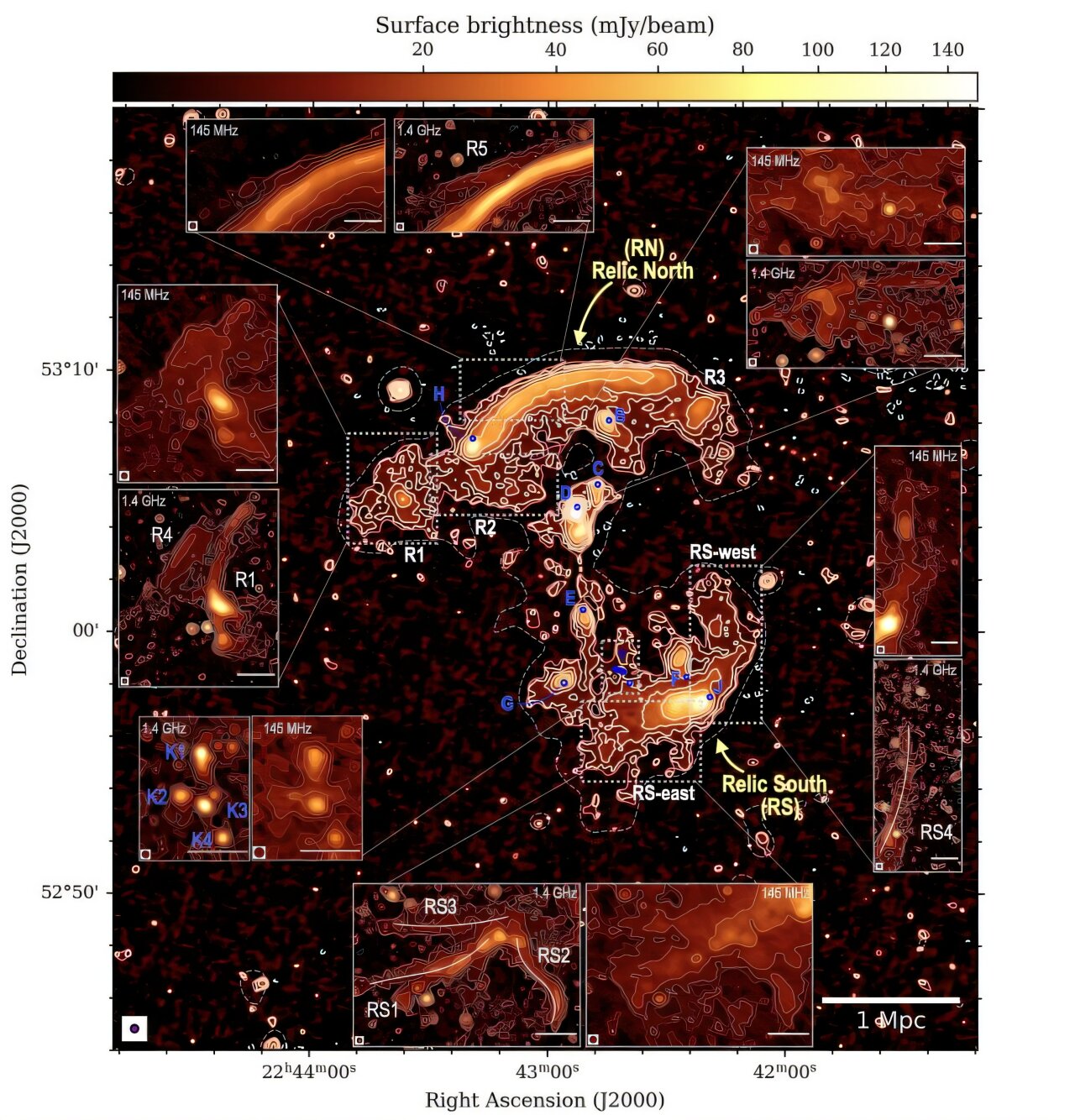
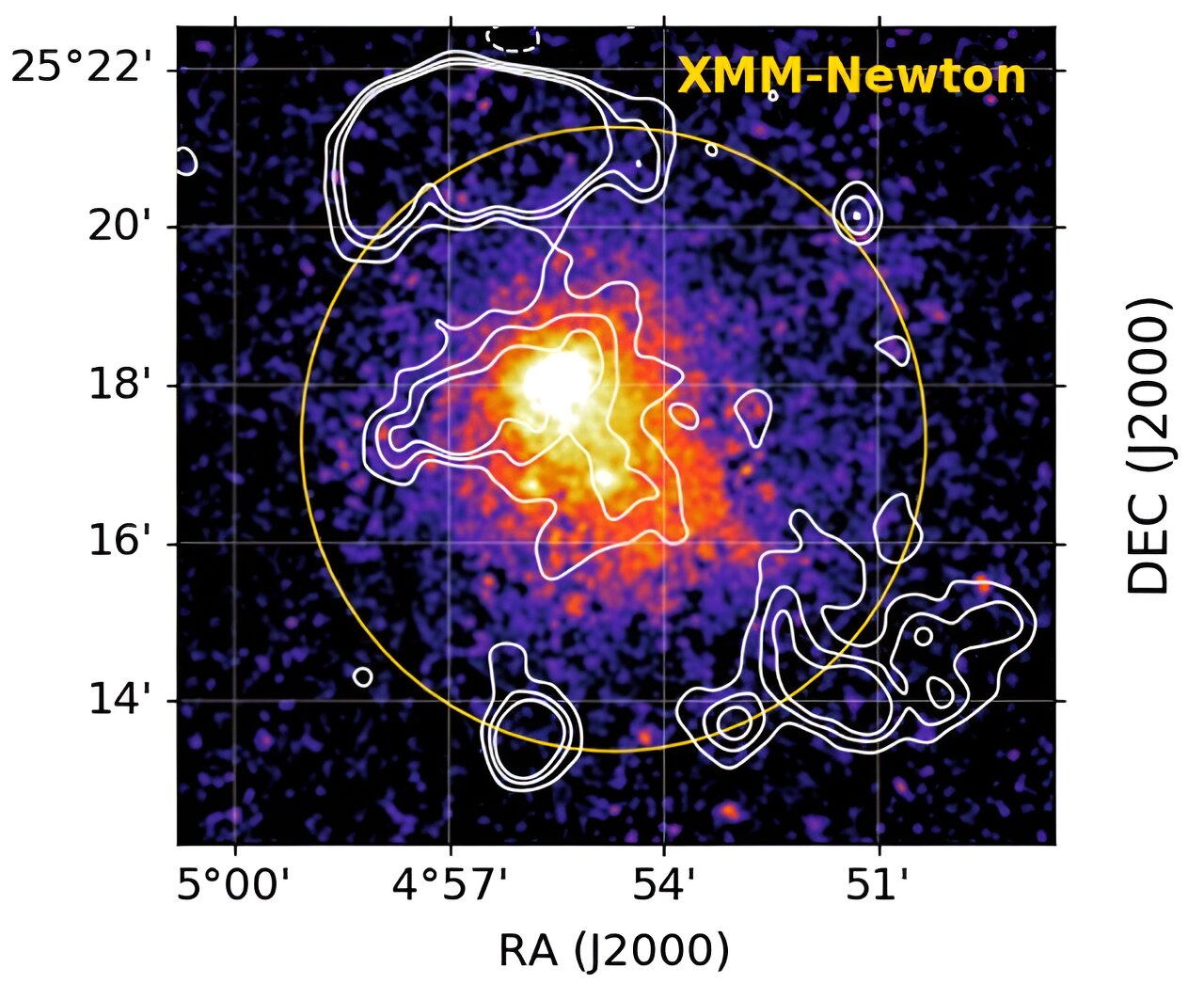
European astronomers have used ESA's XMM-Newton satellite and the Low-Frequency Array (LOFAR) to study the galaxy cluster PSZ2G113.91-37.01 (G113). The observations revealed that G113 is undergoing a merger and confirmed the presence of a radio halo and two radio relics. The study also identified a cold front and a cold region within the cluster. Further analysis found a strong correlation between X-ray and radio emissions in the halo region, while an anti-correlation was observed in the relic region. The researchers propose further observations to understand the physical processes behind these findings.

"Discovery: European Astronomers Uncover Radio Halo's New Element in Nearby Galaxy Cluster"
astronomy2 years ago

"Discovery: European Astronomers Uncover Radio Halo's New Element in Nearby Galaxy Cluster"

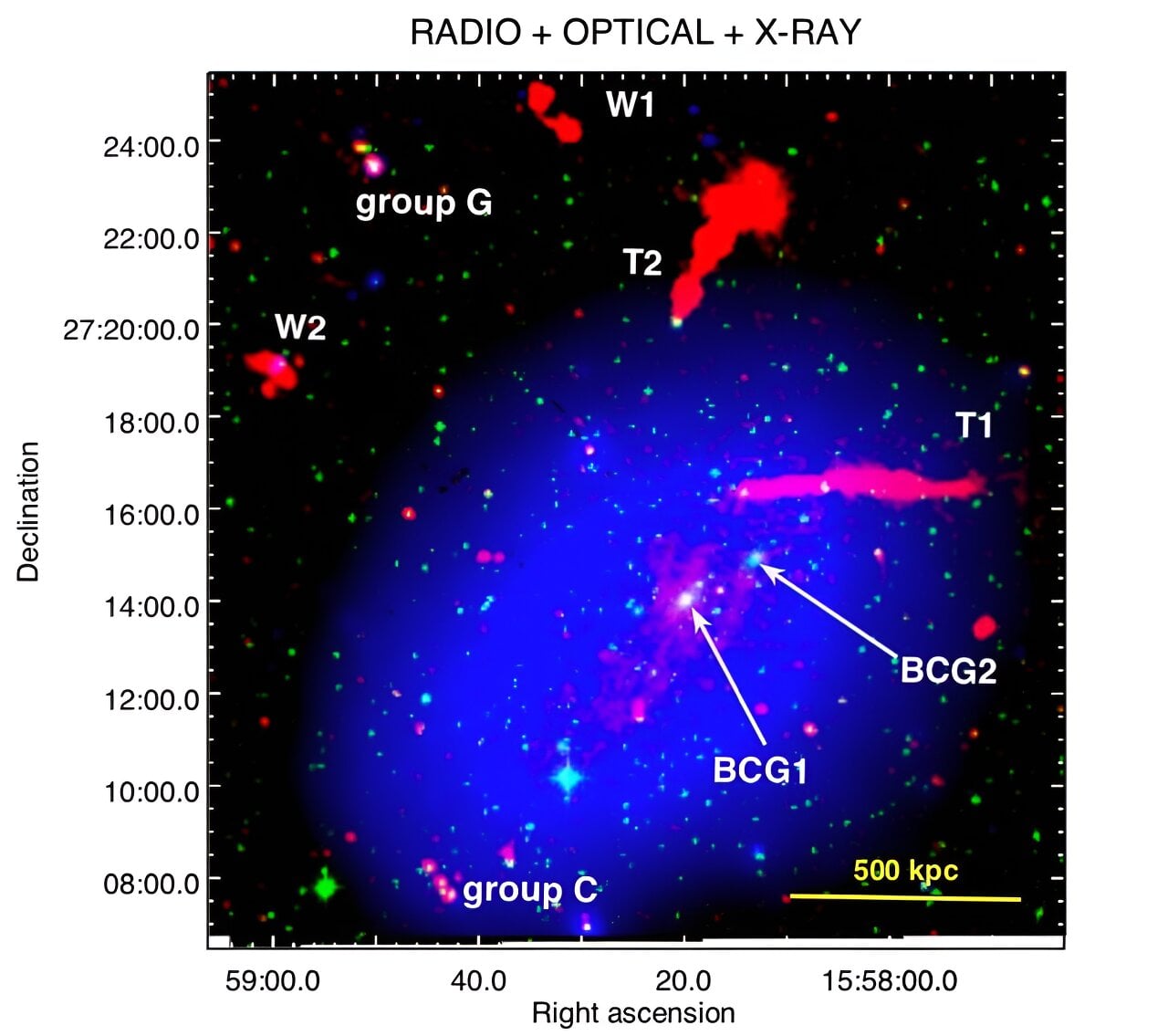
European astronomers using the LOFAR telescope have discovered a new component, named H3, in the radio halo of the nearby galaxy cluster Abell 2142. The radio halo is a diffuse region of radio emission found at the center of galaxy clusters. The discovery of H3 provides further insights into the structure of the halo and its relationship with the X-ray thermal distribution of the intracluster medium. The researchers propose two hypotheses for the origin of H3, suggesting it may be the result of an old energetic merger or turbulent re-acceleration induced by ongoing minor mergers.

"Starlink Satellites' 'Unintended' Radiation Disrupts Radio Astronomy"
science-and-astronomy2 years ago

"Starlink Satellites' 'Unintended' Radiation Disrupts Radio Astronomy"

The Low Frequency Array (LOFAR) telescope in the Netherlands has detected radiation from the onboard electronics of SpaceX's Starlink satellites, which could disturb radio astronomy observations. The unwanted low-frequency radio hum emitted by the satellites falls within a protected band allocated to radio astronomy. This finding raises concerns about the impact of megaconstellations like Starlink on sensitive radio telescopes and large-scale observatories. While SpaceX is collaborating with astronomers to find solutions, there is currently no clear regulation to protect radio astronomy bands from unintended radiation.

"SpaceX's Starlink Satellites Pose Threat to Radio Astronomy with Radiation Leaks, Scientists Warn"
science-and-technology2 years ago

"SpaceX's Starlink Satellites Pose Threat to Radio Astronomy with Radiation Leaks, Scientists Warn"

The onboard electronics of SpaceX's Starlink internet satellites are emitting radiation that is interfering with radio astronomy observations, according to a study conducted by researchers using the Low Frequency Array (LOFAR) telescope in the Netherlands. The study found that the satellites emit low-frequency radio hum in a protected band specifically allocated to radio astronomy. This unintended radiation poses a concern for large-scale radio observatories, such as the Square Kilometer Array Observatory (SKAO), which is being built in Australia and South Africa. The researchers also noted that the impact of this radiation would become more pronounced as the Starlink constellation grows in size. SpaceX is reportedly collaborating with astronomers to find solutions that allow the constellation and astronomy to coexist without negative impacts.