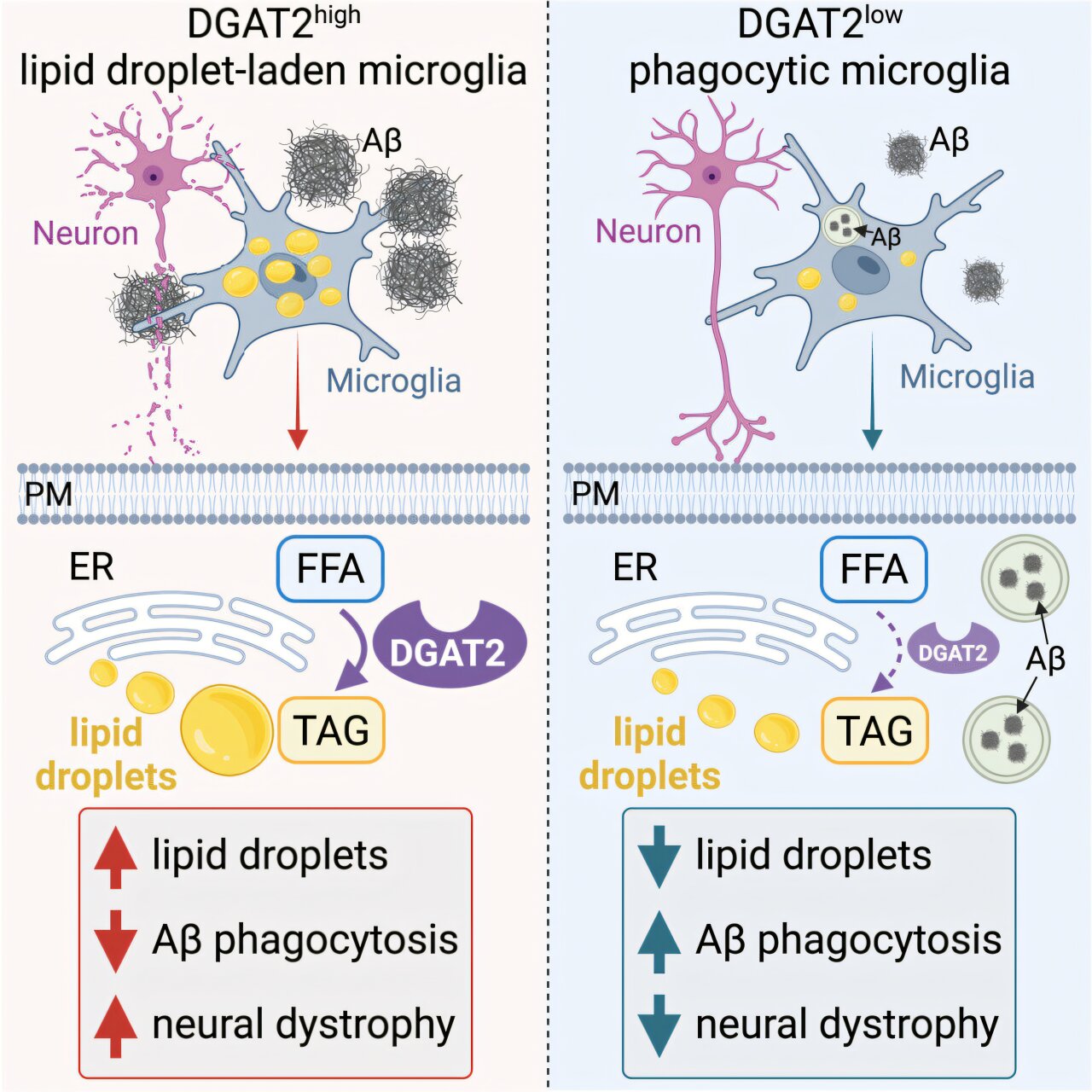
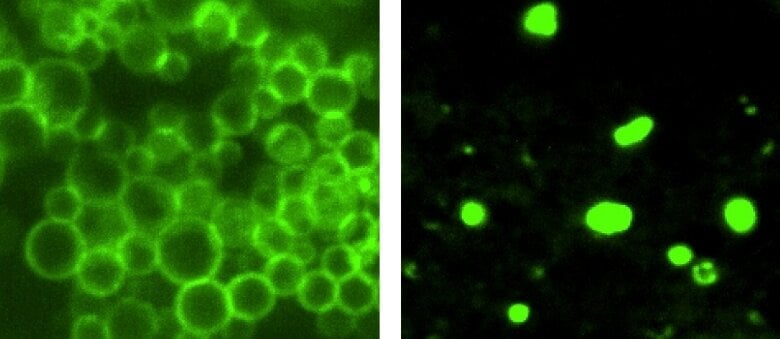
Purdue University researchers have discovered that excess fat in brain immune cells impairs their ability to fight Alzheimer's disease, revealing a new lipid-based mechanism involving the enzyme DGAT2. Targeting this enzyme to reduce fat accumulation in microglia restores their function and offers a promising therapeutic approach for neurodegeneration.
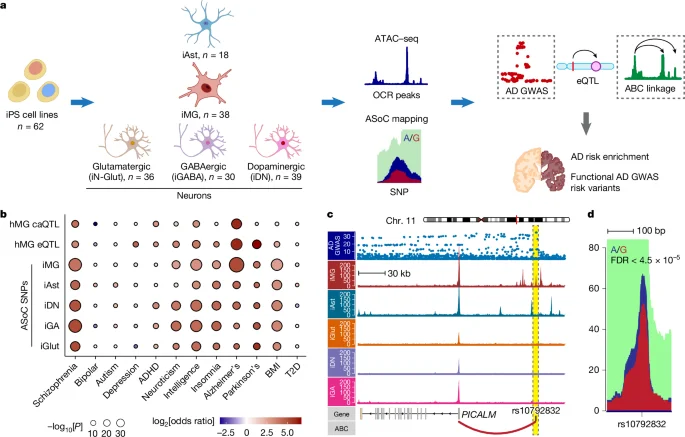
The study identifies a functional Alzheimer's disease risk variant in the PICALM gene that disrupts PU.1 binding, reduces PICALM expression in microglia, leading to increased lipid droplet accumulation, lysosomal dysfunction, and impaired phagocytosis, which may contribute to disease pathology.
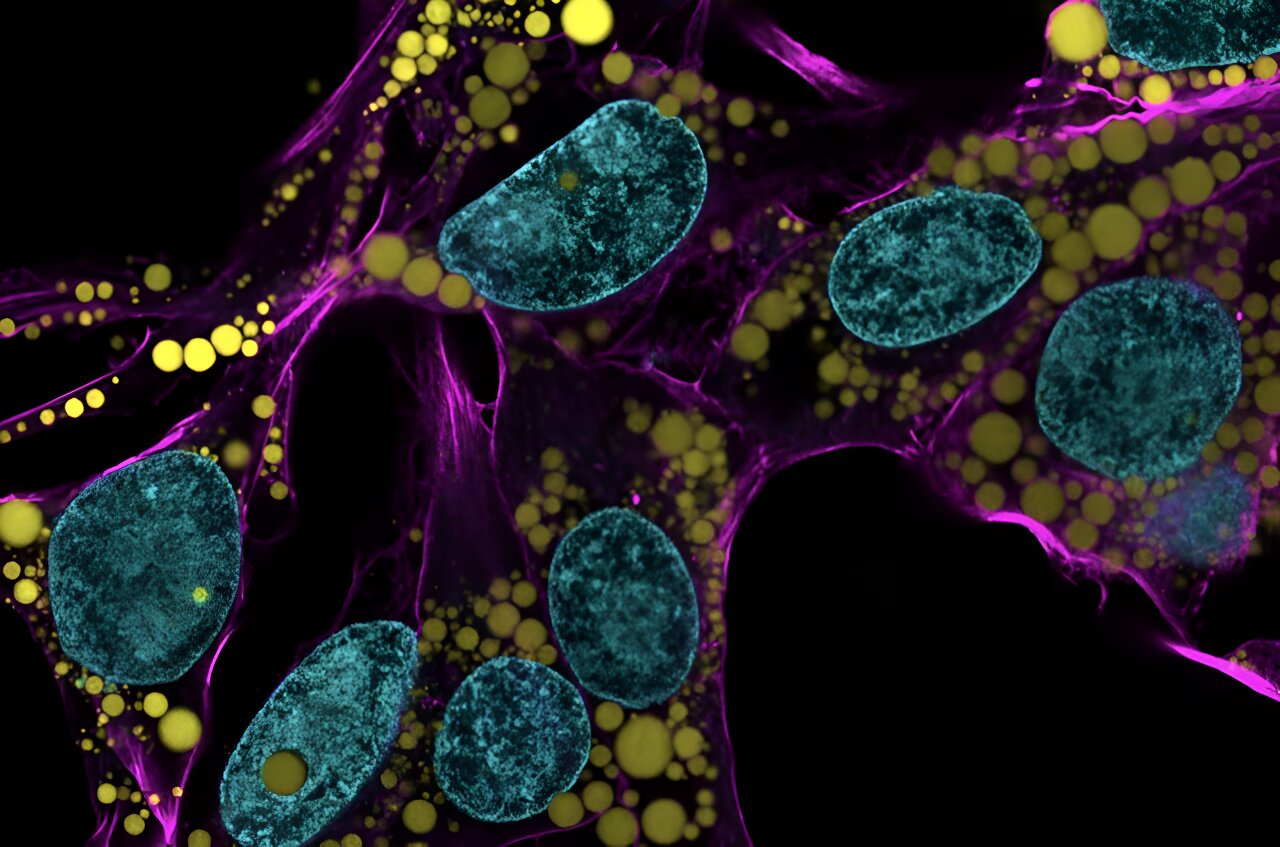
A study published in Nature reveals that APOE4 exacerbates the formation of lipid droplets in microglia, particularly in individuals with Alzheimer's disease. This lipid accumulation is linked to the overexpression of an enzyme involved in triglyceride synthesis, and APOE4/4 microglia were found to release neurotoxic substances, potentially including the triglycerides themselves. The study suggests that APOE4/4 microglia may be detrimental to neurons and could play a role in the progression of Alzheimer's disease.
Two recent studies published on bioRxiv shed light on the role of Aβ fibrils in the formation of lipid droplets in microglia, a type of brain cell. The studies found that exposure to Aβ fibrils led to an increase in triglyceride-rich lipid droplets in both mouse and human microglia. The accumulation of these lipid droplets was associated with impaired phagocytosis of Aβ and the release of neurotoxic molecules. The researchers also identified specific enzymes, ACSL1 and DGAT2, that were involved in the formation of these lipid droplets. Furthermore, the presence of the APOE4 allele, a genetic risk factor for Alzheimer's disease, exacerbated the formation of lipid droplets in microglia. These findings provide new insights into the mechanisms underlying lipid accumulation in microglia and its potential contribution to Alzheimer's disease.
Researchers at the University of Pennsylvania have discovered that small fat-filled lipid droplets have the surprising ability to indent and puncture a cell's nucleus, which contains and regulates its DNA. This can lead to elevated DNA damage, potentially contributing to diseases such as cancer. The physical properties of these droplets, including their high curvature, make them capable of deforming and damaging cellular components. The findings highlight the importance of understanding the physics of fat and its impact on cellular health beyond its metabolic functions.
Researchers from Stanford University have discovered cellular effects of the Mediterranean diet for the first time, based on how one of its healthy fats influenced lifespan in nematodes, also known as roundworms. The study focused on one healthy fat, oleic acid, which is the main monounsaturated fatty acid (MUFA) in olive oil and some nuts. The researchers discovered two benefits of oleic acid: it protects cell membranes from damage by lipid oxidation, and it raises the quantity of two key cellular components called organelles. Roundworms fed oleic acid lived about 35 percent longer than worms on a more traditional diet.
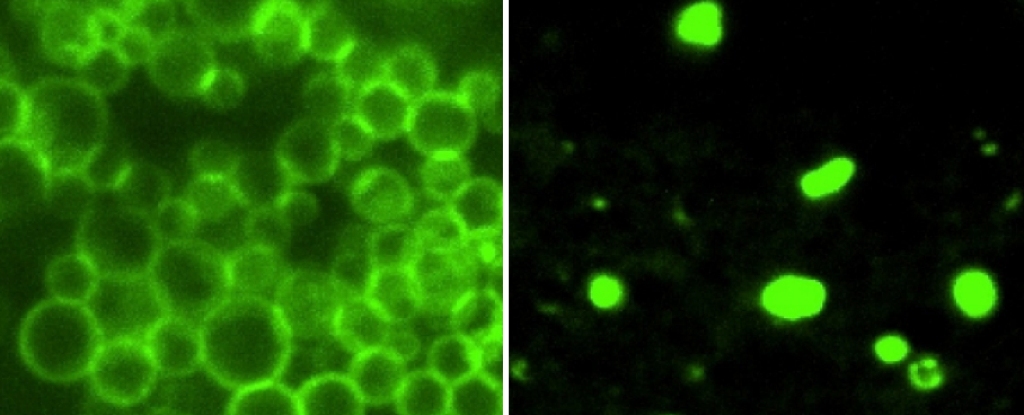
Researchers at Stanford School of Medicine have found a cellular connection between monounsaturated fatty acids, found in the Mediterranean diet, and lifespan in laboratory worms. The study found that oleic acid, a fat in the Mediterranean diet, increases the number of lipid droplets and peroxisomes, two key cellular structures, and protects cellular membranes from damage by oxidation. Worms fed food rich in oleic acid lived about 35% longer than those on standard worm rations. The findings suggest there may be a fat-based strategy to improve human health and longevity.