Amgen expands oncology portfolio with UK biotech and Oxford spinout acquisitions
Amgen has announced a deal to acquire a UK-based cancer biotechnology company for up to $840 million, marking a significant expansion in its oncology portfolio.
All articles tagged with #amgen

Amgen has announced a deal to acquire a UK-based cancer biotechnology company for up to $840 million, marking a significant expansion in its oncology portfolio.

Amgen has acquired Dark Blue Therapeutics for up to $840 million, adding a novel investigational molecule targeting proteins MLLT1/3 to its oncology pipeline, aiming to improve treatment for acute myeloid leukemia (AML).

Amgen has acquired Dark Blue Therapeutics, a UK biotech specializing in targeted protein degraders for oncology, for up to $840 million, to enhance its pipeline for treating acute myeloid leukemia with a novel investigational molecule showing promising preclinical results.

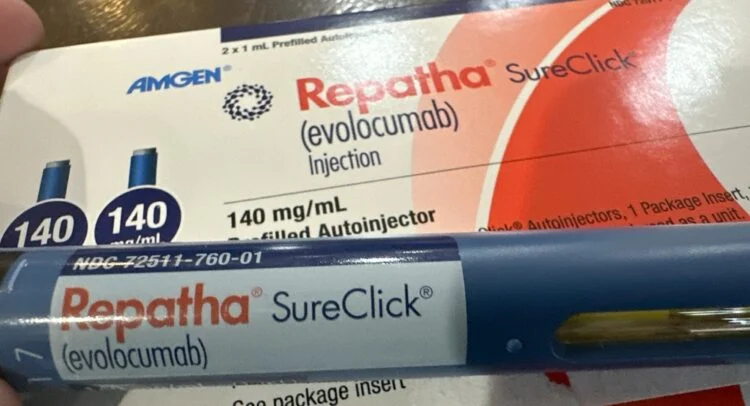
A study published in the New England Journal of Medicine shows that Amgen's cholesterol injection Repatha significantly reduces the risk of heart attacks, strokes, and cardiovascular death in high-risk individuals without prior events, outperforming traditional statin therapy.

Amgen has reduced the price of its cholesterol drug by 60% following pressure from President Trump, impacting its stock value.

Amgen announced that its cholesterol-lowering drug Repatha significantly prevented heart disease-related deaths, heart attacks, and strokes in a large 12,000-patient trial, potentially broadening its market beyond high-risk patients and boosting its commercial prospects.

Amgen reported strong Q2 earnings exceeding expectations but saw declines in key product sales, leading to a drop in after-hours stock trading. The company highlighted growth in products like Uplizna and Tepezza, and raised its full-year guidance despite mixed quarterly results.

Amgen's shares dropped after disappointing trial results for its weight-loss drug MariTide, which showed high discontinuation rates due to gastrointestinal side effects, especially at higher doses, despite promising efficacy in weight loss; the company plans to adjust its Phase 3 trial strategy to mitigate these issues.

Amgen's obesity drug MariTide showed significant weight loss in a Phase 2 trial but had high side effects and discontinuation rates, prompting the company to plan a slower dosing schedule for future testing.

Amgen Inc.'s shares plummeted by 12%, marking the largest drop in 23 years, after its experimental obesity drug, MariTide, failed to significantly outperform competitors and showed a high rate of gastrointestinal side effects. The drug achieved a 20% weight loss in a yearlong trial, falling short of the 25% target set by rivals Eli Lilly and Novo Nordisk. The study also reported a 40% vomiting rate, leading to an 11% discontinuation rate. Amgen plans to test a lower initial dose to reduce side effects in future studies.

Amgen's stock plummeted 12% after its obesity drug, MariTide, showed comparable results to Eli Lilly's Zepbound in weight loss efficacy but had a higher dropout rate due to side effects. While patients lost about 20% of their body weight with less frequent dosing, 11% discontinued due to gastrointestinal issues, compared to 7% for Zepbound. The market reacted negatively despite the drug meeting expectations, highlighting the competitive nature of the weight-loss drug market.

Amgen announced that its experimental obesity drug, MariTide, led to an average weight loss of up to 20% in patients over a year without plateauing, according to mid-stage trial results. The drug also showed a 17% weight loss in patients with both obesity and Type 2 diabetes. Despite these results, Amgen's shares fell as the outcomes were at the lower end of Wall Street expectations. The trial's first part tested various dosing regimens, and the second part will assess the durability of weight loss and less frequent dosing. MariTide's unique mechanism involves a peptide antibody conjugate targeting GLP-1 and GIP hormones.

Amgen's stock rebounded after concerns about its weight-loss drug MariTide causing bone mineral density loss were deemed "overdone" by analysts. Despite a 7% stock drop due to initial fears, experts argue that significant weight loss often correlates with reduced bone density. Amgen maintains confidence in MariTide, with Phase 2 trial results expected later this year. Analysts note that while rival drugs from Eli Lilly and Viking Therapeutics may offer bone health benefits, the impact of MariTide remains uncertain pending further data.

Amgen's market cap dropped by $12 billion after hidden data on bone density changes in patients treated with its obesity drug prospect, MariTide, was discovered in an Excel spreadsheet. The data, which was not initially disclosed, raised concerns about potential risks associated with the drug, leading to a 7% fall in Amgen's share price. However, some analysts and Amgen itself downplayed the significance of the findings, and the stock partially recovered as investors reassessed the situation.

Amgen's market value plummeted by $12 billion after an analyst from Cantor Fitzgerald discovered unverified data suggesting potential side effects of its obesity drug candidate, MariTide. The data, found in hidden tabs of a trial results file, indicated a loss of bone mineral density in participants, particularly at higher doses, leading to a 7% drop in Amgen's stock as investors reacted to the news.