Researchers identified a brain leptin pathway that can trigger rapid loss of all body fat—including bone marrow fat—without reducing food intake, by inducing a state of low glucose and insulin and removing fat‑breakdown inhibitors. While this could guide new obesity treatments and aid wasting disorders, safety concerns for bone health mean it’s not ready for human use.
Researchers have discovered that leptin, a hormone produced by fat cells, can reverse diabetic ketoacidosis (DKA) and regulate blood sugar levels independently of insulin by reprogramming the brain's response, potentially leading to new insulin-free treatments for type 1 diabetes.
Researchers have discovered a new population of neurons in the hypothalamus that regulate appetite by expressing leptin receptors and the BNC2 gene. These neurons respond to hunger-suppressing signals and food-related cues. Disrupting these neurons in mice led to increased food intake and weight gain, highlighting their role in energy balance. This finding offers a potential new target for obesity treatments, providing hope for more effective therapies against the obesity epidemic.
Novo Nordisk has developed a new compound that combines the effects of GLP-1 and leptin hormones to enhance appetite suppression and weight loss, showing promising results in mice. This dual approach could potentially offer a more effective treatment for obesity, although its applicability in humans remains to be determined. The research highlights the potential of combinatorial therapies in weight management, building on the success of existing GLP-1 drugs like Ozempic.
Scientists have discovered a new type of neuron, BNC2, in the brain's arcuate nucleus that rapidly inhibits hunger-promoting AGRP neurons, offering potential new treatments for obesity and metabolic disorders. These neurons respond quickly to hunger cues, providing a faster appetite regulation mechanism than previously known satiety neurons. The discovery could lead to novel therapies targeting BNC2 neurons to better manage appetite and reduce disease risk, while also expanding our understanding of brain-driven behaviors.
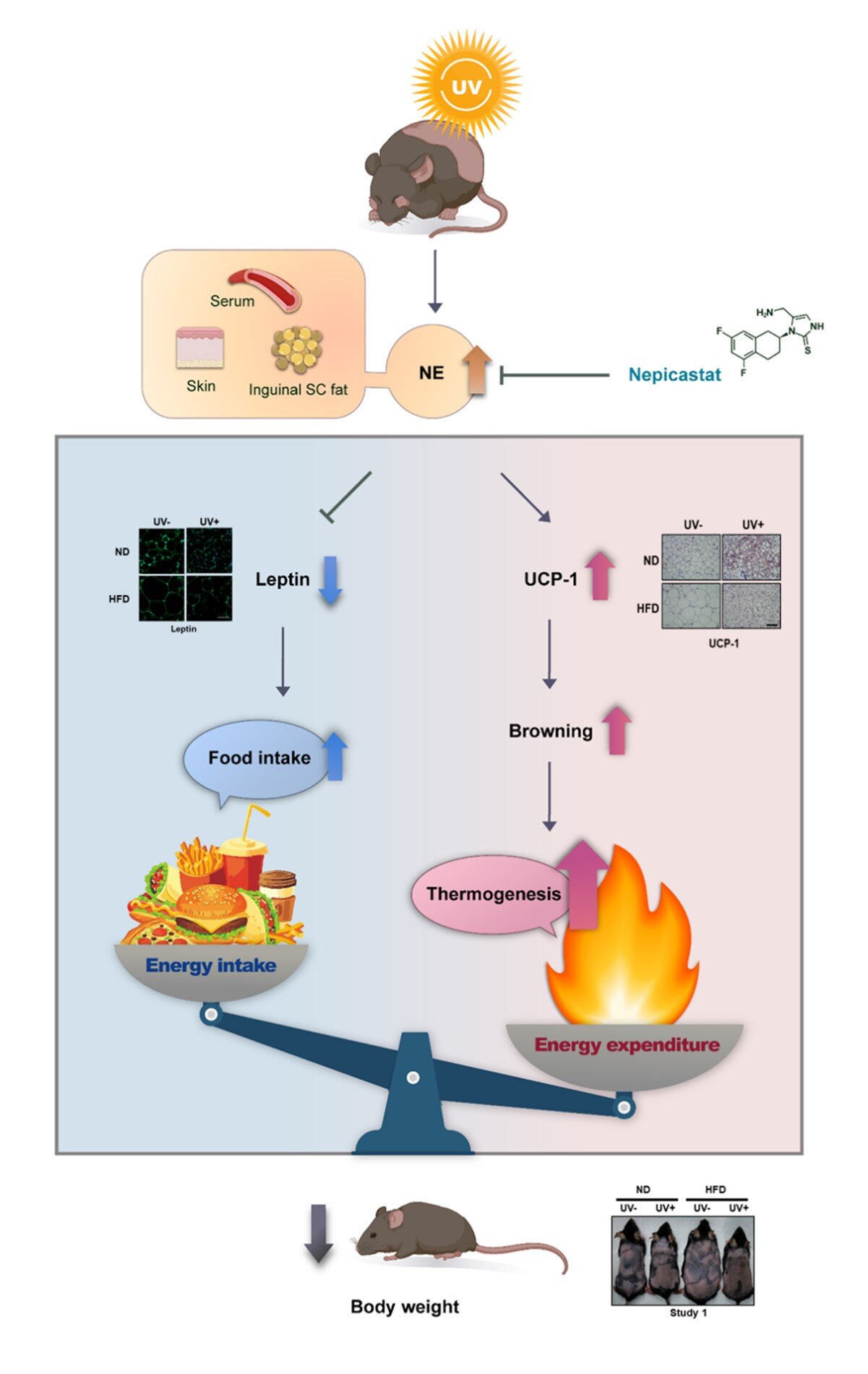
A study published in the Journal of Investigative Dermatology reveals that ultraviolet (UV) radiation can influence subcutaneous fat regulation by increasing norepinephrine levels, which decreases leptin and promotes the browning of fat, thus enhancing energy expenditure. This discovery could lead to new treatments for obesity and metabolic disorders, although further research is needed to address the long-term effects and safety of UV exposure.
Leptin, known as the "satiety hormone," regulates appetite and fat storage, playing a crucial role in weight management. While it helps signal fullness after a meal, high levels in obesity can lead to leptin resistance, contributing to increased food intake and decreased energy expenditure. Lifestyle adjustments such as a fiber-rich diet, hydration, quality sleep, and stress management can enhance leptin sensitivity and support overall well-being. Understanding leptin's complexities offers insights into energy balance and the importance of mindful choices for health.
Leptin, a hormone produced by fat cells, plays a crucial role in regulating appetite, body weight, and metabolism. Imbalance in leptin levels can lead to overeating and weight gain, often associated with leptin resistance, a condition prevalent in obesity. Strategies to improve leptin sensitivity include adopting a nutrient-rich diet, regular exercise, sufficient sleep, and stress management. These lifestyle modifications are essential for effective weight management and overall metabolic health.
A recent perspective article published in the journal Science highlights the complex mechanisms of obesity pathogenesis, emphasizing that it involves genetic, environmental, and physiological interactions beyond exercise and diet. The article discusses the role of leptin and fat cells in regulating food consumption and poses key unanswered questions regarding the regulation of body weight and adiposity, the integration of nutritional and energy signals in the brain, the impact of the food environment, the interaction between genetics and environmental factors, and the need to understand obesity as a multifaceted problem for effective prevention and treatment strategies.
Ghrelin and leptin are hormones that work together to regulate hunger and fullness. An imbalance in these hormones can disrupt appetite regulation and metabolism, leading to overeating and weight gain. Symptoms of an imbalance include constant hunger, difficulty feeling full, overeating, cravings for junk food, and weight gain. Factors such as diet, sleep, physical activity, and genetics can contribute to hormone imbalances. Strategies to balance ghrelin and leptin levels include maintaining a regular eating schedule, mindful eating, limiting sugar and processed foods, getting enough sleep, managing stress, engaging in regular physical activity, and eating a balanced diet. Foods high in fiber, healthy fats, and protein can help keep you fuller longer and stabilize energy levels. It is important to consult with a healthcare provider or endocrinologist for hormone imbalances.
Two children who experienced intense, insatiable hunger that drove them to overeat have rare, never-before-seen genetic mutations that interfere with leptin, a key hormone that helps tell the body when it is full, a new case report says. Both children carried slightly different leptin-disrupting genetic mutations. Doctors provided metreleptin, a synthetic form of leptin, to treat the children. Both children also participated in fasting and exercise programs, to help reduce their white fat and therefore their leptin production. Eventually, both children attained near-normal weight.