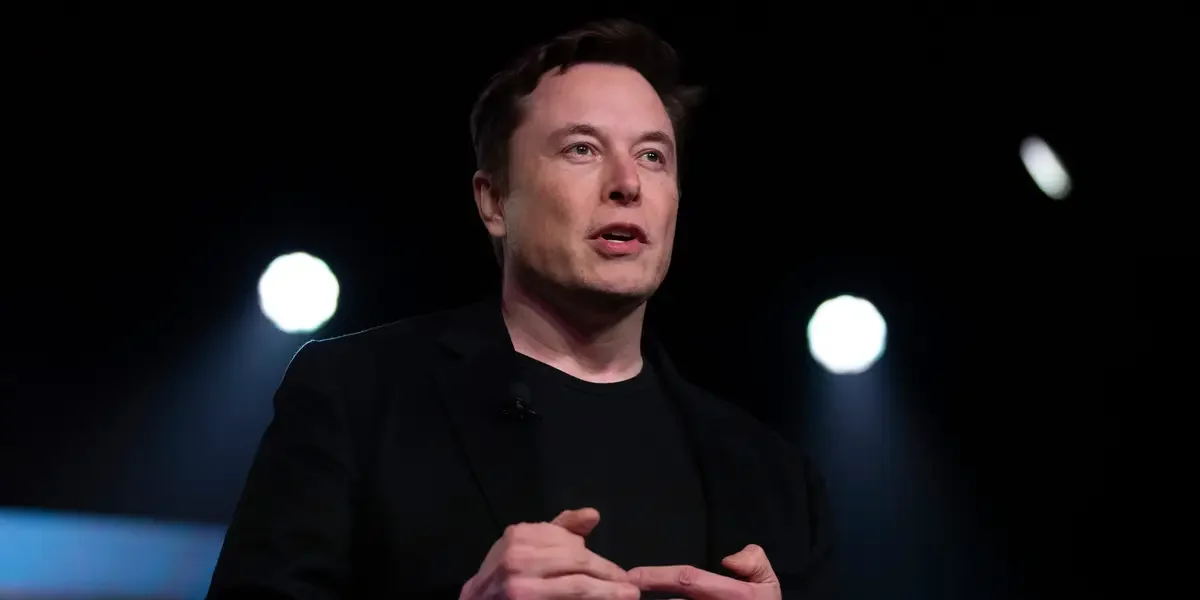
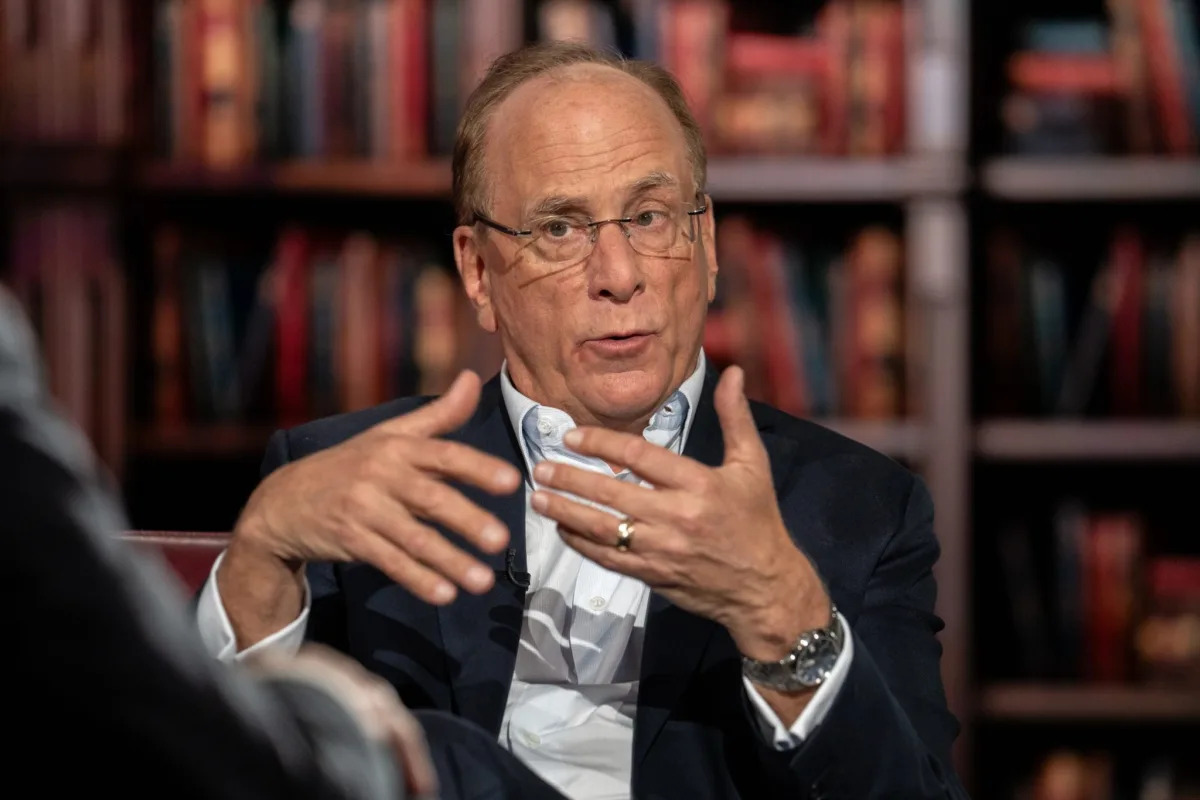
Elon Musk was added to the Davos schedule for a 4:30 p.m. Thursday session with BlackRock CEO Larry Fink, marking an unexpected appearance at the World Economic Forum; no topic has been disclosed for his remarks.
BlackRock CEO Larry Fink tells the World Economic Forum in Davos that capitalism is losing its legitimacy and must evolve as AI disruption and widening inequality test prosperity, urging broader dialogue beyond Davos to ensure gains reach more people and to measure prosperity by real-world impact.
Six years after BlackRock CEO Larry Fink pledged trillions to address climate change, Wall Street’s climate initiatives have largely stalled, with critics arguing that high-profile commitments have not yielded meaningful, systemic changes in finance.
BlackRock CEO Larry Fink warns that America's $35 trillion national debt will become a significant burden for future generations unless the private sector is allowed to grow. He emphasizes the need for economic growth over spending cuts to manage the rising debt-to-GDP ratio, which is projected to reach 122% by 2034. Fink advocates for unleashing the potential of the private sector to drive growth and mitigate the impact of the national debt.
BlackRock CEO Larry Fink, once a skeptic of Bitcoin, now endorses it as a legitimate financial instrument and a potential portfolio asset, likening it to "digital gold." His comments come as BlackRock's Bitcoin ETF, the iShares Bitcoin Trust, sees significant inflows, highlighting Bitcoin's growing acceptance in mainstream finance. This shift underscores the evolving investment landscape where diversification and uncorrelated assets like Bitcoin are increasingly valued.
BlackRock CEO Larry Fink expresses surprise at the explosive growth of spot bitcoin exchange-traded funds, with the firm's iShares Bitcoin Trust ETF pulling in $10 billion in the first few weeks and now nipping at the heels of Grayscale’s Bitcoin Trust. The SEC's approval of spot bitcoin ETFs in January has made it easier for both institutional and Main Street investors to invest in bitcoin, driving gains for the cryptocurrency and rivaling interest in gold. However, some remain skeptical about the value of a bitcoin ETF compared to physically backed assets like gold.
BlackRock CEO Larry Fink discusses the economy's "tale of two parts," highlighting the strength of large-cap companies and the expansion of market breadth. He dismisses concerns of a stock market bubble, citing earnings momentum and validation of stock prices. Fink anticipates "probably two more" rate hikes by the Federal Reserve but believes it won't significantly impact homeowners with 30-year mortgages.
BlackRock CEO Larry Fink and other experts are advocating for raising the Social Security retirement age, citing demographic shifts and the program's looming shortfall. Fink argues that the current retirement age of 65 is outdated and proposes a new full retirement age of 67, while others suggest different changes such as a higher minimum benefit or a flat benefit for all retirees. As the debate continues, the focus remains on ensuring that workers can retire on their own terms and with enough financial security.
BlackRock CEO Larry Fink criticizes the U.S. retirement age of 65 as outdated, suggesting that Americans should work longer due to changing demographics and the strain on the retirement system. However, experts argue that ageism and health issues often force older workers to retire earlier than planned. Fink's comments are notable given BlackRock's influence in retirement accounts, and he also promotes a new target-date fund. He urges his generation, the baby boomers, to address the nation's retirement problems before their leadership positions fade, emphasizing the impact on future generations and the country's collective belief in the future.
BlackRock CEO Larry Fink faced backlash after calling retirement at 65 "a bit crazy," with critics accusing him of being out of touch with the financial realities of most Americans. Fink's comments sparked a debate about wealth inequality and the challenges many people face in saving for retirement, especially as life expectancies increase.
BlackRock's CEO Larry Fink has warned of a looming financial crisis facing retirees and announced the launch of "LifePath Paycheck" next month to address the issue, aiming to make it available for 500,000 employees as defined contribution plans. Fink emphasized the need for an organized effort to ensure future generations can retire with dignity, citing data showing nearly half of Americans aged 55 to 65 have no retirement savings. He also highlighted climate transition as a major economic trend and discussed BlackRock's ESG policies, which have been a topic of discord, particularly in Republican states.
BlackRock CEO Larry Fink addressed the retirement crisis in his annual letter to shareholders, emphasizing the need for government and business leaders to take action. With lifespans increasing and many Americans lacking retirement savings, Fink suggested leveraging capital markets and adjusting the retirement age or encouraging later work as potential solutions. He also highlighted the importance of employer benefits and state-level retirement programs in addressing the issue.
BlackRock CEO Larry Fink warns of a looming retirement crisis in the US and urges baby boomers to help younger generations save for their futures to prevent disillusionment with capitalism and politics. Fink calls for a high-level effort to rethink the retirement system, questioning the conventional retirement age and emphasizing the need for corporate leaders and politicians to take action. He also addresses the shift from defined benefit to defined contribution pensions and announces upcoming initiatives to address retirement challenges. Fink's annual letter also highlights BlackRock's focus on energy pragmatism, the urgency of the US public debt situation, and the firm's excitement about business opportunities in bond management.
BlackRock CEO Larry Fink warns of an impending retirement crisis as the world's population continues to age, emphasizing the need for individuals and governments to prioritize financial planning and address the challenges posed by longer life expectancies and inadequate retirement savings.