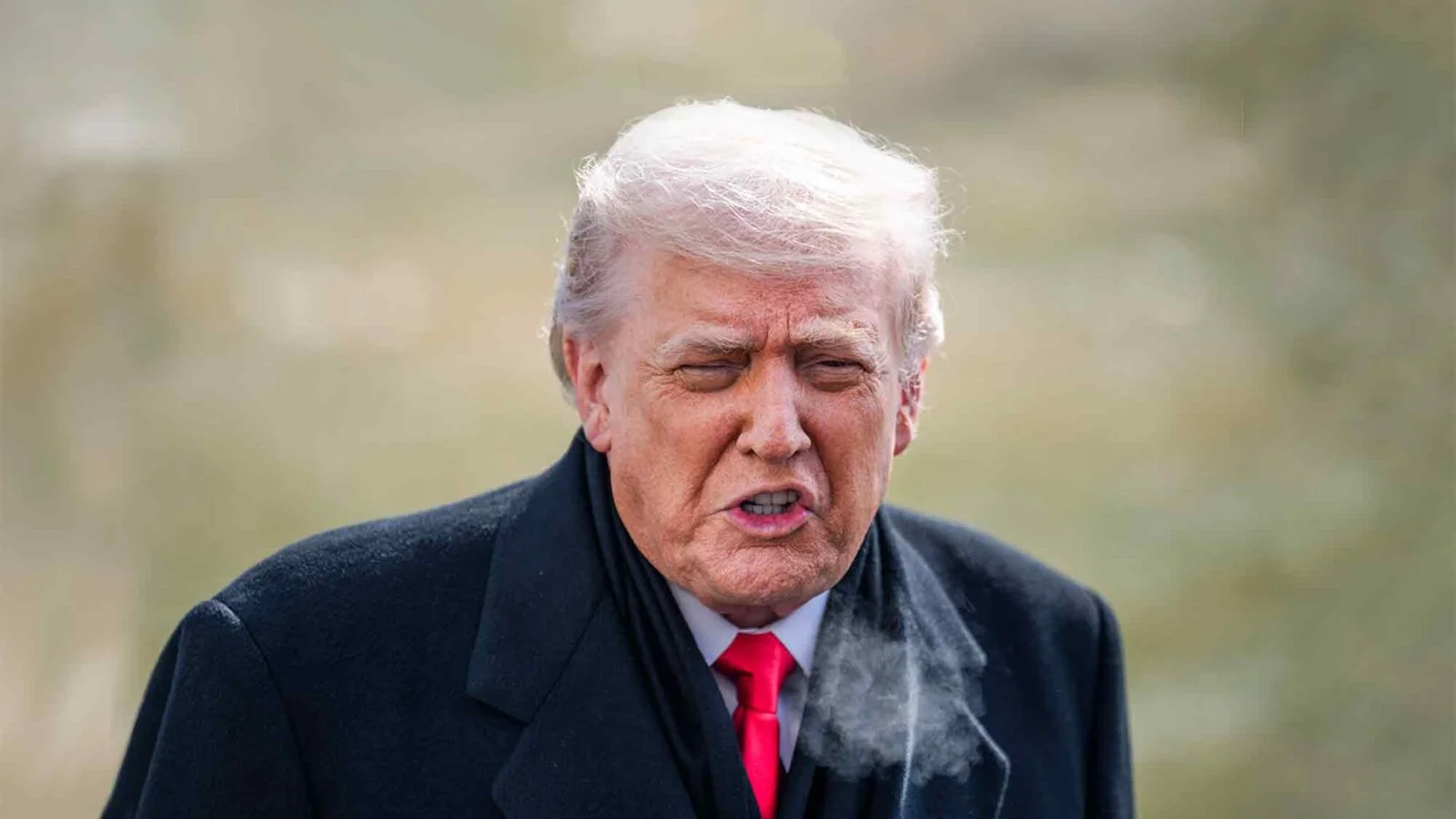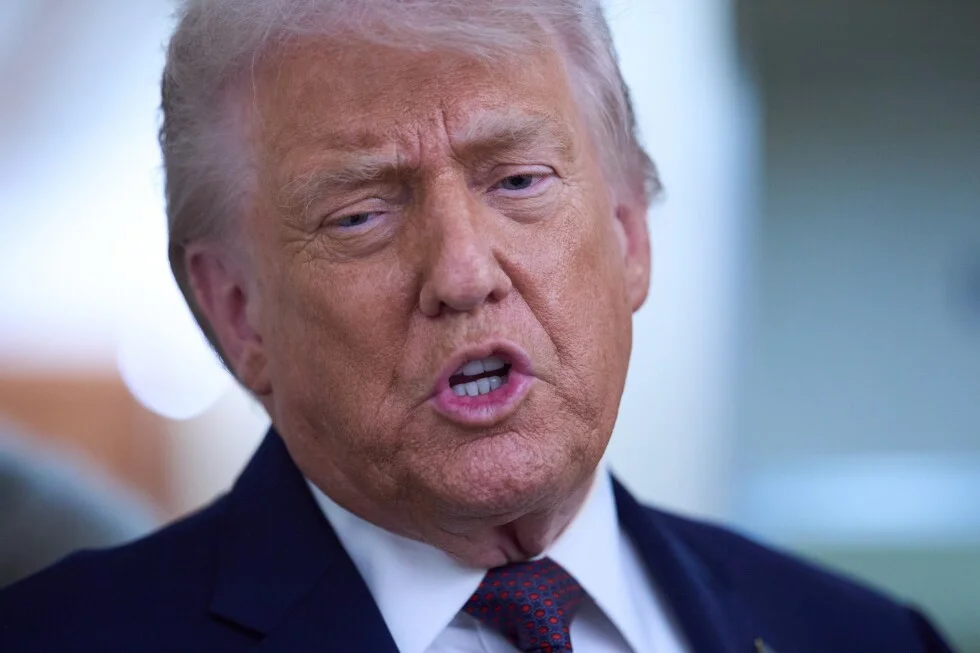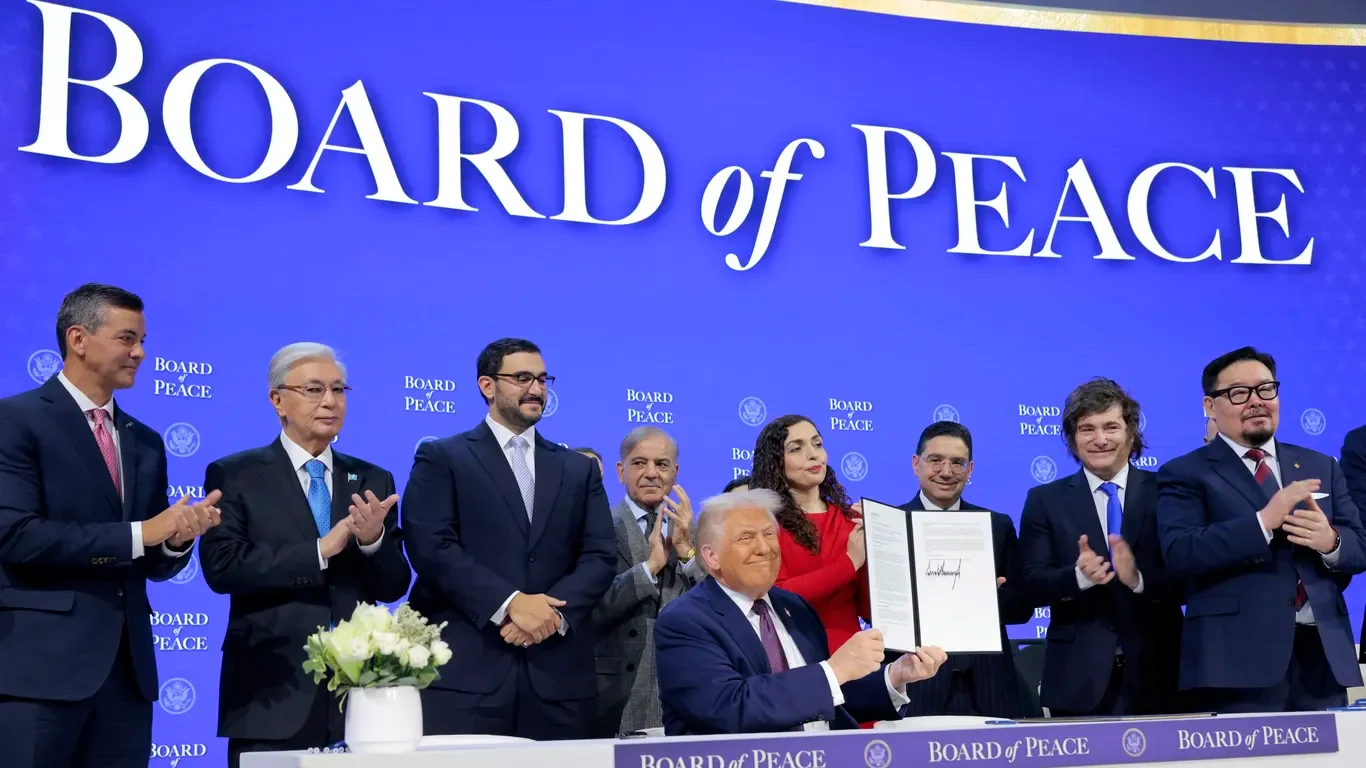
Microsoft and McKinsey are each contributing up to $1 million to support Donald Trump's platform at the Davos summit, highlighting their financial backing and interest in engaging with Trump during this event.
Argentina, led by President Javier Milei, faces a severe currency crisis despite implementing shock therapy reforms, prompting the US to provide a $20 billion currency swap to support the peso, marking a significant geopolitical and economic intervention that highlights US influence and regional tensions.
The founder of the World Economic Forum, Klaus Schwab, has stepped down amid allegations of sending inappropriate emails, practicing workplace harassment, and misusing funds, though he denies the misconduct. An internal probe revealed a culture of bullying and misconduct at the organization, leading to Schwab's resignation after the investigation was launched.
A ski hire shop in Davos, Switzerland, faced backlash and legal action after posting signs in Hebrew announcing a ban on renting skis and sledges to Jewish customers, citing incidents of theft. The shop has since taken down the signs and apologized, stating that Jewish customers are welcome. However, the incident has sparked outrage and legal action from the Swiss Federation of Jewish Communities and raised concerns about discrimination and antisemitism in the region, particularly in light of previous tensions between the Orthodox Jewish community and local hosts.
A video of elites at the World Economic Forum discussing the environmental impact of coffee production has sparked outrage on social media, with many criticizing the discussion as an attempt to regulate something people love. Swiss banker Hubert Keller's comments on the CO2 emissions from coffee production and the potential impact on coffee growers have drawn sharp criticism and accusations of a power grab. Critics argue that the discussion is part of a larger plan to make people feel guilty for existing and to change their purchases to products owned by WEF-connected billionaires.
The World Economic Forum in Davos showcased the shifting global power dynamics, with India and the Middle East making a strong presence, while China made a subdued impression. Discussions revolved around topics such as artificial intelligence and the disruption to global shipping caused by Houthi attacks on vessels in the Red Sea. The event also highlighted concerns about the impact of technology on jobs and inequality, as well as the potential for a pickup in dealmaking and the uncertain future of global monetary policies.
The World Economic Forum in Davos concluded with a panel discussing the state of the global economy, acknowledging that while most countries have outperformed expectations, there are challenges ahead. The global economy is facing fractures, with a grim struggle for economic supremacy between Washington and Beijing, widening gaps between north and south, and challenges to liberal democracy. Despite this, globalisation is not dead, but is evolving into "glocalisation," characterized by shorter supply chains, emphasis on domestic manufacturing, and a more strategic role for government. The shift towards onshoring previously outsourced production has been accelerated by recent events, leading to a growing interest in industrial policy and green growth plans.
The World Economic Forum (WEF) and its founder, Klaus Schwab, have come under scrutiny for fostering cronyism and elitism, with concerns raised about the organization's future after Schwab. Critics argue that WEF has become an exclusive networking club for the mega-rich and super-powerful, perpetuating an unaccountable system that doesn't reflect the needs of all society. The organization's invite-only policy to its annual event has also drawn criticism, as well as its calls for a greener global economy juxtaposed with the use of private jets emitting high levels of carbon. Additionally, Schwab's association with the global elite and the concept of "the Great Reset" have sparked controversy amid widening wealth disparities.
At the Davos World Economic Forum, Argentina's President Javier Milei warned that the Western world is in danger due to the embrace of socialism, while Heritage Foundation President Kevin Roberts criticized the attendees for being part of the problem. Former President Trump found support from JPMorgan Chase CEO Jamie Dimon, who praised Trump's handling of the economy and China. Blackstone CEO Steve Schwarzman expressed doubts about the Biden administration's approach to various issues and its ability to handle a second term, while Greece's Prime Minister Kyriakos Mitsotakis cautioned against alienating populist voters. Open Society Foundations Chairman Alex Soros criticized the "Davos consensus" and discussed the potential return of Donald Trump to the presidency.
The 2024 World Economic Forum in Davos brought together 3,000 participants, including business leaders, heads of state, and academics, to discuss pressing global issues. Key takeaways included concerns about geopolitical instability, upcoming elections in democratic countries, the impact of climate change on human health, the importance of preparing data for artificial intelligence, and discussions around the future of AI, with OpenAI's CEO expressing hopes for significant advancements in the next decade.
Ukrainian President Volodymyr Zelensky faced a tough time at the World Economic Forum in Davos as he sought private sector investment to rebuild his country's economy. Despite a positive pitch and interest from Wall Street bigwigs, Zelensky left empty-handed as no hard commitments were made. While there is interest in investing in Ukraine, the ongoing war with Russia remains a major obstacle for significant capital raise. However, there is hope as Zelensky's efforts to root out corruption and revive the economy have garnered some support, and there are potential investments from figures like Robert Kraft on the horizon.
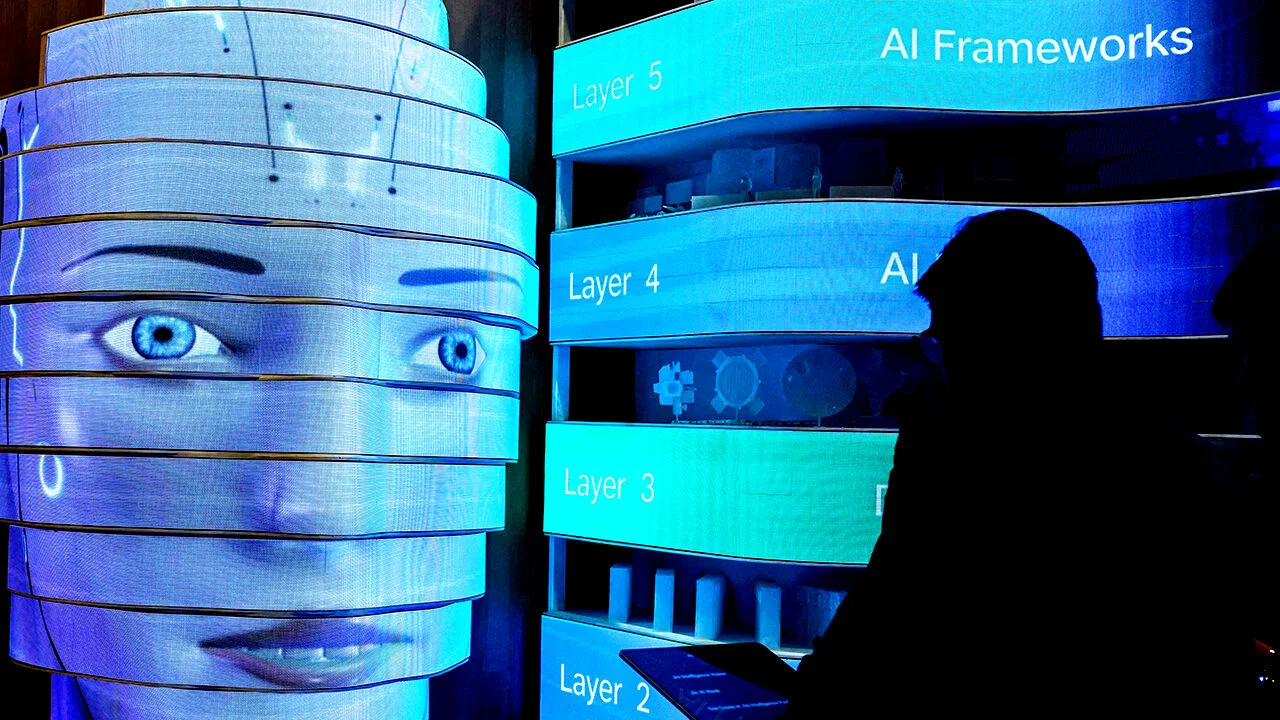
The annual meeting of the World Economic Forum in Davos, Switzerland, saw a significant focus on the regulation of artificial intelligence, with discussions emphasizing the need to proactively manage the potential risks and unintended consequences of new technologies, as highlighted by Microsoft CEO Satya Nadella.
The World Economic Forum in Davos, Switzerland, returned to its prepandemic form this year, with artificial intelligence emerging as a major theme, overshadowing the official theme of "rebuilding trust." Discussions centered on A.I.'s potential uses, risks including job losses and misinformation, and the financial opportunities in the climate transition, despite climate change not being a big focus of the event.
Global elites at the World Economic Forum conference in Davos, Switzerland have shifted their tone on artificial intelligence, expressing concerns about its potential dangers and the need to make AI trustworthy. Leaders are worried about job losses, disinformation, and the need for human control over machines. Even CEOs invested in AI, like Salesforce's Marc Benioff, are warning about the risks, with Benioff likening the potential impact of AI to a "Hiroshima moment." Despite the warnings, some CEOs still plan to replace employees with AI, highlighting the ongoing debate about the impact of AI on society.
Wealthy attendees at the World Economic Forum in Davos complained about long lines at the conference's go-to hotel and popular parties, with some waiting up to an hour to get in. Even those with the most elite white badges experienced delays, highlighting that sometimes even money can't buy its way out of a line.