
JWST finds a red supergiant survivor after a stellar merger
TL;DR Summary
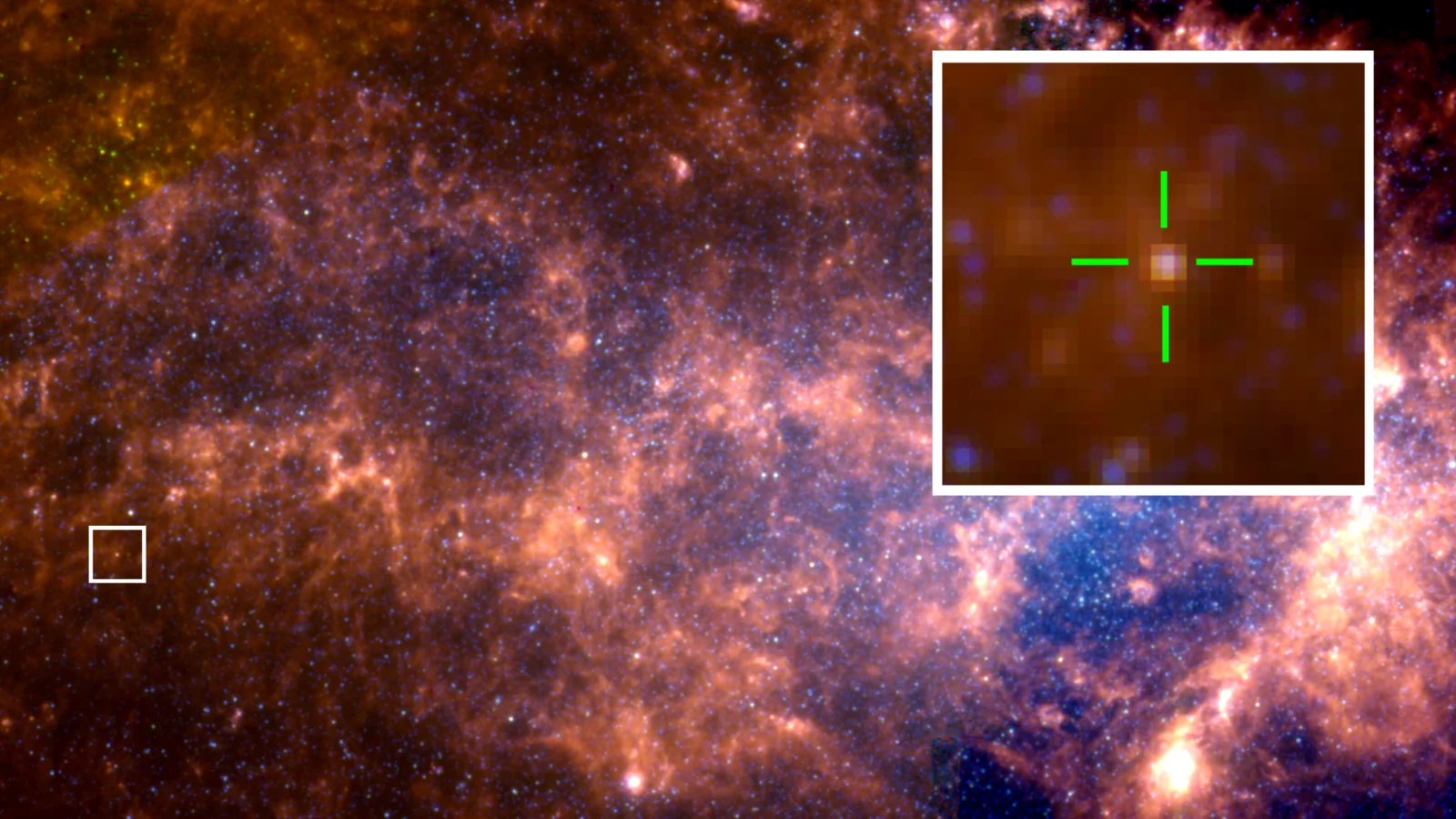
Using infrared observations from the James Webb Space Telescope (with prior Hubble and Spitzer data), researchers revisited nine luminous red novae and found that, in the cases of AT 2011kp and AT 1997bs, the merger left behind a massive, cool, red supergiant–like star rather than a hotter compact remnant. The event expelled a vast dust shell—carbon-rich graphite dust—amounting to about 300 Earth masses, potentially seeding the cosmos with materials for life. The findings, to be published in Astronomy & Astrophysics, suggest stellar mergers can produce long-lived massive stars and contribute significantly to interstellar dust and chemical evolution.
Topics:science#interstellar-dust#james-webb-space-telescope#luminous-red-nova#red-supergiant#space#stellar-merger
Reading Insights
Total Reads
0
Unique Readers
13
Time Saved
76 min
vs 77 min read
Condensed
99%
15,240 → 97 words
Want the full story? Read the original article
Read on Space