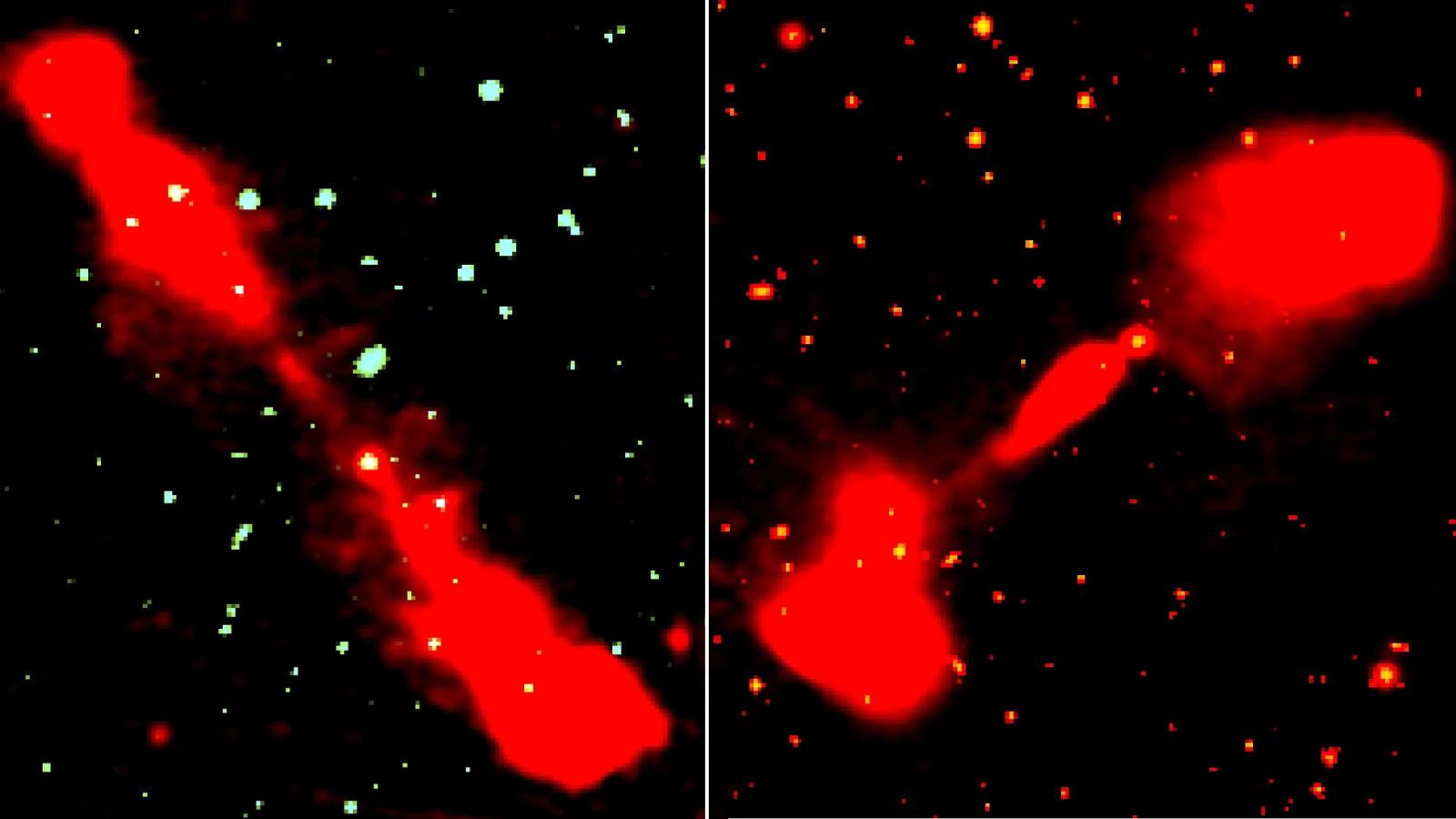
Astronomers have discovered 53 new giant radio quasars powered by supermassive black holes, with jets extending up to 7.2 million light-years, providing insights into galaxy evolution and the intergalactic medium, especially in denser cosmic environments.
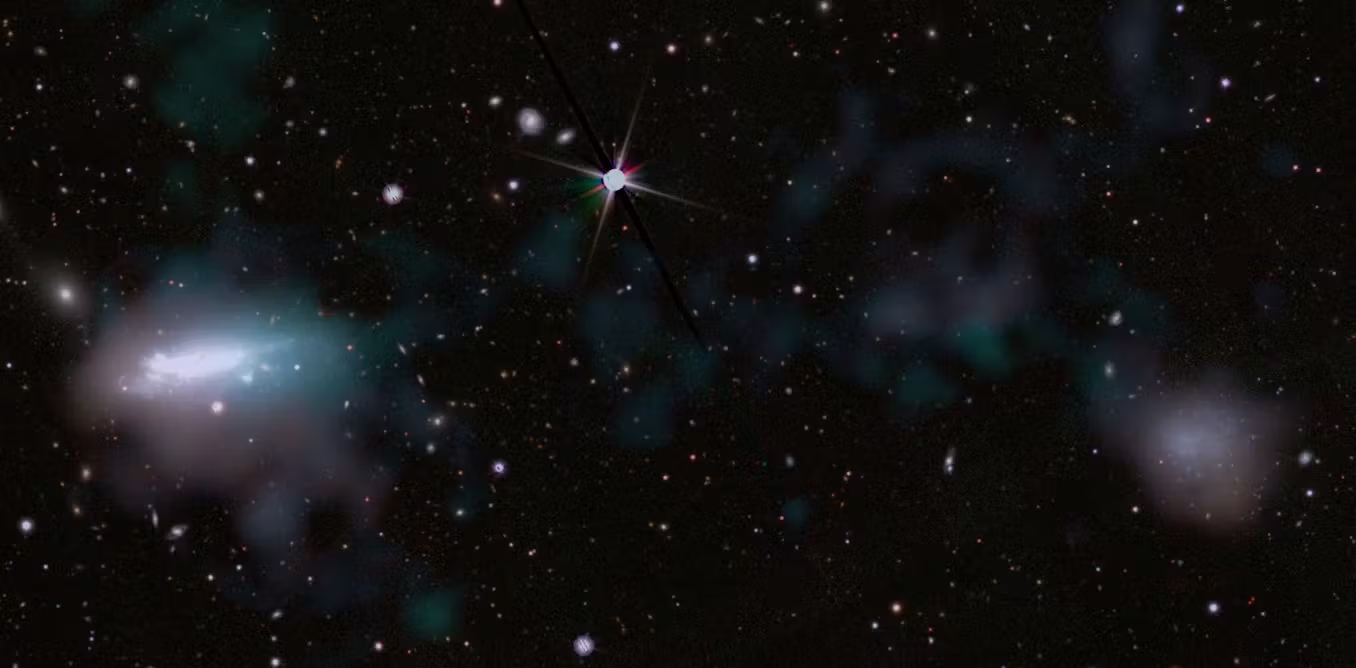
A new discovery from the WALLABY survey using the ASKAP telescope revealed a 160,000-light-year-long gas bridge between two dwarf galaxies, formed by tidal interactions, and a massive gas tail caused by ram pressure as the galaxies move through the Virgo cluster's hot gas, providing insights into the cosmic cycle of matter between galaxies and intergalactic space.
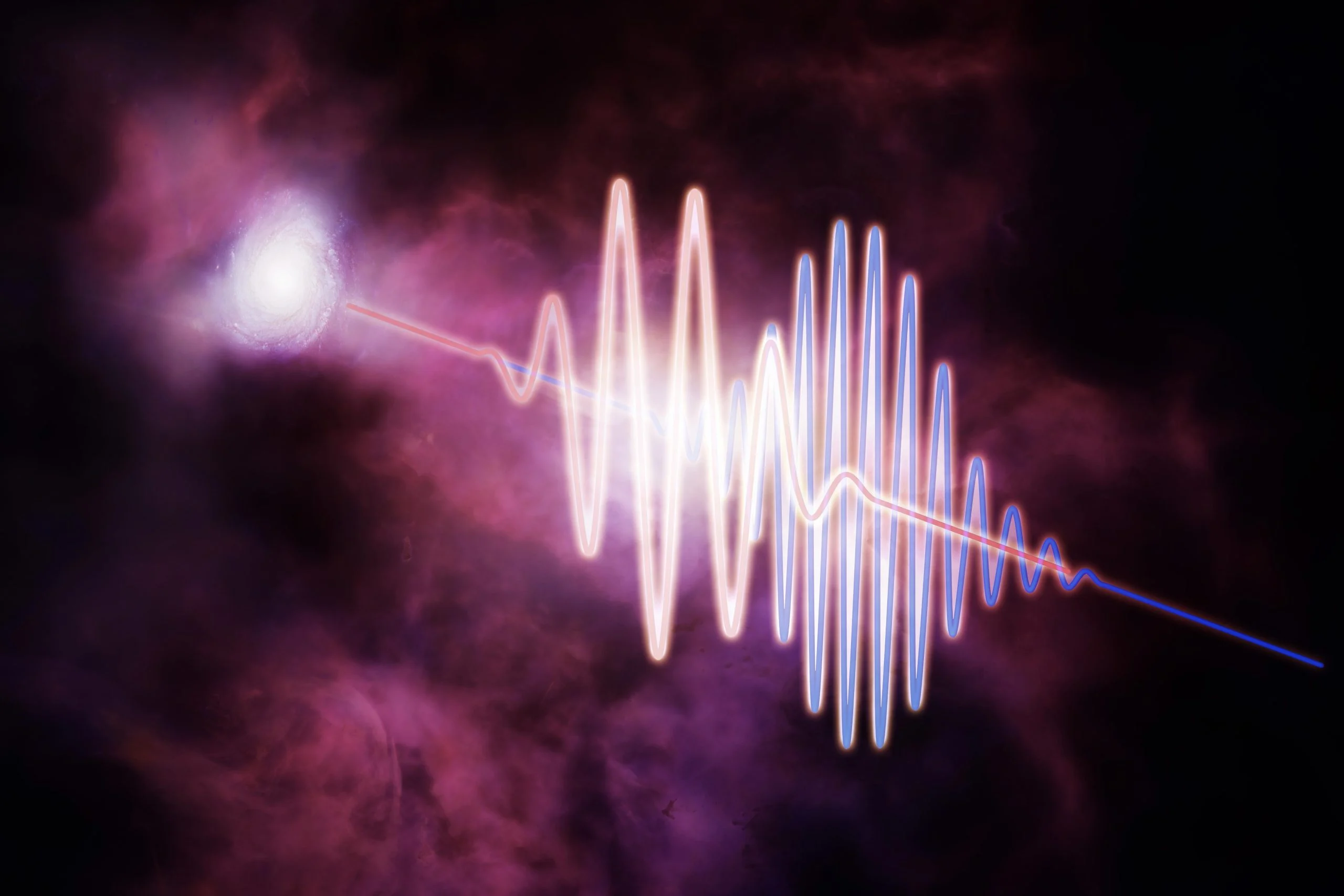
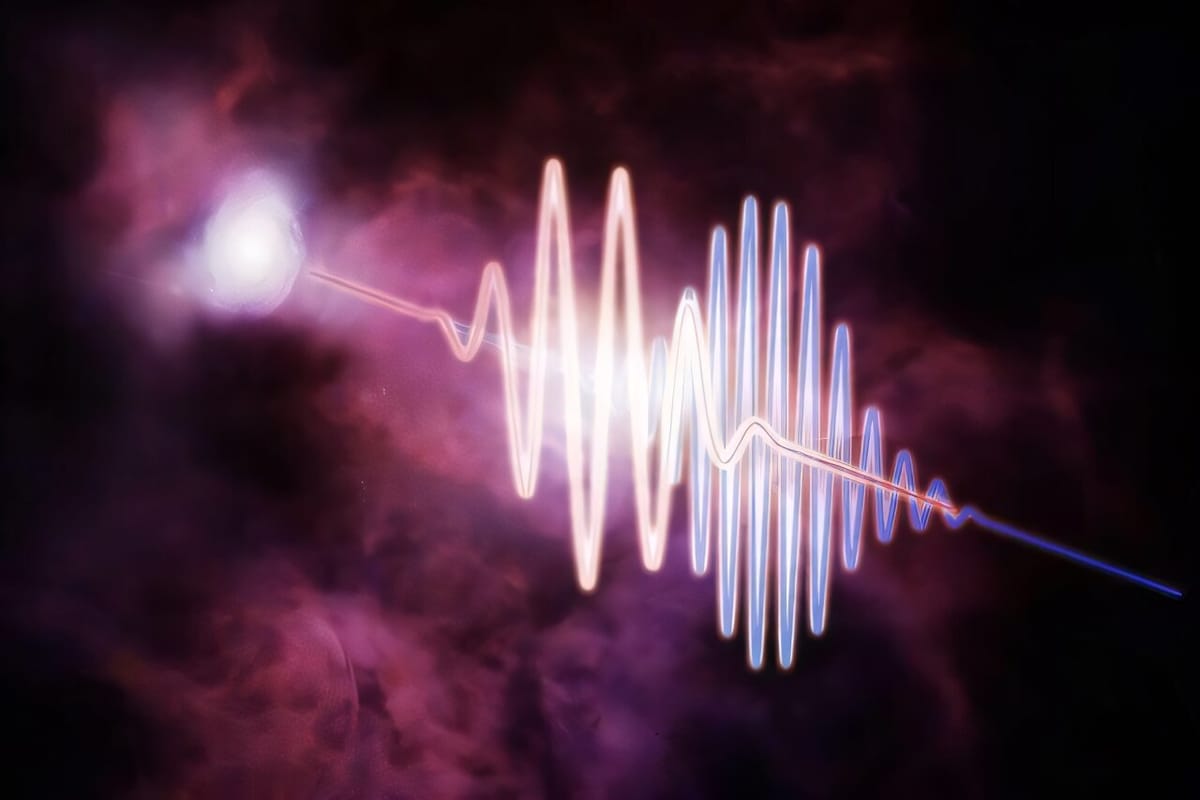
Astronomers have used Fast Radio Bursts to locate and measure the universe's 'missing' ordinary matter, finding that over 75% of it resides in the intergalactic medium between galaxies, marking a major breakthrough in understanding cosmic matter distribution.
Astrophysicists have used fast radio bursts to locate the Universe's missing normal matter, finding that about three-quarters of it resides in the intergalactic medium between galaxies, primarily as hydrogen gas, helping to solve a decades-old cosmic mystery.
Scientists have confirmed the location of the universe's 'missing' baryonic matter, finding that about 76% of it exists as gas in the intergalactic medium, using fast radio bursts to illuminate these dark regions and improve understanding of cosmic matter distribution.
Using fast radio bursts, astronomers have accounted for all the regular matter in the universe, solving the long-standing 'missing baryon problem' by locating most of this matter in the intergalactic medium and galaxy halos.
Astronomers used fast radio bursts to map and locate the universe's missing ordinary matter, revealing that about 76% of cosmic matter exists as hot, low-density gas between galaxies, helping to solve the decades-old missing baryon problem.
Scientists have used fast radio bursts to directly detect and account for all the missing ordinary matter in the universe, revealing that most of it resides in the space between galaxies, which confirms predictions from cosmological models and enhances our understanding of galaxy formation and fundamental particles like neutrinos.
Astronomers have used fast radio bursts (FRBs) to locate and account for the universe's missing ordinary matter, revealing that about 76% of it resides in the space between galaxies, with the rest in galactic halos and within galaxies, providing new insights into cosmic matter distribution.
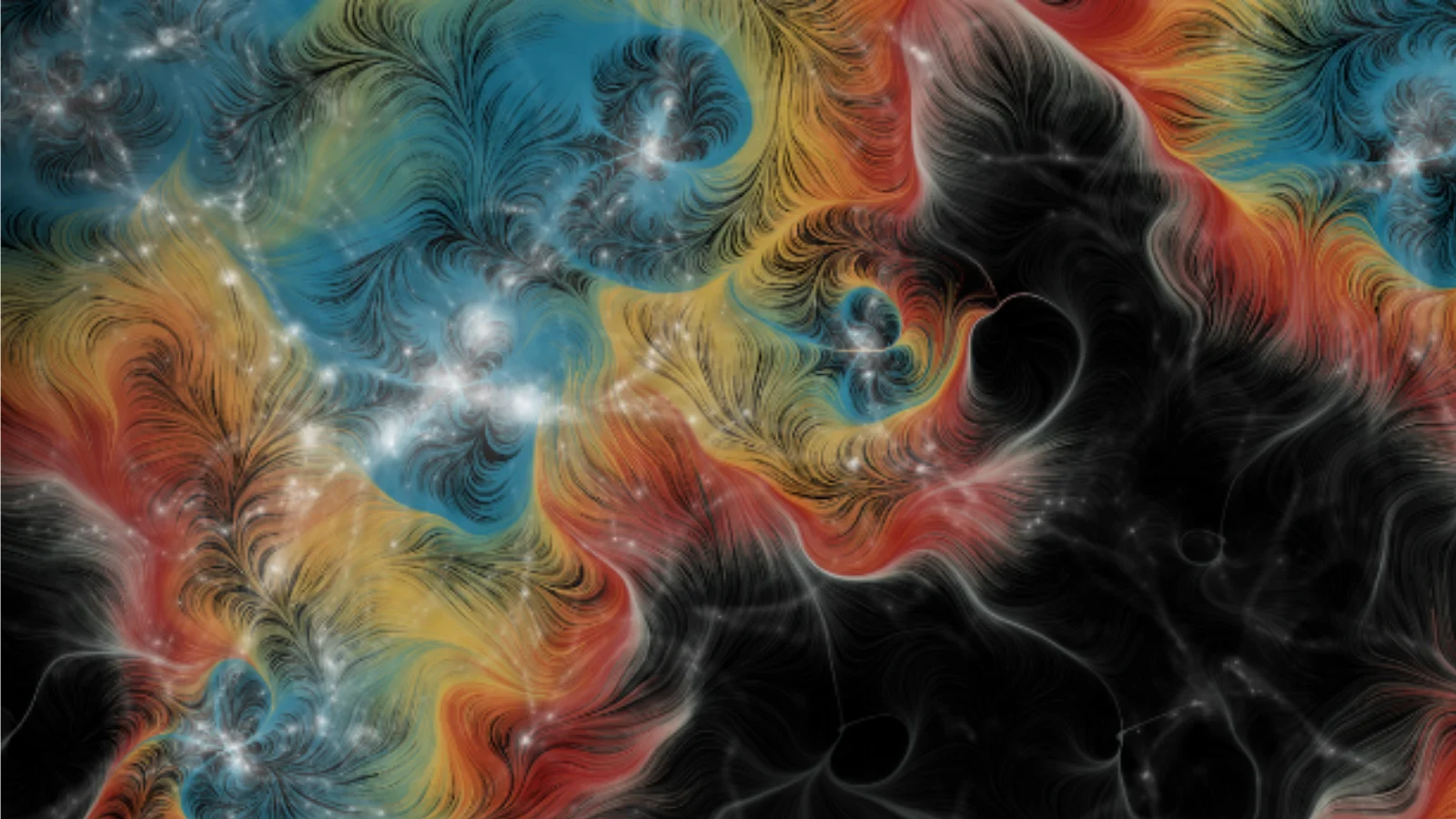
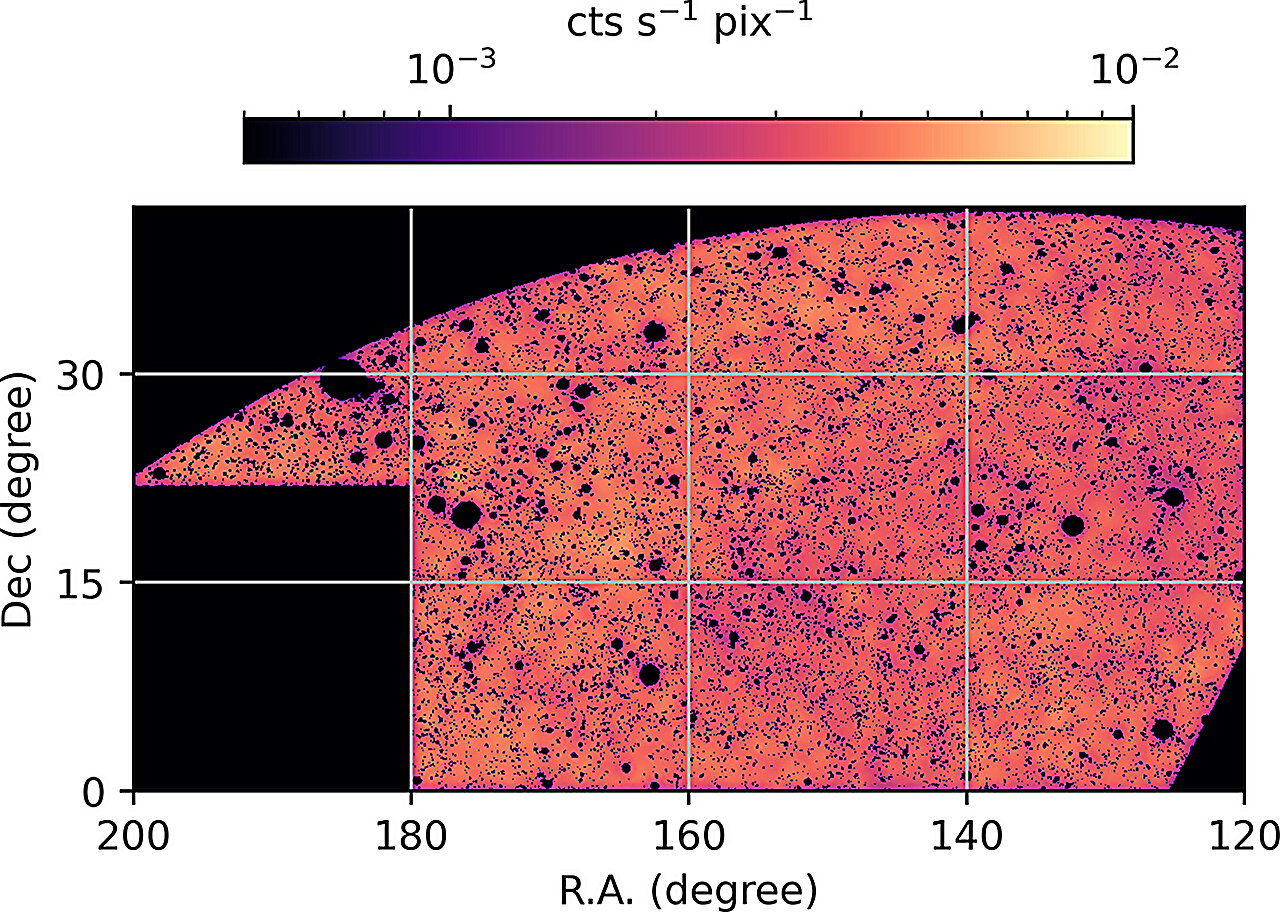
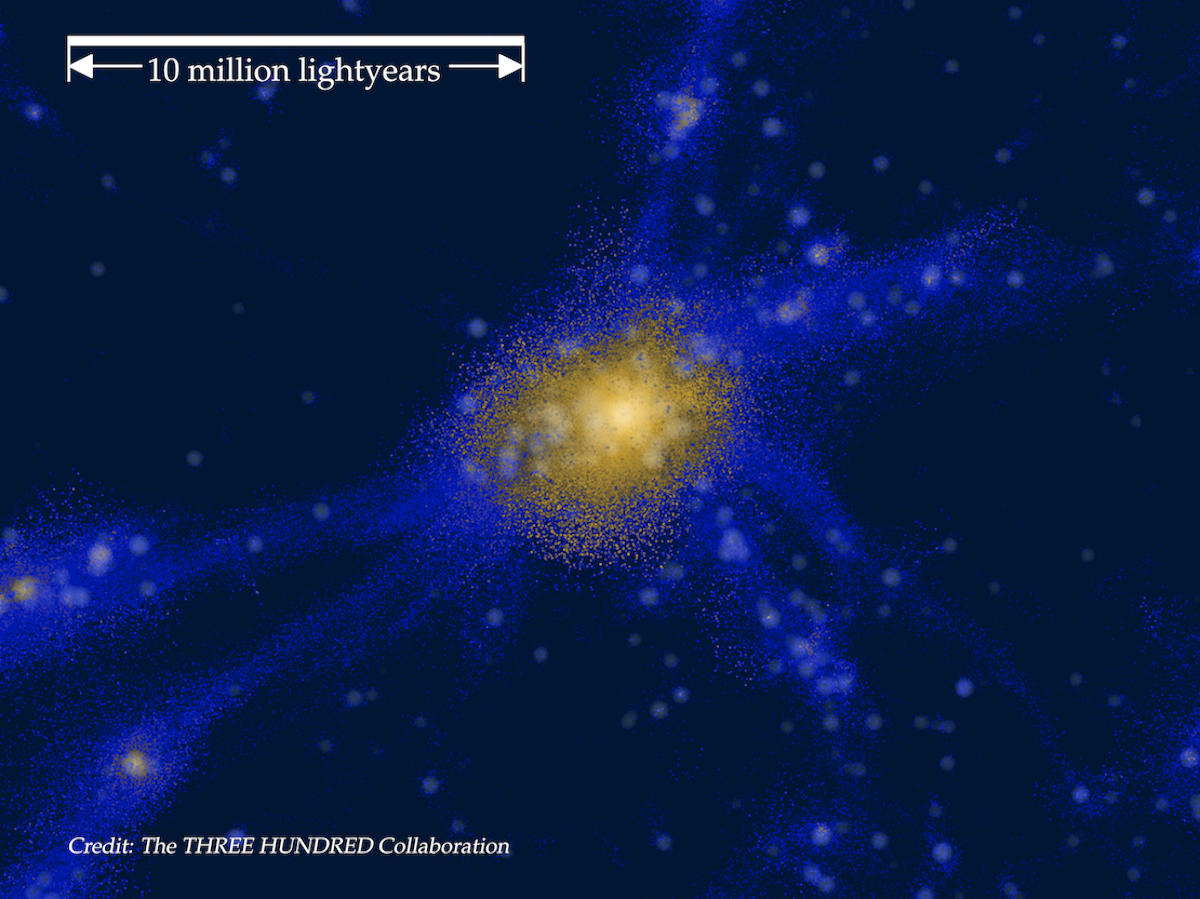
A team of European scientists has improved the quantification of the warm-hot intergalactic medium (WHIM) and cosmic filaments using data from the eROSITA X-ray instrument. These cosmic filaments, which are vast structures of hot, diffuse gas, contain about 50% of the universe's baryonic mass. The study, published in Astronomy & Astrophysics, involved analyzing X-ray emissions from nearly 8,000 filaments to determine their temperature and baryon density contrast. The findings align with numerical simulations and are expected to enhance understanding of the WHIM as future X-ray missions explore its properties further.
Astrophysicists have discovered the earliest indications of certain portions of the universe that were heated to temperatures similar to that of the intergalactic gas medium, where the majority of atoms in the universe currently reside. The team identified the furthest patch of the universe heated up to temperatures more characteristic of today’s Warm-Hot Intergalactic Medium (WHIM) at a time when the universe was only 3 billion years old. This region is a giant aggregation of galaxies known as ‘COSTCO-I’, a galaxy protocluster with a total mass of over 400 trillion times the mass of the Sun, and spanning several million light-years across.