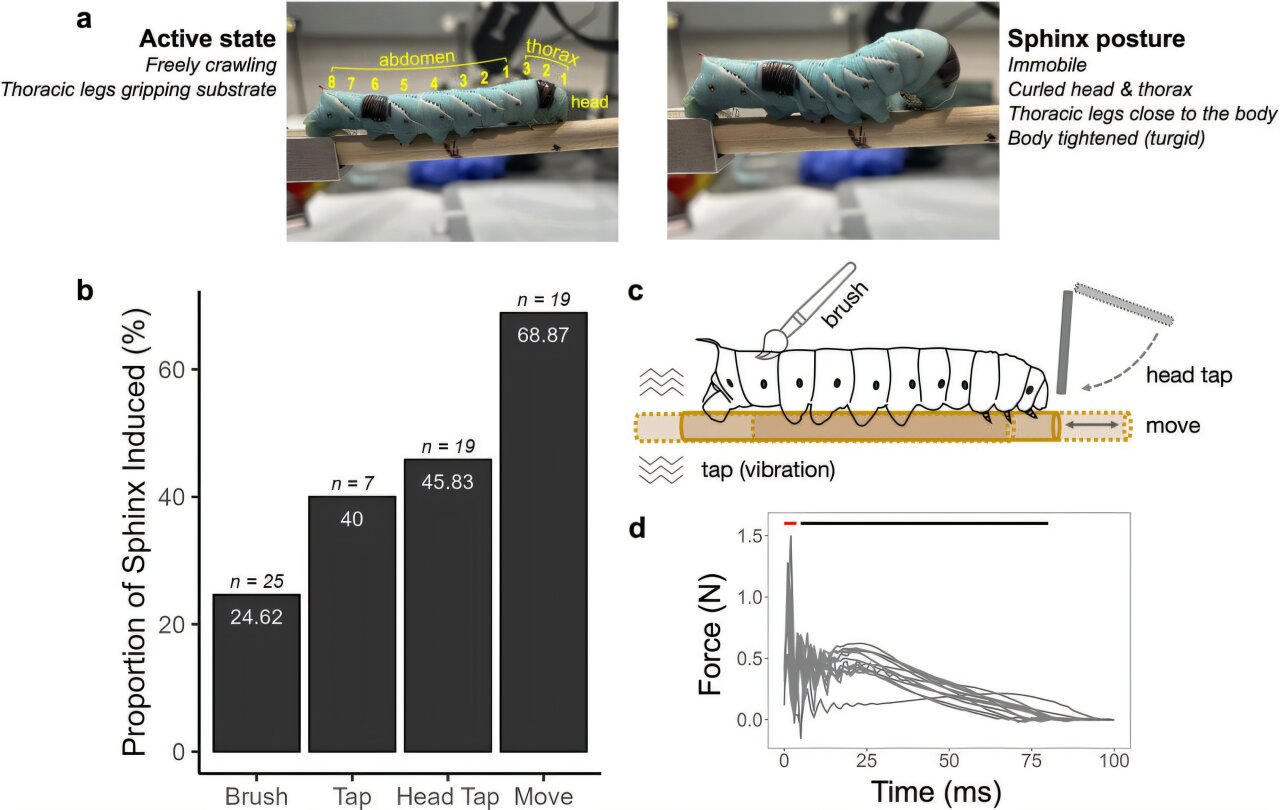
Research shows that tobacco hornworm caterpillars actively adopt a sphinx pose to suppress pain responses, challenging the idea that nociception is purely automatic and hard-wired, with potential implications for pest control and human pain research.
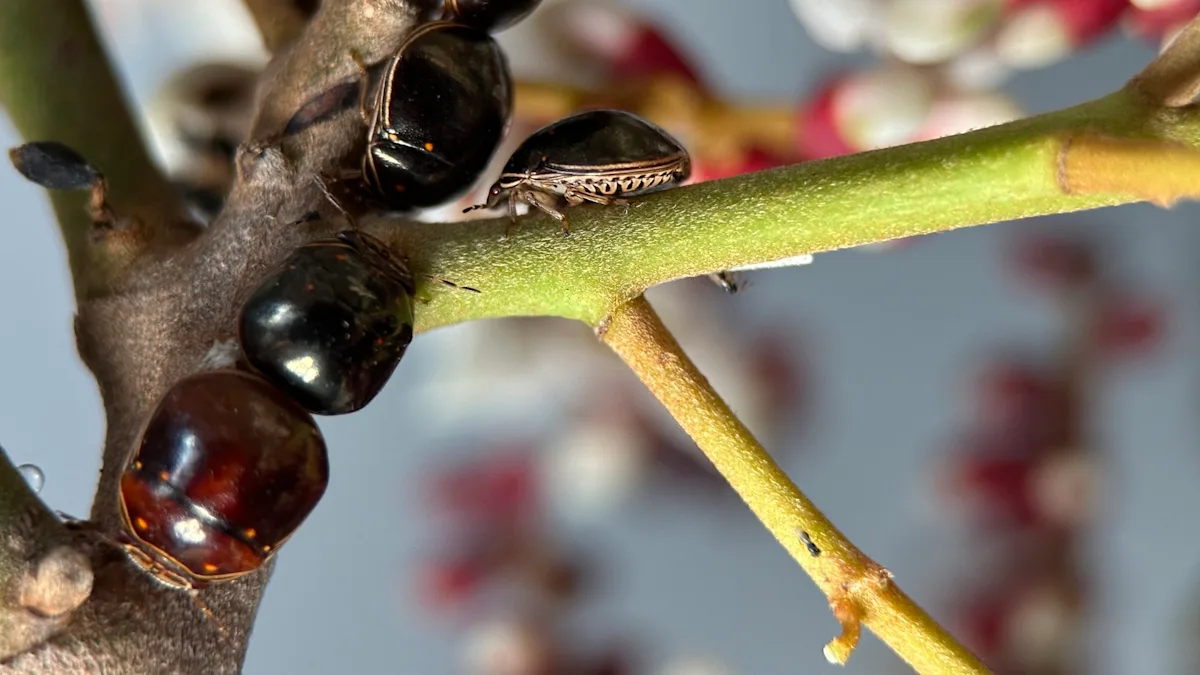
Scientists have found that azuki bean beetles, a pest affecting legume crops, lay larger male eggs under stress from increased temperatures and CO2 levels, influenced by Wolbachia bacteria, which could worsen crop damage in a changing climate. This discovery highlights the need for targeted pest management strategies that consider environmental impacts and microbial interactions to protect food supplies without harmful chemicals.
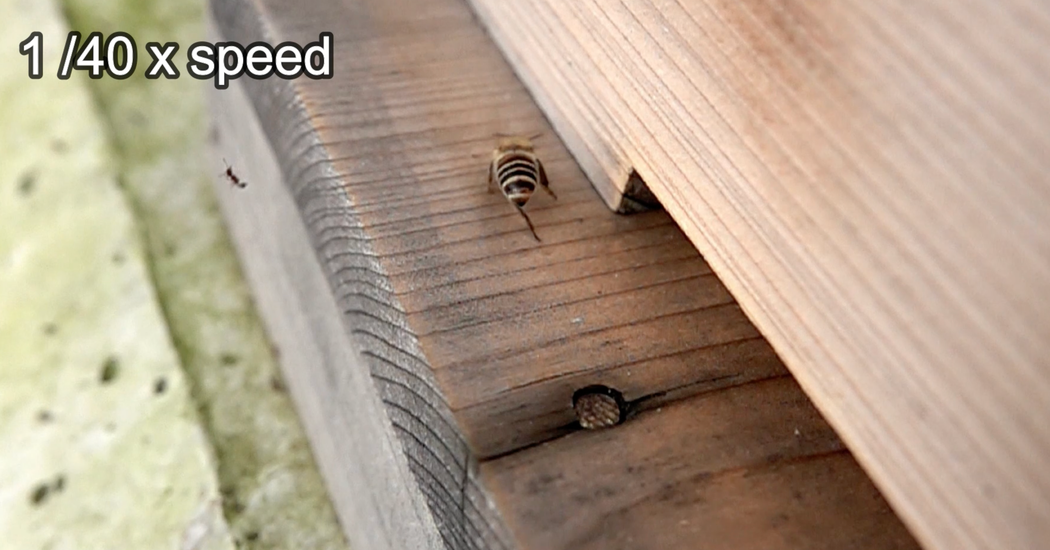
Asian honeybees use their wings to slap invading ants away from their hives, a low-energy defense mechanism that effectively sends smaller ant species tumbling through the air, as revealed by slow-motion video research from Japan's National Institute for Environmental Studies.
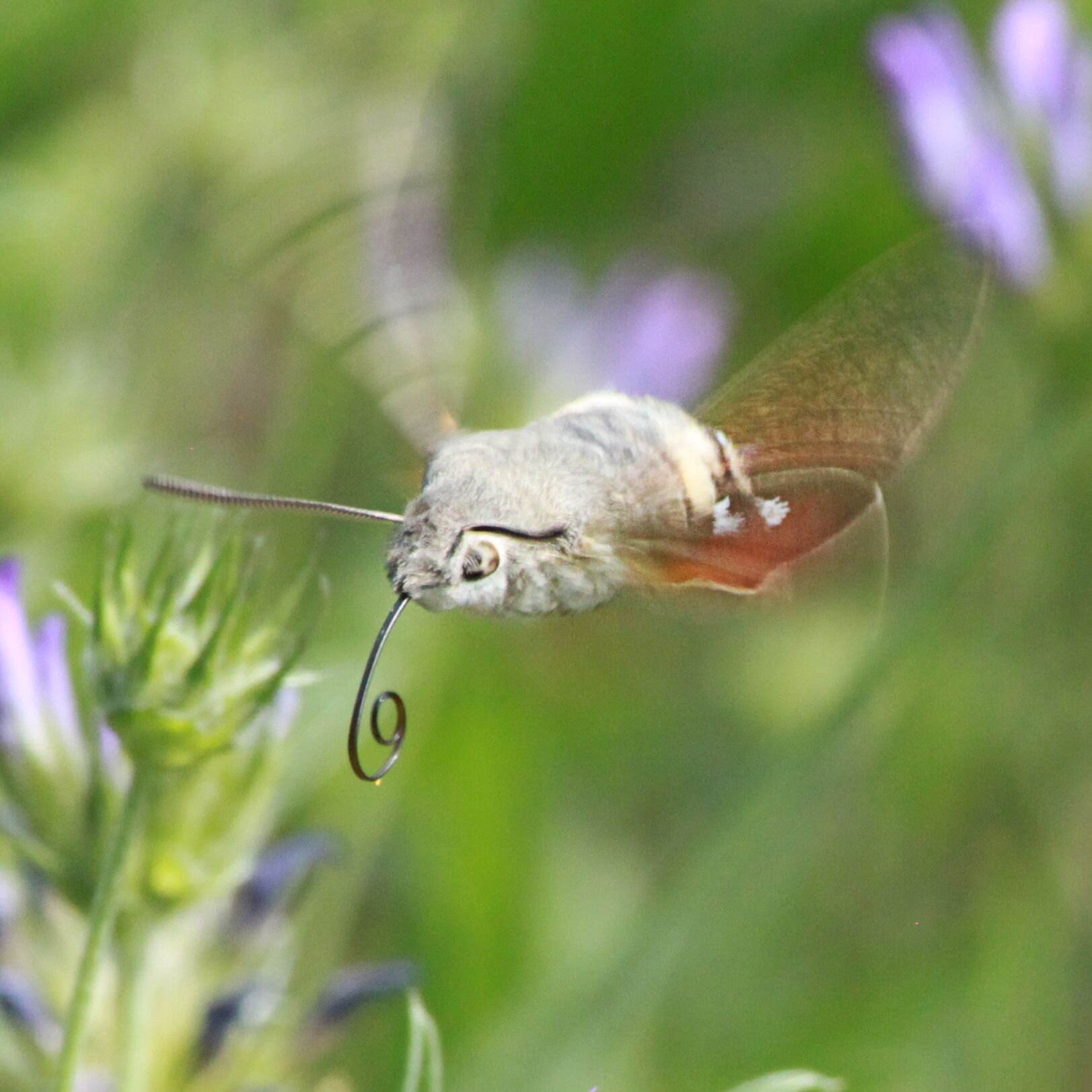
The hummingbird hawk-moth, found in Europe and North Africa, resembles a bird but is actually a moth that hovers and feeds on nectar like a hummingbird. It uses its long, curled proboscis to extract nectar from tube-shaped flowers and relies on its exceptional vision to precisely position its mouthpart. A recent study revealed that the moth uses continuous visual feedback to fine-tune its movements, showcasing a sophisticated neural circuit for visually guided reaching, a behavior more commonly associated with mammals.
Biologists from the University of Konstanz have studied the sensory information that hummingbird hawk moths use to control their long proboscis when searching for nectar. They found that the moths rely on their sense of sight to precisely move and adjust their proboscis, similar to how humans use visual feedback to grasp objects. High-speed camera recordings revealed that the moths primarily move their entire bodies to control the rough positioning of the proboscis, while smaller movements of the proboscis itself are used for precise targeting. This real-time coordination between visual input and proboscis movement is computationally complex, especially considering the moths' relatively simple nervous system, making them an interesting model for research into visual control of appendages and potential applications in robotics.
South Korean researchers have developed a robot dinosaur, Robopteryx, to test the hypothesis that feathered dinosaurs may have used their wings and tails for threatening displays to flush out prey. The robot was used to mimic displays of the prehistoric omnivore, Caudipteryx, in front of grasshoppers, and the researchers found that the insects were more likely to flee when the robot deployed its wings and tail moves. This suggests that such displays may have triggered ancient escape circuitry in the insect brain, potentially driving the evolution of larger and stiffer feathers in feathered dinosaurs. However, some scientists remain skeptical of this idea, emphasizing the potential for gliding rather than threatening displays in the early evolution of flight-type feathers.
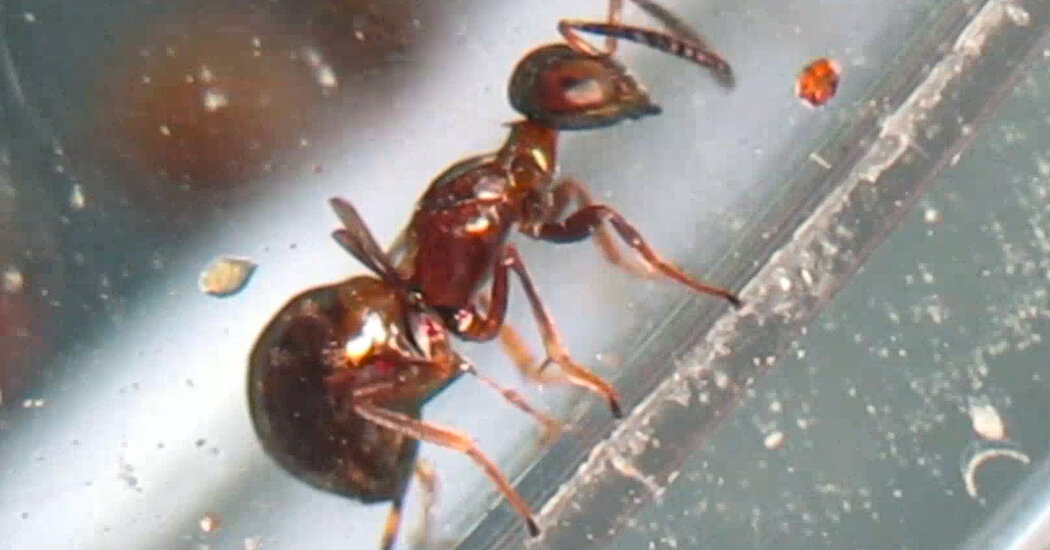
Matvey Nikelshparg, a teenage researcher, discovered that a species of parasitic wasp called Eupelmus messene has the ability to drill through plastic using its ovipositor. Nikelshparg observed the wasp drilling through a petri dish and laying an egg outside of the container. Further experiments revealed that some wasps could drill holes in plastic even when a suitable host was present. The drilling process involved rotating the ovipositor in both directions and using rhythmic upward motions to withdraw it. This discovery raises questions about the wear and tear on the ovipositor and why other related species do not exhibit the same behavior. The study may have implications for understanding other insects' puncturing tools and could inspire the development of new human tools.
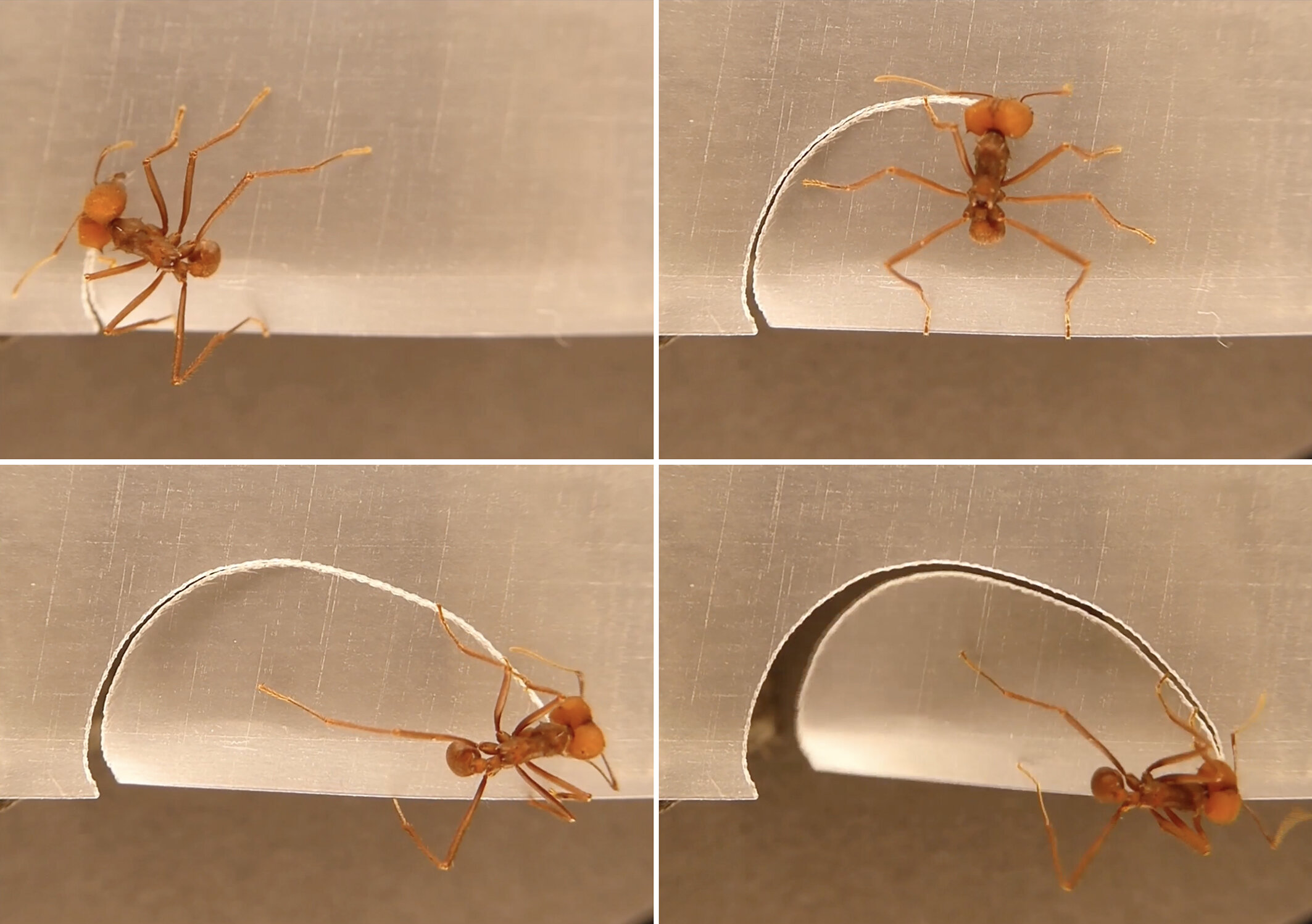
Leaf-cutting ants determine the size of the leaf fragments they carve with their mandibles by keeping track of the position of the leaf edge using their hind legs while pivoting their bodies as they trim. They adapt their technique by crouching their legs to reduce their reach to cut smaller elliptically shaped fragments when provided with thick leaves. The ants depend on knowledge of the location of the leaf edge provided by their legs and the position of their heads to keep them cutting on the curve and ensure that they never excise fragments that exceed their exceptional strength.