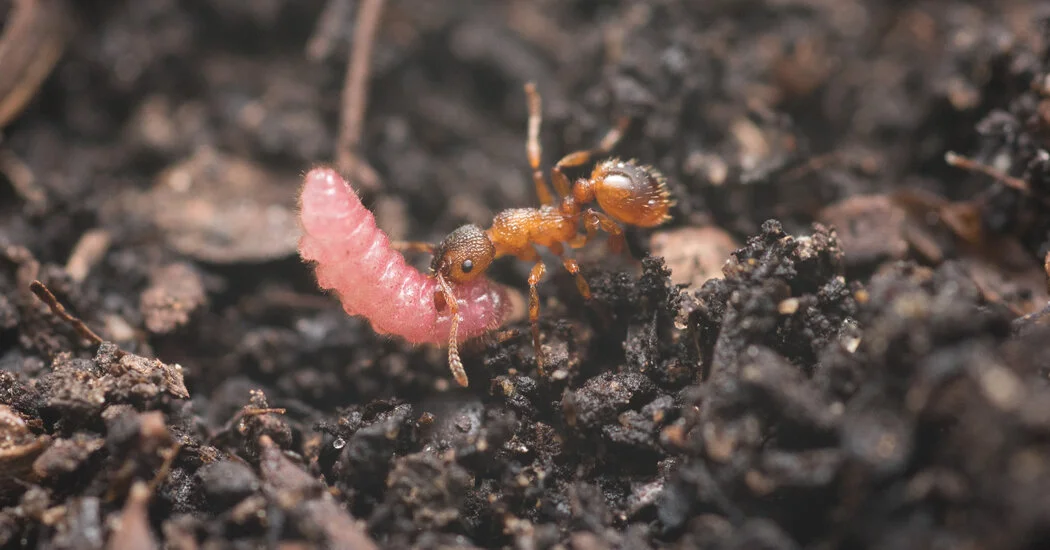
Lycaenidae caterpillars have evolved to manipulate ants through rhythmic acoustic and chemical signals, enabling ants to raise them in their colonies until they metamorphose into butterflies, a striking example of interspecies deception and mutualism.
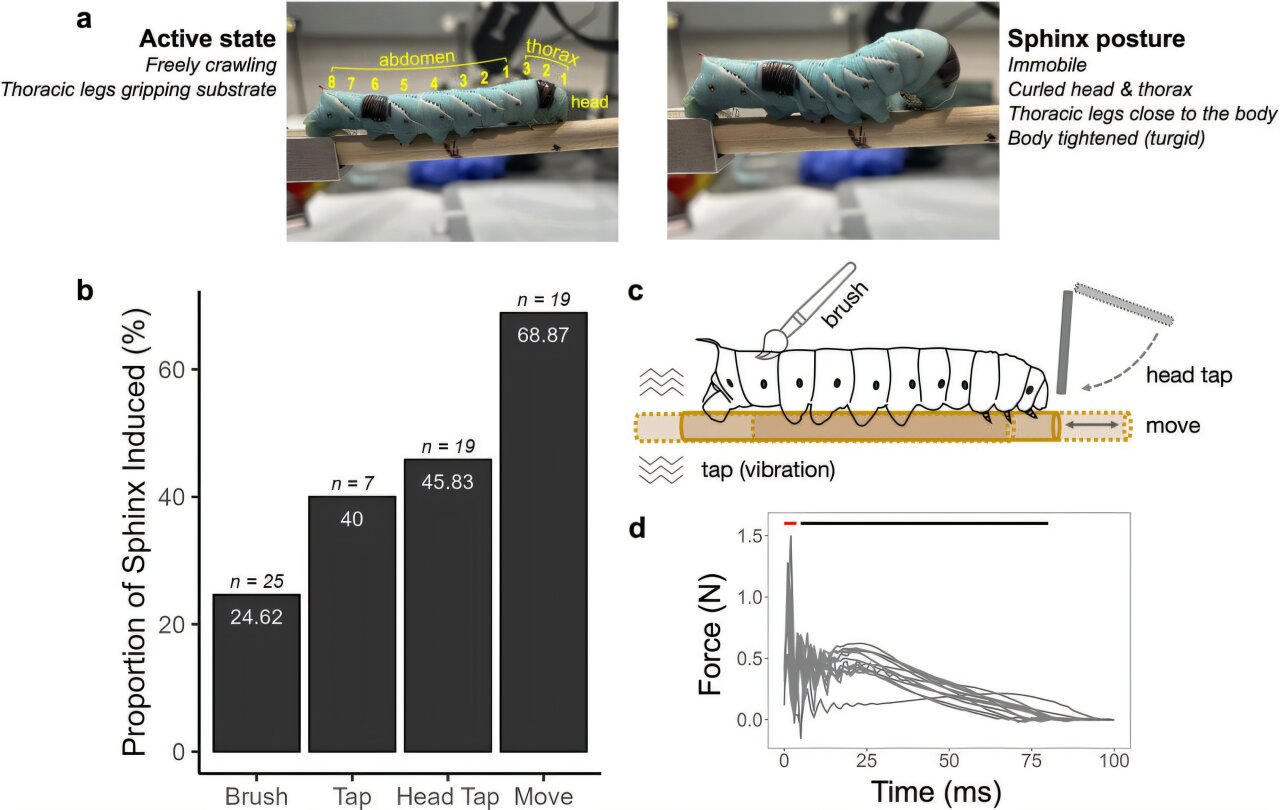
Research shows that tobacco hornworm caterpillars actively adopt a sphinx pose to suppress pain responses, challenging the idea that nociception is purely automatic and hard-wired, with potential implications for pest control and human pain research.
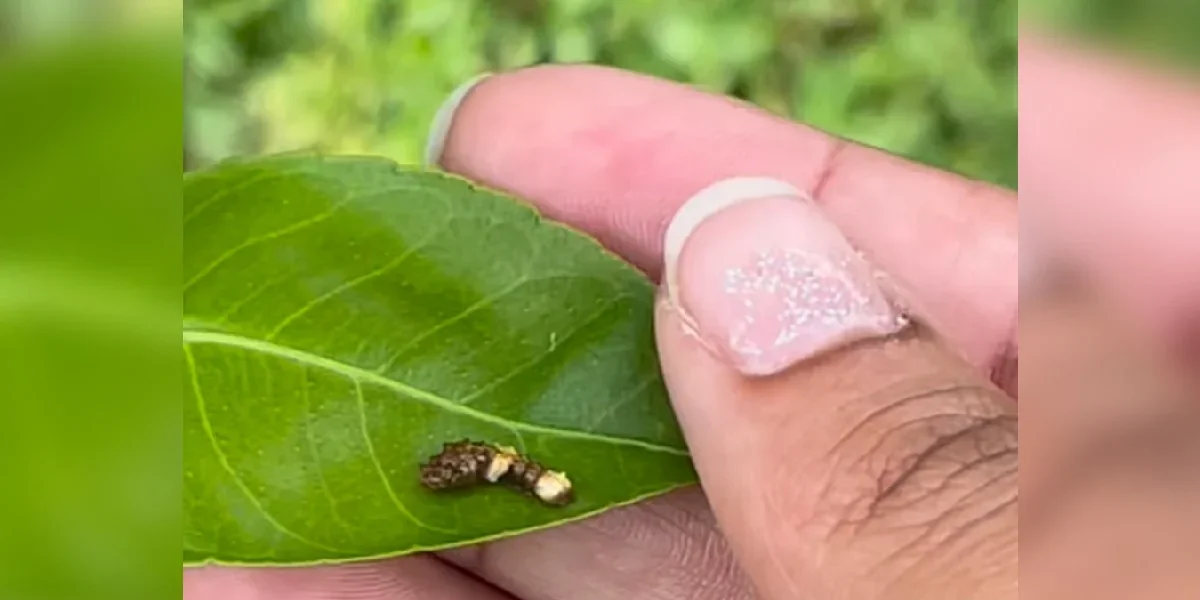
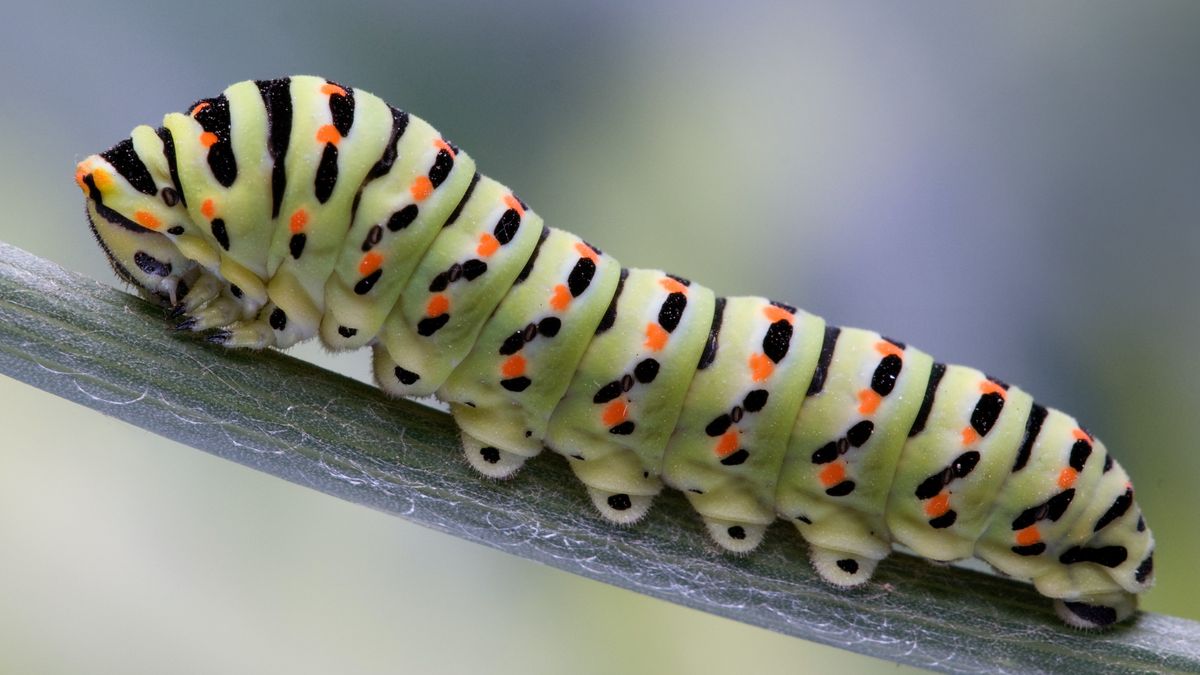
A woman discovers a caterpillar that resembles bird droppings on her lemon plant, which later transforms into a beautiful butterfly, highlighting the remarkable process of metamorphosis and the caterpillar's clever camouflage.
Scientists at Brandon University discovered that waxworms, the larvae of the greater wax moth, can break down plastics like polyethylene and store the degraded material as body fat, offering a potential biological solution to plastic waste management, though a diet solely of plastic harms the caterpillars' health.
Scientists have discovered how caterpillars of the Carolina sphinx moth can stop their bleeding in seconds by transforming their hemolymph from a viscous to a viscoelastic fluid. This transformation allows the hemolymph to quickly seal wounds by retracting back to the wound and forming a crust. The study, published in Frontiers in Soft Matter, has potential applications for human medicine, with researchers hoping to design drugs that could turn human blood into a viscoelastic material to stop bleeding.
Caterpillars' extra sets of legs, known as prolegs, have been traced back to their crustacean ancestors over 400 million years ago, according to a study published in Science Advances. These unjointed limbs with gripping hooks function like spiky suction cups and emerge from the abdomen. Prolegs are powered by hydraulic pressure and help caterpillars grab onto substrates while their other legs assist with feeding or movement. The study found that prolegs are modified endites, leg structures apparent in ancestral crustaceans, which were reactivated in butterflies and moths. This evolutionary repurposing of structures from crustacean ancestors has occurred multiple times and for multiple functions in insects.
A recent study published in Science Advances reveals that the chubby legs of caterpillars, known as "prolegs," are not actually real legs but rather fake appendages that help the caterpillar move around. The caterpillar's true legs, which will develop into adult legs, are located near its face and are not used for walking. These prolegs, equipped with barbed pads called crochets, serve as anchors for the caterpillar to cling onto surfaces. The study suggests that the genes responsible for these fake legs are related to crustacean legs rather than insect legs. This discovery raises questions about the definition of a leg and challenges the notion of realness in anatomy.
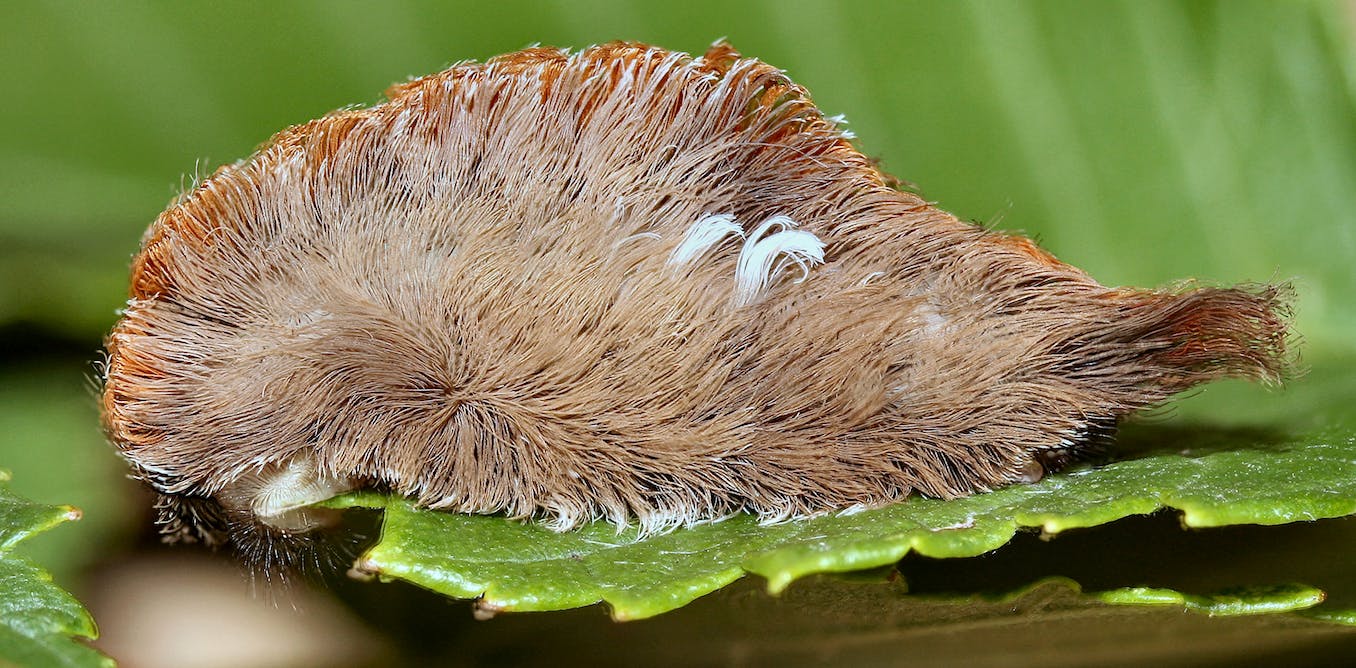
Researchers at the University of Queensland have discovered that the venom of asp caterpillars, known for causing excruciating pain, contains toxins belonging to a family of molecules usually found in disease-causing bacteria. The study revealed that a gene responsible for this type of toxin was transferred from bacteria to the ancestors of moths and butterflies millions of years ago through horizontal gene transfer. This finding highlights the complexity of evolution and opens up possibilities for harnessing venom toxins for medical applications, such as drug delivery and targeted cancer treatments.
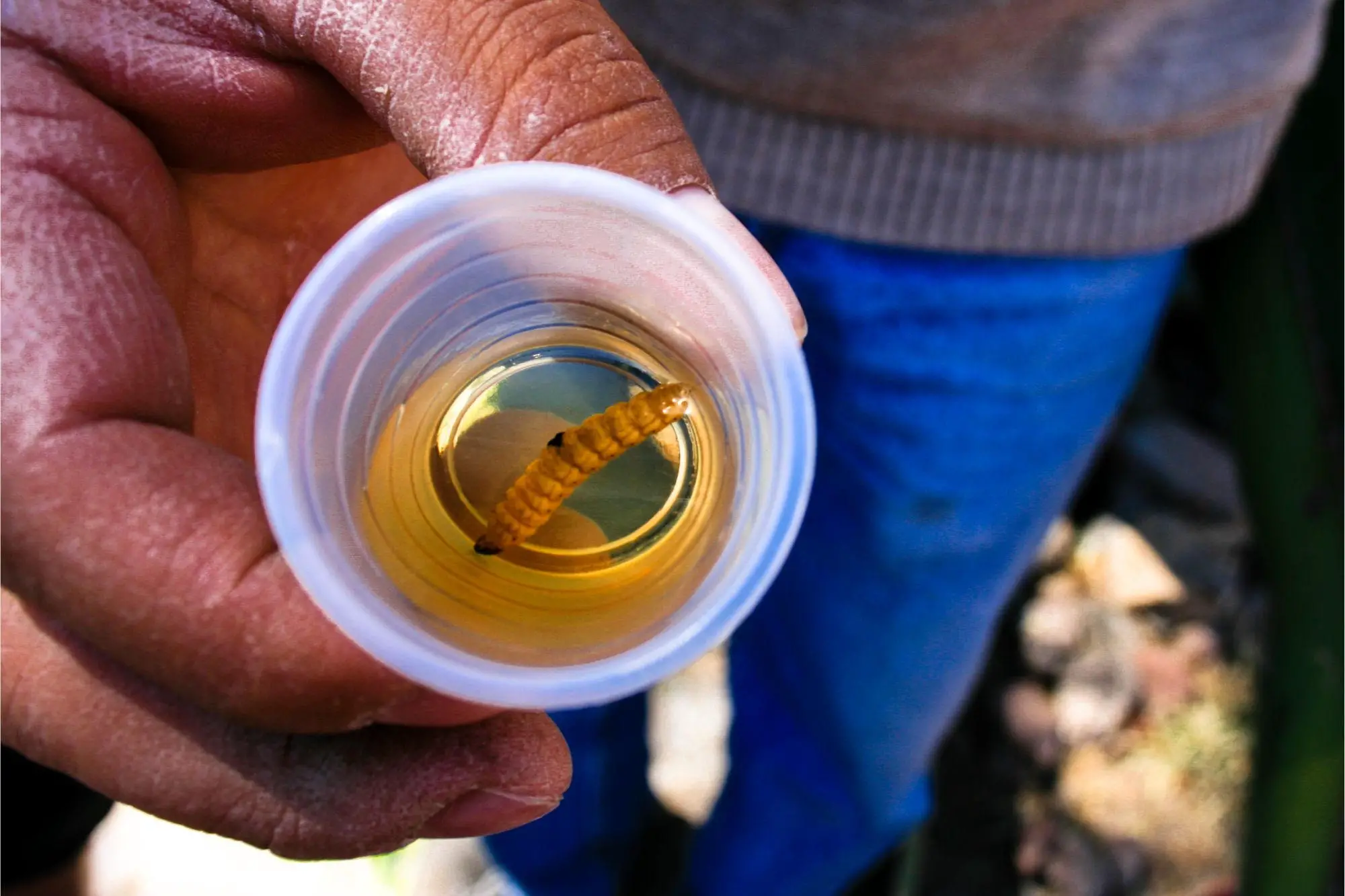
A recent study has identified the species of larvae found in bottles of Mezcal, a distilled alcoholic beverage made from agave, as the caterpillars of agave redworm moths. The researchers suspect that accounts of white gusanos de maguey come from caterpillars that have been stored in alcohol for long amounts of time and have consequently leached their color. The sale of mezcal is expected to increase by 22% in the next decade, reaching $2.1 billion in profits by 2030, riding a growing wave of interest in artisanal, ethically manufactured products. However, the impact of mezcal becoming popular can have long-term negative effects on local populations because they are harvested in the wild.