Tag

Infrared Radiation

All articles tagged with #infrared radiation

Dusty Quasars May Explain Alleged Dyson Spheres, Scientists Suggest
science-and-technology1 year ago

Dusty Quasars May Explain Alleged Dyson Spheres, Scientists Suggest

A new study suggests that seven stars previously identified as potential Dyson Sphere candidates are more likely to be dust-obscured galaxies. The research, which used data from various astronomical surveys, found radio sources for three of the candidates, indicating they are distant galaxies rather than advanced alien structures. Further investigation is needed to confirm the nature of the remaining candidates.

"Scientists Debate Alien Dyson Sphere Candidates in Our Galaxy"
astronomy1 year ago

"Scientists Debate Alien Dyson Sphere Candidates in Our Galaxy"

Seven candidate Dyson spheres identified by Project Hephaistos may actually be distant, dusty quasars, raising questions about their true nature. While some astronomers suggest these candidates could be extreme debris discs or background contamination from "Hot DOGs" (dust-obscured galaxies), further spectroscopic observations, potentially using the James Webb Space Telescope, are needed to confirm their identity.

Astronomers Identify Possible Dyson Sphere Candidates
science-and-technology1 year ago

Astronomers Identify Possible Dyson Sphere Candidates

Astronomers have identified seven potential candidates for Dyson spheres, hypothetical alien megastructures designed to harness a star's energy, within 1,000 light-years of Earth. These candidates, all M-dwarf stars, exhibit excess infrared radiation, a possible signature of such structures. However, natural explanations like gas and dust discs cannot be ruled out. While the concept of Dyson spheres is intriguing, the feasibility of their construction remains highly speculative due to the immense material and energy requirements.

"NASA's Twin Spacecraft: Exploring Earth's Extremes"
spaceclimate-science2 years ago

"NASA's Twin Spacecraft: Exploring Earth's Extremes"

NASA is launching two miniature CubeSats as part of the PREFIRE mission to study heat loss from Earth's polar regions, aiming to improve climate models and predictions. The satellites will carry thermal infrared spectrometers to measure far-infrared wavelengths of heat radiation, providing crucial data on climate variables such as atmospheric temperature, surface properties, water vapor, and clouds. The mission seeks to understand the impact of polar region changes on global weather patterns and sea level rise, ultimately enhancing our understanding of climate change.

"Ultrafast Optical Control of Magnetic Fields: Trillionths of a Second Switching"
science-and-technology2 years ago

"Ultrafast Optical Control of Magnetic Fields: Trillionths of a Second Switching"

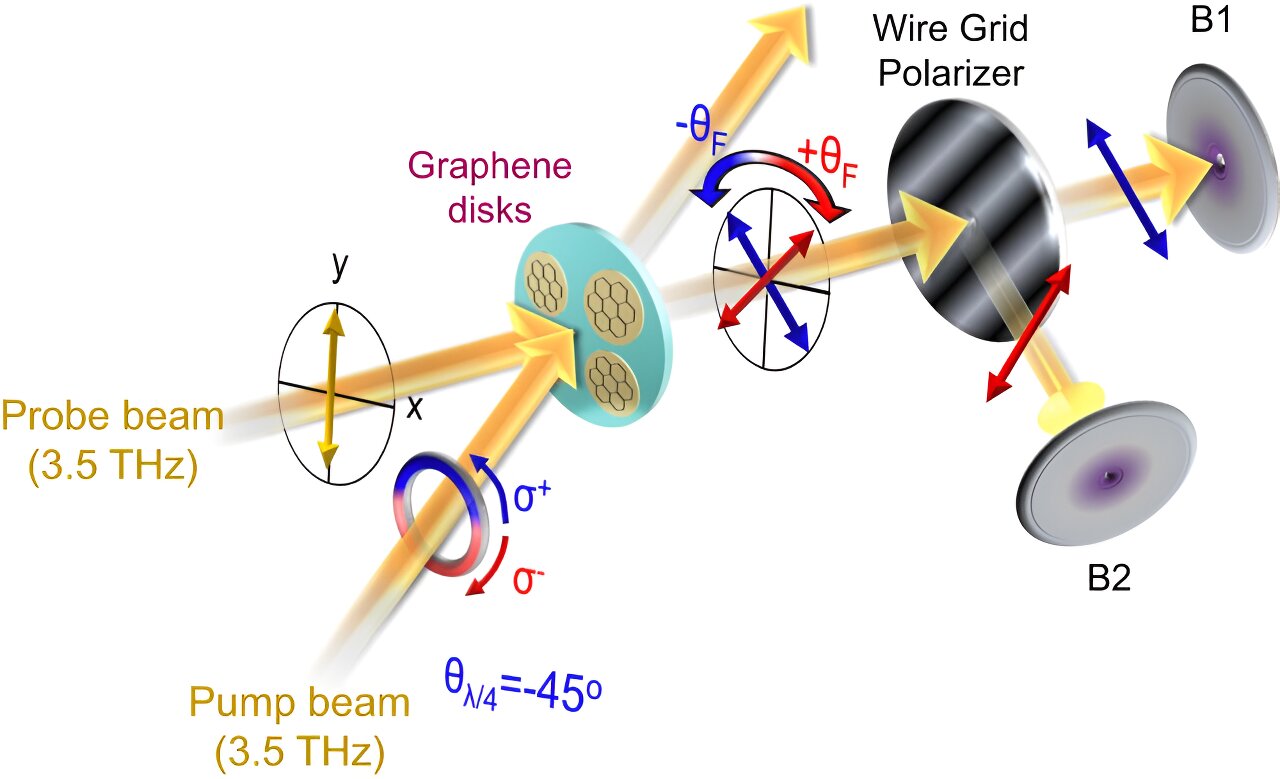
Physicists have discovered that tiny graphene sheets can become electromagnets under infrared radiation. By using circularly polarized terahertz radiation, the researchers were able to excite the electrons in the graphene sheets, causing them to move in a circular motion and generate magnetic fields. These graphene disks can act as strong permanent magnets that can be switched on or off within picoseconds. The researchers believe that this discovery could have potential applications in influencing other materials and adjusting the color of light in quantum dots, as well as changing the temperature of magnetocaloric materials.

"Hubble Telescope Uncovers Rare Radio Galaxy with Luminous Heart"
science-and-astronomy2 years ago

"Hubble Telescope Uncovers Rare Radio Galaxy with Luminous Heart"

NASA's Hubble Space Telescope has captured a stunning image of lenticular galaxy NGC 612, which is an active galaxy with a supermassive black hole at its center. The galaxy's central region is incredibly energetic, spewing out jets of gas at nearly the speed of light and outshining the combined light of every star in the galaxy. NGC 612 is also a Seyfert galaxy, emitting large amounts of infrared radiation. This rare non-elliptical galaxy is believed to have had a past interaction with a companion spiral galaxy, and it is one of only five known radio-emitting lenticular galaxies.

Jupiter's Color Changes Mystery Solved by Research.
science2 years ago

Jupiter's Color Changes Mystery Solved by Research.

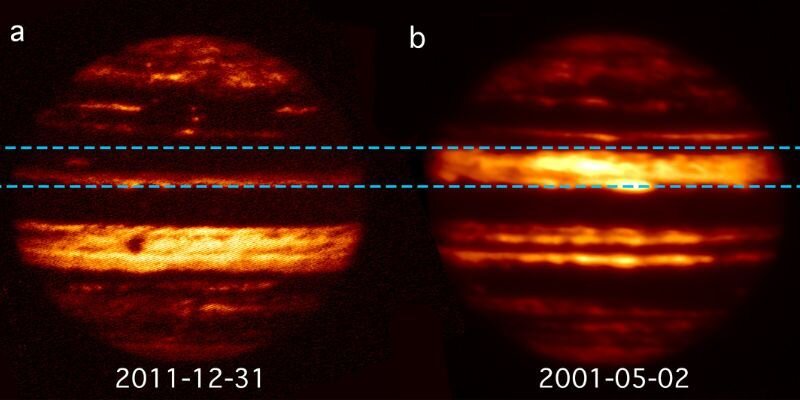
Researchers at the University of Leeds have used data from NASA's Juno mission to Jupiter to explain the mystery behind the planet's changing bands and stripes. The team found that waves produced by Jupiter's magnetic field deep within its interior could cause variations in infrared radiation about 50 km below the planet's surface, which in turn cause the changing appearance of Jupiter. The research fills in the missing link between scientists studying Jupiter's weather and those working on its deep interior.

Unprecedented Image of Planet-Forming Disks' Inner Region Revealed in Study
astronomy2 years ago

Unprecedented Image of Planet-Forming Disks' Inner Region Revealed in Study

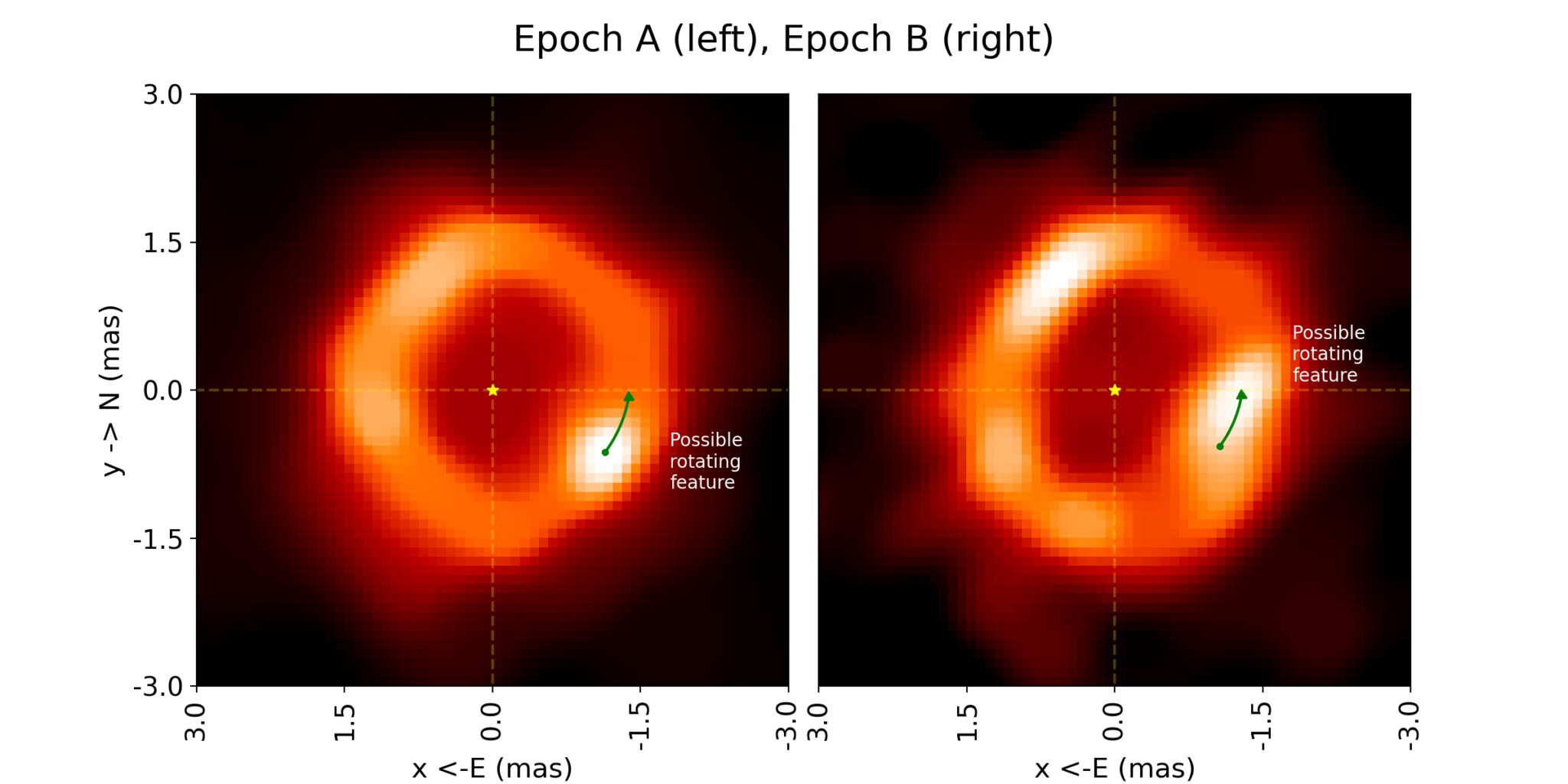
University of Michigan astronomers have used interferometry to capture the most detailed images of the inner region of a planet-forming disk around a young, massive star called V1295 Aquilae. The images show unexpected moving structures and confirm mysterious inner emissions reported in previous studies. The findings raise more questions about the early stages of planet formation and demonstrate the power of interferometry to perform cutting edge science at a fraction of the price of space telescopes.

Harnessing Infrared Radiation with MXene Spray Coating for Temperature Control
science-and-technology2 years ago

Harnessing Infrared Radiation with MXene Spray Coating for Temperature Control

Researchers at Drexel University have discovered that a thin coating of MXene, a two-dimensional nanomaterial, can enhance a material's ability to trap or shed heat by regulating the passage of ambient infrared radiation. MXene coatings can be used for both localized thermal management and large-scale radiative heating and cooling systems. MXene-coated textiles can reflect external infrared radiation to avoid heating from sunlight while allowing the infrared radiation emitted from the body to pass, making them more effective than passive cooling materials available in the market today. MXenes could be integrated into lightweight clothing that keeps the wearer warm in extreme environments.