Tag

Industrial Processes

All articles tagged with #industrial processes

clean-energy-technology1 year ago

"MIT's Electric Bricks: A Fossil Fuel Alternative for Industry"

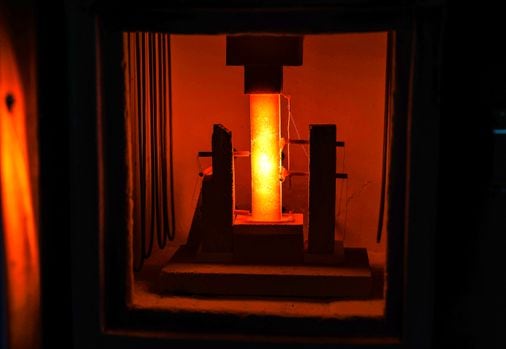
MIT spinoff Electrified Thermal Solutions has developed electrically conductive bricks that can generate and store high-temperature heat, potentially replacing fossil fuels in industrial processes like steel and cement production. These bricks, which are more durable and cost-effective than traditional electric heaters, could significantly reduce greenhouse gas emissions. The company has received substantial government funding to scale up production and deploy their technology commercially.

science-and-technology2 years ago

"Unlocking the Potential: Exploring the World of Graphite Mining and Refining"

Graphite, a versatile and valuable mineral, is used in various industrial processes and is increasingly important in the decarbonization of transportation. It is commonly found in flake or amorphous form and has unique properties such as lubricity and high melting point. Graphite mining involves open-cast mines and flotation processes to separate the graphite from the surrounding rock. Natural graphite production is dominated by China, while synthetic graphite is produced through high-temperature processes using petroleum coke. However, synthetic graphite is more expensive than natural graphite. As the demand for graphite continues to grow, there is a need for more sustainable extraction and refining methods.

science-and-technology2 years ago

Advancing Protein Folding Prediction: The Fusion of Physics and AI

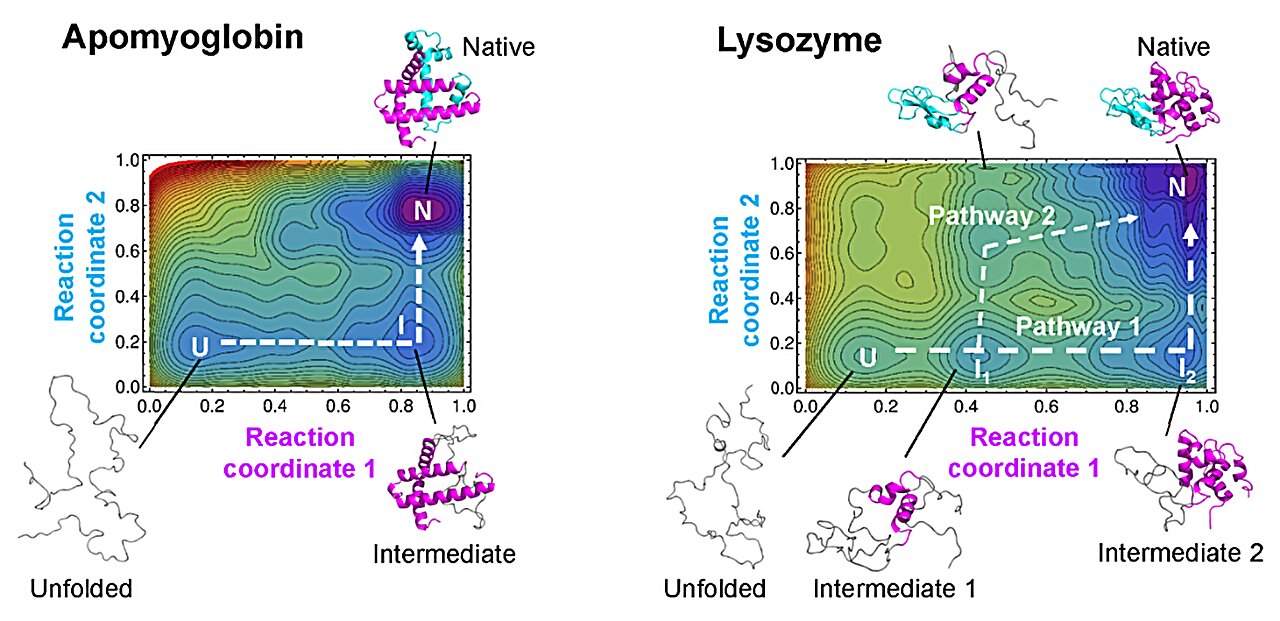
Researchers from the University of Tokyo have developed a novel physical theory, called WSME-L, that can accurately predict how proteins fold into specific structures. This model overcomes limitations of previous models and can provide insights into protein folding pathways and transient states. Improved knowledge of protein folding has significant implications for medical research and industrial processes.

science-and-technology2 years ago

Chemists Crack Decades-Old Polymer Puzzle

Chemists at the University of Liverpool have made a breakthrough in polymer science by using mechanochemistry to understand how polymer chains in solution respond to sudden changes in solvent flow. This discovery has significant implications for various areas of physical sciences and industrial processes such as oil recovery and photovoltaics manufacturing. The researchers plan to further expand their method to accurately predict flow behavior in different polymer-solvent-flow conditions.

science-and-technology2 years ago

Challenges of CO2 to Fuel Conversion.

Researchers at Helmholtz-Zentrum Berlin für Materialien und Energie are working on the clogging problem in CO2 electrolysis, which can convert the greenhouse gas into useful hydrocarbons. The process requires energy, water, suitable electrodes and special catalysts. The team is using a "zero-gap" electrolysis cell, which is particularly suitable for industrial processes, but the cathodes clog up quickly due to potassium crystals. The researchers are studying the process of crystal formation at the cathode in detail and plan to use X-rays to find out how ion migration in the cell affects the chemical reaction processes.

science-and-technology2 years ago

Revolutionary Atomic Breakthrough to Transform Petroleum Refining.

Chemical engineers at the University of Wisconsin-Madison have developed a model of how catalytic reactions work at the atomic scale, which could allow engineers and chemists to develop more efficient catalysts and tune industrial processes, potentially with enormous energy savings. The team used powerful modeling techniques to simulate catalytic reactions at the atomic scale, looking at reactions involving transition metal catalysts in nanoparticle form. The understanding could have major ramifications for industry, including petroleum refining, pharmaceuticals, plastics, food additives, fertilizers, green fuels, and industrial chemicals.

energy2 years ago

Spain leads EU in green hydrogen production.

Spain aims to become the European leader in green hydrogen produced exclusively from renewable energy, with the ambition to export the gas to the rest of the continent. The country is betting that it can rapidly build a new supply chain for sectors of the economy that require hydrogen for industrial processes, and which have been harder to wean off fossil fuels. However, critics have warned there isn’t enough renewable energy capacity to produce green hydrogen that can replace natural gas and coal in the making of petrochemicals, steel and agricultural products.

science-and-technology2 years ago

Revolutionary Catalysis Discovery Promises Huge Energy Efficiency Gains

Chemical engineers from the University of Wisconsin-Madison have developed a model that explains how catalytic reactions work at the atomic level, potentially leading to more efficient catalysts, optimized industrial processes, and significant energy savings. Catalysis plays a crucial role in producing 90% of the products we use daily, and just three catalytic reactions use close to 10% of the world's energy. The researchers used powerful modeling techniques to simulate catalytic reactions at the atomic scale and found that the energy provided for many catalytic processes to take place is enough to break bonds and allow single metal atoms to pop loose and start traveling on the surface of the catalyst, forming small metal clusters that serve as sites for chemical reactions to take place much easier than the original rigid surface of the catalyst.

science-and-technology2 years ago

"Revolutionizing Energy Efficiency and Carbon Control through Atomic-Scale Catalysis and Equations"

Chemical engineers at the University of Wisconsin-Madison have developed a breakthrough model of how catalytic reactions work at the atomic scale, which could allow engineers and chemists to develop more efficient catalysts and tune industrial processes, potentially with enormous energy savings. The researchers used powerful modelling techniques to simulate catalytic reactions at the atomic scale, looking at reactions involving transition metal catalysts in nanoparticle form. The new framework challenges the foundation of how researchers understand catalysis and how it takes place, and may apply to other non-metal catalysts as well.

finance2 years ago

JPMorgan's $1.3 Million Nickel Turned Out to be Fake

JPMorgan is the owner of nine shipments of fake nickel discovered by the London Metal Exchange, which were found to contain bags of rocks instead of the valuable metal. The LME invalidated the shipments and delayed the relaunch of nickel trading during Asia hours. Nickel is used in industrial processes and is a key component in lithium-ion batteries for electric cars. The total amount of nickel involved is small, but this is the second scandal involving fake nickel in as many months. Trading in nickel is still suspended during Asia hours due to the crisis, and several trading firms that had their nickel trades canceled are suing the London Metals Exchange.