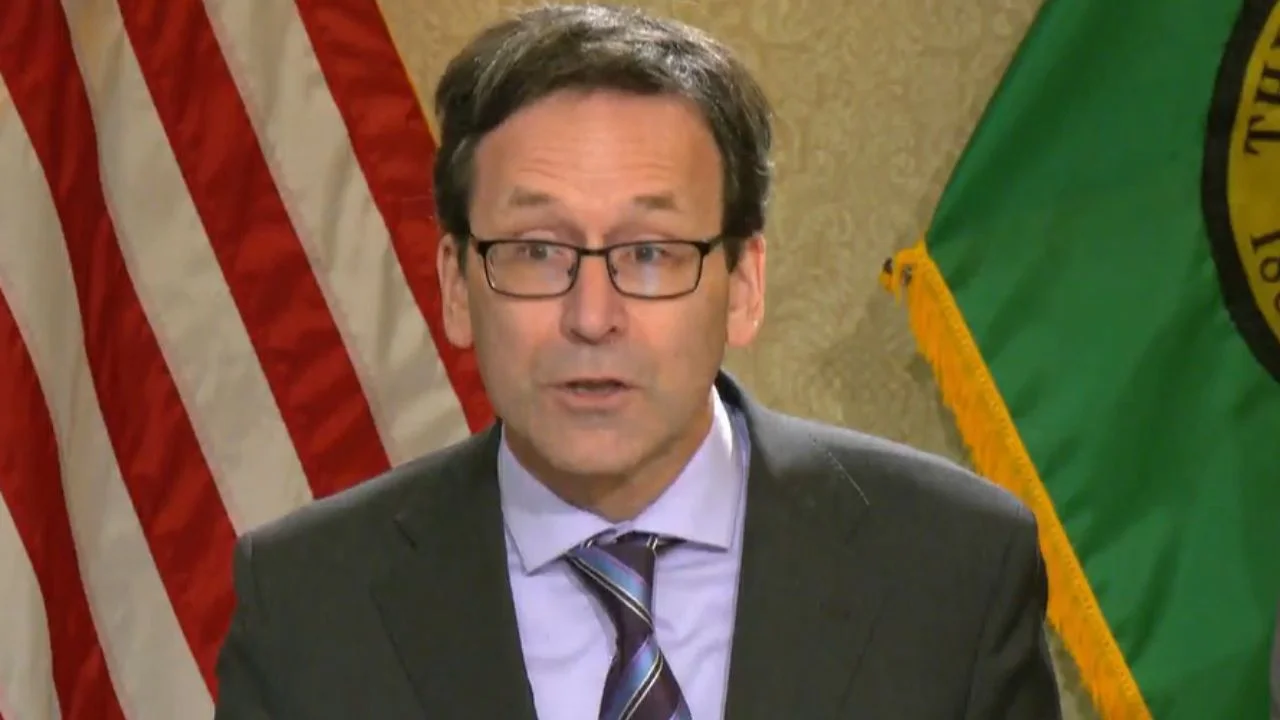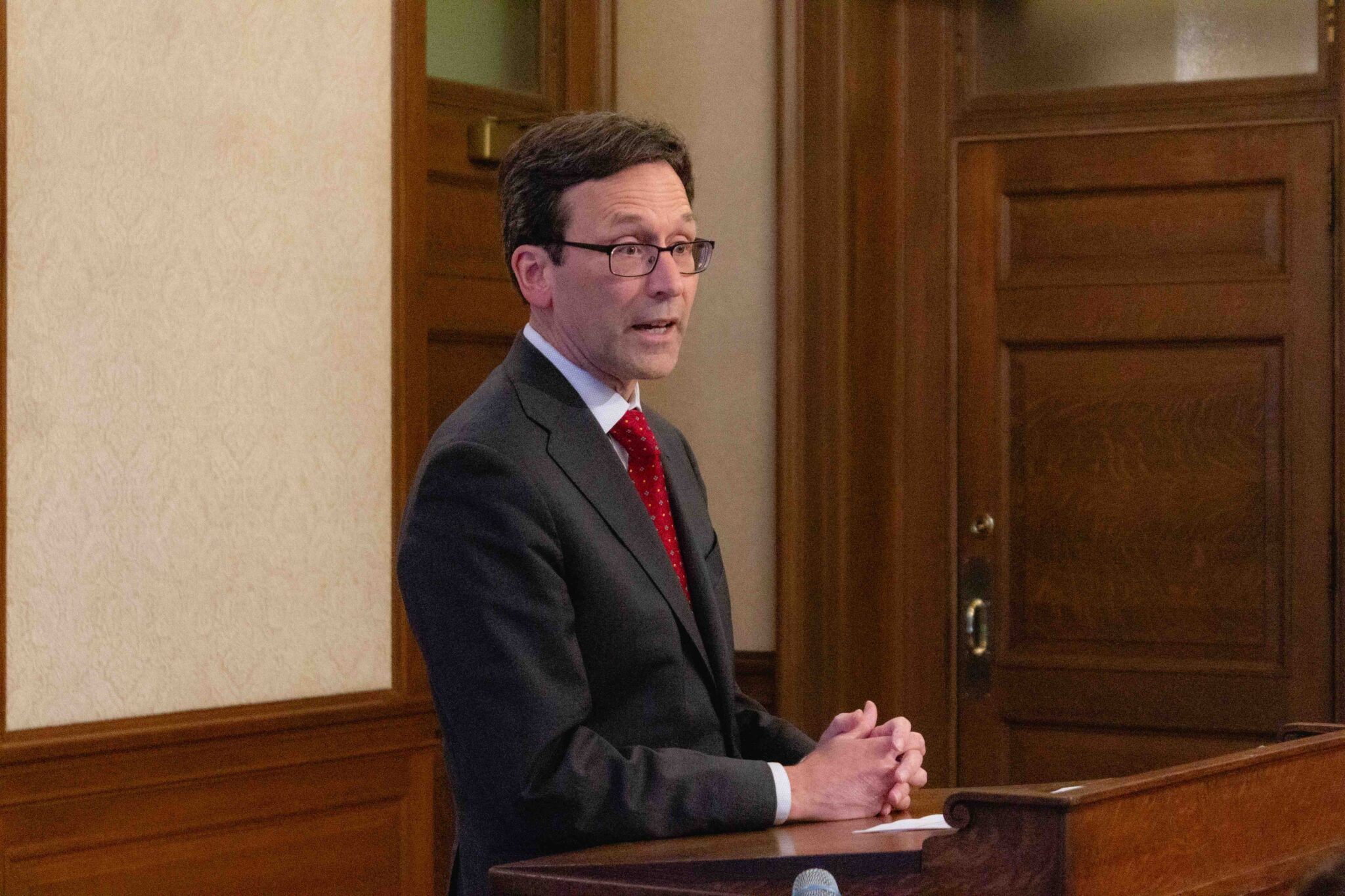
Washington Governor Bob Ferguson supports exploring a new income tax, specifically a 9.9% tax on those earning over $1 million, aiming to overhaul the state's regressive tax system and fund public services, despite historical rejection and legal challenges.
Washington Governor Bob Ferguson supports a proposed 9.9% income tax on residents earning over $1 million, aiming to raise $3 billion annually starting in 2029, contingent on legal approval and voter support, with plans to use the revenue for tax credits, education, and small business relief.
The UK Chancellor Rachel Reeves indicated plans to increase income tax, signaling a potential break from Labour's manifesto pledge, amidst political debates and opposition from Labour figures. The article also covers various political and social issues, including BBC controversies, prison release mishaps, and international incidents involving the royal family and sports events.
Rachel Reeves is considering breaking a 50-year-old tradition by raising income tax in her upcoming Budget, challenging a long-standing political taboo, with the decision likely influenced by economic pressures and Labour's manifesto promises.
Rachel Reeves, the UK Chancellor, has not ruled out raising income taxes in the upcoming Budget, despite previous Labour promises not to increase rates, as she faces fiscal pressures and explores options to address a significant budget shortfall, including potential hikes on higher earners and the basic rate, amid ongoing discussions and economic challenges.
The article discusses the potential impact of taxing billionaires at the same rate as the upper middle class, highlighting that it could significantly increase government revenue and promote wealth equality, but also noting the complexities and loopholes in the tax system that make such reforms challenging.
A Gurugram resident's LinkedIn post reveals that maintaining a luxury lifestyle in an expensive neighborhood requires a monthly pre-tax income of Rs 7.5 lakh, highlighting the high costs associated with affluent living and sparking online debate.
Thirteen U.S. states do not tax retirement income from Social Security, 401(k), IRA, or pensions, potentially lowering retirees' tax bills. Nine states, including Florida and Texas, have no income tax, while four others, like Illinois and Pennsylvania, exempt retirement income from taxation. However, some states may tax early withdrawals or specific types of retirement income. Additionally, many states do not tax Social Security benefits, offering further tax relief for retirees. Despite these exemptions, other taxes like property and sales taxes remain unavoidable.
Hawaii Governor Josh Green signed the largest income tax cut in state history, aiming to make the state more affordable and reduce the exodus of residents. The new law will significantly reduce state income taxes for many working-class families and eliminate taxes for the lowest earners by 2031. However, critics worry the $5.6 billion reduction in state revenue by 2031 will lead to cuts in essential state programs and services.
MicroStrategy founder Michael Saylor has agreed to a $40 million settlement with the District of Columbia over allegations of income tax fraud, marking the district's largest-ever recovery in such a case. Saylor disputes the claims but settled to avoid litigation burdens.
President Joe Biden and Vice President Kamala Harris released their 2023 tax returns, showing lessons for average Americans, including the impact of interest income, self-employment tax planning, and the importance of working with a tax professional for those with complex financial situations. The Bidens and the Harrises both earned most of their income from salaries, with interest income causing small estimated tax penalties. The Bidens reduced self-employment taxes through their S corporations, while taxpayers with self-employment income should consider the impact on future Social Security benefits. Working with a tax professional is recommended for higher earners with complex financial situations.
The IRS is launching a Direct File pilot program for the 2024 tax season, allowing certain taxpayers in 12 states to calculate and submit their returns directly to the government without using commercial tax preparation software. The program is aimed at low- and middle-income earners who typically claim a standard deduction and will be available in both English and Spanish. The limited rollout is part of the IRS's effort to build a new government service that could replace the use of commercial tax preparation software. However, the program is not viewed favorably by commercial tax prep software firms, while IRS officials emphasize the need for continued funding for the program to succeed.
The IRS is launching a Direct File pilot program in 12 states, allowing certain taxpayers to calculate and submit their returns directly to the government without using commercial tax preparation software. The program is aimed at low- and middle-income earners who typically claim a standard deduction and will be available in both English and Spanish. The IRS hopes to gather information from the limited pilot to steer the direction of the program, but faces opposition from commercial tax prep software firms.
Republican lawmakers in Wisconsin have proposed a $2.1 billion tax package aimed at low and middle earners, which includes expanding the state's second-lowest tax bracket to cover individuals earning between $19,000 and $150,000 annually. The package also involves exempting up to $75,000 of retirees' income and increasing tax credits for married filers and those with children. This announcement comes ahead of Democratic Gov. Tony Evers' State of the State Address, where he plans to address workforce challenges. The proposed tax cuts are in response to Evers' previous vetoes of GOP tax cut proposals, and the governor's office has stated that Evers will review the proposals once the bills are released.
Gov. Tate Reeves, who has been advocating for the elimination of Mississippi's personal income tax to attract residents, secured legislative funding for a plant to manufacture electric vehicle batteries in north Mississippi. However, the plant's location near the Tennessee state line raises concerns about the effectiveness of the tax cut plan, as Tennessee residents may work at the plant and not necessarily move to Mississippi. This situation highlights the potential impact on state income tax revenue and the need for careful consideration of tax policies in attracting and retaining workers.