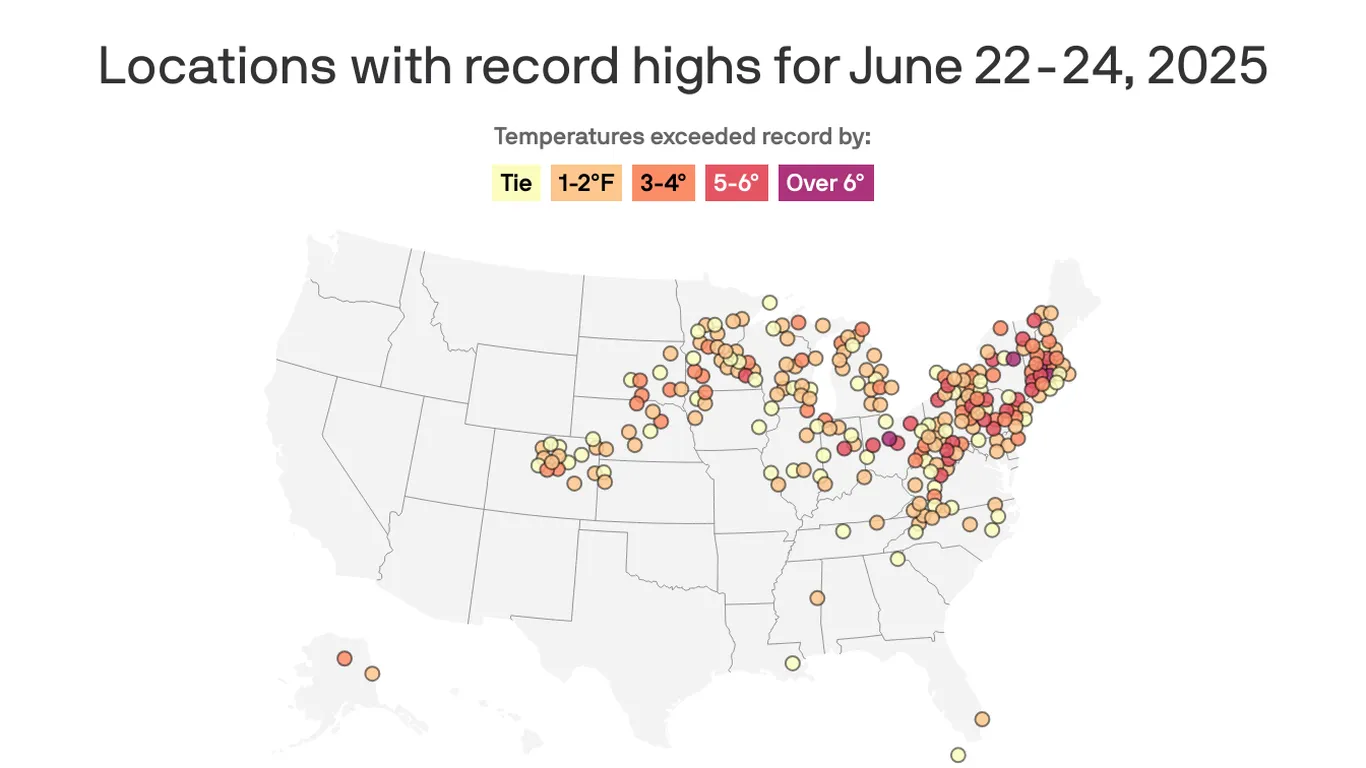
A severe heat wave has broken over 280 heat records across the U.S., driven by a 'heat dome' that has caused dangerous conditions affecting nearly 130 million people, with continued high temperatures expected.
Nearly 190 million Americans are under heat advisories due to an early summer heat wave driven by a heat dome, breaking multiple temperature records and increasing health risks, especially for vulnerable populations, with relief not expected until the end of the week.
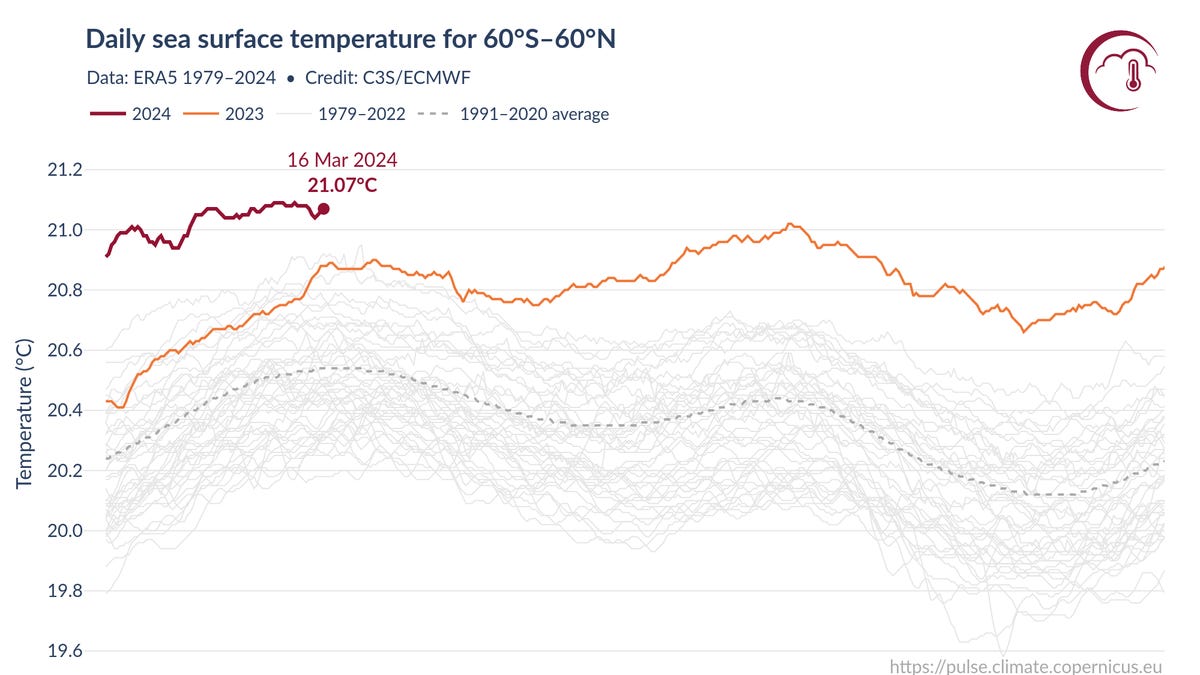
2024 continues the trend of breaking heat records, with nine consecutive months of record warmth and global average temperatures exceeding the 1.5°C threshold set in the Paris Agreement. Scientists are puzzled and alarmed by the unprecedented warmth, particularly in ocean temperatures and the impact on glaciers and sea ice. Factors contributing to the surge in temperatures include atmospheric greenhouse gases, El Niño, volcanic eruptions, and increased solar activity. The need for improved data collection and analysis is emphasized to understand and address the rapid climate changes.
The World Meteorological Organization (WMO) has issued a "Red Alert" as it reports that 2023 broke every major global climate record, with average temperatures reaching the highest level in 174 years and ocean temperatures hitting the warmest in 65 years. The WMO expressed particular concern about ocean heat and shrinking sea ice, emphasizing the irreversible nature of ocean warming and its detrimental impact on marine ecosystems and food systems. The report also highlighted the high probability of 2024 setting new heat records, with a significant plunge in Antarctic sea ice and a doubling of the rate of sea-level rise over the past decade. WMO Secretary-General Celeste Saulo stressed the urgent need to scale up climate action to mitigate the increasingly frequent and extreme climate events.
New research predicts a 90 percent chance of record high global average surface temperatures leading up to June 2024, largely due to the impact of El Niño. The heat is expected to hit parts of Asia particularly hard, raising the risk of drought, wildfires, and other cascading effects. While a moderate El Niño is most likely, it still has the potential to push global temperatures to new highs, with a strong El Niño posing even greater risks to regions such as the Caribbean, South China Sea, Amazon, and Alaska.
Japan experienced its hottest summer on record in 2023, with average temperatures 1.78 degrees Celsius above average. Australia also recorded its warmest winter in the southern hemisphere, with temperatures 1.53 degrees Celsius above the average. These heat records are part of a global trend of increasing temperatures due to climate change. The extreme heat has led to health risks, including heat-related deaths and glacier melt. The National Oceanic and Atmospheric Association (NOAA) predicts that 2023 will be one of the top five hottest years on record.
Heat records are being broken around the world this summer, and this trend is expected to continue due to climate change. Factors such as summer in the Northern Hemisphere, increasing marine heat waves, El Niño, and global warming are contributing to the extreme temperatures. It is highly likely that 2023 will be the warmest year on record. The global average temperature is determined using data from satellites, weather stations, ships, and buoys. The National Weather Service collects and verifies weather records in the US. Warm records are being broken more frequently, and there is a rising trend in overnight low temperatures. A new daily global temperature record of 63 degrees was recently set, although there is some dispute over the accuracy of the measurement.
The past three days have likely been the hottest in Earth's modern history, with temperatures breaking records across the globe. This surge in heat is attributed to the combination of greenhouse gases trapping heat in the atmosphere and the return of the El Niño weather pattern. The North Atlantic has experienced exceptionally high ocean temperatures, while the overall warming of the planet is consistent with projections due to human-caused emissions. Scientists anticipate that the current El Niño will continue to drive temperatures up, potentially making next year even hotter. Other factors, such as weakened winds and reduced dust blowing from the Sahara, may also contribute to the record-breaking temperatures.
Earth's average temperature has broken record highs for the third consecutive day, reaching an unofficial record of 17.18 degrees Celsius (62.9 degrees Fahrenheit), according to the University of Maine's Climate Reanalyzer. While not an official government record, these figures indicate the unprecedented territory that climate change is pushing us into. High-temperature records were also surpassed in Quebec and Peru this week, while some countries experienced colder weather than usual. The exceptionally mild winter in the Antarctic is one of the largest contributors to these records. Scientists warn that 2023 could see more record heat as human-caused climate change continues to warm the atmosphere.
Earth's average temperature reached an unofficial record high of 17.18 degrees Celsius (62.9 degrees Fahrenheit) on Wednesday, matching the previous day's record, according to the University of Maine's Climate Reanalyzer. While not an official government record, the figures indicate the unprecedented territory of climate change. High-temperature records were also broken in Quebec and Peru this week. The exceptionally mild winter in the Antarctic contributed to the records, with parts of the continent and nearby ocean experiencing temperatures 10-20 degrees Celsius (18-36 degrees Fahrenheit) warmer than average. Scientists warn that global warming is pushing us into a hotter future, with more frequent and intense heat waves disrupting life worldwide.