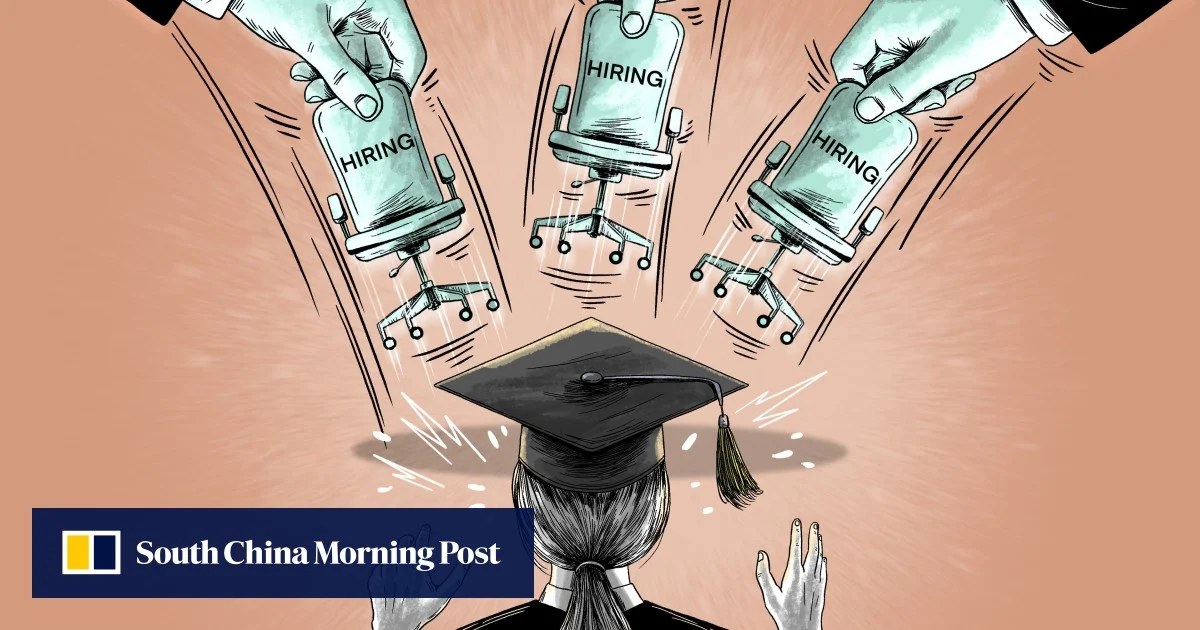
Graduates, including those with master's degrees, are applying to an unprecedented number of jobs amid a highly competitive and AI-impacted labor market, with many facing ghost jobs, employer ghosting, and feeling that their degrees are a waste of money, especially among Gen Z, leading to increased unemployment and disillusionment.
OpenAI CEO Sam Altman highlights AI's advanced capabilities, suggesting it can perform tasks comparable to PhDs, raising concerns about job displacement for new graduates. Despite a challenging job market with rising unemployment and reduced entry-level hiring, experts believe that new opportunities will emerge in AI-related fields and that skills development, upskilling, and adaptability are crucial for future job security. The article emphasizes the importance of continuous learning and innovative strategies for job seekers in an AI-augmented economy.
The article discusses how today's graduates face more challenges and fewer opportunities than previous generations, making their path to financial stability and success more uncertain.
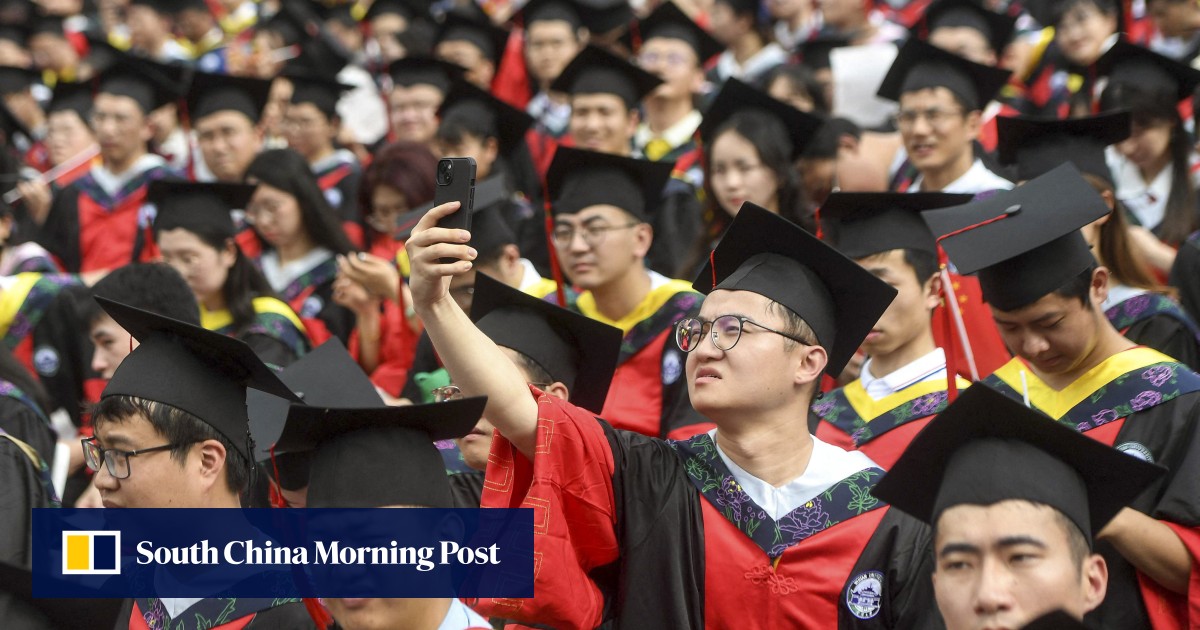
China's already high youth unemployment rate has worsened due to the trade war and economic challenges, making it difficult for highly educated graduates like Jethro Chen to find jobs, with the job market struggling to absorb the record number of new graduates.
A recent New York Federal Reserve study reveals that engineering degrees occupy nine of the top 16 college majors with the highest incomes five years after graduation, with computer engineering majors ranking first with an annual median salary of $80,000. On the other hand, liberal arts, performing arts, and theology majors earn the lowest salaries within five years of graduating from college, with a median annual income of $38,000. The study highlights the disparity in earnings between different majors and the factors contributing to it, such as demand, skills, and job market dynamics.
Job hunting has become tougher for computer science majors as layoffs hit the tech industry, leading to a decrease in job opportunities and internships. The demand for fresh graduates has dampened, with companies being cautious and holding cash. The increase in the number of students pursuing computing degrees has also contributed to the competitive job market. Students are advised to be realistic about the expectations of tech employers, as having a degree does not guarantee a job. This trend is not limited to Singapore, as students and recent graduates in the US have also expressed concerns about job prospects in the industry.
The number of U.S. students earning bachelor's degrees in accounting dropped by 7.8% in the 2021-2022 academic year, leaving a gap in the workforce as more professionals in the field retire without enough new entrants to replace them.
China is facing a youth unemployment crisis, with the unemployment rate for people aged 16 to 24 rising to a record high of 21.3% in June. The country's inability to cope with the increasing number of graduates and shrinking job opportunities could have serious consequences for the world's second-largest economy. The pressure on wage growth and lack of consumption may further hinder economic growth and potentially lead to social instability. Factors contributing to the crisis include mismatches between the skills graduates acquire and those required by employers, as well as regulation changes in major industries. To address the issue, experts suggest reducing tight regulations on the private sector and aligning school disciplines with business demand.
China's People's Liberation Army (PLA) is planning to recruit more graduates with tech and leadership skills to boost modernization and ease the record jobless rate for young people. With over 11 million students graduating this year, the PLA hopes to attract some of the brightest and best to join their ranks.
In a hot labor market, more high school graduates are choosing to forgo college and enter the workforce directly. This trend is driven by the availability of well-paying jobs that do not require a college degree, such as in the skilled trades and healthcare. However, experts caution that a college degree can still provide long-term benefits and career advancement opportunities.
Nvidia CEO Jensen Huang told graduates that 2023 will be a perfect year to graduate as A.I. has opened immense opportunities and reinvented the computing industry. Huang urged graduates to take advantage of A.I. and do amazing things with an A.I. copilot by their side. He also said that A.I. will create new jobs that didn't exist before, such as prompt engineering, A.I. factory operations, and A.I. safety engineers.
China's youth unemployment rate has reached a record high of 20.4% in April, with nearly 12 million Chinese expected to enter the job market next month. The pandemic has exacerbated the issue, with strict health restrictions limiting travel, decimating small businesses, and damaging consumer confidence. The Chinese government has introduced policies to stimulate youth employment, but there is a mismatch between the jobs college graduates want and the jobs available. The recovery of the Chinese economy remains tenuous until consumers regain confidence to make big-ticket purchases, prompting more companies to do more hiring.
The Class of 2023 is graduating into the best labor market for young workers since 1953, with the youth unemployment rate for workers between the ages 16 and 24 tumbling to 7.5% in March, the lowest level in 70 years for the unemployed youth. Young workers are now more likely to have predictable work hours, and on key measures of job quality, young people face a better labor market today than in 2019. However, more than half of economists surveyed by the National Association for Business Economists expect a recession to begin later this year as a result of the Federal Reserve's aggressive interest-rate hike campaign.
The class of 2023 is graduating into a tight and uncertain job market, with many companies announcing massive layoffs and others on hiring freezes. While college career counselors say there are jobs out there, the market remains competitive post-pandemic. However, the class of 2023 is in a better position than graduates entering the workforce at the peak of the pandemic. The National Association of Colleges and Employers (NACE) reports that companies plan to hire about 4% more grads from the class of 2023 than they did from the class of 2022.
China's State Council has introduced a 15-point plan to address the country's weak job market, which has been exacerbated by the uneven post-coronavirus economic recovery. The jobless rate for 16- to 24-year-olds rose to 19.6% in March, with over 11.5 million university students set to graduate this year. Graduates are facing fresh obstacles and challenges in finding employment, prompting the government to search for new ways to create vacancies.