Tag

Galactic Mergers

All articles tagged with #galactic mergers

science1 year ago

Gravitational Waves Unveil Cosmic Secrets and Black Hole Activity

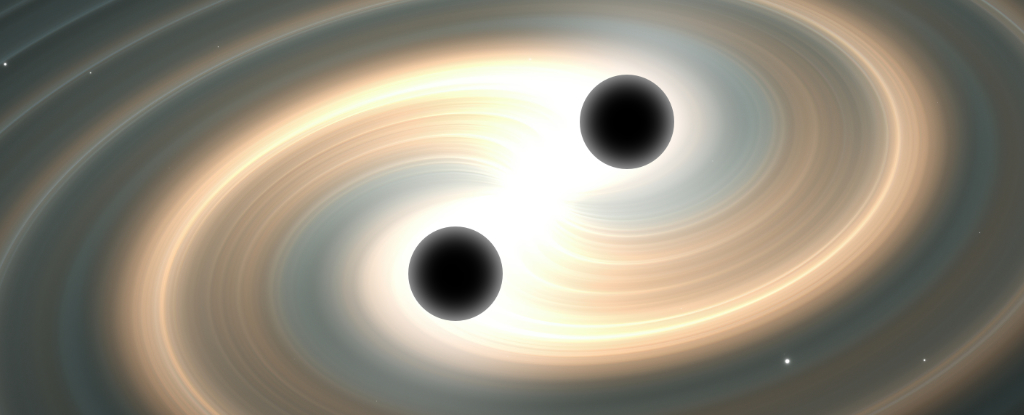
Astronomers using the MeerKAT Pulsar Timing Array have detected a surprisingly loud gravitational wave background, suggesting more supermassive black holes may be orbiting each other than previously thought. This discovery, made by observing 83 pulsars, has led to the most detailed maps of gravitational waves, revealing a 'hot spot' of activity in the Southern Hemisphere. The findings challenge existing theories about the number of supermassive black holes and could provide insights into the cosmic architecture of the universe.

astronomy2 years ago

Unveiling the Enigmatic Glow of Early Galaxies

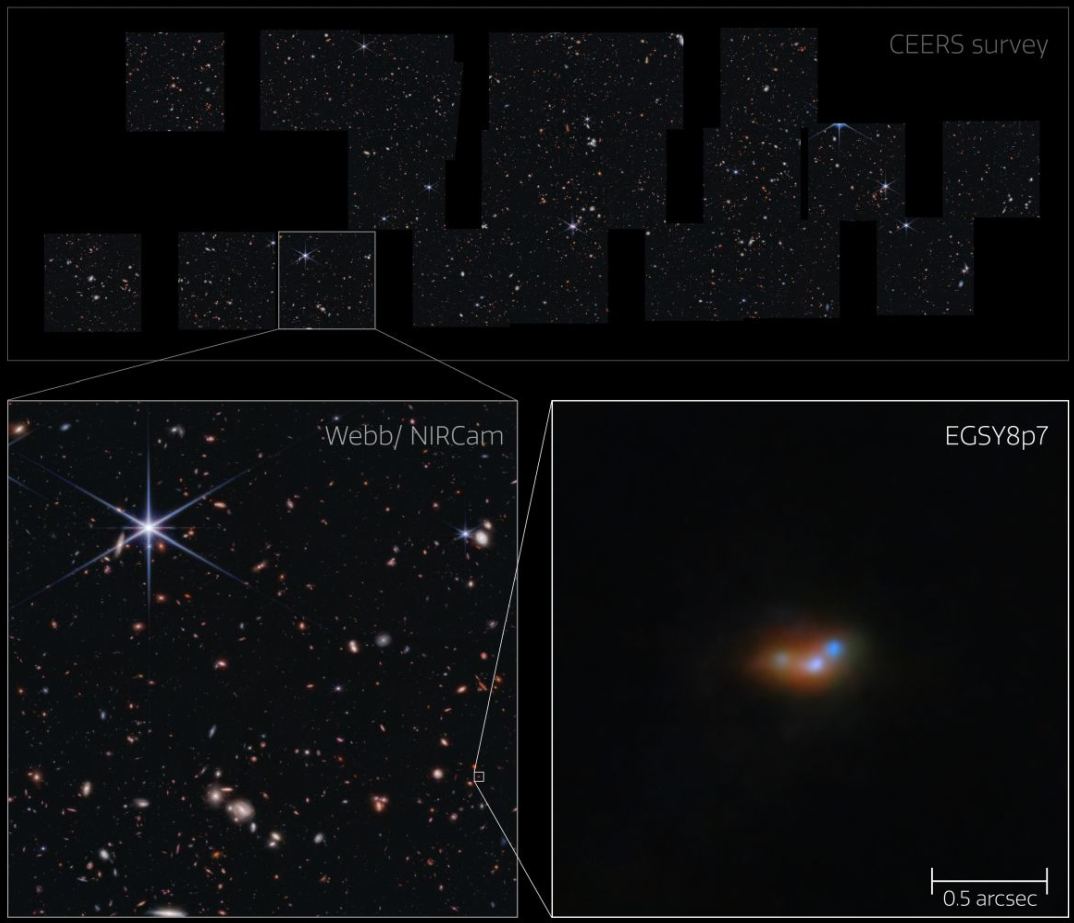
The mysterious source of Lyman-alpha emissions in the early Universe has been revealed by astronomers using the James Webb Space Telescope. They found that galactic mergers and abundant star formation in the early Universe created the emissions and provided a path for them to escape the dense, opaque neutral hydrogen. This discovery sheds light on the previously unexplained detection of light from hydrogen atoms in the very early Universe and opens a new window into understanding the early Universe.

astronomy2 years ago

Unveiling Ancient Mysteries: JWST's Revelations on Early Galaxies

The James Webb Space Telescope has shed light on the mysterious Lyman-alpha emissions in the early Universe, revealing that galactic mergers and abundant star formation were responsible for creating these emissions and providing a path for them to escape the dense, opaque neutral hydrogen that dominated the young Universe. This discovery opens a new window into the early Universe and may lead to further insights through more detailed observations of galaxies at different stages of merging.

astronomy2 years ago

"Hubble's Startling Image: Galaxies Colliding, Foreshadowing Milky Way's Fate"

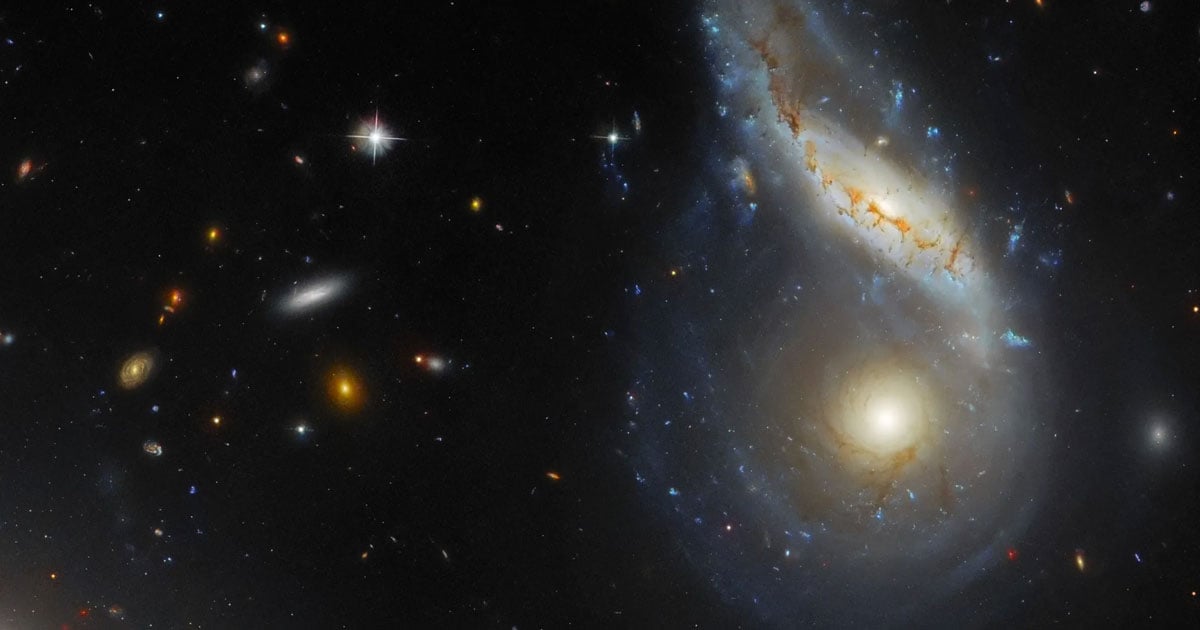
NASA's Hubble Space Telescope captured an image of two massive galaxies, NGC 6040 and LEDA 59642, in the process of colliding, forming the "monster merger" known as Arp 122. This collision, occurring 570 million light-years from Earth, could eventually create a singular structure over hundreds of millions of years. Astronomers believe that galactic mergers play a significant role in the formation of more massive galaxies and are connected to the process of star formation, but there is still much to learn about these epic collisions.

astronomy2 years ago

The Intricate Dance of Galactic Mergers and Black Hole Collisions

New research led by Newcastle University reveals that supermassive black holes obscured by dust are more likely to grow and release tremendous amounts of energy when they are inside galaxies that are expected to collide with a neighboring galaxy. The study used a statistical approach to determine the likelihood of galaxies being close together and on a collision course. By analyzing data from various telescopes, including the Hubble and Spitzer Space Telescopes, the researchers were able to detect the growing black holes using infrared light. This research provides insights into the growth of supermassive black holes during the cosmic noon, a crucial period in galactic evolution, and paves the way for future discoveries with the James Webb Space Telescope.

astronomy2 years ago

"James Webb's Mind-Blowing Discovery: Ancient Quasars Illuminate Cosmic Web and Galaxies"

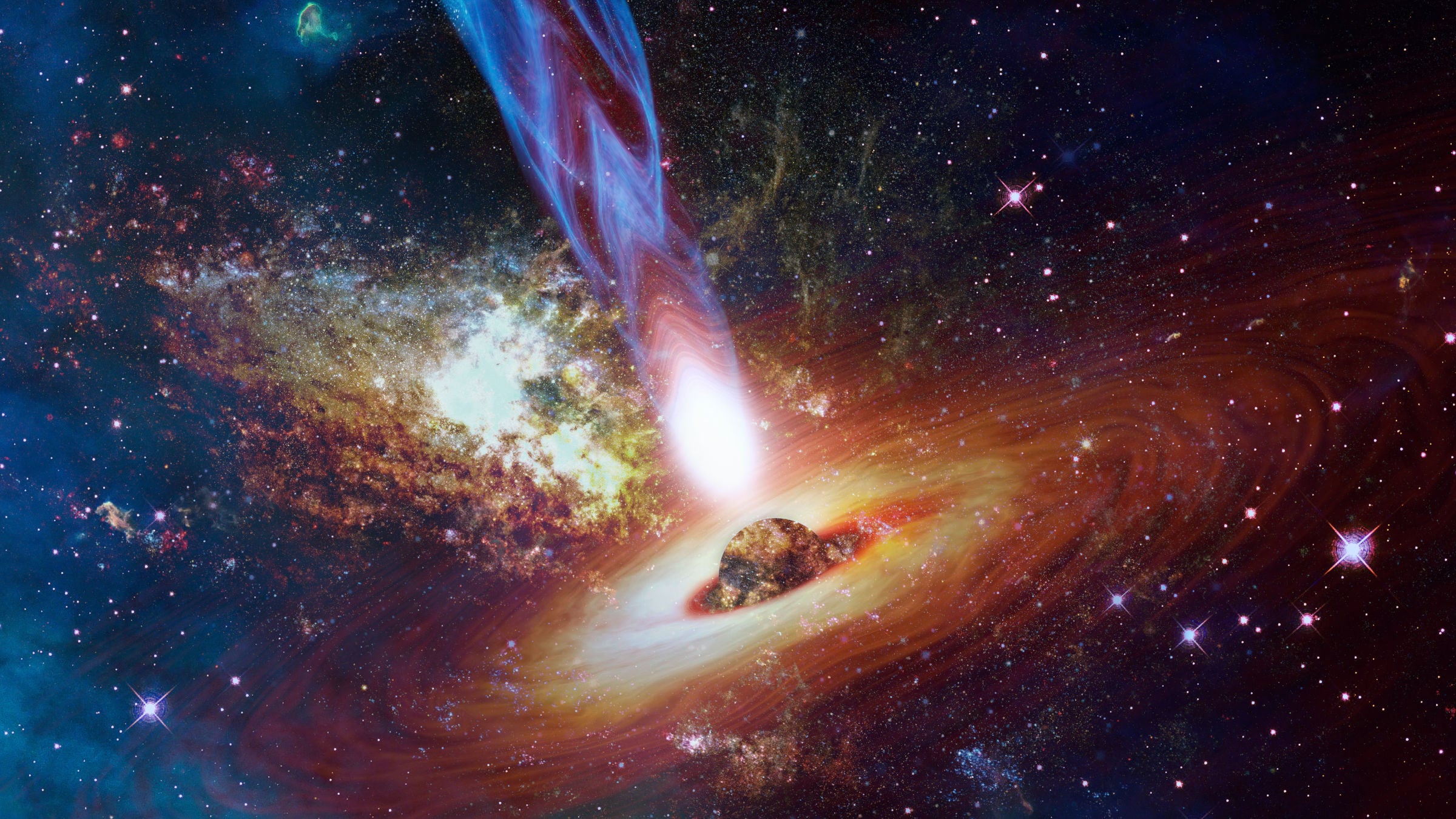
The James Webb Space Telescope has made a groundbreaking discovery by capturing starlight from ancient quasars, allowing astronomers to observe galaxies that existed when the universe was less than one billion years old. The observed galaxies have masses between 30 billion and 130 billion times that of the sun, with black holes weighing 200 million to 1.4 billion solar masses. This finding provides valuable insights into the early universe and supports the theory that quasars are formed through galactic mergers that fuel supermassive black holes.

astronomy2 years ago

Early Universe Witnesses Merger of Two Supermassive Black Holes.

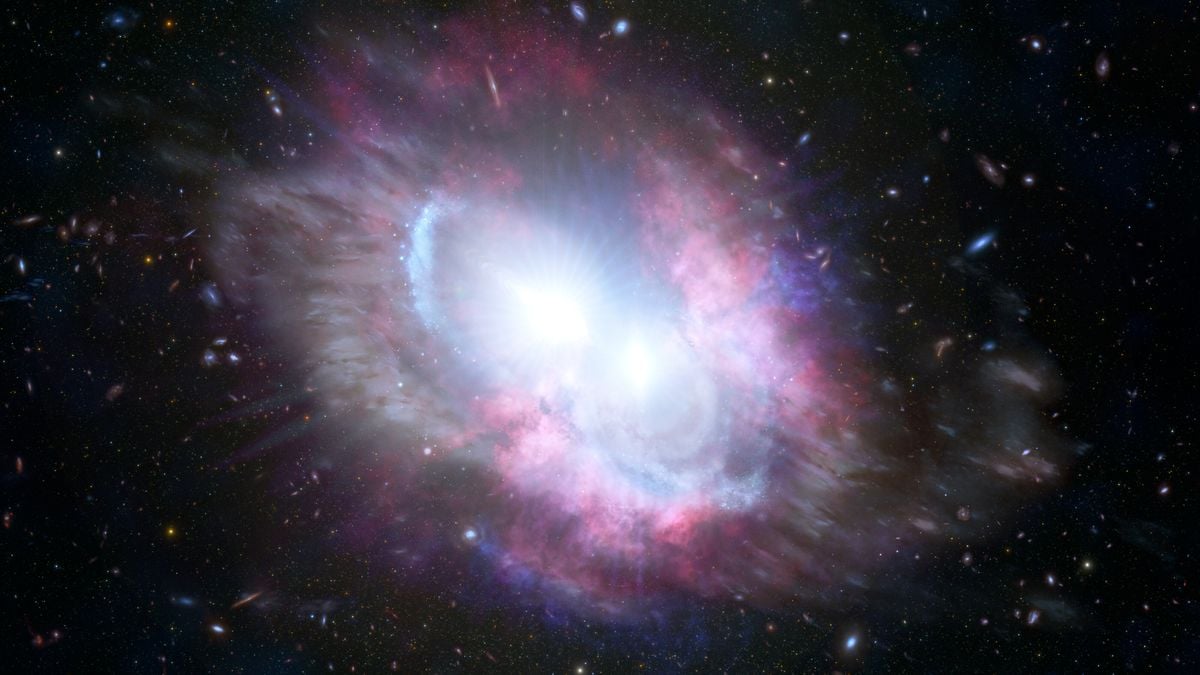
Astronomers have discovered two quasars lighting up the mutual heart of colliding galaxies during a period in the universe's early history known as "cosmic noon." The energetic quasars are powered by feeding supermassive black holes and are seen as they were just three billion years after the Big Bang, during a period of intense galactic growth and star formation. Such a closely bound pair of energetic quasars are characteristic of merging galaxies, which go on to form massive elliptical galaxies. By investigating such events, astronomers can learn more about the evolution of galaxies and how the universe took the shape we see today.