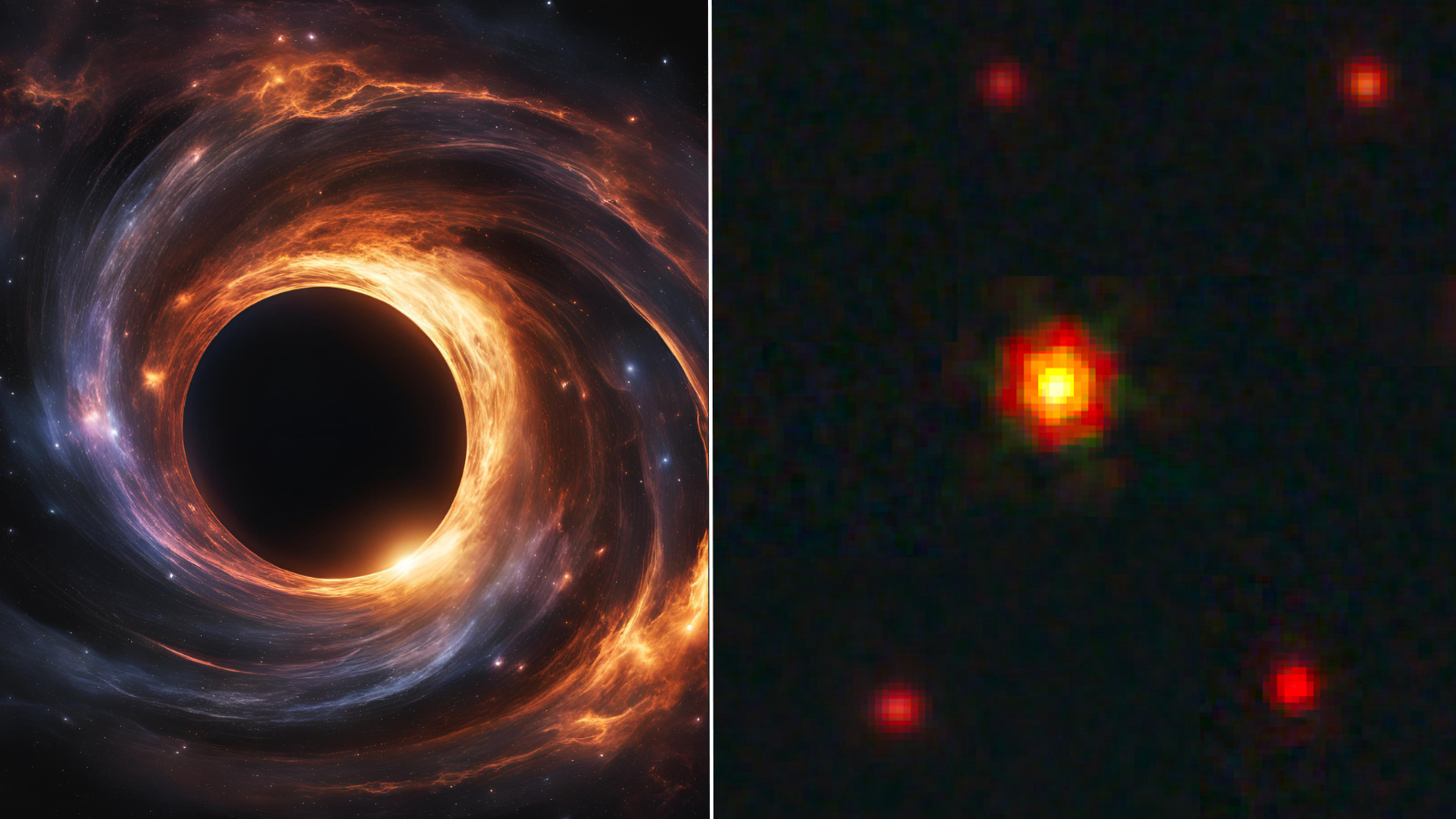
Using the James Webb Space Telescope, astronomers discovered a massive supermassive black hole called BiRD from the early universe, providing new insights into black hole growth during cosmic noon and challenging previous theories about these objects' evolution.
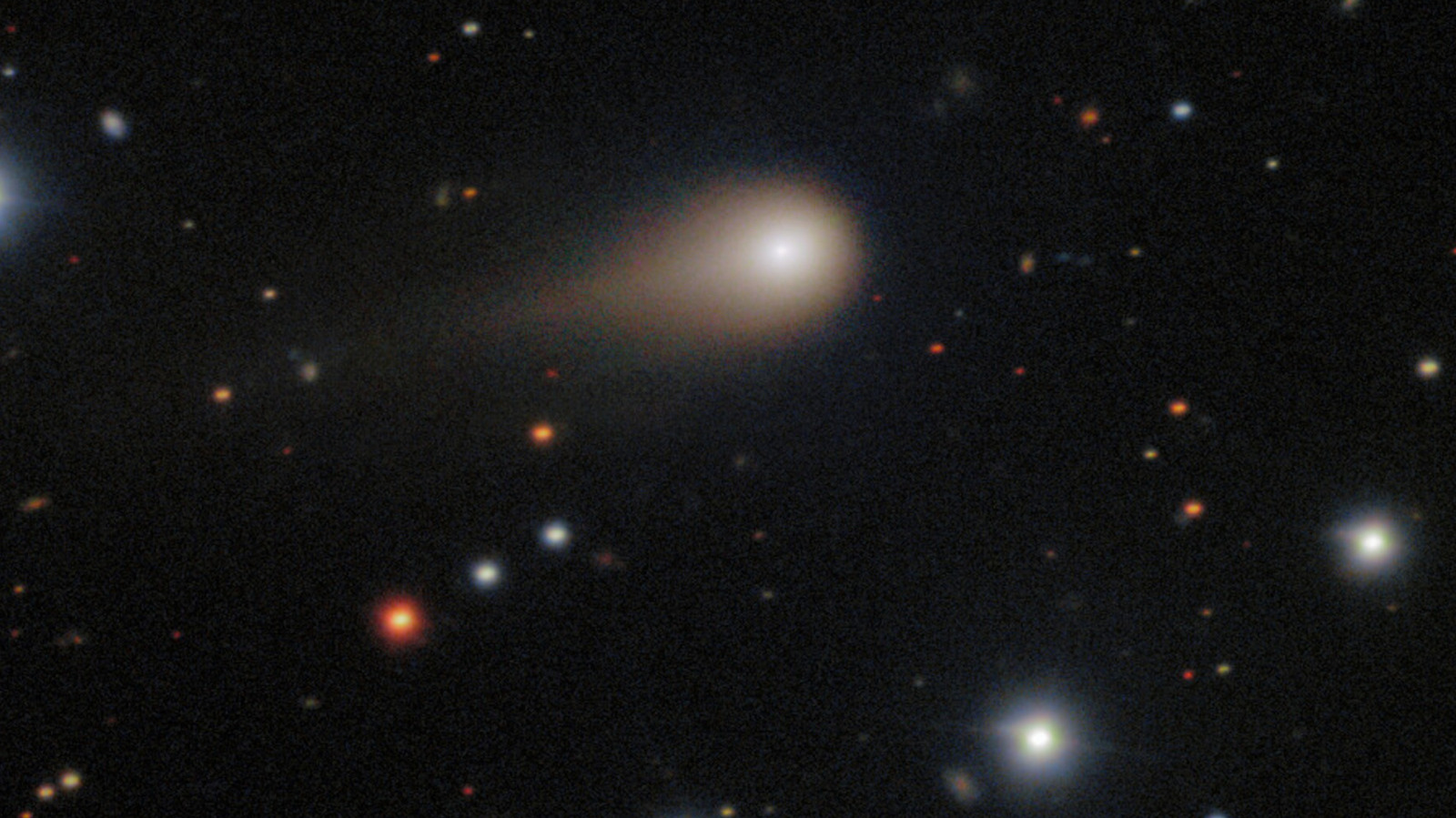
Scientists have traced the interstellar comet 3I/ATLAS back to the galaxy's oldest regions, making it potentially one of the oldest objects in the Milky Way, offering a rare glimpse into the galaxy's formation and early universe, while also revealing unusual chemical compositions that challenge current understanding.
NASA's Chandra X-ray Observatory has detected a surprisingly powerful black hole jet from about 11.6 billion light-years away, during the universe's 'cosmic noon' when galaxy and black hole growth was at its peak. The study identified two black holes with jets over 300,000 light-years long, moving at nearly the speed of light, with their brightness influenced by relativistic effects and viewing angles. This discovery enhances understanding of black hole activity in the early universe.
The James Webb Space Telescope (JWST) has provided new insights into the Cosmic Noon epoch, 2 to 3 billion years after the Big Bang, when galaxies grew and supermassive black holes (SMBHs) became luminous quasars. Using near-infrared data from JWST, astronomers observed over 100 galaxies from this period and found evidence that SMBH-driven outflows can rapidly remove cool gas from galaxies, starving them of fuel for star formation. This suggests that AGNs are responsible for shutting down star formation in massive galaxies, providing a better understanding of galaxy evolution.
New research led by Newcastle University reveals that supermassive black holes obscured by dust are more likely to grow and release tremendous amounts of energy when they are inside galaxies that are expected to collide with a neighboring galaxy. The study used a statistical approach to determine the likelihood of galaxies being close together and on a collision course. By analyzing data from various telescopes, including the Hubble and Spitzer Space Telescopes, the researchers were able to detect the growing black holes using infrared light. This research provides insights into the growth of supermassive black holes during the cosmic noon, a crucial period in galactic evolution, and paves the way for future discoveries with the James Webb Space Telescope.
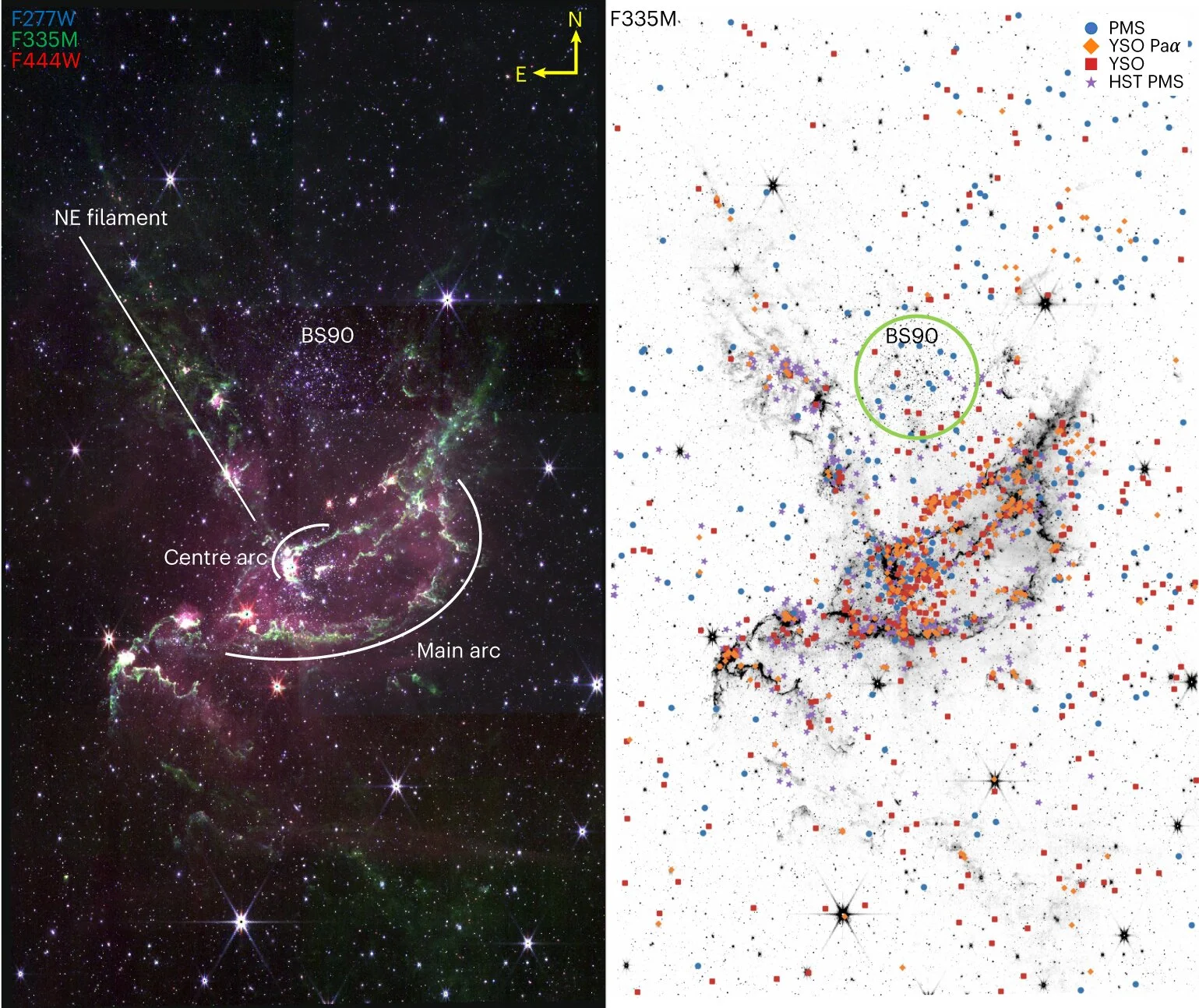
An international team of space scientists has used data from the James Webb Space Telescope to study a part of the Small Magellanic Cloud and found evidence suggesting that planets could have formed during the "cosmic noon." The team focused on a part of the SMC called NGC 346, which is made up of hundreds of young, low-mass stars, and found evidence of rock-forming elements in the SMC, despite the lack of metals, suggesting that many planets may have been forming around them at that time.
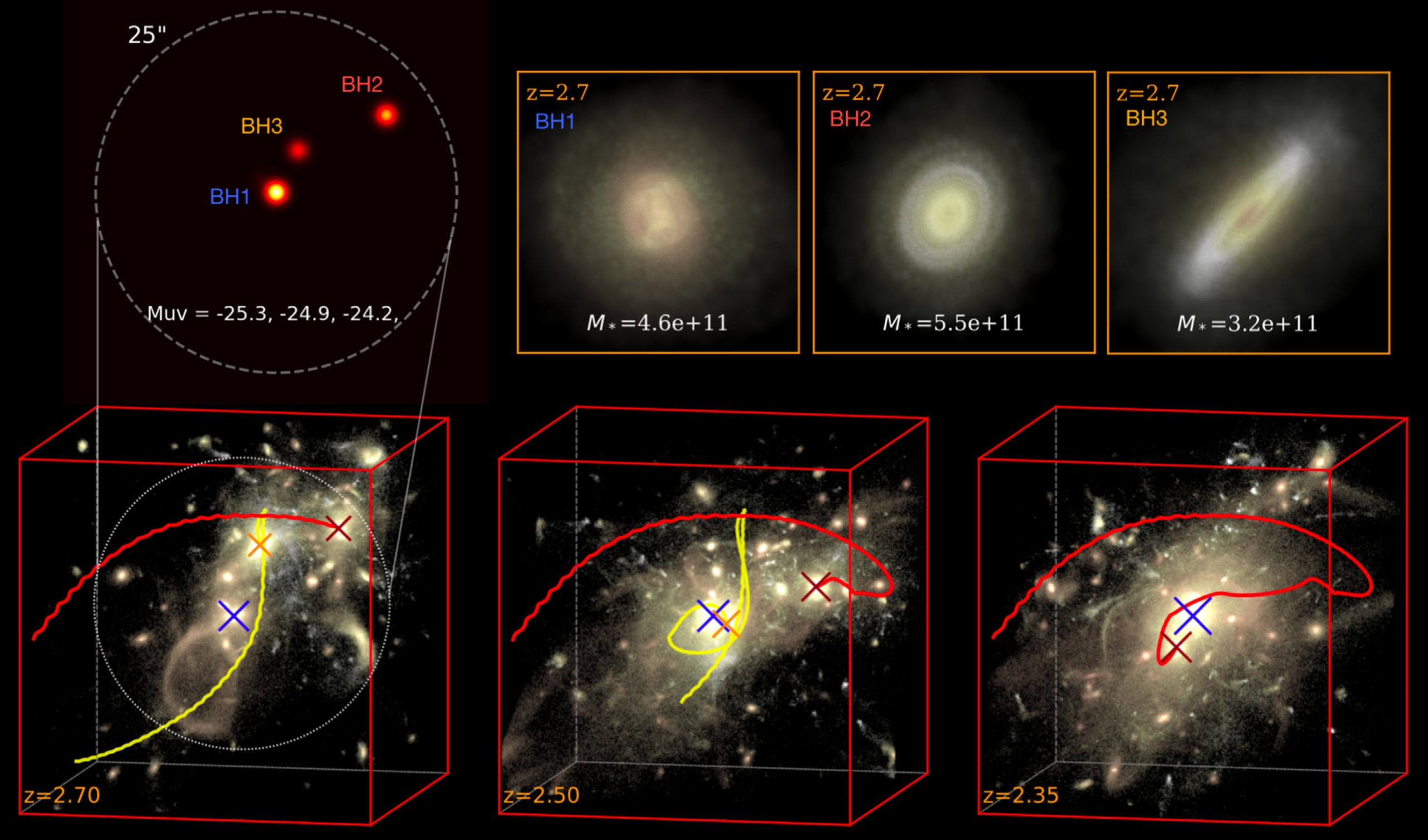
Astrophysicists have gained insight into the origin of ultra-massive black holes, the heaviest entities in the cosmos, through simulations run on TACC’s Frontera supercomputer. The simulations show that one possible formation channel for ultra-massive black holes is from the extreme merger of massive galaxies that are most likely to happen in the epoch of the ‘cosmic noon’. The largest cosmological simulation to date, called Astrid, co-developed by Yueying Ni, is aiding in the investigation of ultra-massive black holes. The findings from the Astrid simulations show the formation of black holes can reach a theoretical upper limit of 10 billion solar masses.