
Tag

Cosmic Cannibalism

All articles tagged with #cosmic cannibalism

astronomy1 year ago

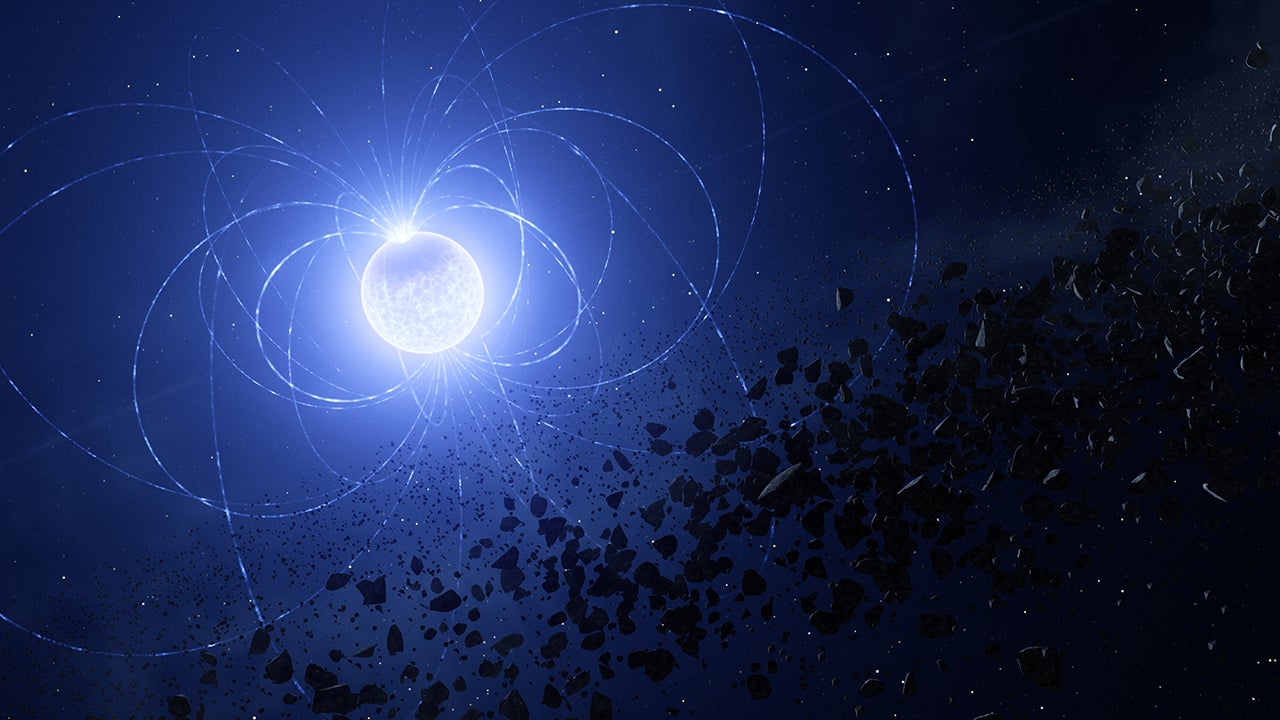
"Zombie Star Displays Metal Scar from Devouring Planets"

Astronomers using the European Southern Observatory’s Very Large Telescope have discovered a metallic scar on a dying Earth-sized star, indicating the remains of a shredded planetoid or asteroid. The concentrated patch of planetary material is held in place by the star's magnetic field, challenging previous theories. This discovery sheds light on the destructive potential of stars and the nature of planetary material they consume, offering insights into the future fate of Earth as the Sun transforms into a red giant.
astronomy2 years ago

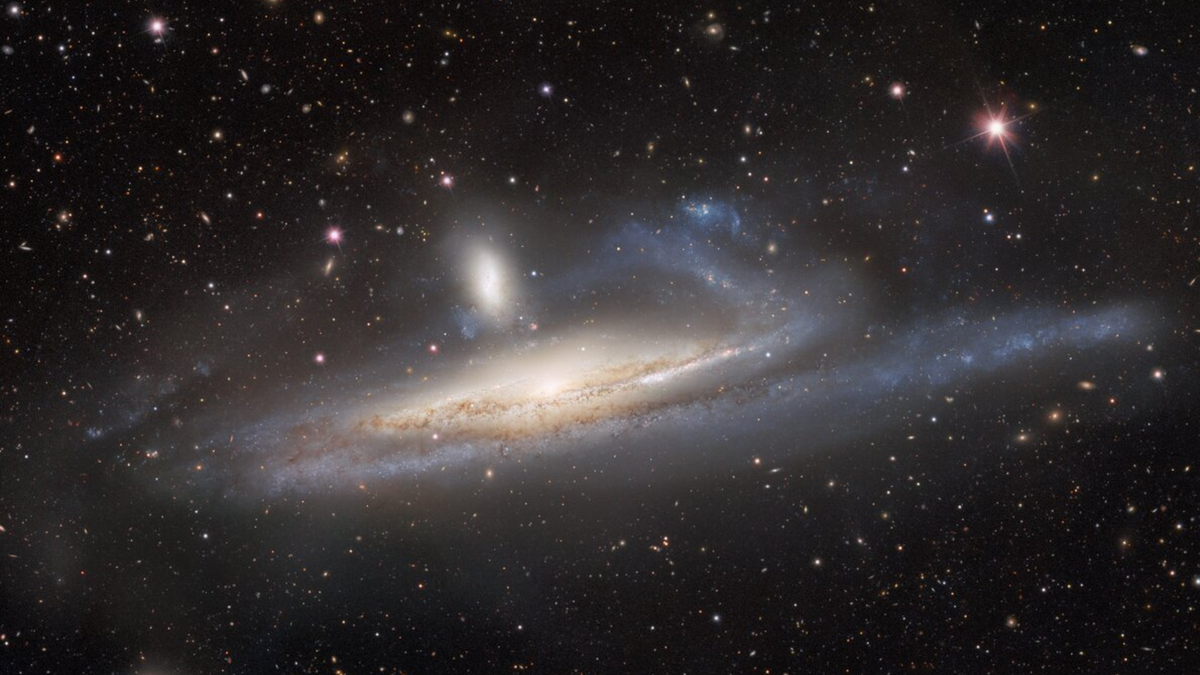
"Dark Energy Camera Uncovers Galaxies Engaged in Cosmic Tug of War"

Astronomers have captured an image of a cosmic tug of war between a massive galaxy, NGC 1532, and its smaller dwarf galaxy neighbor, NGC 1531. The smaller galaxy is being dragged towards its larger counterpart and will eventually merge with it, resembling an act of cosmic cannibalism. The image, taken by the Dark Energy Camera, reveals the distorted spiral arms of NGC 1532 and a bridge of gas and dust connecting the two galaxies. This observation provides insights into how galaxies grow by merging with smaller companions. The Milky Way, too, has cannibalized smaller dwarf galaxies and is currently surrounded by satellite dwarf galaxies, some of which are being digested. In the future, the Milky Way is expected to merge with the Andromeda galaxy, resulting in the merger of their central supermassive black holes.

astronomy2 years ago

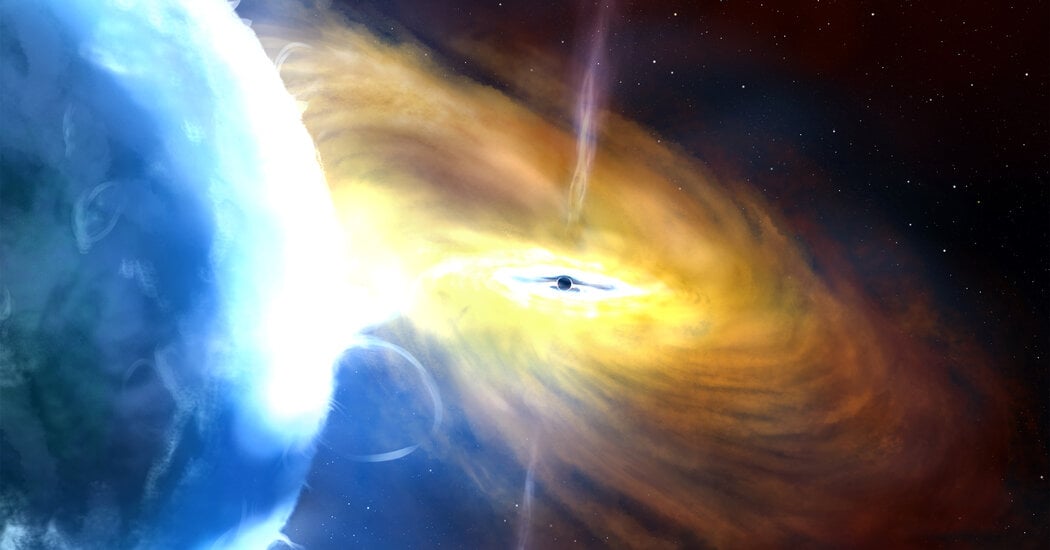
Astronomers Witness Largest Explosion in Cosmos

An international group of astronomers has been observing a black hole, perhaps a billion times as massive as the sun, consuming a humongous cloud of gas, which is one of the most violent and energetic acts of cosmic cannibalism ever witnessed, and perhaps the biggest explosion seen yet in the history of the universe. The explosion, known as AT2021lwx, has been ongoing for three years and is one of the most luminous transients ever discovered, with a total radiated energy equal to 100 supernovas. The most likely explanation is that a black hole as massive as a billion suns was enjoying a prolonged feast on a gigantic cloud of gas.