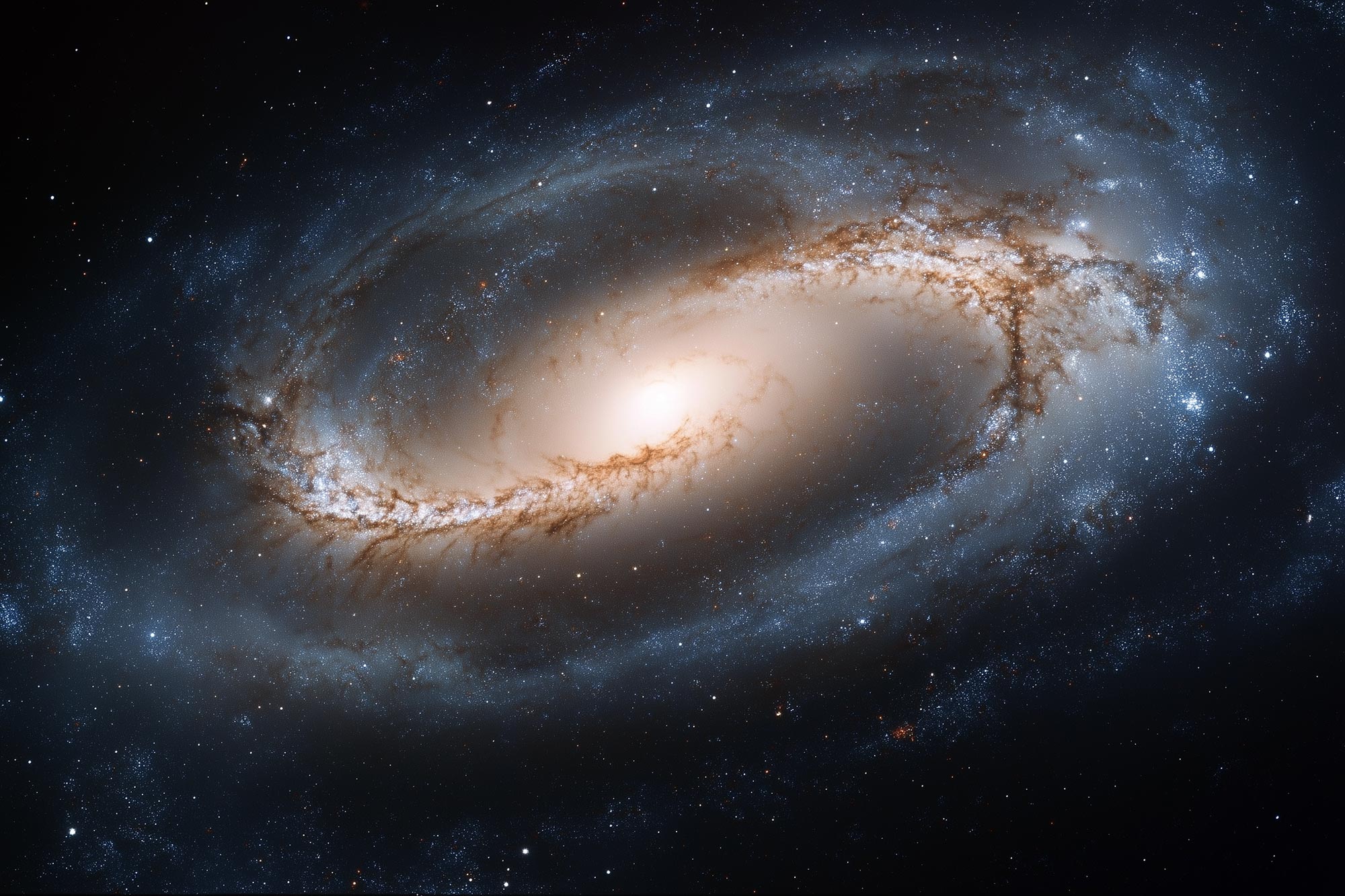
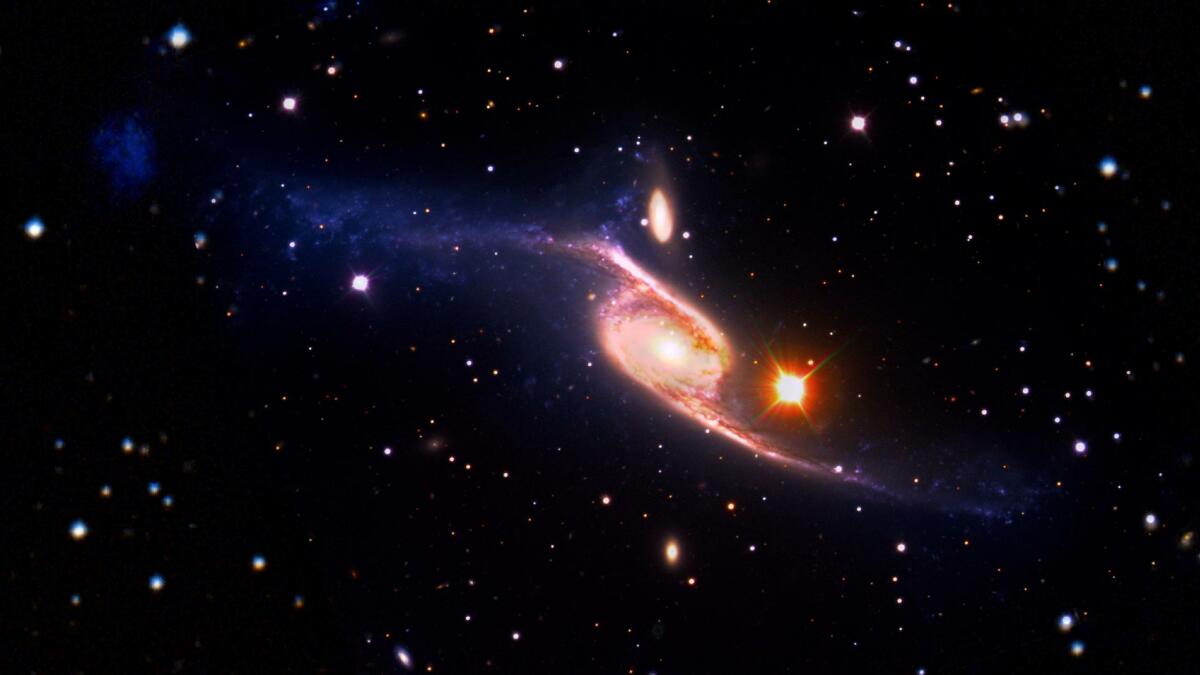
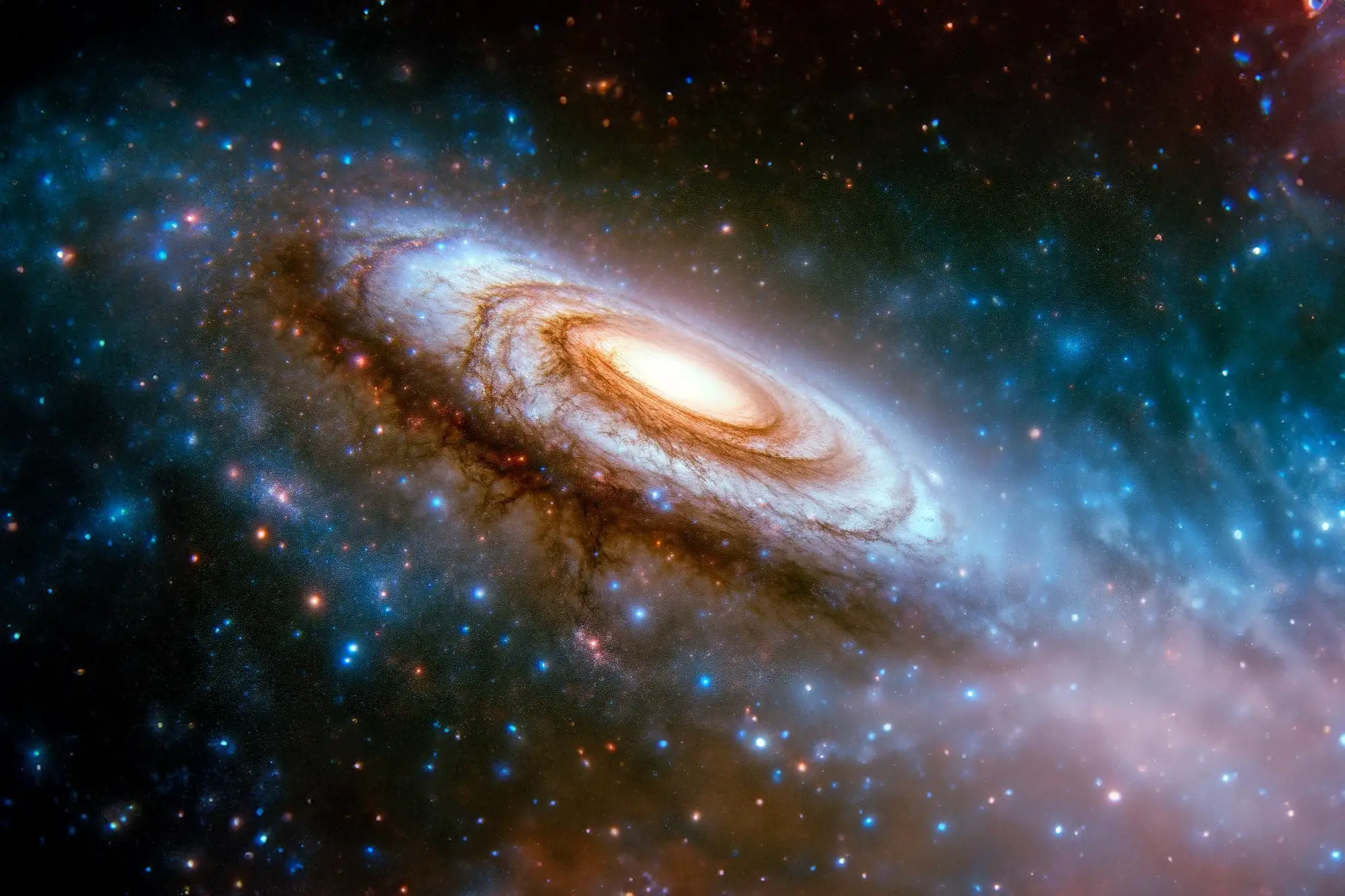
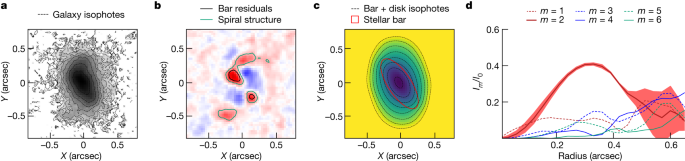
Scientists have discovered the oldest known barred spiral galaxy, J0107a, dating back 11.1 billion years, revealing unprecedented details about galaxy growth, star formation, and gas flows in the early universe, which could reshape our understanding of galaxy evolution.
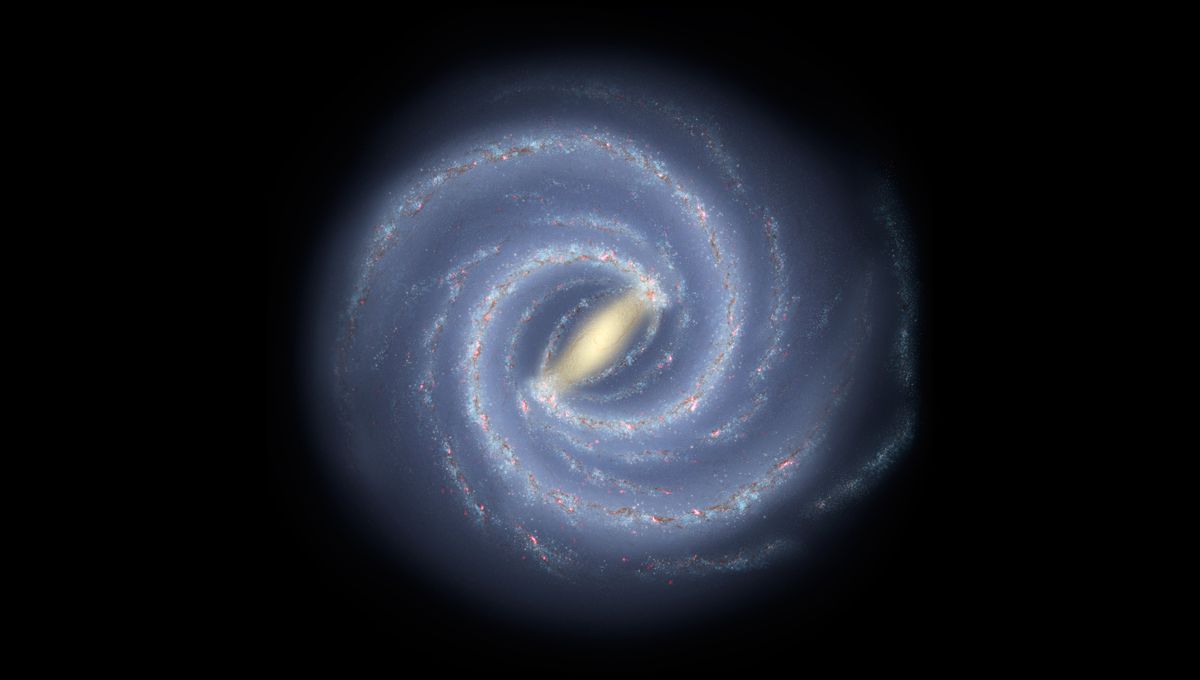
A new study suggests that the bar shape of the Milky Way, a barred spiral galaxy, may have been caused by a collision with another galaxy, specifically the Gaia Sausage, which occurred about 8-11 billion years ago. Computer simulations show that without this collision, there could have been a 2 billion-year delay in the formation of the bar. While the study doesn't prove a direct causal relationship, it strongly implies that the collision triggered the formation of the Milky Way's bar structure. Further research and sky surveys will help us better understand the dynamics of our galactic structure.
The discovery of a barred spiral galaxy known as Ceers-2112 by the James Webb Space Telescope challenges previous theories about galaxy evolution. Astronomers believed that it took billions of years for galaxies to develop bars, but this finding suggests that galaxies may have matured much faster than previously thought. The observation of Ceers-2112, which existed when the universe was only about 2 billion years old, indicates that galaxies in the early universe could be as ordered as the Milky Way. This discovery will require scientists to adjust their theories on galaxy formation.
Astronomers using the James Webb Space Telescope have discovered ceers-2112, the most distant barred spiral galaxy observed to date. This challenges previous assumptions about galaxy evolution, showing that galaxies became orderly earlier than previously believed and may lead to changes in theoretical models of galaxy formation. The discovery of ceers-2112 suggests that galaxies in the early universe could be as ordered as the Milky Way, indicating that some aspects of our theories of galaxy formation and evolution need revision. This finding also paves the way for more bars to be discovered in the young universe.
Astronomers have discovered a galaxy, named ceers-2112, that closely resembles the Milky Way just 2 billion years after the Big Bang, challenging previous theories about galaxy formation. The galaxy's well-ordered structure, including a bar formation, suggests that galaxies may become stable and mature much faster than previously thought. This finding will require revisions to current models of galaxy formation and evolution, potentially impacting our understanding of dark matter's role in the process. The discovery of ceers-2112 opens up new possibilities for detecting similar structures in the early universe and sheds light on the development of galaxies in their early stages.
Using the James Webb Space Telescope, astronomers have discovered a barred spiral galaxy, named ceers-2112, in the early universe that resembles the Milky Way. This challenges previous beliefs that such galaxies could not be observed before the universe reached half of its current age. The discovery suggests that galaxies in the early universe could be as ordered as the Milky Way, indicating a faster maturation and organization process than previously thought. The finding will require revisions to theories of galaxy formation and evolution, as well as provide insights into the properties and detection of structures like galactic bars in the young universe.
Astronomers have discovered a barred spiral galaxy, named ceers-2112, at a redshift of approximately 3, making it one of the earliest known examples of a galaxy with a mature stellar bar. The galaxy, which has a stellar mass similar to that of the Milky Way, provides insights into the formation and evolution of galaxies in the early Universe. The presence of a barred structure challenges previous models that suggested bars were rare beyond a redshift of 1.5. The discovery suggests that baryons (ordinary matter) could have dominated over dark matter at such early cosmic times, and that dynamically cold stellar disks and bars could have formed much earlier than previously thought.
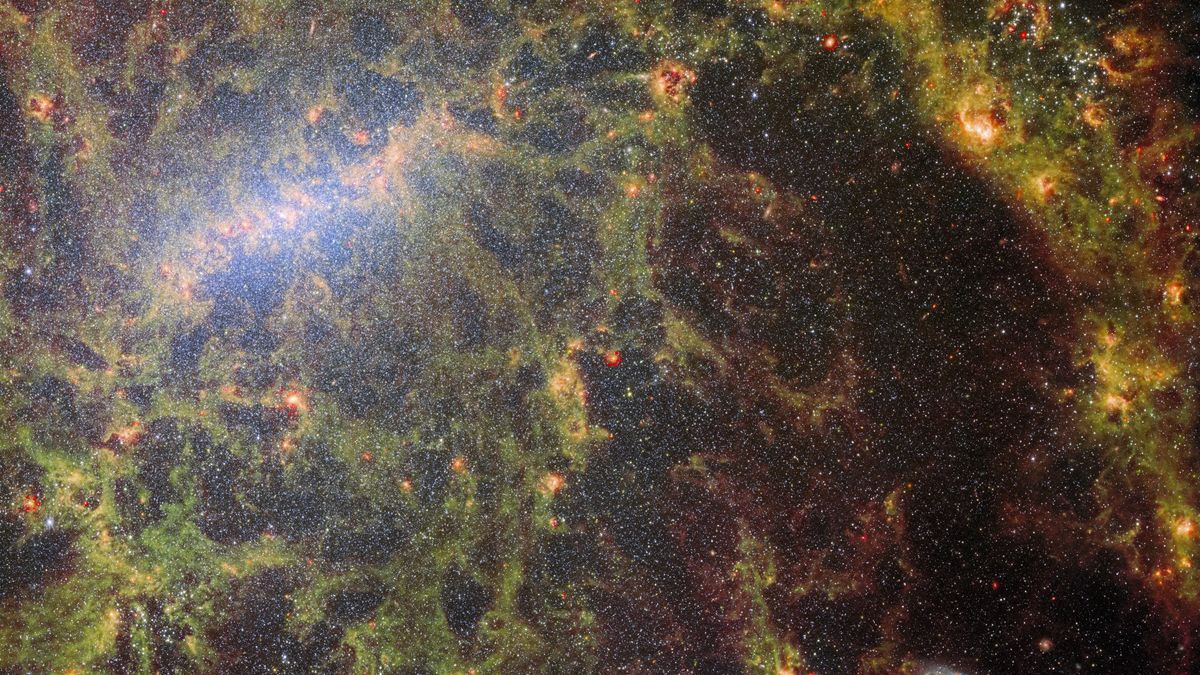
Astronomers have discovered a barred spiral galaxy, NGC 5068, located 17 million light-years away using the James Webb Space Telescope. The discovery could lead to a better understanding of barred spiral galaxies like our own. The telescope has collected images of 19 galaxies to add to our understanding of star-birthing galaxies. The observations are particularly valuable as star formation underpins many fields in astronomy, and Webb's observations build on other studies using telescopes including the NASA/ESA Hubble Space Telescope and ground-based observatories.
The James Webb Space Telescope has captured an image of the barred spiral galaxy NGC 5068, located 17 million light-years away, as part of its mission to study star formation in nearby galaxies. The image shows tendrils of gas and stars stretching throughout the galaxy, with a bright central bar visible in the upper left-hand corner. The bar may indicate that the galaxy is older and more evolved than unbarred spiral galaxies, and may be responsible for intense bursts of star formation. The JWST is designed to see the universe in infrared, making it ideal for studying opaque star-forming regions.