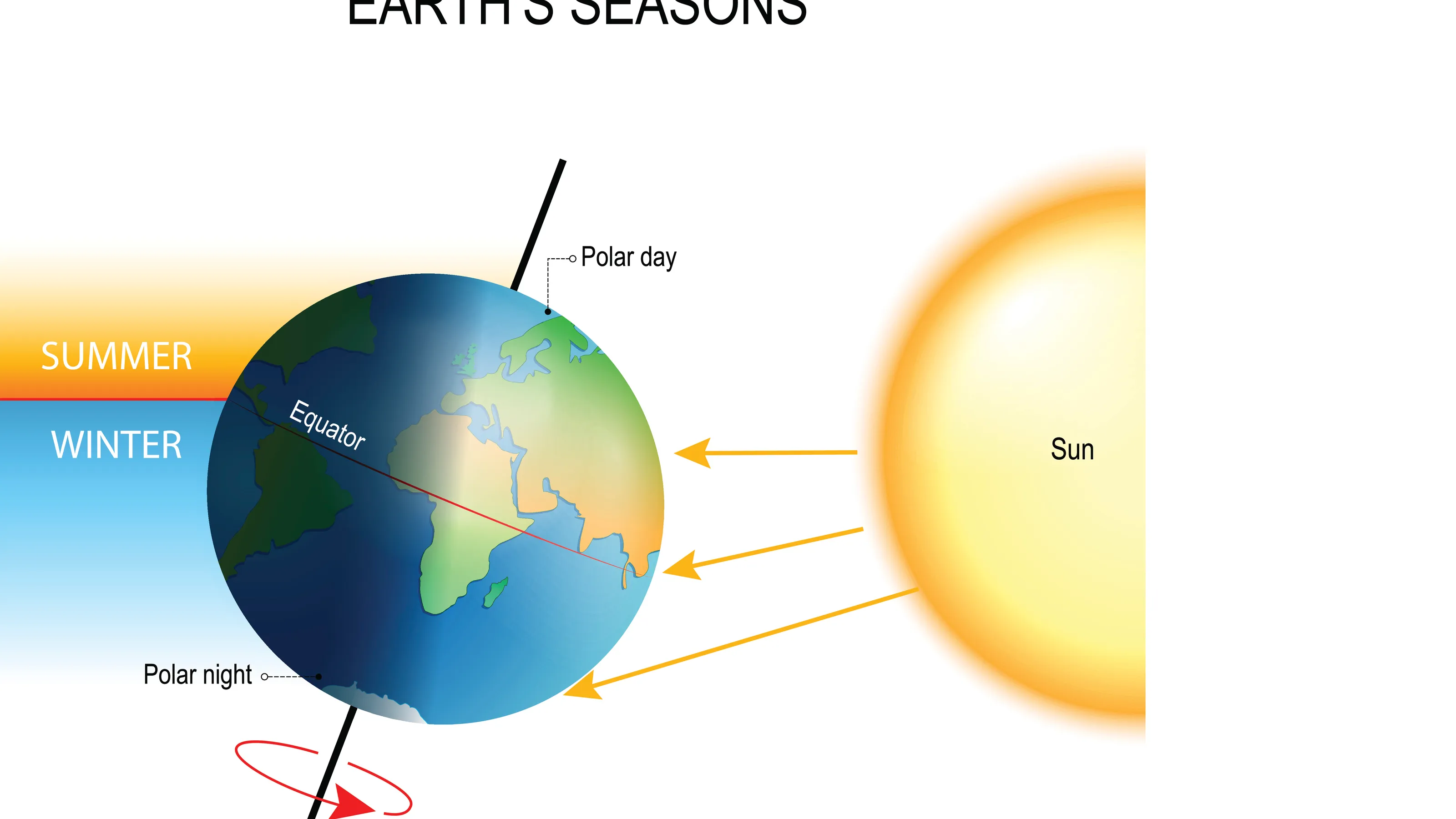
Earth reaches its farthest point from the sun during aphelion in July, but this distance has little impact on seasonal temperatures. The primary factor influencing seasons is Earth's 23.5-degree tilt, which affects how much sunlight different regions receive, making tilt far more significant than the slight variation in distance.
A study published in June 2023 reveals that Earth's axis has tilted 31.5 inches over 17 years due to human activities, specifically the massive pumping and redistribution of groundwater. This movement of water contributes to sea level rise and affects the planet's rotational pole drift. The study highlights the significant impact of groundwater redistribution on Earth's tilt, which is crucial for understanding climate dynamics, although it does not affect the seasons.
A study reveals that extensive groundwater pumping has tilted Earth's rotation by 31.5 inches over two decades, contributing to sea-level rise and climate change. This shift is primarily due to the redistribution of 2,150 gigatons of groundwater, highlighting the significant impact of human water usage on the planet's physical orientation. The findings emphasize the need for sustainable groundwater management and global cooperation to mitigate these effects and address broader climate challenges.
A new study published in Geophysical Research Letters reveals that massive groundwater pumping has shifted Earth's tilt by 31.5 inches over the past two decades, affecting the planet's rotation and contributing to sea-level rise. This shift, primarily caused by water redistribution from regions like western North America and northwestern India, highlights the interconnectedness of human activities and planetary mechanics. The findings raise concerns about the broader implications for climate change and timekeeping systems, emphasizing the urgent need for sustainable water management.
The coldest time of the year typically occurs about a month after the winter solstice, despite it being the darkest day, due to Earth's tilt and the way it retains heat. This phenomenon, known as 'seasonal lag,' happens because physical objects like oceans and land retain warmth longer than the air. Proximity to large bodies of water can further influence temperature variations and delay the coldest or warmest periods.
A new study has revealed that the rapid extraction of groundwater by humans has caused a significant shift in the Earth's tilt. Between 1993 and 2010, the tilt of the Earth shifted by 31.5 inches, corresponding to global withdrawals of underground water. The displacement of this water, which is often used for irrigation and eventually flows into the oceans, has occurred faster than aquifer replenishment. The study suggests that groundwater depletion has the largest impact on the drift of the Earth's rotational pole, highlighting its significant role in sea level rise. To conserve groundwater, individuals can take actions such as choosing water-saving plantings, repairing leaks promptly, and using water-saving products.
A new study published in Geophysical Research Letters reveals that pumping groundwater has caused Earth's tilt to shift by 31.5 inches in less than two decades, resulting in a sea-level rise of 0.24 inches. The redistribution of groundwater has been found to have the largest impact on the drift of the rotational pole, surpassing other climate-related causes. The study highlights the significant influence of human activities on Earth's rotation and emphasizes the need for better understanding and management of groundwater pumping to mitigate the effects of climate change, including sea-level rise.
A new study published in Geophysical Research Letters reveals that pumping groundwater has caused Earth's tilt to shift by 31.5 inches in less than two decades, resulting in a sea-level rise of 0.24 inches. The redistribution of groundwater has been found to have the largest impact on the drift of the rotational pole, surpassing other climate-related causes. The study highlights the significant influence of human activities on Earth's rotation and emphasizes the need for better understanding and management of groundwater pumping to mitigate the effects of climate change, including sea-level rise.
A new study published in Geophysical Research Letters reveals that pumping groundwater has caused Earth's tilt to shift by 31.5 inches in less than two decades, resulting in a sea-level rise of 0.24 inches. The redistribution of groundwater has been found to have the largest impact on the drift of the rotational pole, surpassing other climate-related causes. The study highlights the significant influence of human activities, particularly irrigation, on Earth's rotation and climate change. Understanding the effects of groundwater pumping can aid in mitigating sea-level rise and other climate issues.
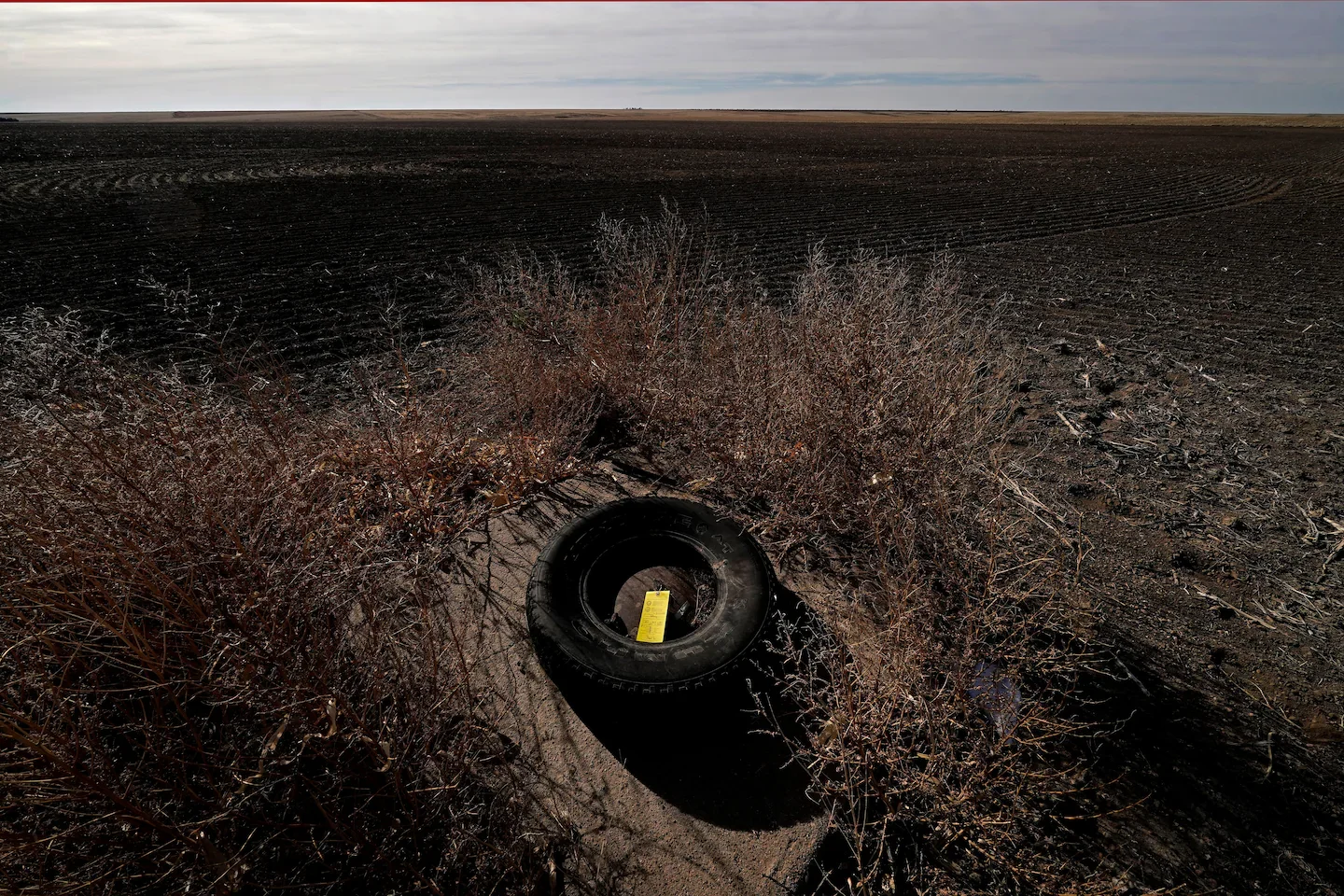
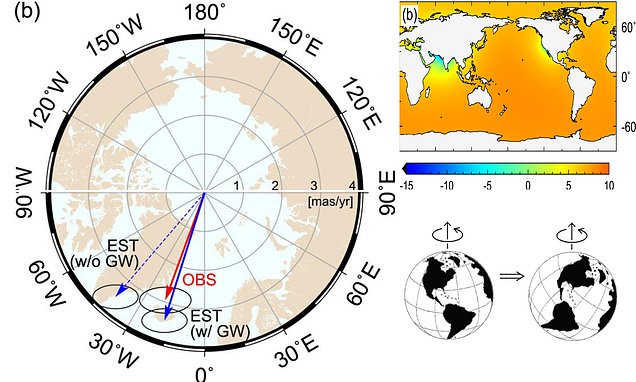
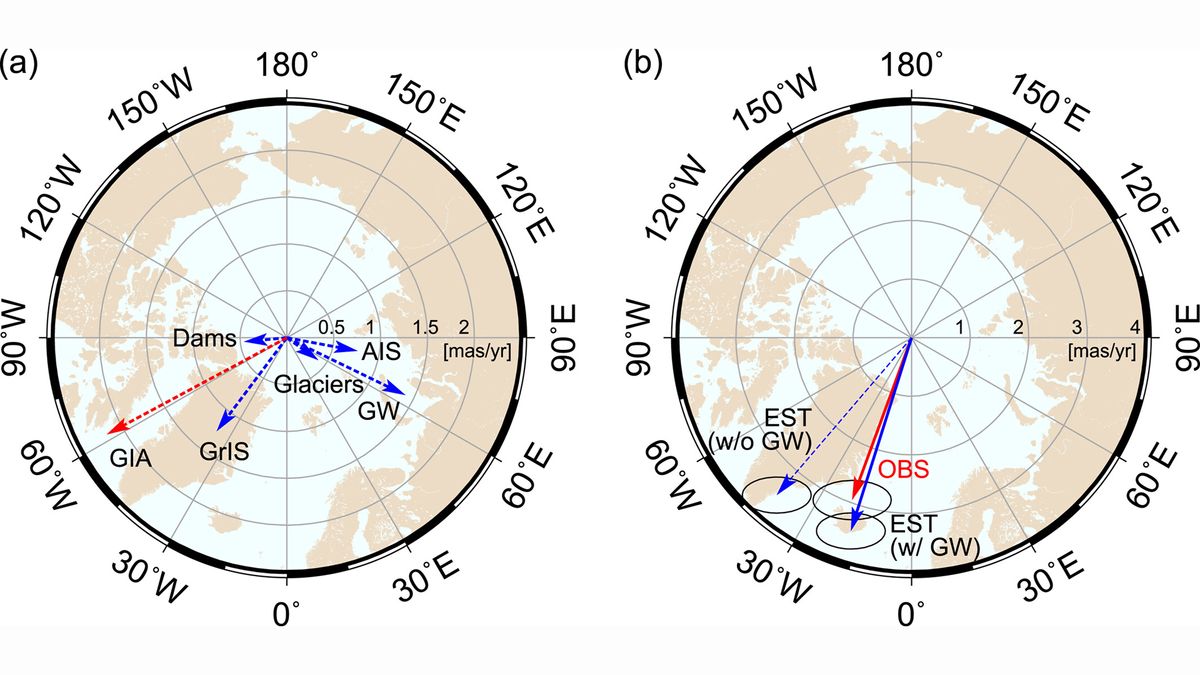
The rampant removal of groundwater for drinking and irrigation has altered the distribution of water on Earth enough to shift the planet’s tilt, according to a new study. Between 1993 and 2010, humans removed a total of 2,150 gigatons of groundwater, enough to fill 860 million Olympic swimming pools. Moving all that water has shifted Earth’s tilt 31.5 inches eastward. The shift in Earth’s tilt is far too small to impact weather or seasons, but the team of scientists discovered that polar drift can be used to estimate the effect of groundwater pumping on sea level rise.
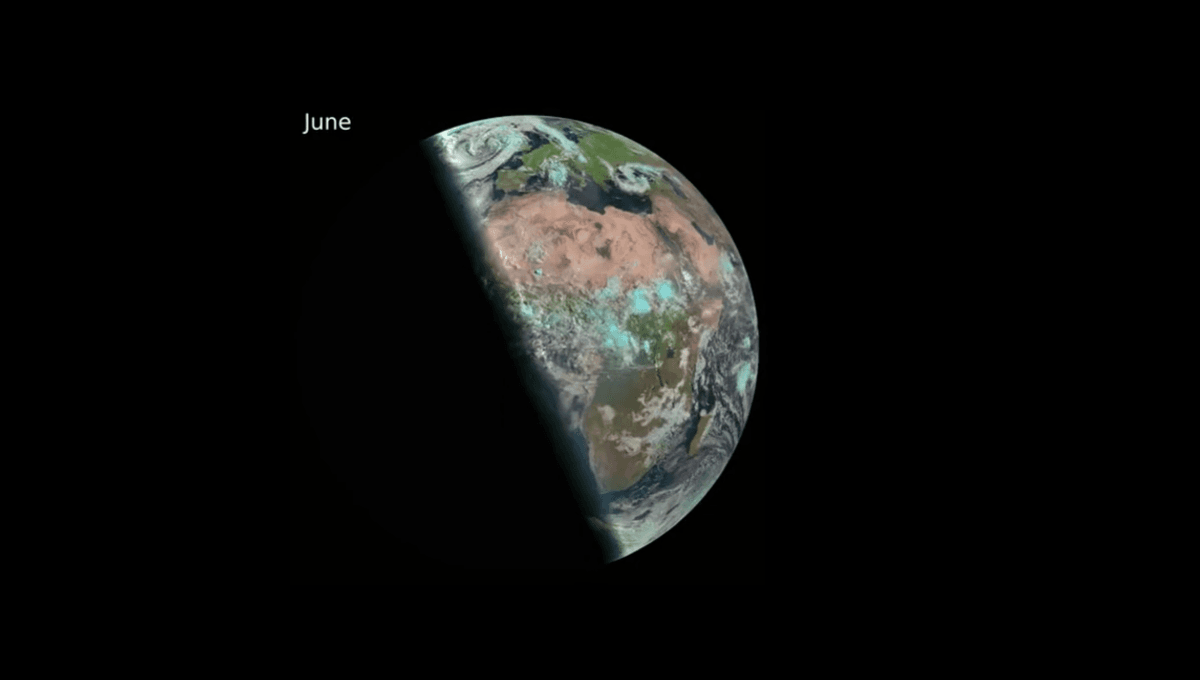
An animation created by Simon Proud, an Earth-observation scientist, shows how Earth's tilt creates solstices and seasons. The animation was produced by stitching together 365 images taken at 6 am on each day over the past year from weather satellite data. Earth's tilt is currently 23.4 degrees away from the poles, and it's known to change. The tilt is responsible for the number of daylight hours we receive throughout the year. The animation shows how places like Europe and North Africa are perfectly illuminated by the sun at 6 am in June, while they are shrouded in darkness in December.
Human activities, particularly groundwater depletion, have caused a significant eastward shift of 31 inches in Earth's rotational pole between 1993 and 2010, according to new research. The study estimates that pumping 2,150 gigatons of water from underground aquifers caused the shift, which is the largest impact on the drift of the rotational pole among climate-related causes. The extracted groundwater that ended up in the oceans may have also boosted global sea level rise by around 0.25 inch.
A new study claims that the Earth's tilt changed by nearly 80 centimeters between 1993 and 2010, and humans are to blame for pumping 2,150 gigatons of groundwater from the planet. The distribution of water on our planet affects how the mass of the Earth's crust is distributed, thereby playing a part in how the Earth's tilt is determined. The changes to the distribution of the Earth's groundwater could also be attributed to global sea levels rising. Conservation attempts sustained for several decades could alter the changes in the Earth's tilt drifting.
The removal of groundwater for drinking and irrigation purposes is causing the Earth's axis to shift, according to a study by researchers at Seoul National University. The team found that the Earth tilted 31 inches east between 1993 and 2010 due to the redistribution of groundwater, which alters the planet's mass. This shift can increase the amount of sunlight the poles receive, potentially increasing the melting of polar ice. The study highlights the need to consider Earth's axis wobbling when using GPS, satellites and ground observatories.
Earth's tilt has changed by 31.5 inches (80 centimeters) between 1993 and 2010 because of the amount of groundwater humans have pumped from the planet's interior. Scientists have discovered that displacing such an enormous amount of water has had an effect on the axis around which the planet spins. The shifts of the rotational pole could contribute to climate change in the long-term, and managing how groundwater moves around the globe could help limit the shifts of the rotational pole and thus the potential climate effects that come with them.