Tag

Default Mode Network

All articles tagged with #default mode network

Neuroscientists Reveal How the Brain Creates a Unified Reality

Originally Published 2 months ago — by PsyPost

Featured image for Neuroscientists Reveal How the Brain Creates a Unified Reality
Source: PsyPost

Neuroscientists discovered that the brain constructs a unified reality by using separate predictive models for context, intentions, and actions, which are integrated in the precuneus, shaping our subjective experience. This process was observed through fMRI studies during movie watching, revealing specialized brain regions and their dynamic interactions, providing insights into how our perceptions and shared realities are formed.
Scientists Reveal Brain's Default Mode Network Structure

Originally Published 7 months ago — by PsyPost

Featured image for Scientists Reveal Brain's Default Mode Network Structure
Source: PsyPost

A study in Nature Neuroscience reveals the structural complexity of the brain's default mode network (DMN), showing it comprises diverse tissue types that support its role in various mental states, from introspection to decision-making, through distinct anatomical features and connectivity patterns. The research combines postmortem histology and in vivo imaging to map the microstructure and functional pathways of the DMN, highlighting its unique integrative role in human cognition.

"Scientists Uncover Brain's Source of Creativity"

Originally Published 1 year ago — by Neuroscience News

Featured image for "Scientists Uncover Brain's Source of Creativity"
Source: Neuroscience News

Researchers have discovered that the brain's default mode network (DMN) initiates creative ideas, which are then evaluated by other brain regions. Using advanced brain imaging, they tracked real-time brain activity during creative tasks, revealing the DMN's crucial role in creativity. This understanding could lead to interventions that enhance creativity and aid in treating mental health disorders.

"Uncovering the Mechanisms of Sustained Attention in Brain Networks"

Originally Published 1 year ago — by Neuroscience News

Featured image for "Uncovering the Mechanisms of Sustained Attention in Brain Networks"
Source: Neuroscience News

A new study using fMRI investigates the brain's mechanisms behind deep focus, finding that certain brain networks synchronize and desynchronize, affecting an individual's ability to maintain attention. The research suggests that low-frequency fluctuations in brain networks play a key role in regulating sustained attention, providing potential insights for improving cognitive function. The study's findings could lead to better strategies for enhancing focus and attention in various cognitive tasks.

"The Neuroscience of Idle Minds: What Happens in Your Brain When You're Not Occupied"

Originally Published 1 year ago — by WIRED

Featured image for "The Neuroscience of Idle Minds: What Happens in Your Brain When You're Not Occupied"
Source: WIRED

Researchers have discovered the default mode network, a collection of brain areas that activate when the mind is at rest, offering insights into brain function outside of specific tasks. This network is involved in processes such as mind wandering, memory recall, envisioning the future, and processing language, and may contribute to constructing an internal narrative. Studies are exploring its interactions with other brain networks, such as the salience network, and its potential links to mental health disorders. The default mode network has prompted neuroscientists to consider the effects of interactions between brain networks and appreciate the brain's activity during inward-focused tasks.

"Brain Scans Confirm Gender-Based Differences in Neural Organization"

Originally Published 1 year ago — by Daily Mail

Featured image for "Brain Scans Confirm Gender-Based Differences in Neural Organization"
Source: Daily Mail

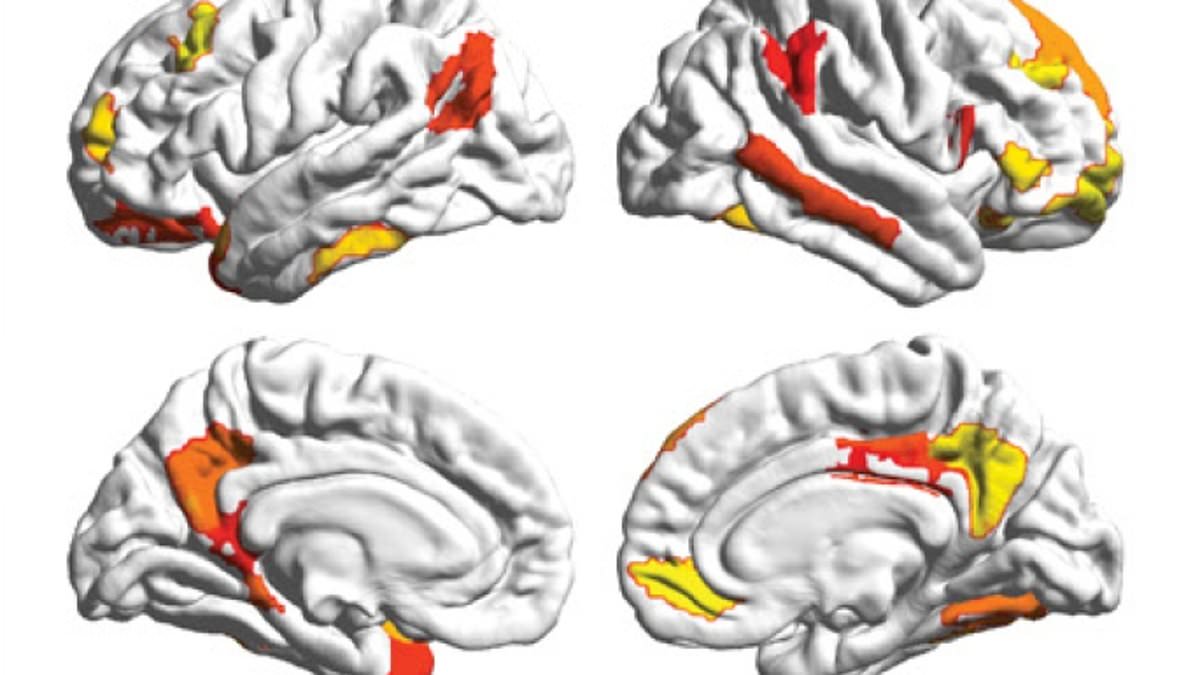
A new study using an artificial intelligence model has shown that there are distinct differences in brain activity between men and women, particularly in areas such as the default mode network, striatum, and limbic network. These findings support the idea that biological sex shapes the brain and may help shed light on brain conditions that affect men and women differently. The AI model was able to distinguish between male and female brain scans with over 90% accuracy, and the study's "explainable" nature allowed researchers to identify which brain regions were most important in determining a person's sex.

"The Neuroscience of Resting: Understanding Your Brain's Idle State"

Originally Published 1 year ago — by Quanta Magazine

Featured image for "The Neuroscience of Resting: Understanding Your Brain's Idle State"
Source: Quanta Magazine

Researchers have discovered the default mode network, a collection of brain areas that activate when the mind is at rest, offering insights into brain function outside of specific tasks. This network is associated with mind wandering, memory, envisioning the future, and processing language, and may play a role in constructing an internal narrative. The default mode network is just one of several distinct brain networks that harmonize to produce effects that they can only achieve together, prompting further research into the role of brain networks in managing internal experiences.

"Heightened Brain Activity in Depressed Women when Processing Criticism"

Originally Published 2 years ago — by PsyPost

Featured image for "Heightened Brain Activity in Depressed Women when Processing Criticism"
Source: PsyPost

A neuroimaging study found that women with high levels of neuroticism, a personality trait associated with negative emotions, showed increased activity in the brain's default mode network when processing criticism, but not praise. This heightened activity, particularly in the medial prefrontal cortex and inferior parietal lobule, suggests a tendency towards rumination, which can contribute to the onset or exacerbation of mental disorders such as depression. The default mode network is involved in various cognitive functions and its dysregulation has been linked to neurological and psychiatric conditions. The study highlights the potential for targeted interventions in individuals at risk for depression. However, the study's small sample size and limited demographic representation warrant further research.

"Promising Results: Mindfulness-based fMRI Neurofeedback Reduces Depression Risk in Adolescents"

Originally Published 2 years ago — by PsyPost

Featured image for "Promising Results: Mindfulness-based fMRI Neurofeedback Reduces Depression Risk in Adolescents"
Source: PsyPost

A study published in Molecular Psychiatry suggests that mindfulness-based fMRI neurofeedback shows promise as a treatment for adolescent depression. The study found that this intervention effectively reduced connectivity in the default mode network (DMN), a neurological marker of major depressive disorder. It also increased state mindfulness and enhanced central executive network regulation. However, the study had a small sample size and lacked a control group, highlighting the need for further research in this area.

The Brain's "I" Center: Understanding Sense of Self.

Originally Published 2 years ago — by Neuroscience News

Featured image for The Brain's "I" Center: Understanding Sense of Self.
Source: Neuroscience News

The anterior precuneus (aPCu) in the brain plays a critical role in forming our physical sense of self or “I”, as revealed by Stanford Medicine. The aPCu is part of a network of brain regions that integrate various types of bodily information to create our self-awareness. When activity in the aPCu is disrupted, people’s perceptions of their place in the world dramatically change, invoking feelings of depersonalization. The findings further our understanding of self-awareness and consciousness.

Neurological Weaving of Imagination.

Originally Published 2 years ago — by Neuroscience News

Featured image for Neurological Weaving of Imagination.
Source: Neuroscience News

Recent advances in neuroscience have revealed that imagination is a complex process that engages multiple brain regions and networks, including the hippocampus, frontoparietal control network, and default mode network. These regions work in tandem, dynamically coupling and decoupling, to support the complex operations underlying imagination. The neural underpinnings of imagination are distributed across the brain, and the sensorimotor systems also play a role in imagination. Future research should focus on how these networks interact over time and across different imaginative tasks.