Tag

Deep Learning

All articles tagged with #deep learning

AI Model Uses Sleep Data to Predict Long-Term Disease Risks

Originally Published 5 days ago — by Nature

Featured image for AI Model Uses Sleep Data to Predict Long-Term Disease Risks
Source: Nature

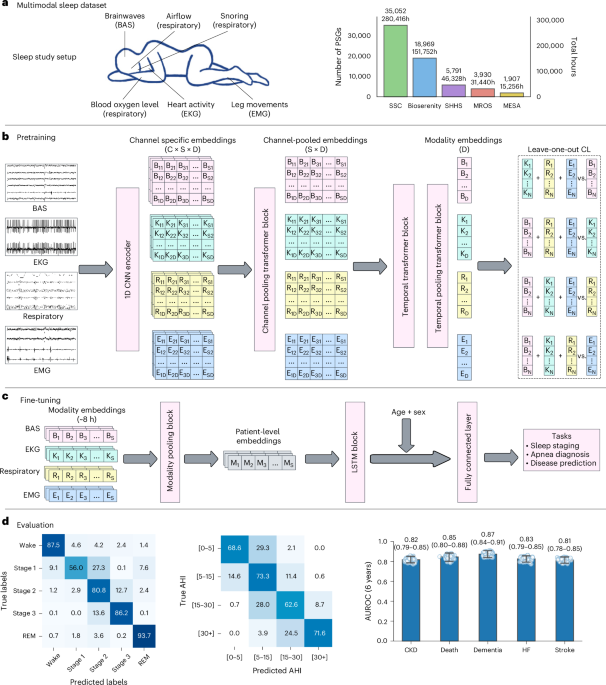
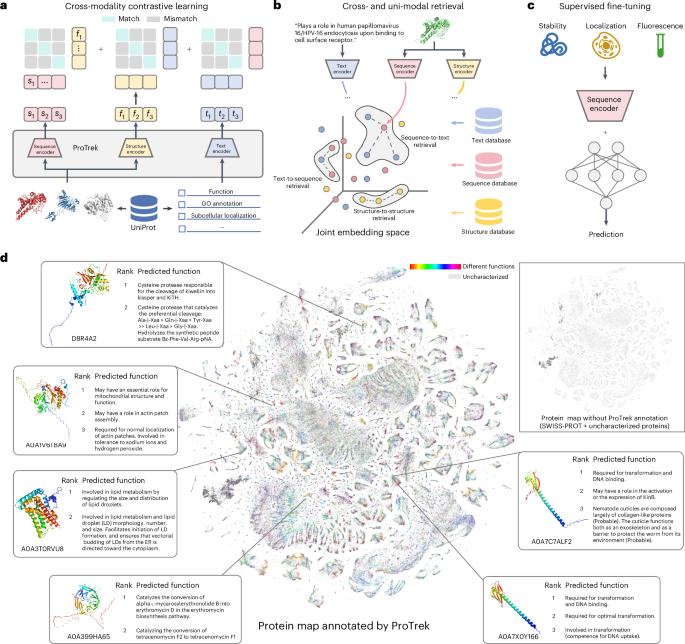
The article introduces SleepFM, a large-scale foundation model trained on over 585,000 hours of sleep data from 65,000+ participants, which captures complex sleep physiology across multiple modalities and demonstrates strong predictive power for a wide range of diseases, outperforming traditional models and showing robust generalization across datasets and time.

Revival of 'World Models' in AI Innovation

Originally Published 4 months ago — by Quanta Magazine

Featured image for Revival of 'World Models' in AI Innovation
Source: Quanta Magazine

The article discusses the resurgence of 'world models' in AI research, a concept dating back to the 1940s, which involves creating internal representations of the environment to improve AI decision-making and robustness. While early attempts relied on handcrafted models, modern deep learning approaches aim to develop these models automatically, though current systems often rely on heuristics rather than coherent representations. Developing effective world models is seen as crucial for advancing AI safety, reliability, and interpretability, with various approaches being explored to achieve this goal.

BindCraft Enables One-Shot Design of Functional Protein Binders

Originally Published 4 months ago — by Nature

Featured image for BindCraft Enables One-Shot Design of Functional Protein Binders
Source: Nature

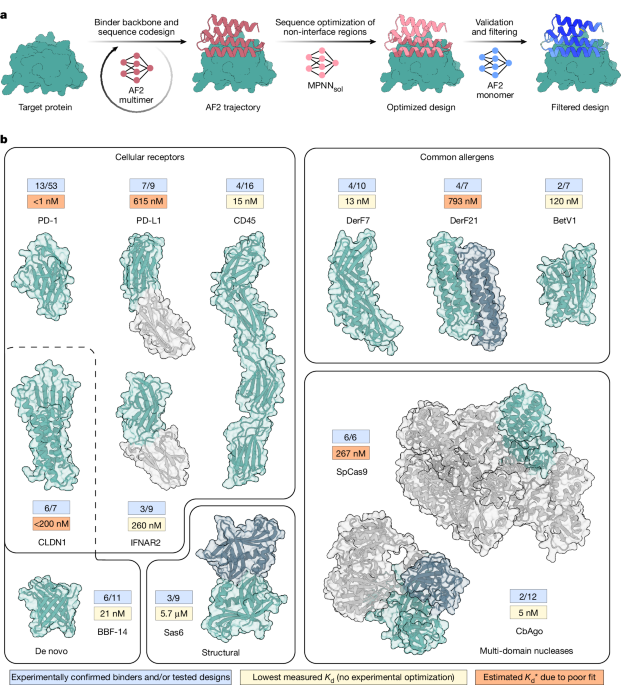
BindCraft is a novel computational pipeline that leverages deep learning, specifically AlphaFold2, to de novo design functional protein binders targeting diverse proteins, including challenging membrane receptors, allergens, and nucleases, with high success rates and potential therapeutic applications.

Simpler Models Outperform Deep Learning in Climate Prediction

Originally Published 4 months ago — by MIT News

Featured image for Simpler Models Outperform Deep Learning in Climate Prediction
Source: MIT News

A study by MIT researchers shows that simpler, physics-based models can outperform complex deep-learning models in climate prediction, especially for regional temperature estimates, highlighting the importance of appropriate benchmarking and problem-specific modeling approaches in climate science.

A Beginner's Guide to AI Terms and Concepts

Originally Published 7 months ago — by TechCrunch

Featured image for A Beginner's Guide to AI Terms and Concepts
Source: TechCrunch

This article provides a comprehensive glossary of key AI terms, explaining concepts like AGI, AI agents, chain of thought, deep learning, diffusion, distillation, fine-tuning, GANs, hallucinations, inference, large language models, neural networks, training, transfer learning, and weights, to help readers understand the complex language used in AI research and development.

MIT's Photonic Chip Revolutionizes Energy-Efficient AI Computing

Originally Published 1 year ago — by MIT News

Featured image for MIT's Photonic Chip Revolutionizes Energy-Efficient AI Computing
Source: MIT News

MIT researchers have developed a new photonic chip that performs deep neural network computations using light, achieving ultrafast processing speeds and high energy efficiency. This fully integrated photonic processor can handle both linear and nonlinear operations on-chip, overcoming previous limitations that required off-chip electronics. The chip's performance is comparable to traditional hardware, completing tasks in less than half a nanosecond with over 92% accuracy. This advancement could lead to faster, more efficient AI applications in fields like telecommunications and scientific research.

AI Revolutionizes Rapid Disease and Cancer Detection

Originally Published 1 year ago — by Tech Explorist

Featured image for AI Revolutionizes Rapid Disease and Cancer Detection
Source: Tech Explorist

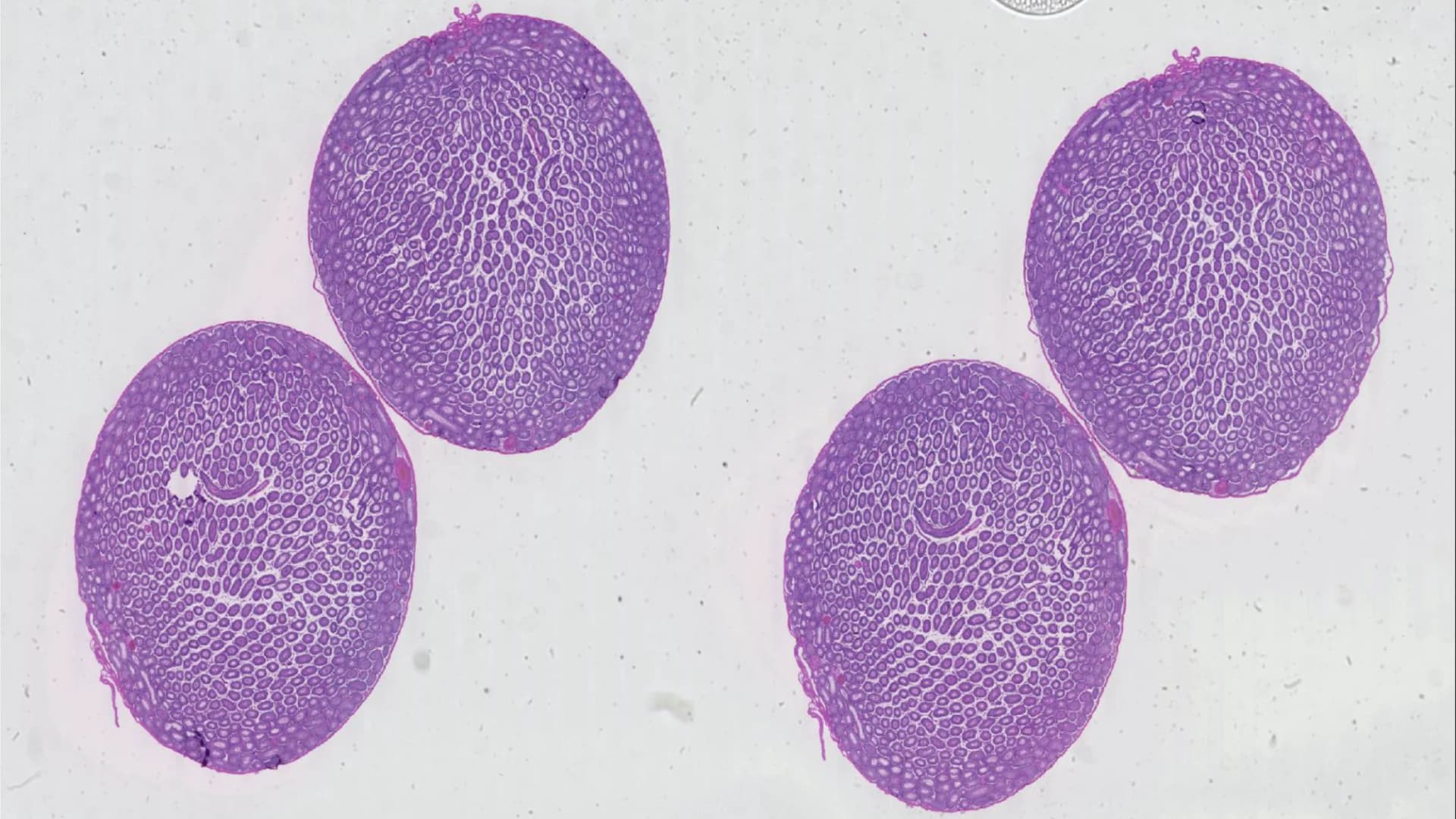
Researchers at Washington State University have developed an AI system that uses deep learning to identify diseases from tissue images more accurately and quickly than humans. This model, detailed in Scientific Reports, processes gigapixel histopathology slides, significantly speeding up disease research. It integrates AI, computer vision, and medicine to overcome challenges in automatic disease detection, and has shown superior performance in identifying pathologies compared to previous systems and human experts.

AI Surpasses Human Speed in Disease Detection

Originally Published 1 year ago — by Neuroscience News

Featured image for AI Surpasses Human Speed in Disease Detection
Source: Neuroscience News

A deep learning AI model developed by Washington State University researchers significantly enhances the speed and accuracy of disease detection in tissue images, outperforming human pathologists in some cases. By analyzing gigapixel images with advanced neural networks, the AI reduces analysis times from months to weeks, revolutionizing research and diagnostics, particularly for cancer and gene-related illnesses. This model, already aiding animal disease research, holds transformative potential for human medical diagnostics.

AI Breakthrough Enhances DNA-Based Disease and Aging Predictions

Originally Published 1 year ago — by Phys.org

Featured image for AI Breakthrough Enhances DNA-Based Disease and Aging Predictions
Source: Phys.org

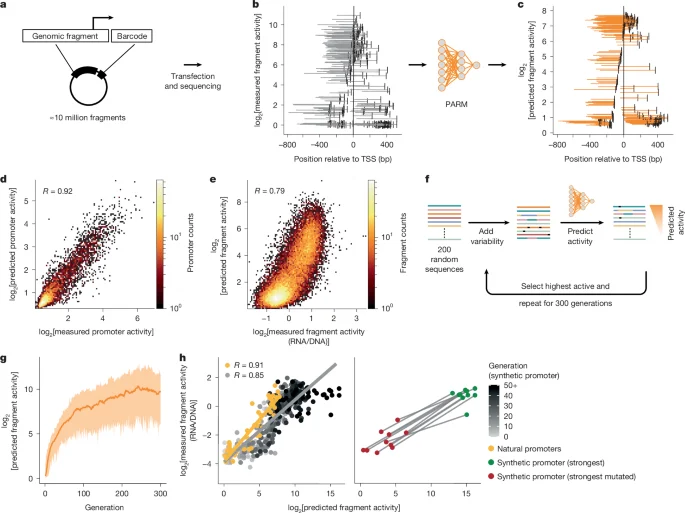
Scientists at Los Alamos National Laboratory have developed a new AI model, EPBDxDNABERT-2, which enhances the prediction of transcription factor binding to DNA, a key process in gene regulation related to diseases like cancer. By integrating DNA breathing dynamics into a deep learning framework, the model significantly improves the accuracy of predicting where transcription factors bind on the genome, aiding potential drug development. The model was trained using extensive gene sequencing data and tested on the Venado supercomputer, showing a 9.6% improvement in prediction accuracy.

The Accidental Pioneer: How a Stubborn Scientist Ignited the AI Revolution

Originally Published 1 year ago — by Ars Technica

Featured image for The Accidental Pioneer: How a Stubborn Scientist Ignited the AI Revolution
Source: Ars Technica

The deep learning boom was inadvertently launched by computer scientist Fei-Fei Li, who created the ImageNet dataset, a massive collection of labeled images that proved crucial for training neural networks. Despite skepticism, Li's work, combined with advancements in GPU technology by Nvidia and the persistence of researchers like Geoffrey Hinton, enabled breakthroughs in AI, exemplified by the success of the AlexNet model in 2012. This convergence of big data, neural networks, and GPU computing marked a pivotal moment in AI history.