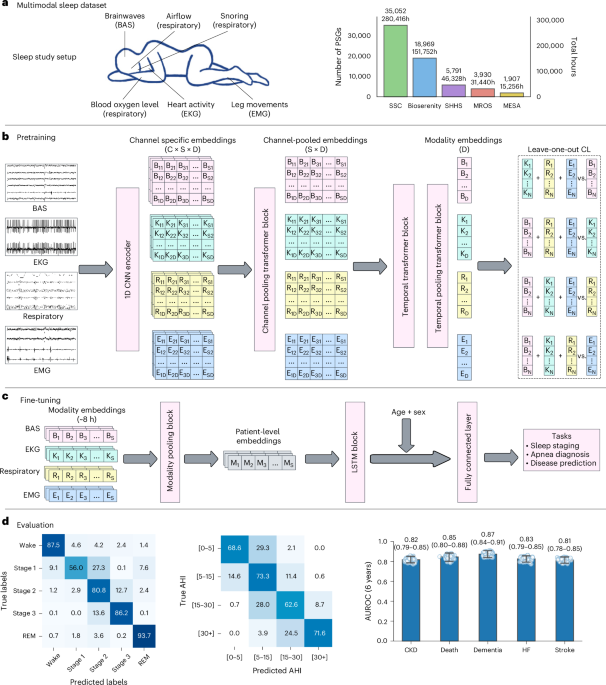
The article introduces SleepFM, a large-scale foundation model trained on over 585,000 hours of sleep data from 65,000+ participants, which captures complex sleep physiology across multiple modalities and demonstrates strong predictive power for a wide range of diseases, outperforming traditional models and showing robust generalization across datasets and time.
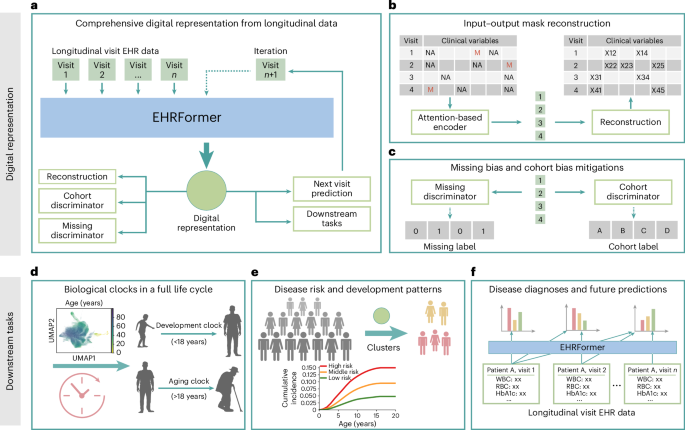
This study introduces LifeClock, a comprehensive biological aging clock based on routine clinical data from electronic health records (EHRs), utilizing a transformer-based model called EHRFormer to predict biological age across the full human lifespan and assess its association with disease risks and survival outcomes, demonstrating high accuracy and potential for personalized medicine.
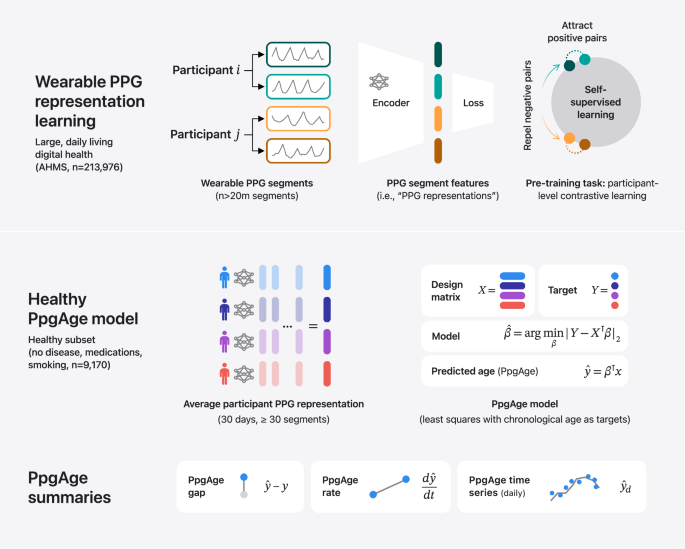
A wearable-based aging clock called PpgAge, developed using PPG data from Apple Watch, accurately predicts chronological age, associates with disease and behavior, and detects physiological changes, offering a scalable tool for longevity research and clinical practice.
Scientists have developed an AI model called Delphi-2M that can predict over 1,000 diseases years in advance by analyzing patient history and healthcare data, potentially transforming preventative medicine and healthcare resource management, though it still requires further testing before clinical use.
A new AI model, detailed in Nature, can predict an individual's risk of developing various diseases throughout their life, potentially transforming preventive medicine.
Scientists have developed Delphi-2M, a generative AI tool capable of predicting the risk of over 1,000 diseases and forecasting health changes up to a decade in advance by analyzing individual health histories and lifestyle factors, potentially transforming personalized healthcare and disease management.
Researchers have developed DunedinPACNI, a tool that uses a single brain scan taken midlife to accurately assess biological aging and predict risks of diseases like dementia, potentially enabling earlier interventions to improve health outcomes.
UK Biobank's extensive imaging and health data from 100,000 participants provide unprecedented insights into how diseases develop silently over time, enabling earlier detection and better understanding of health risks through advanced imaging and AI analysis.