
Sharper dark‑energy map tightens cosmic clues while hinting at clustering mysteries
TL;DR Summary
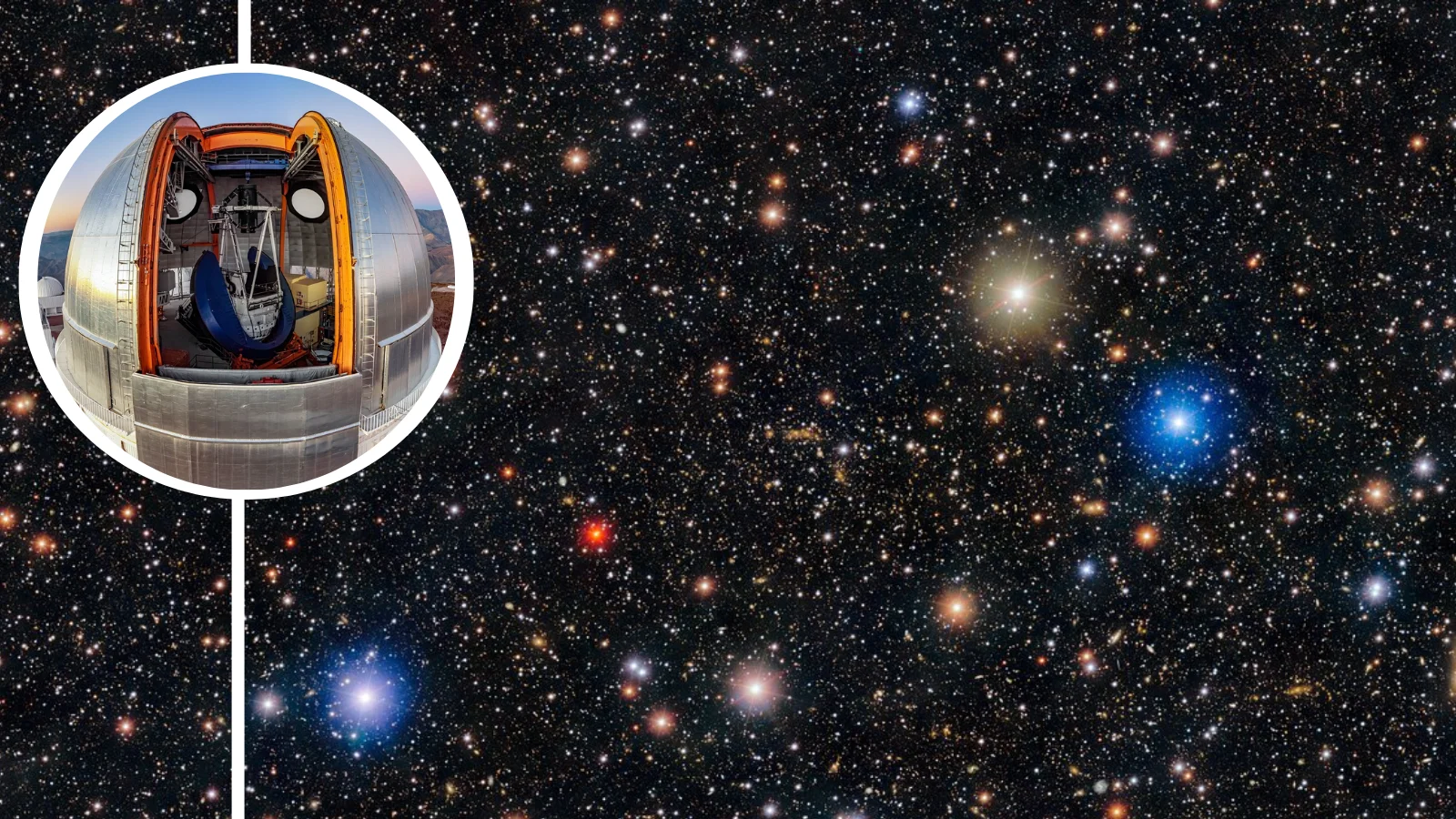
Six years of DES data from the Dark Energy Camera (DECam) on the Blanco telescope, spanning 758 nights and about 669 million galaxies, were analyzed using four probes—Type Ia supernovae, weak gravitational lensing, galaxy clustering and baryon acoustic oscillations—to dramatically tighten constraints on dark energy and the expansion of the universe. The results largely align with LCDM and the wCDM model, but reveal a tension in how matter clusters today compared with early-universe predictions, hinting at potential new physics as DES plans to combine its data with observations from the Vera C. Rubin Observatory’s LSST for even clearer cosmic maps.
- Scientists just got the clearest picture of the dark universe yet: 'Now the dream has come true' Space
- Dark energy survey scientists release analysis of all six years of survey data Phys.org
- University of Cincinnati Physicist Spearheads Global Quest to Unlock Cosmic Secrets of Dark Energy Hoodline
- UA researchers among team releasing results from culmination of Dark Energy Survey kjzz.org
- What Is Dark Energy and Why Is It Accelerating the Universe? Vocal
Reading Insights
Total Reads
1
Unique Readers
10
Time Saved
75 min
vs 76 min read
Condensed
99%
15,144 → 100 words
Want the full story? Read the original article
Read on Space