Gynaecology waiting lists in the UK have more than doubled since February 2020, with over 755,000 appointments pending, affecting around 630,000 women. Conditions like endometriosis, fibroids, and menopause care are causing significant delays, impacting women's health and quality of life. Health leaders criticize the lack of priority given to women's health, urging for more funding and better management. Despite some improvements, the situation remains dire compared to pre-pandemic levels, with calls for government action to address the crisis.
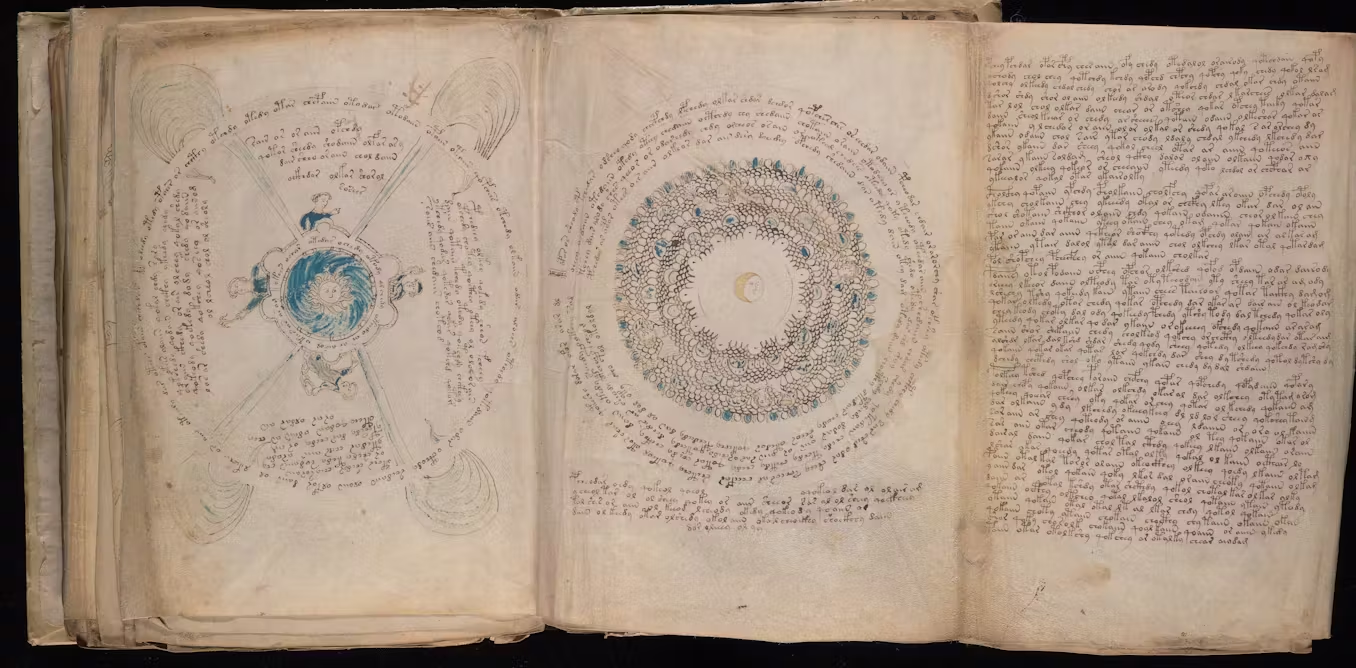
The Voynich manuscript, a mysterious late-medieval document covered in illustrations of stars, planets, plants, and naked women, has long puzzled historians. In a recent article, researchers propose that the manuscript contains information about sex and conception, drawing on late-medieval gynaecology and sexology. They suggest that the largest illustration, the Rosettes, represents a late-medieval understanding of sex and conception, resolving many of the manuscript's contradictions. The proposal aligns with the patriarchal culture of the time and sheds light on the manuscript's enigmatic features, offering a new perspective for future research.
A study by Endometriosis UK reveals that women in the UK are waiting nearly nine years for an endometriosis diagnosis, with health professionals often dismissing or minimizing symptoms. The average diagnosis time has increased to eight years and 10 months, prompting calls for urgent action to reduce waiting times. The government's women's health strategy includes endometriosis as a priority area, but the report suggests that waiting times have worsened. Endometriosis UK is urging governments to commit to an average diagnosis time of a year or less by 2030 and calling for urgent reductions in gynaecology waiting times.