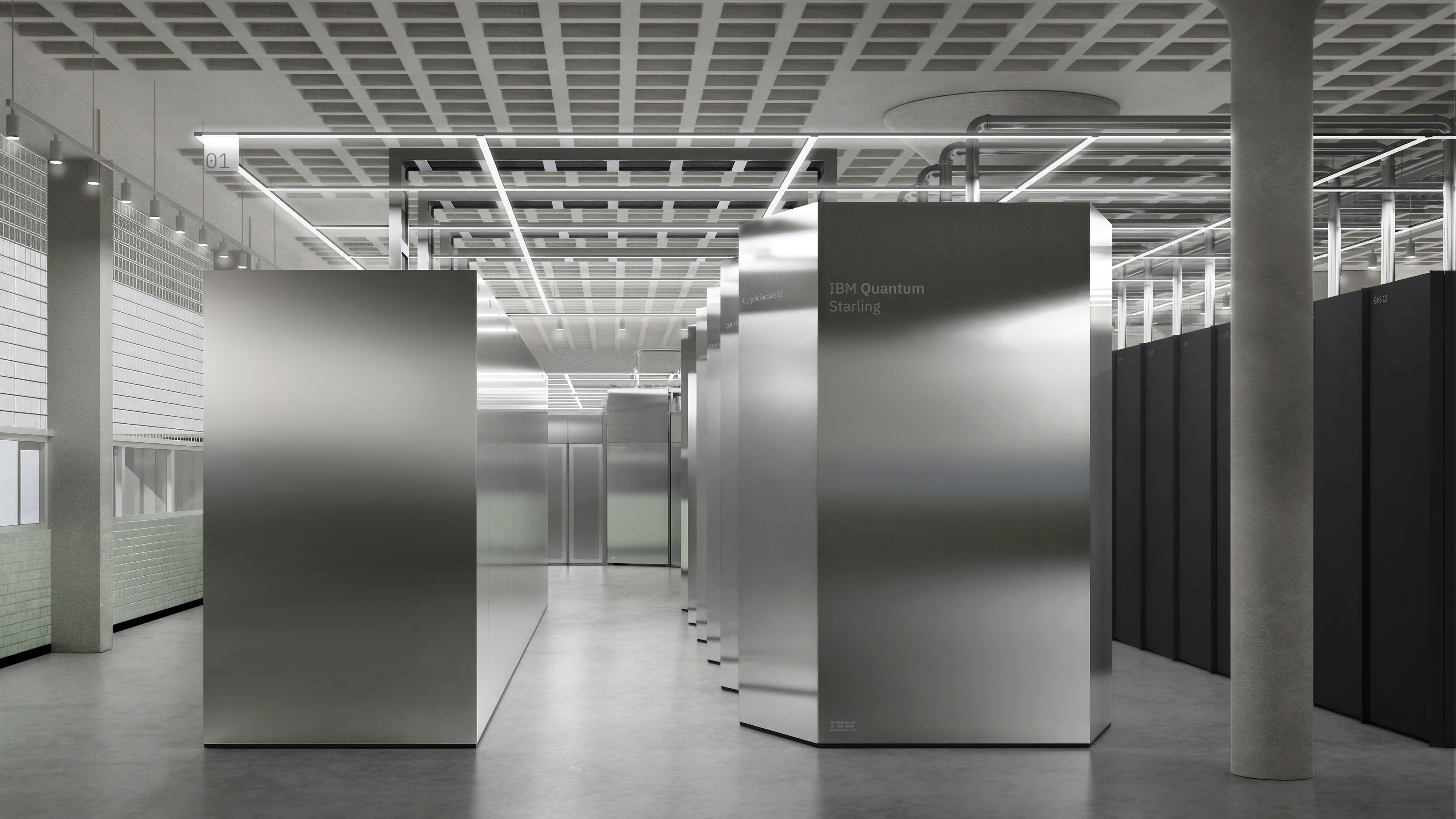
IBM announced significant advancements in quantum computing, including the upcoming IBM Quantum Nighthawk processor with 120 qubits designed for quantum advantage, and the IBM Quantum Loon demonstrating key components for fault-tolerant quantum computing. They also introduced new software capabilities with Qiskit, improved error correction, and scaled fabrication to 300mm wafers, all aiming toward achieving quantum advantage by 2026 and fault-tolerance by 2029.

SpaceX's 10th Starship test flight focused on testing fault tolerance by intentionally introducing faults to evaluate heat shield resilience, propulsion redundancy, and engine relight capabilities, emphasizing the company's shift towards resilient, reusable space vehicles for future missions including lunar landings and satellite launches.
Researchers at The University of Osaka have developed a new method called level-zero magic state distillation that significantly reduces the resources needed for high-fidelity magic states, overcoming noise challenges and accelerating the development of practical, large-scale quantum computers.
IBM is developing a fault-tolerant quantum computer called Starling, expected by 2029, which could accelerate the timeline for quantum threats to Bitcoin's security. Despite current skepticism, experts acknowledge that advancements in quantum error correction could eventually pose risks to cryptographic systems, prompting a need for quantum-resistant encryption. IBM's roadmap includes scaling up qubits and modular architectures to achieve practical quantum computing.
IBM plans to build the world's first fault-tolerant quantum computer, called Starling, by 2029, using new error-correction techniques that will enable scaling to 200 logical qubits (roughly 10,000 physical qubits), making quantum computers significantly more powerful and bringing them closer to practical utility.