Tag

Crabs

All articles tagged with #crabs

science1 year ago

Experts Urge Ban on Boiling Crabs Alive After New Findings

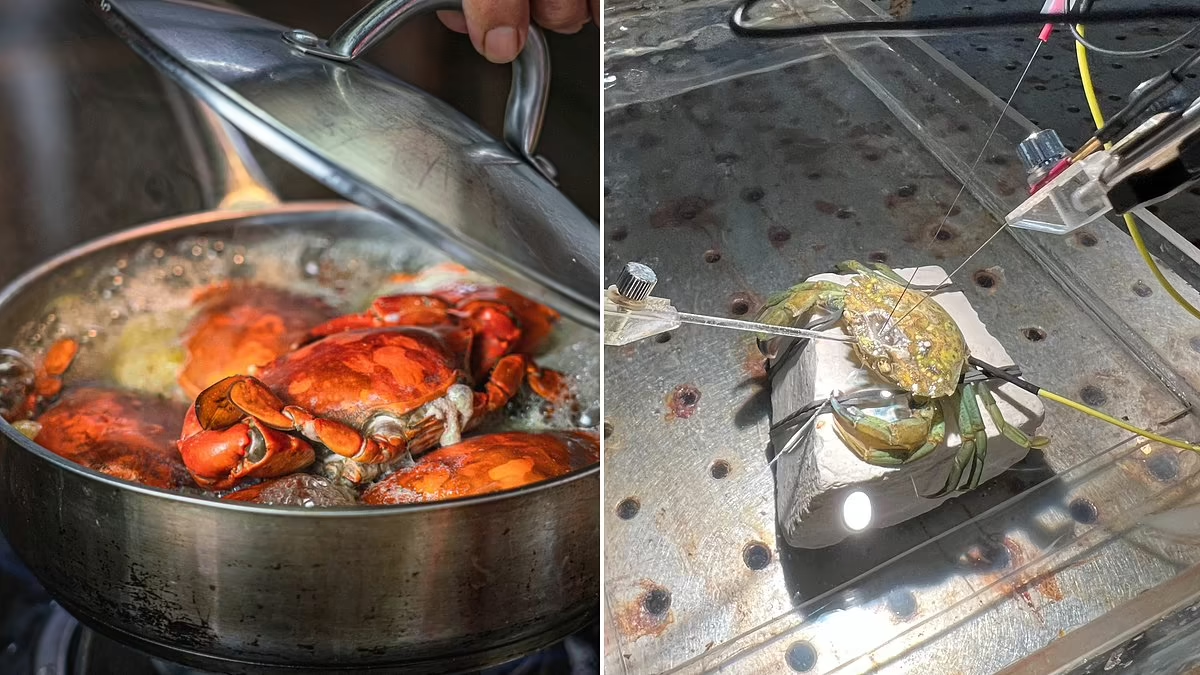
Scientists from the University of Gothenburg have discovered that crabs can feel pain, prompting calls for a ban on boiling them alive. The study used brain scans to show that crabs process pain similarly to humans, suggesting that crustaceans like crabs, lobsters, and shrimp experience pain. Researchers advocate for humane methods such as electro-stunning to kill crabs, as current EU laws do not protect crustaceans from painful deaths. The findings highlight the need for updated animal welfare legislation to include these animals.

science2 years ago

Crab Trail Unveils Hidden Hydrothermal Vent in Galápagos Islands

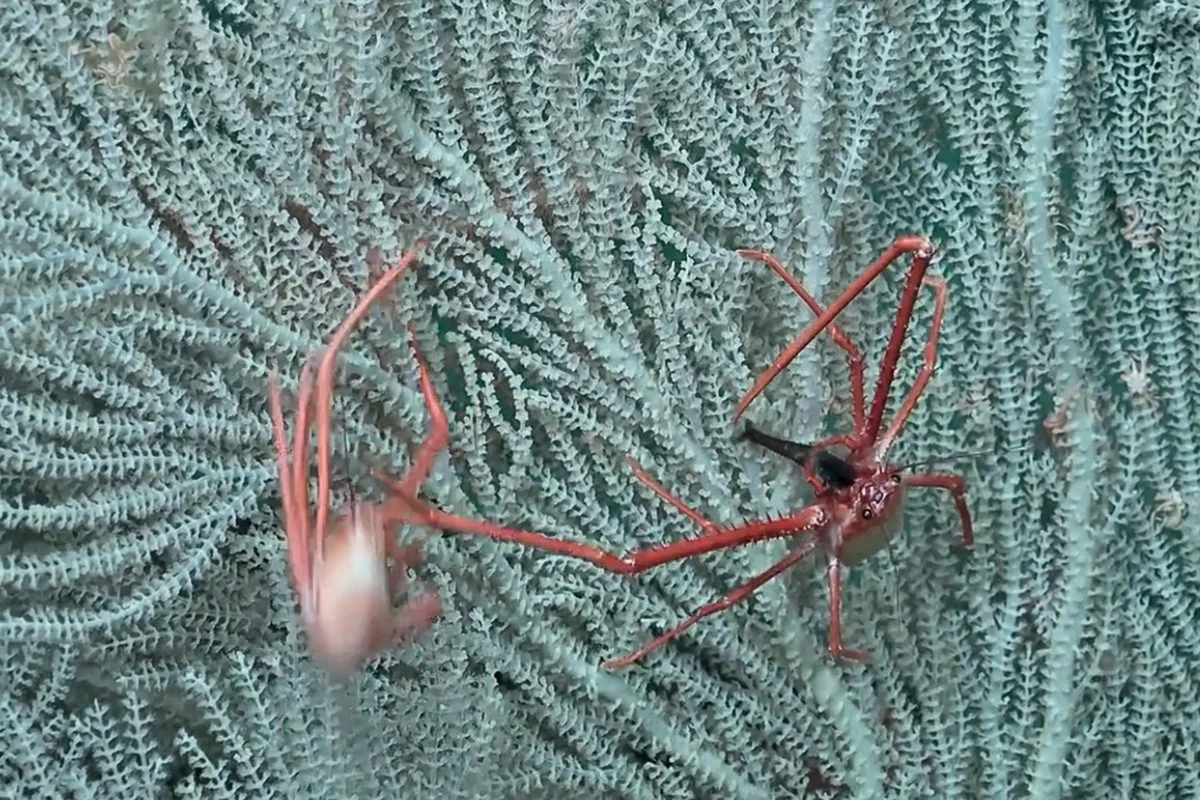
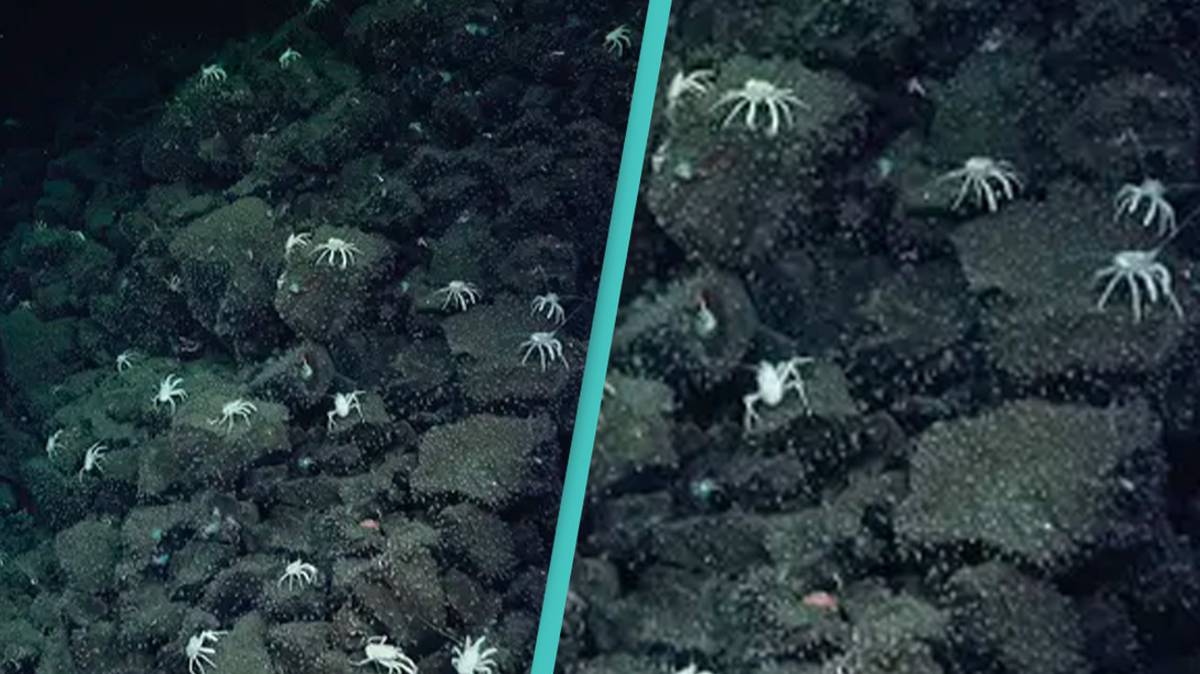
Scientists have discovered a new hydrothermal vent in the Galápagos Islands with the help of crabs. Following a chemical anomaly, researchers used a remotely operated vehicle to analyze the sea floor and found a dense population of squat lobsters, which led them to the vent. The vent, located between the Cocos and Nazca tectonic plates, spans an area of 98,800 square feet and is home to crabs, tube worms, clams, and mussels. Hydrothermal vents are cracks in the sea floor that release heated water from the Earth's magma chambers, creating a hostile environment where only certain species can survive.

biology2 years ago

The Evolutionary Journey of Crabs: From Sea to Land and Back

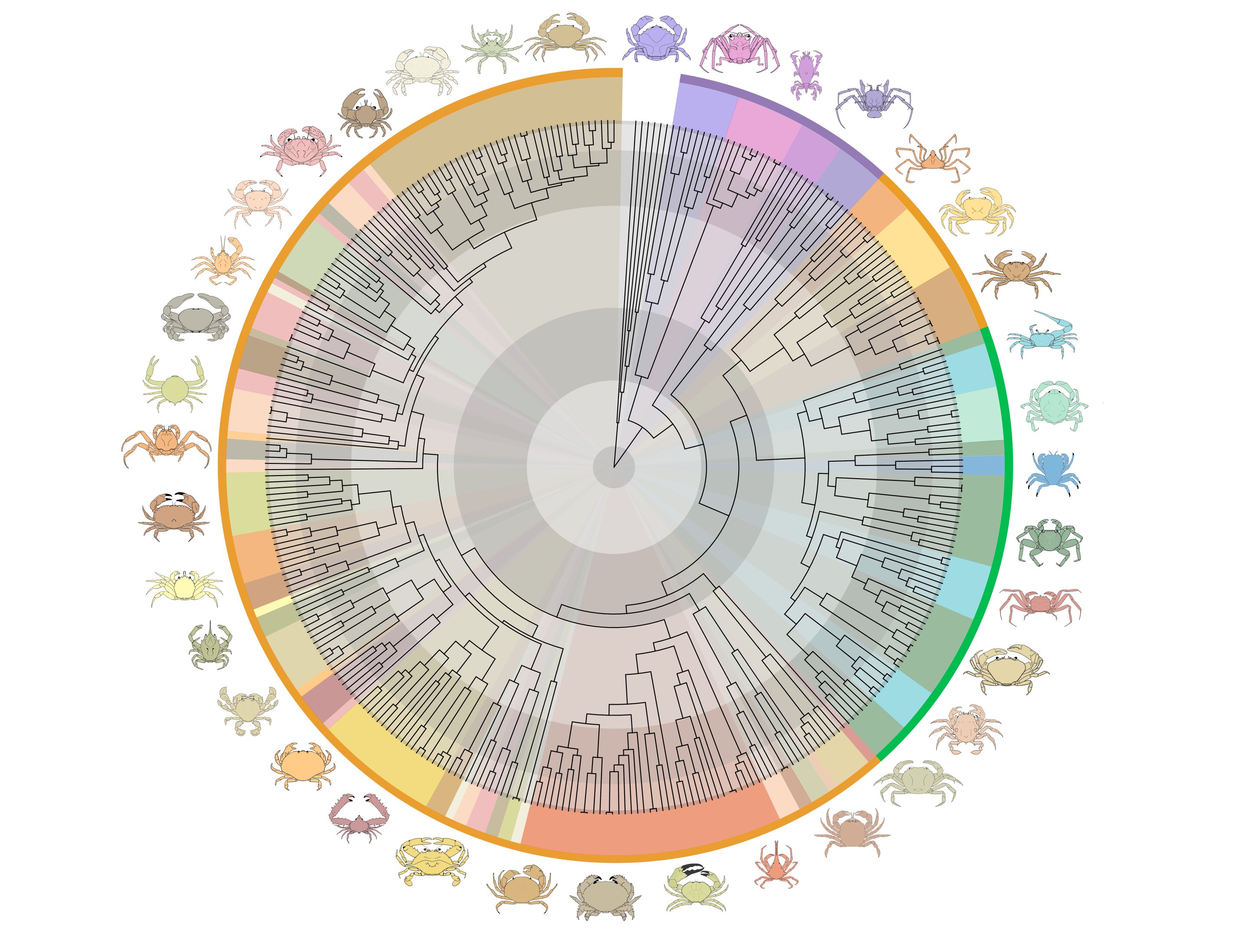
A new study has found that true crabs (Brachyura) have evolved to migrate from marine to land habitats between seven and 17 times over the past 100 million years. Some crabs even returned to the sea from land on two or three occasions. Most crabs are only able to survive in semi-terrestrial habitats, with land-based crabs concentrated in one species-rich group. The findings suggest that true crabs emerged about 45 million years earlier than previously estimated, dating back to the mid-Triassic period.

science2 years ago

Crabs' Ancient Journey: From Sea to Land and Back

A new study reveals that true crabs (Brachyura) have left the marine environment multiple times, with around 17 independent transitions to land and freshwater over the past 100 million years. The research, spanning almost 20 years, found that true crabs are older than previously estimated, dating back to the Middle Triassic. The study provides insights into convergent evolution and the adaptation of organisms from water to land, shedding light on the early processes of adaptation to new environments. The researchers also discovered evidence of crabs returning to fully marine life at least 2 to 3 times.

science2 years ago

Crab-like Evolution: Decoding Carcinization's Trend

Evolutionary trend known as carcinization has led to various species independently evolving crab-like forms. Convergent evolution has resulted in similar features evolving in species from different periods or regions, despite lacking a common ancestor with those features. The advantage of the crab shape includes improved walking, burrowing, and climbing abilities, as well as reduced vulnerability to predators.

science2 years ago

The Mysterious Continuation of Crab Evolution.

The evolution of crabs has resulted in the development and loss of crab-like features at least five times in the past 250 million years, a phenomenon known as carcinization. The reasons for this repeated evolution of the crab-like body plan remain a mystery, but studying crabs provides an opportunity to understand convergent evolution and predict the shapes that evolution might make based on environmental factors and genetic cues. Taxonomists are steadily piecing together what makes a crab, a crab, and resolving the multiple origins and losses of crab body forms through time.

science2 years ago

The Evolutionary Mystery of Crab-Like Animals.

The crab-like body plan has evolved at least five separate times among decapod crustaceans, a group that includes crabs, lobsters and shrimp. Scientists don't know for sure why animals keep evolving into crab-like forms, but they have lots of ideas. The crab-like body plan has emerged many times among very closely related animals, which means that evolution is flexible and dynamic. The fact that the trait is advantageous for the species is a sign that it sticks around through generations, which is the basic principle of natural selection.

science2 years ago

The Evolutionary Mystery of Crab-Like Animals.

The crab-like body plan has evolved at least five separate times among decapod crustaceans, a group that includes crabs, lobsters and shrimp. This phenomenon is called carcinization, an example of convergent evolution. Scientists have many ideas but are not sure why animals keep evolving into crab-like forms. The crab-like body plan has emerged many times among very closely related animals, indicating that evolution is flexible and dynamic. The crab body plan might leave more flexibility for animals to evolve specialized roles for their legs beyond walking, allowing crabs to easily adapt to new habitats.