Tag

Copernicus

All articles tagged with #copernicus

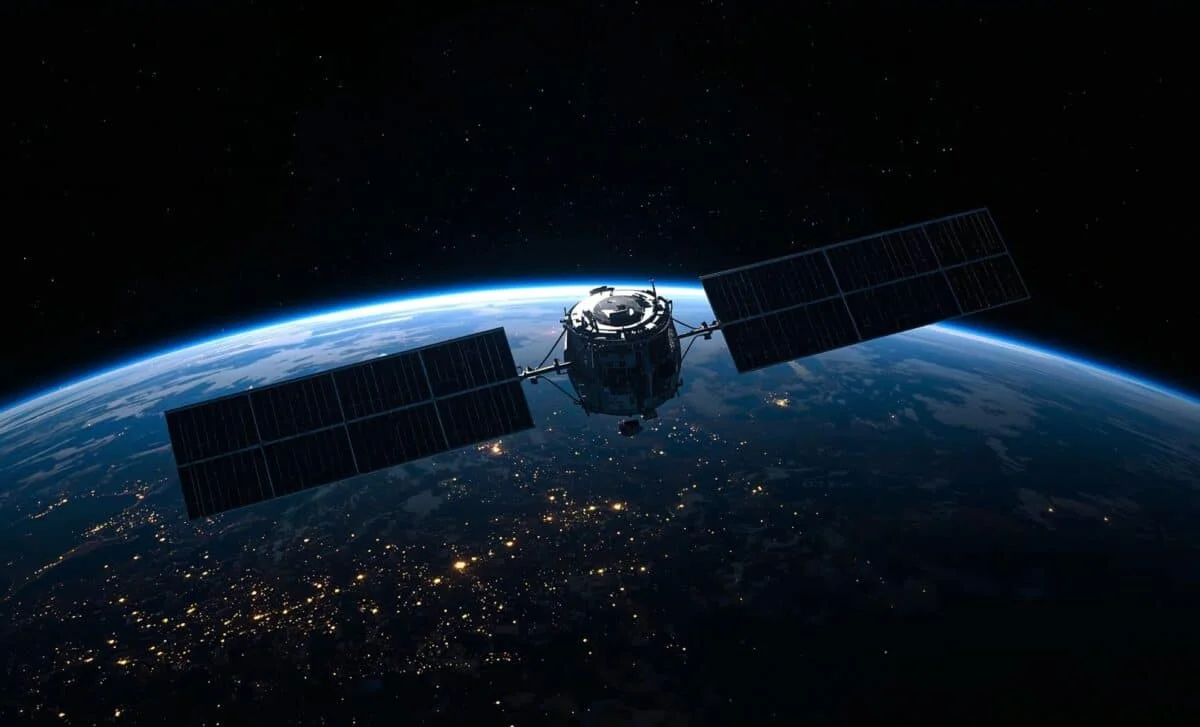
Sentinel-1D Debuts with Stunning Images Just 50 Hours Post-Launch

Originally Published 9 days ago — by The Daily Galaxy

Featured image for Sentinel-1D Debuts with Stunning Images Just 50 Hours Post-Launch
Source: The Daily Galaxy

Sentinel-1D, Europe's latest Earth observation satellite, achieved a record-breaking 50-hour turnaround from launch to first images, capturing high-resolution radar data of Antarctica, Europe, and maritime activity, demonstrating rapid response capabilities and advancing climate and environmental monitoring.

Ariane 6 Launches Sentinel-1D and Mysterious Sky Swirls Explored

Originally Published 2 months ago — by European Space Agency

Featured image for Ariane 6 Launches Sentinel-1D and Mysterious Sky Swirls Explored
Source: European Space Agency

Sentinel-1D, the last of the first-generation Sentinel-1 satellites, was successfully launched into orbit aboard an Ariane 6 rocket from French Guiana, completing the Copernicus Earth observation mission that provides critical radar data for environmental monitoring and disaster response.

Vega-C Rocket Triumphantly Returns with Successful Launch

Originally Published 1 year ago — by DW (English)

Featured image for Vega-C Rocket Triumphantly Returns with Successful Launch
Source: DW (English)

Europe's Vega-C rocket successfully launched from French Guiana, marking its return after a two-year hiatus due to a previous failure. The rocket carried the Sentinel-1C satellite for the EU's Copernicus Earth observation program, which aims to enhance radar imagery for environmental monitoring. The Vega-C, an upgrade from the original Vega, offers increased payload capacity and cost efficiency. This launch is crucial for Europe's space access, especially after the cessation of using Russian Soyuz vehicles and delays in the Ariane 6 program.

Vega-C Set for Comeback with Sentinel-1C Launch

Originally Published 1 year ago — by NASASpaceflight.com

Featured image for Vega-C Set for Comeback with Sentinel-1C Launch
Source: NASASpaceflight.com

Arianespace is set to launch the Vega-C rocket on December 5, 2024, marking its return to flight after a failed mission in 2022. The launch will deploy the Sentinel-1C satellite, part of the Copernicus Earth science program, from Kourou, French Guiana. This mission is crucial for Arianespace as it transitions from older rockets to new models like the Ariane 6 and Vega-C, amid geopolitical and technical challenges. Sentinel-1C will enhance radar imaging capabilities and introduce new features like AIS receivers for ship tracking.

Vega-C Rocket Set for Return with Sentinel-1C Launch

Originally Published 1 year ago — by Space.com

Featured image for Vega-C Rocket Set for Return with Sentinel-1C Launch
Source: Space.com

Europe's Vega-C rocket is set to return to flight for the first time since a 2022 mission failure, launching the Copernicus Sentinel-1C satellite from Kourou, French Guiana. This mission aims to replace the inoperable Sentinel-1B and complete a dual-satellite constellation with Sentinel-1A for comprehensive Earth observation. The launch marks a significant step for ESA and Avio, Vega-C's primary designer, as they continue to innovate with plans for an upgraded Vega-E rocket.

Vega-C Launch Delayed for Precautionary Checks, Now Set for Dec. 4

Originally Published 1 year ago — by Spaceflight Now

The Vega-C rocket's return to flight has been delayed by a day for additional precautionary checks, as announced by Arianespace. The mission, VV25, will launch the Sentinel-1C satellite into a Sun-synchronous orbit, marking the first Vega-C flight since a failed launch in December 2022. The delay is part of efforts to ensure maximum flight worthiness, following extensive tests on the rocket's upper stage. The Sentinel-1C is part of the Copernicus program, providing crucial Earth observation data.

"Planet Earth Sets 10th Consecutive Hottest Month Record, Climate Scientists Alarmed"

Originally Published 1 year ago — by NPR

Featured image for "Planet Earth Sets 10th Consecutive Hottest Month Record, Climate Scientists Alarmed"
Source: NPR

March 2024 marked the 10th consecutive month of record-breaking global heat, with temperatures reaching 14.14 degrees Celsius, fueled by marine heat waves and human-caused climate change. Scientists attribute the trend to carbon dioxide and methane emissions from fossil fuel burning and deforestation. With the Paris Agreement aiming to limit warming to 1.5 degrees Celsius, urgent global action is needed to achieve net zero emissions and mitigate the impact of rising temperatures.

"March Marks 10th Consecutive Hottest Month on Record, Alarming Climate Scientists"

Originally Published 1 year ago — by The Associated Press

Featured image for "March Marks 10th Consecutive Hottest Month on Record, Alarming Climate Scientists"
Source: The Associated Press

March 2024 marked the 10th consecutive month of record-breaking global heat, with both air temperatures and ocean temperatures hitting all-time highs, attributed to human-caused climate change from carbon dioxide and methane emissions. Scientists emphasize the need to stop burning fossil fuels and take more sustainable actions to curb rising greenhouse gas concentrations. The trajectory of increasing temperatures is not expected to change until these measures are taken, with the globe experiencing 12 months of average monthly temperatures surpassing the Paris Agreement threshold.

"Earth Shatters Heat Records for Ninth Consecutive Month, Signaling Climate Crisis"

Originally Published 1 year ago — by CNN

Featured image for "Earth Shatters Heat Records for Ninth Consecutive Month, Signaling Climate Crisis"
Source: CNN

February 2024 marked the ninth consecutive month of record-breaking global temperatures, with the month being 1.77 degrees Celsius warmer than the average February in pre-industrial times. This trend has resulted in the hottest 12-month period in recorded history, with global ocean temperatures hitting a record high. Experts warn that these extreme temperatures have significant global impacts, fueling extreme weather events and emphasizing the urgent need for drastic emissions reductions to mitigate the effects of climate change.

"Unprecedented Global Heat: February 2024 Breaks Records Again"

Originally Published 1 year ago — by The New York Times

Featured image for "Unprecedented Global Heat: February 2024 Breaks Records Again"
Source: The New York Times

A study has found that the recent winter heat waves in cities worldwide have the hallmarks of global warming, with February being the hottest on record. Climate Central's analysis of temperature data from 678 cities revealed that climate change played a recognizable role in the unusually warm winter. Additionally, Copernicus reported that global ocean temperatures in February were at an all-time high, painting a picture of an unequivocally warming world exacerbated by a natural El Niño weather pattern.

"February 2024: Record-Breaking Global Heat Wave and Hottest Ocean Temperatures"

Originally Published 1 year ago — by CBS News

Featured image for "February 2024: Record-Breaking Global Heat Wave and Hottest Ocean Temperatures"
Source: CBS News

February 2024 has been confirmed as the hottest on record globally, with temperatures surpassing critical climate thresholds. The average global surface air temperature was 1.77 degrees Celsius above the pre-industrial average, marking the ninth consecutive month of record-breaking heat. The world's oceans also experienced record high temperatures, exacerbating the cycle of global warming and contributing to extreme weather events. Climate scientists warn that human activities are driving the planet towards surpassing critical temperature thresholds, with ongoing impacts from a recent El Niño event further exacerbating the situation.

"University Surprised by Hidden Text in Donated Renaissance Astronomy Book"

Originally Published 1 year ago — by Space.com

Featured image for "University Surprised by Hidden Text in Donated Renaissance Astronomy Book"
Source: Space.com

A donated Renaissance-era astronomy book to the Rochester Institute of Technology may contain a hidden treatise, as it appears to be a palimpsest with erased text underneath. The book, a 15th century version of a work by Johannes de Sacrobosco, is suspected to have an older text beneath its words. Another donated book is a famous work by Nicolaus Copernicus from 1543, which postulates that the sun is the center of the universe. The university plans to use imaging science students to decipher the erased words and study the books for advanced work and research.

Global Average Temperatures Surpass 1.5°C Threshold for First Time in Year-long Record

Originally Published 1 year ago — by CBS News

Featured image for Global Average Temperatures Surpass 1.5°C Threshold for First Time in Year-long Record
Source: CBS News

January 2024 marked the hottest January on record, with a global average air temperature of 13.14 degrees Celsius, pushing the 12-month global average temperatures over the 1.5 degree Celsius threshold for the first time ever. This comes after 2023 was confirmed as the hottest year on record. The rise in global temperatures is fueling extreme weather events, prompting calls for rapid reductions in greenhouse gas emissions and a transition away from fossil fuels.

Global Temperatures Exceed 1.5°C Threshold for Entire Year

Originally Published 1 year ago — by CNN

Featured image for Global Temperatures Exceed 1.5°C Threshold for Entire Year
Source: CNN

Global warming has surpassed 1.5 degrees Celsius over the past year for the first time on record, breaching a critical threshold set by the Paris Agreement. The past year was 1.52 degrees hotter on average than pre-industrial temperatures, with the hottest January on record at 1.66 degrees warmer. Scientists warn that rapid reductions in greenhouse gas emissions are the only way to stop global temperatures from increasing, as extreme weather events are becoming more frequent and severe due to long-term global warming and the influence of El Niño.

"Global Climate Crisis: Record-Breaking Year Above 1.5C Warming Limit"

Originally Published 1 year ago — by CNN

Featured image for "Global Climate Crisis: Record-Breaking Year Above 1.5C Warming Limit"
Source: CNN

Global warming has surpassed 1.5 degrees Celsius over the past year for the first time on record, breaching a critical threshold set by the Paris Agreement. The past year was 1.52 degrees hotter on average than temperatures before industrialization, with the last eight months being the hottest on record. Scientists warn that rapid reductions in greenhouse gas emissions are the only way to stop global temperatures from increasing, as extreme weather events are becoming more frequent and severe due to long-term global warming and the influence of El Niño.