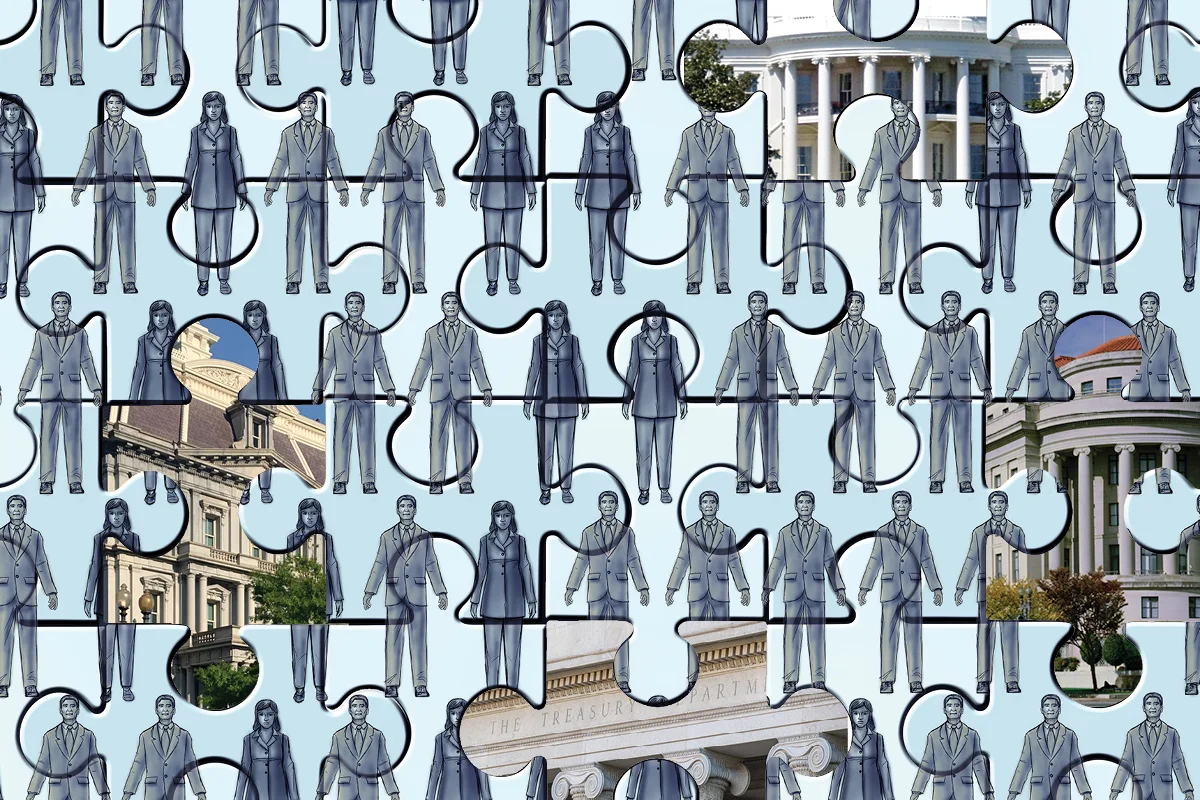
Despite the hardships caused by the ongoing government shutdown, federal workers are finding their voice, organizing, and strategizing to oppose perceived injustices and defend their rights, with some seeing the crisis as an opportunity for greater activism and accountability.
During a government shutdown, the Trump administration used official channels to blame Democrats, blurring the line between federal employees and partisan politics, raising concerns about violations of the Hatch Act and potential erosion of public trust in the civil service.
Yair Golan, leader of the Democrats Party, has pledged to remove ISA head David Zini if elected, criticizing his appointment and calling for a civil service purge to protect democratic integrity, while facing criticism from Benny Gantz for politicizing security appointments.
A bipartisan group of 48 senators introduced the Protect America’s Workforce Act to nullify President Trump's executive orders that stripped federal employees of union rights, aiming to restore collective bargaining agreements and oppose what they describe as union-busting measures.
Republican efforts to overhaul civil service protections through the reconciliation process face obstacles after the Senate parliamentarian ruled several provisions as violations of reconciliation rules, including proposals to alter employment and retirement contributions for federal workers. While some measures are struck down, others remain under consideration, with GOP aiming to pass the bill by July 4.
The article exposes the treatment of veteran lawyers at the Justice Department, who are being sidelined into a 'rubber room' with menial tasks and idle time, as part of political retaliation and upheaval following the change in administration, raising concerns about the treatment of civil servants and the impact on government readiness.
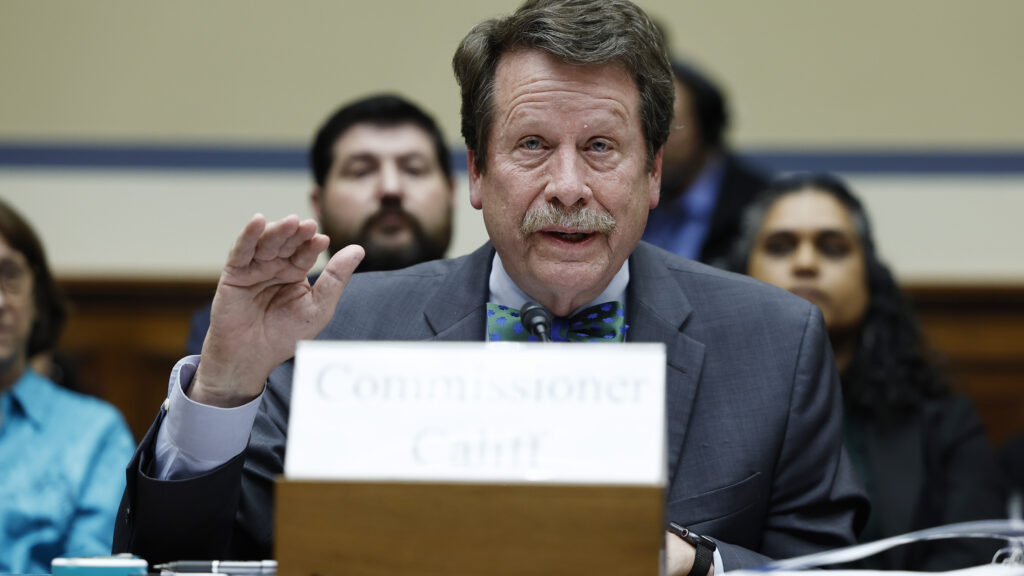
FDA Commissioner Robert Califf expressed uncertainty about the agency's future under the Trump administration, citing concerns over potential changes and the influence of Trump ally Robert F. Kennedy Jr. on health policy. Califf highlighted the risk to the FDA's ability to hire and retain skilled employees due to Kennedy's critical stance on civil servants.
Federal employees are anxious about potential mass firings under a second Trump administration, as Trump plans to reinstate Schedule F, allowing for the removal of nonpartisan federal workers. This move could significantly alter the federal workforce, reminiscent of the 19th-century spoils system. Unions and legal groups are preparing to challenge these changes, which could impact over 2 million federal employees, particularly in the DC area. Concerns include political interference and the potential relocation of agency offices.
Pentagon officials are reportedly discussing how to handle potential illegal orders from Donald Trump, such as deploying the military domestically, amid concerns he might alter rules to fire career civil servants. This comes as Trump considers using the military against political enemies and migrants, despite legal prohibitions. Meanwhile, the US election remains undecided in key swing states, and various political and legal developments unfold, including charges against an Iranian for plotting against Trump and a federal judge overturning Illinois' semiautomatic weapons ban.
With Donald Trump potentially returning to the presidency, three key Biden administration priorities face scrutiny: protecting the civil service, maintaining climate measures from the Inflation Reduction Act, and continuing military and economic support for Ukraine. Biden's efforts to "Trump-proof" these policies include solidifying civil service protections, embedding climate investments in Republican districts, and securing Ukraine aid through NATO and G7 commitments. However, Trump's past actions and statements suggest potential rollbacks, particularly in climate policy and foreign aid.
The Office of Personnel Management (OPM) is defending a new rule to prevent the return of Schedule F, a Trump-era policy that made it easier to fire career federal employees in policymaking positions. Acting OPM Director Rob Shriver argued that Schedule F would undermine civil service protections and deter qualified individuals from joining the federal workforce. Democrats are pushing to codify the rule into law, while Republicans argue that Schedule F would prevent federal employees from undermining administration policies. Additionally, OPM is supporting telework amid a push for federal employees to return to the office, noting that federal workers are returning faster than the private sector.
Simon Case, head of the Civil Service, faced questions about his membership in the all-male Garrick Club, with concerns raised about how it aligns with his commitment to inclusiveness. Case stated that he joined the club to help reform it from within, prompting laughter and further inquiries from other members. The club, which does not allow women, counts judges, lawyers, members of the House of Lords and MPs, academics, actors, rock stars, and senior journalists among its members.
Rep. Mike Johnson, R-La., has been elected as the new Speaker of the House. While he has a history of proposing civil service reforms and engaging in shutdown politics, he has indicated a willingness to avoid a government shutdown by supporting a continuing resolution through either January 15 or April 15. Johnson has also advocated for changes to the federal workforce, including ending expanded remote work, reducing the time to fire federal workers, and eliminating near-automatic step increases. He has previously led efforts to overturn President Biden's COVID-19 vaccine mandate for federal employees and contractors. Johnson aims to pass all 12 annual appropriations bills by November 17 but is open to a short-term funding measure to prevent a Christmas omnibus and a potential sequestration in April.
The Biden administration has proposed a new rule aimed at protecting federal workers and preventing the replacement of career government officials with political loyalists. This rule is a response to former President Donald Trump's executive order, known as Schedule F, which stripped job protections from employees in policy roles. The proposed regulation seeks to safeguard the foundation of the federal civil service, ensuring that career employees have due process rights and can serve any administration without partisanship. It tightens the definition of roles exempt from civil service protections and aims to prevent future attempts to undermine the nonpartisan workforce.
The Biden administration is proposing a new rule to strengthen protections for the civil service system in order to prevent a potential second term of Donald Trump from firing tens of thousands of federal workers and replacing them with loyalists. The proposed rule aims to make it more difficult to reinstate Trump's executive order known as Schedule F, which would have allowed the administration to transform career federal employees into political appointees who can be hired and fired at will. Trump allies believe they can still roll back the new regulation if they regain power. The proposed rule is now open for public comment and is expected to be completed by early 2024.