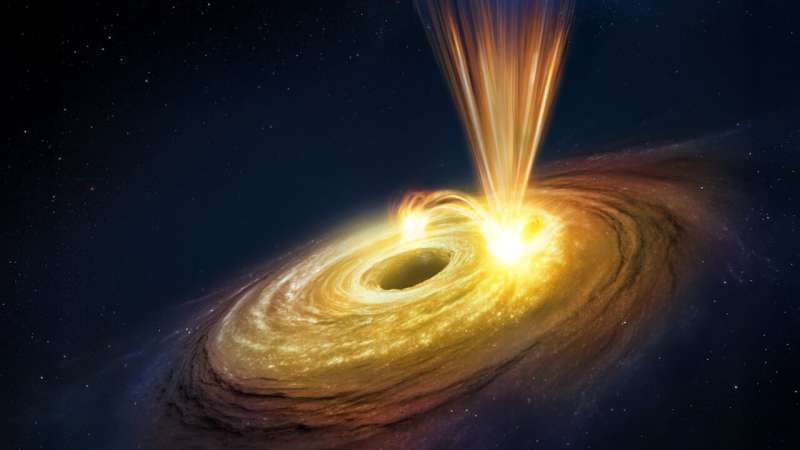
Scientists observed a supermassive black hole in galaxy NGC 3783 eject matter at a record-breaking speed of 60,000 km/sec, using X-ray satellites. This rapid wind formation, triggered by a burst of X-ray light, resembles solar eruptions but on a vastly larger scale, providing new insights into black hole behavior.
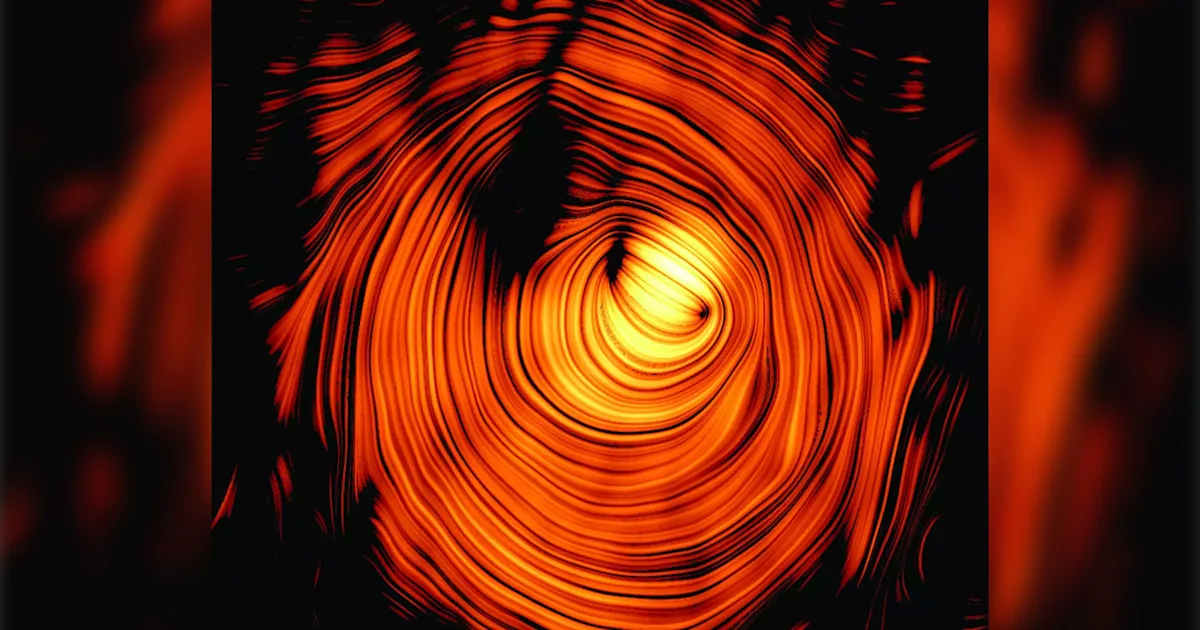
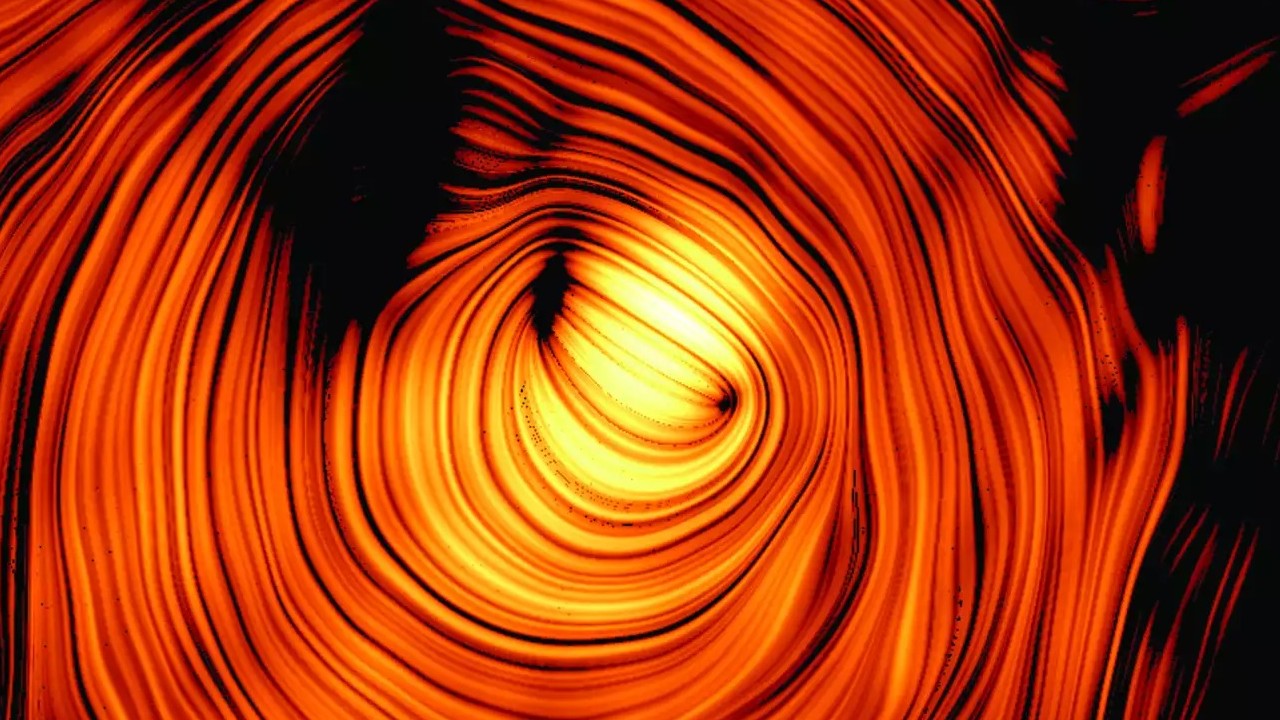
Astronomers have observed a bright galactic nucleus called PKS 1424+240, dubbed the 'Eye of Sauron,' which is a blazar emitting intense gamma rays and neutrinos, with jets pointed directly at Earth. The apparent brightness and slow movement of its jets are due to projection effects, providing insights into supermassive black holes and cosmic jet behavior.
Astronomers have captured a detailed image of a blazar called PKS 1424+240, resembling the 'Eye of Sauron,' revealing a toroidal magnetic field and high-energy jets pointing toward Earth. This object is a powerful source of gamma rays and neutrinos, providing insights into how supermassive black holes accelerate particles and produce ghost particles that pass through everything, including our bodies.
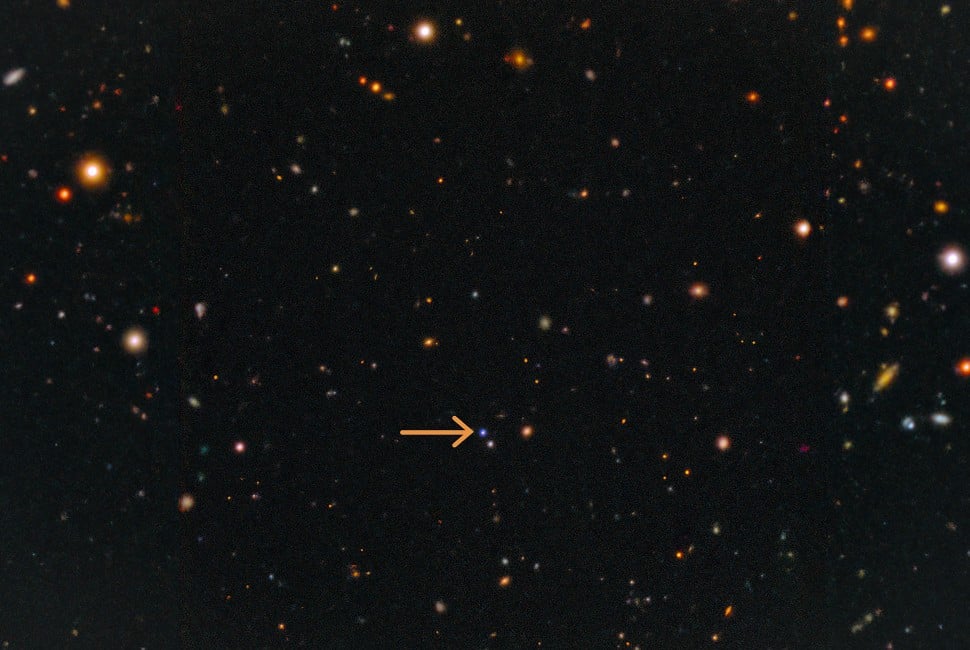
Astronomers detected an unusual fast X-ray transient, EP 250108a, near Earth, likely caused by a 'failed' jet from a gamma-ray burst associated with a star's explosive death 2.8 billion light-years away, providing new insights into cosmic phenomena.