Researchers are showing promising progress in treating small cell lung cancer with a new immunotherapy targeting PDL1 and VEGF, demonstrating significant tumor reduction in a Phase 2 trial, which could mark a breakthrough in difficult cancer treatments.
The article highlights today's top moving stocks, with Planet Labs leading gains after strong earnings, EchoStar's deal with SpaceX boosting satellite stocks, Robinhood's inclusion in the S&P 500, and mixed results for biotech firms like Summit Therapeutics and BioNTech, alongside CVS Health's stock decline due to regulatory concerns.
BioNTech's stock rose over 5% after reporting better-than-expected Q2 earnings, driven by Covid-19 vaccine sales in collaboration with Pfizer, with revenue doubling year-over-year. The company also announced a partnership with Bristol Myers Squibb to develop cancer treatments and plans to acquire CureVac to diversify its pipeline.
Bristol-Myers Squibb will pay BioNTech up to $11.1 billion to license a new cancer immunotherapy, marking a significant move in the competitive oncology market aiming to expand immune-based treatments, with the deal including upfront payments, milestone payments, and shared development costs.
Bristol Myers Squibb has signed an $11 billion partnership with BioNTech to develop and commercialize BNT327, a promising cancer drug that could rival Keytruda, with potential to treat up to 3 million patients and transform cancer care. The deal includes shared clinical trial costs and milestone payments, reflecting the drug's significant potential in immunoncology.
The U.K. is launching a trial for personalized cancer vaccines, developed by BioNTech SE, which aim to train the immune system to target and destroy cancer cells, potentially preventing the return of cancers such as colorectal, pancreatic, skin, lung, bladder, and kidney cancers. This innovative approach, using mRNA technology, could be a significant advancement in cancer treatment, though the trial will not conclude until 2027.
Thousands of NHS patients in England will be fast-tracked into trials for personalized cancer vaccines, a world-first initiative aimed at providing permanent cures by tailoring treatments to individual tumors. The scheme, hailed as a "landmark moment" by NHS England's head Amanda Pritchard, will initially focus on colorectal, skin, lung, bladder, pancreatic, and kidney cancers. The vaccines, developed using mRNA technology, aim to prevent cancer recurrence by teaching the body to target and destroy remaining cancer cells.
Vaccine stocks Moderna, Novavax, and BioNTech rallied this week due to fears of a bird flu outbreak after new human cases were detected in the U.S. and Australia. The U.S. government is in talks with these companies for potential avian flu vaccines, although the likelihood of a widespread outbreak remains low.
Vaccine stocks Moderna, Novavax, and BioNTech rallied this week due to fears of an avian flu outbreak after cases were detected in the U.S. and Australia. Moderna and Pfizer/BioNTech are in talks with the U.S. government for a potential mRNA vaccine program, while Novavax is conducting a pre-clinical study. Despite the stock surge, the likelihood of a widespread avian flu outbreak remains low.
The founders of BioNTech, pioneers in mRNA vaccines and personalized cancer immunotherapies, discuss the potential of personalized cancer vaccines and the role of artificial intelligence (A.I.) in their development. By harnessing the power of the immune system and using A.I. algorithms to analyze genetic data, personalized cancer vaccines can be tailored to each patient's unique mutations, instructing immune cells to launch targeted attacks on tumors. The combination of mRNA technology and A.I. has the potential to revolutionize cancer treatment, making personalized therapies widely available and affordable in the future.
German biotechnology company Biontech is developing a tailored cancer vaccine based on messenger RNA (mRNA) technology, with hopes of obtaining approval by 2030. The company aims to train the immune system to recognize and target personalized cancer cells, offering new hope in the fight against the disease. Biontech's success with the COVID-19 vaccine has prompted a transition to cancer research, with the goal of creating a technological framework for swift and individualized cancer treatment. A potential cancer vaccine would revolutionize patient care, providing a targeted and less invasive alternative to traditional treatments like chemotherapy.
The European Patent Office has declared a contested mRNA patent owned by Moderna invalid, giving a victory to BioNTech and Pfizer in their patent dispute. Moderna plans to appeal the decision, while BioNTech welcomes the ruling, stating that Moderna's patents do not meet the requirements for grant. Moderna has previously sued BioNTech in multiple countries, alleging the copying of its mRNA technology.
BioNTech, the maker of the Covid vaccine, reported a surprise profit and better-than-expected sales for the third quarter. However, the company cut its guidance for the year, expecting lower sales of the Pfizer-partnered Covid shot. BioNTech is now focusing on other areas outside of its Covid vaccine, such as cancer therapies. The earnings report caused BNTX stock to surge.
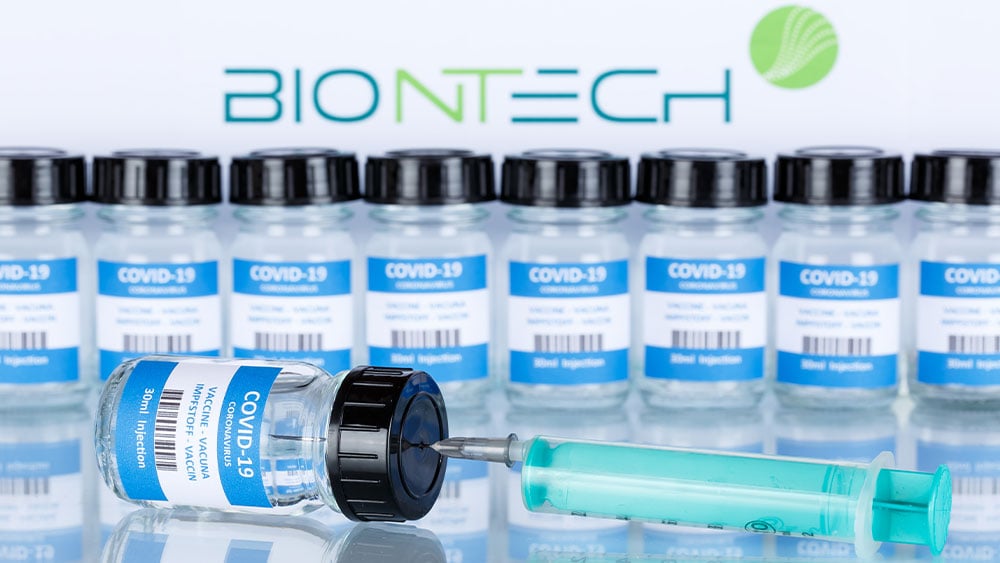
Pfizer and BioNTech have announced that their flu-COVID vaccine has generated a strong immune response against strains of both viruses in an early- to mid-stage trial. The companies plan to proceed with a late-stage trial in the coming months. The vaccine has the potential to simplify immunization practices by addressing two respiratory diseases with a single injection. The trial data showed robust immune responses to influenza A, influenza B, and SARS-CoV-2 strains.
Pfizer and BioNTech announced that their flu-COVID vaccine generated a strong immune response against strains of both viruses in an early- to mid-stage trial. The vaccine candidates were compared to a licensed influenza vaccine and the companies' updated COVID-19 vaccine, and the data showed robust immune responses to influenza A, influenza B, and SARS-CoV-2 strains. The companies plan to proceed with a late-stage trial in the coming months, with the potential to simplify immunization practices by addressing two respiratory diseases with a single injection.