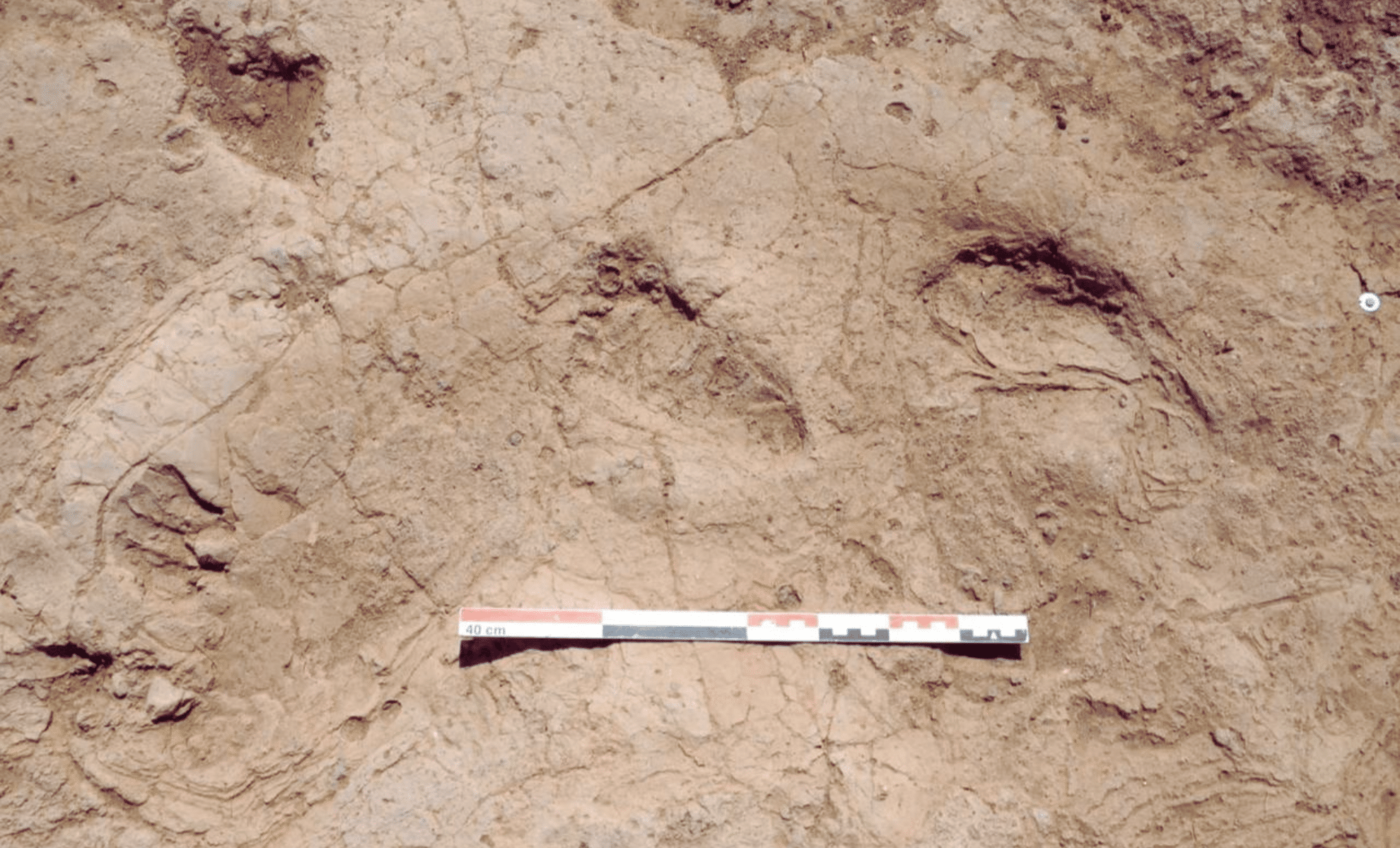
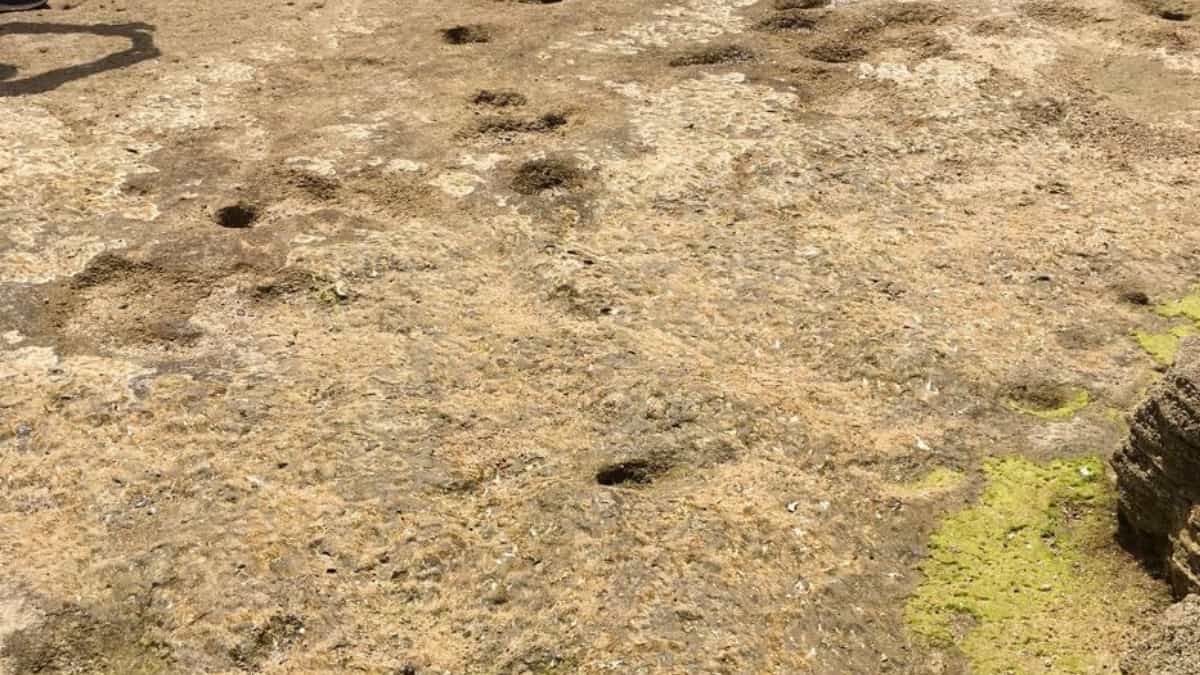
Archaeologists in Hatay, Turkey, discovered 7,000-year-old human footprints from the Ubaid period, providing rare insight into prehistoric life and highlighting Turkey's efforts in heritage preservation and modern archaeological practices.
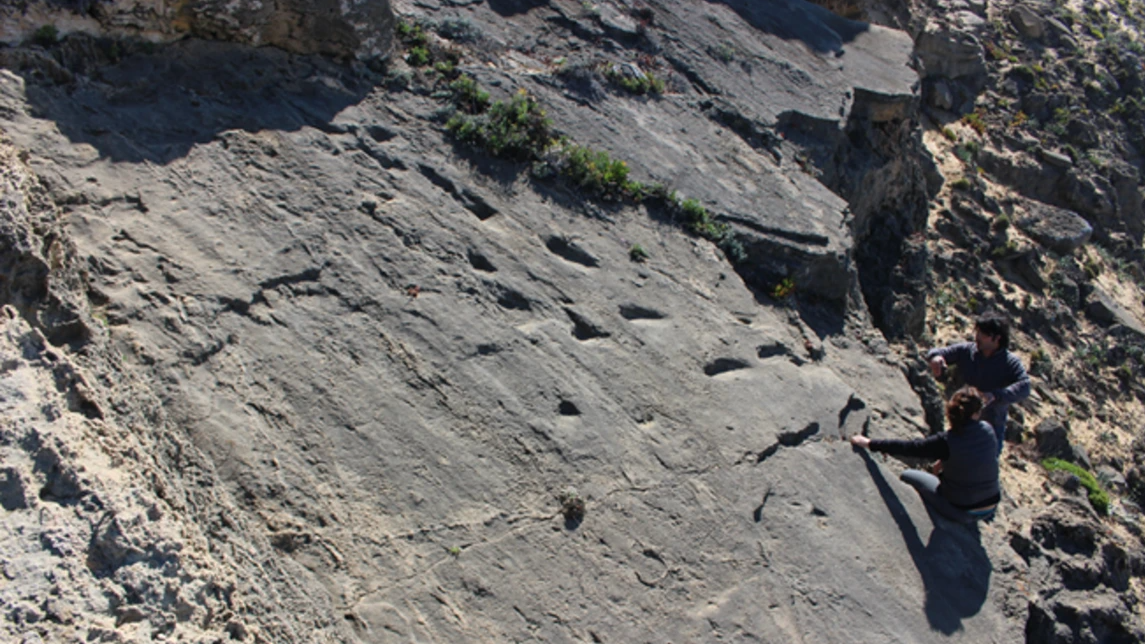
Researchers discovered 78,000-year-old Neanderthal footprints on Portugal's Monte Clérigo beach, including tracks of an adult male, a child, and a toddler, providing rare insights into Neanderthal activity and social behavior along the Atlantic coast.
New research confirms that the oldest human footprints in North America, dating back over 20,000 years at White Sands, exist without any accompanying cultural artifacts, raising questions about early human presence and activity in the continent before the Clovis culture.
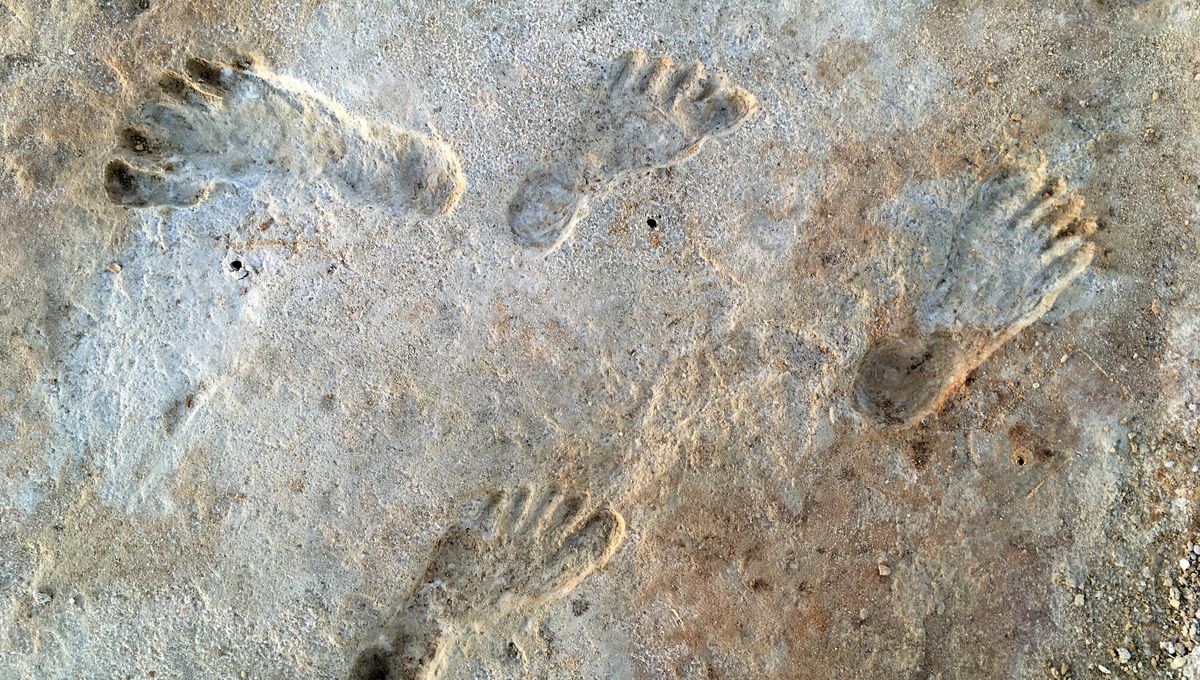
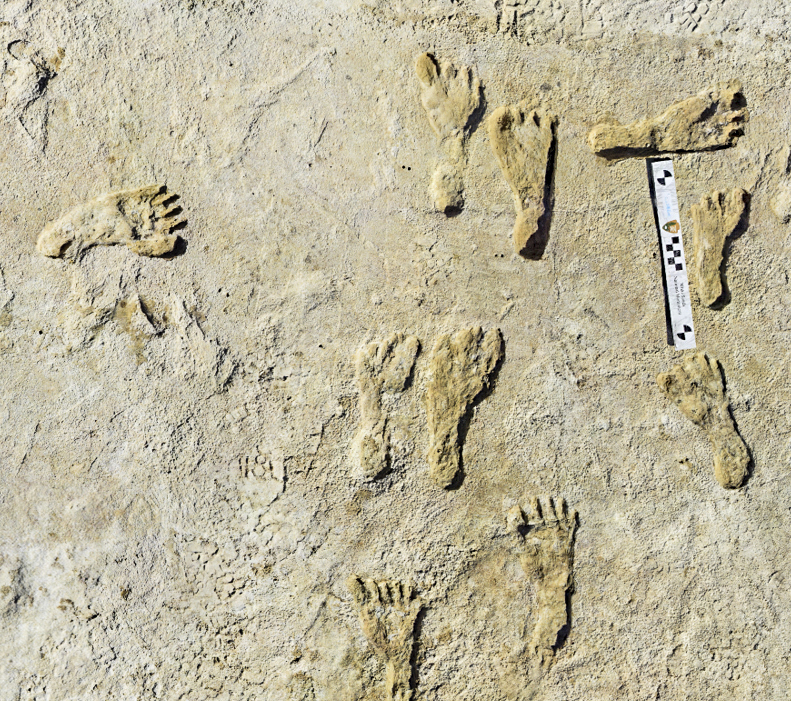
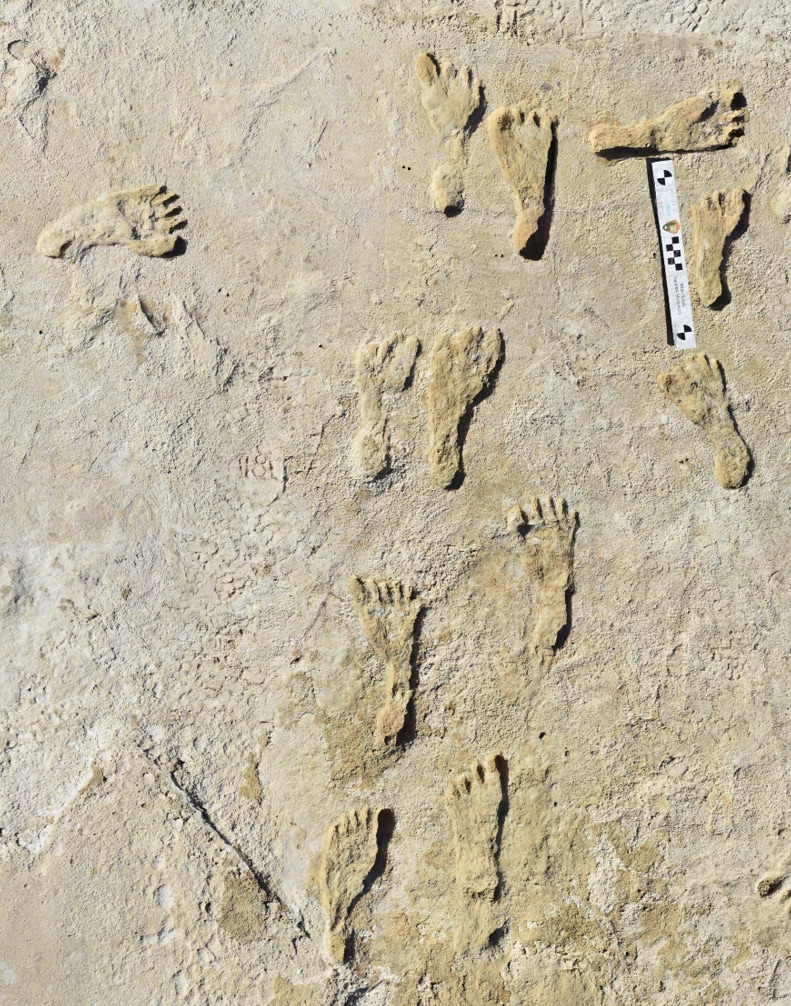
Archaeologists have discovered 23,000-year-old human footprints at White Sands National Park in New Mexico, challenging previous timelines of human arrival in North America and revealing detailed scenes of early human life alongside megafauna during the Ice Age.
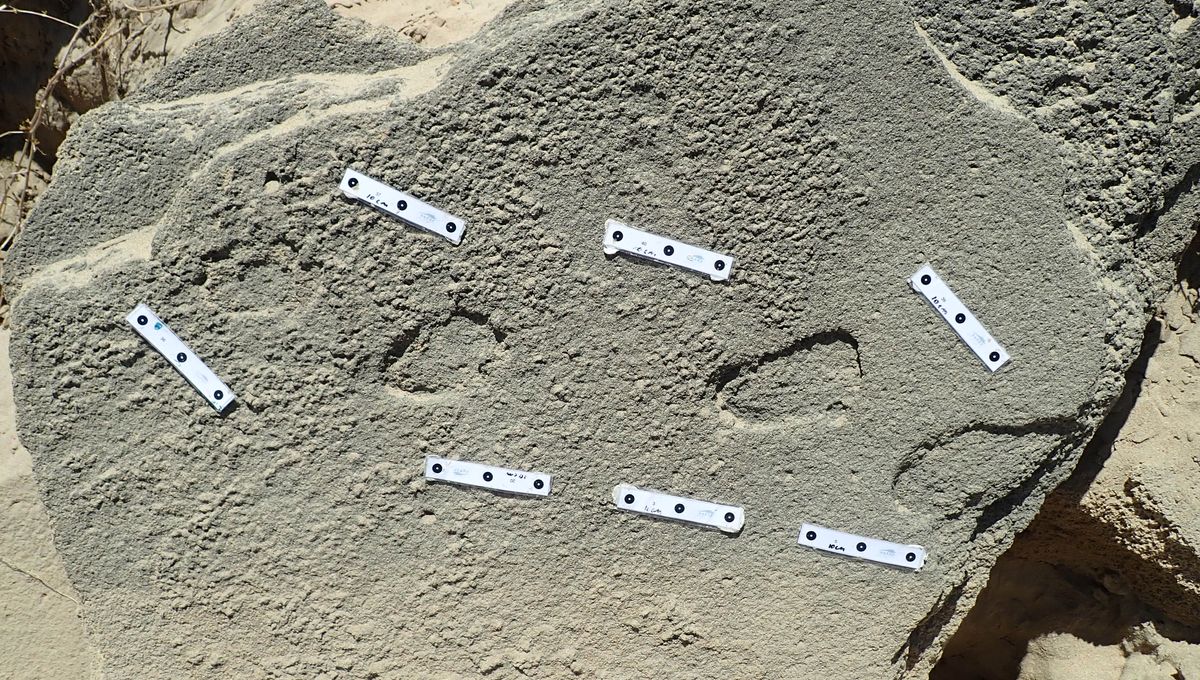
Scientists in Morocco discovered two trails of 90,000-year-old human footprints on a beach, likely the oldest and best-preserved trackways ever found, indicating a multigenerational group of early modern humans. The footprints, found using optically stimulated luminescence dating, suggest the presence of children, adolescents, and adults during the Late Pleistocene. The exceptional preservation of the footprints is attributed to the beach's layout and the tides' rapid burial of the tracks.
Analysis of tree pollen trapped in ancient sand at White Sands National Park in New Mexico by Bay Area scientists supports the claim that humans thrived in North America as early as 23,000 years ago, challenging the previous assumption that people arrived from Asia around 14,000 years ago. The pollen, found alongside ghostly human footprints, provides evidence that these early settlers behaved similarly to modern humans, carrying children, hunting for food, and slipping in mud. The study's findings were confirmed by a second technique called optically stimulated luminescence, further solidifying the evidence of early human presence in North America.
The discovery of 61 fossilized human footprints in New Mexico's White Sands National Park has provided new insights into the timeline of early humans living in the Americas, suggesting they arrived well before climate conditions would have made it impossible to reach North America. The footprints, estimated to be between 21,000 and 23,000 years old, represent a crucial missing chapter in human history. In other scientific news, Nobel Prizes were awarded to researchers in chemistry, physics, and physiology or medicine for advancements in quantum dots, short pulses of light, and mRNA vaccines. Astronomers using the James Webb Space Telescope have discovered pairs of planetlike objects inside the Orion Nebula, challenging current understanding of planet and star formation. NASA is preparing to launch its first mission to explore the metal world of Psyche, while China plans to return the first samples from the far side of the moon to Earth. Additionally, the restoration of Redonda Island in the Caribbean has revived its wildlife population, and there is good news about the birth of a Sumatran rhino, the successful collection of material from an asteroid sample, and the upcoming annular solar eclipse.
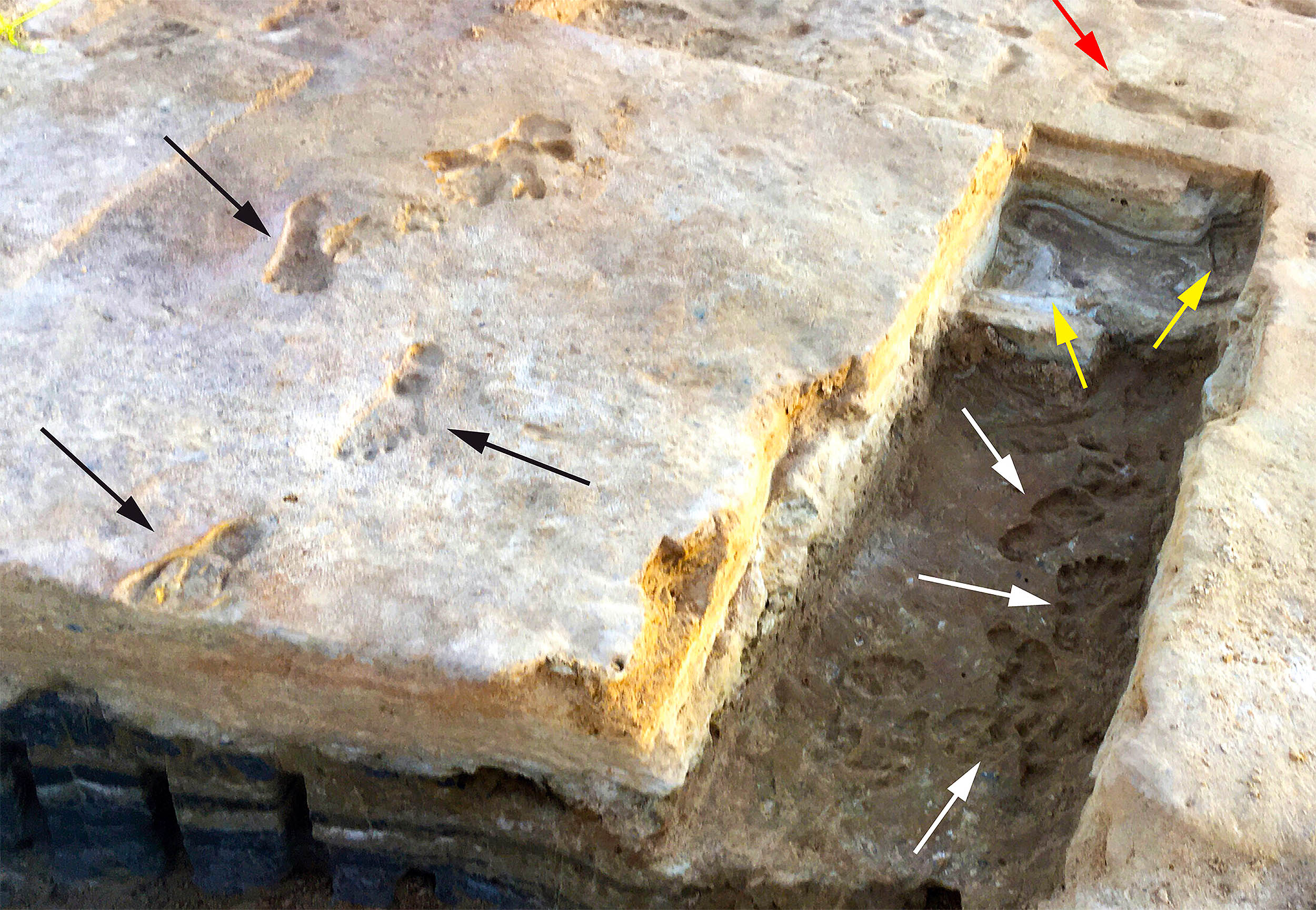
Fossilized footprints found at White Sands National Park in New Mexico, initially dated using radiocarbon dating, have been confirmed to be 21,000 to 23,000 years old through multiple lines of evidence. Concerns about the accuracy of the original dating method were addressed by using radiocarbon dating of conifer pollen and optically stimulated luminescence. The results provide strong support for the presence of humans in North America during the Last Glacial Maximum and shed light on the environmental conditions of the time.
Ancient footprints discovered in White Sands National Park in New Mexico have reignited the debate about when the first humans arrived in the Americas. A study published in the journal Science confirms that the footprints are more than 21,000 years old, challenging the dominant belief that humans migrated to the Americas around 13,000 years ago. The study used evidence from pollen grains and quartz crystals to support the initial finding. While some experts remain skeptical, the discovery has prompted a reevaluation of long-standing assumptions about human migration into the Americas and has been welcomed by Indigenous communities as confirmation of their ancestral presence.
Ancient footprints found in South Africa suggest that humans may have worn shoes as early as 148,000 years ago. The footprints, which show no toes but have crisp edges and possible evidence of strap attachment points, were found at three different locations on the Cape coast. While researchers are cautious about drawing firm conclusions, experiments with sandals resembling historical Indigenous San footwear revealed similar markings. The use of shoes in the Middle Stone Age may have been motivated by the need to protect feet from sharp rocks while coastal foraging. This discovery provides potential evidence of the earliest use of footwear by humans.