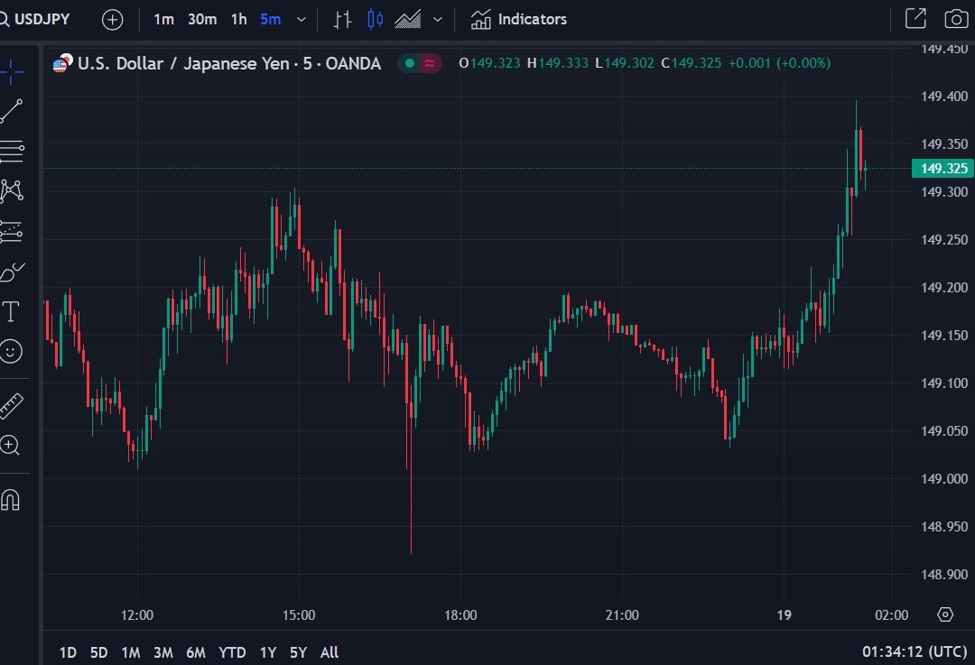
USD/JPY is experiencing volatility due to thinning liquidity and widening spreads ahead of the Bank of Japan's decision, with reports suggesting a potential pivot in March. The Bank's statement is expected within a specific time window, and there is uncertainty regarding whether it will wait until April to make any changes.
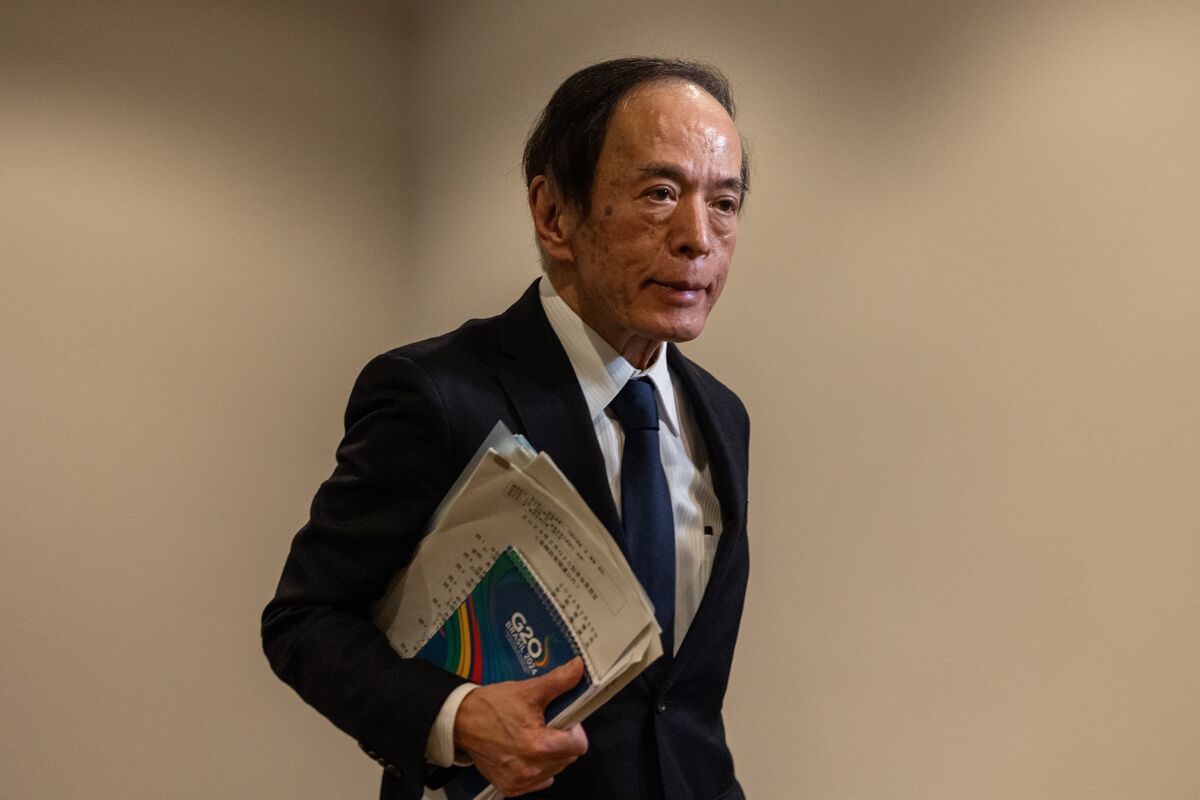
The Bank of Japan is expected to raise interest rates for the first time since 2007, ending its negative interest rates and cutting its yield curve control program, as markets have already priced in the changes following last week's strong wage data. Governor Kazuo Ueda and the board members are anticipated to raise rates from -0.1% to a range from zero to 0.1% during the policy meeting in Tokyo.
The Bank of Japan is set to make significant changes to its monetary policy, including ending yield curve control, ETF purchases, and negative interest rates at its upcoming policy board meeting, marking the most substantial shift in Japanese monetary policy in nearly two decades.
Bitcoin remains above $34,000 as the Bank of Japan (BOJ) eases its grip on the yield curve control (YCC) program, allowing for more yield fluctuations and reducing the need for liquidity-boosting bond purchases. The BOJ's move is seen as a shift away from the dovish YCC program, which has been a significant source of liquidity since 2016. The International Monetary Fund (IMF) has urged the BOJ to abandon YCC and prepare for eventual tightening or rate hikes.
The Bank of Japan (BOJ) has announced increased flexibility in its yield curve control policy, maintaining the target level of the 10-year Japanese government bond yield at 0% but using the upper bound of 1% as a reference. The BOJ also raised the country's inflation outlook for fiscal years 2023, 2024, and 2025. The central bank's short-term policy rate remains at -0.1%, despite core inflation exceeding the 2% target for 18 consecutive months. The BOJ aims to conduct yield curve control through large-scale bond purchases and nimble market operations.
The Bank of Japan has adjusted its ultra-easy monetary policy by discarding an explicit ceiling for 10-year Japanese government bond yields. In response to rising prices and the weakening yen, the central bank introduced more policy flexibility and established 1% as a new reference point for 10-year yields.
The Bank of Japan has adjusted its ultra-easy monetary policy by discarding an explicit ceiling for 10-year Japanese government bond yields. In response to rising prices and the weakening yen, the central bank introduced more policy flexibility and established 1% as a new reference point for 10-year yields under its yield curve control framework.
The Bank of Japan (BOJ) is set to hold its penultimate meeting of the year next week, with market observers expecting the central bank to raise its inflation projections and potentially make adjustments to its yield curve control policy. The BOJ has been cautious in unwinding its ultra-loose monetary policy, but recent tweaks to its policy have surprised investors and rocked markets. The central bank's monetary policy is complex and multi-faceted, with a focus on price stability and achieving sustainable inflation driven by domestic demand. The BOJ has also adopted negative interest rates and implemented yield curve control as part of its unconventional policy measures.
The Bank of Japan has decided to maintain its ultra-loose monetary policy and keep interest rates unchanged, citing uncertainties in the domestic and global growth outlook. Despite core inflation exceeding the 2% target for 17 consecutive months, the central bank remains cautious about exiting the policy due to a lack of sustainable inflation and meaningful wage growth. The Bank of Japan had previously loosened its yield curve control in July, allowing longer-term rates to move more in line with rising inflation. Economists have brought forward their forecasts for a quicker exit from the ultra-loose policy to the first half of 2024.
The Bank of Japan (BOJ) has dismissed speculation that its recent policy adjustment signaled the start of a tightening cycle, emphasizing that its flexible approach to long-term bond yields is aimed at sustaining its ultra-easy monetary policy position. Deputy Governor Shinichi Ichida stated that the BOJ does not have an exit from monetary easing in mind and that there is still a long way to go before considering raising short-term interest rates. The BOJ's yield curve control, part of its ultra-easy monetary policy, is intended to stimulate growth and achieve its 2% inflation target. Ichida highlighted the need to strike a balance between the positive effects and costs of monetary policy.
The Bank of Japan surprised global financial markets by announcing "greater flexibility" in its monetary policy, specifically loosening its yield curve control (YCC). This unexpected move had wide-ranging ramifications, causing the yen to fluctuate against the dollar, Japanese stocks and government bond prices to slide, and European markets to open lower. Economists are now speculating whether this policy tweak is a precursor to a more substantial change, potentially signaling a tightening cycle. The BOJ's decision to enhance the sustainability of its easing framework comes as it revises its forecast for core consumer inflation, recognizing elevated inflationary pressure. While some experts argue that YCC distorts market functioning, the BOJ's move suggests a gradual shift away from this policy in the future.
The Bank of Japan is set to discuss a potential tweak to its yield curve control policy, allowing long-term interest rates to rise beyond the current cap of 0.5% by a certain degree. This proposed change would maintain the rate ceiling but permit moderate increases beyond that level, aiming to address market distortions caused by the central bank's large-scale purchases of Japanese government bonds.
Analysts are divided on the Bank of Japan's response to consistently high inflation, with some suggesting that the central bank has been "wrong-footed" on the issue. Japan's core inflation has exceeded the BOJ's 2% target for 15 consecutive months, prompting speculation about a potential shift in the bank's ultra-loose monetary policy, particularly its "yield curve control" policy. While some economists view the rising prices as transitory, others believe sustained inflation may materialize due to wage hikes and other factors. The BOJ's bond purchases have increased to maintain the YCC policy, leading to concerns about the bank's expanding ownership of the bond market.
The Bank of Japan has decided to maintain its ultra loose monetary policy, keeping its short-term interest rate target at -0.1% and making no changes to its yield curve control policy. This decision comes amidst global economic uncertainty and a focus on supporting fragile economic growth. Economists are now looking towards the bank's next meeting in July for potential changes to its yield curve control policy.
The Bank of Japan may end its targeting of long-term interest rates by the end of September if conditions are favorable, according to an executive at MUFG. The central bank's yield curve control aims to fix yields on 10-year Japanese government bonds around zero, allowing moves of up to 50 basis points above or below that level. The BOJ could also lift its negative interest rate policy next fiscal year.