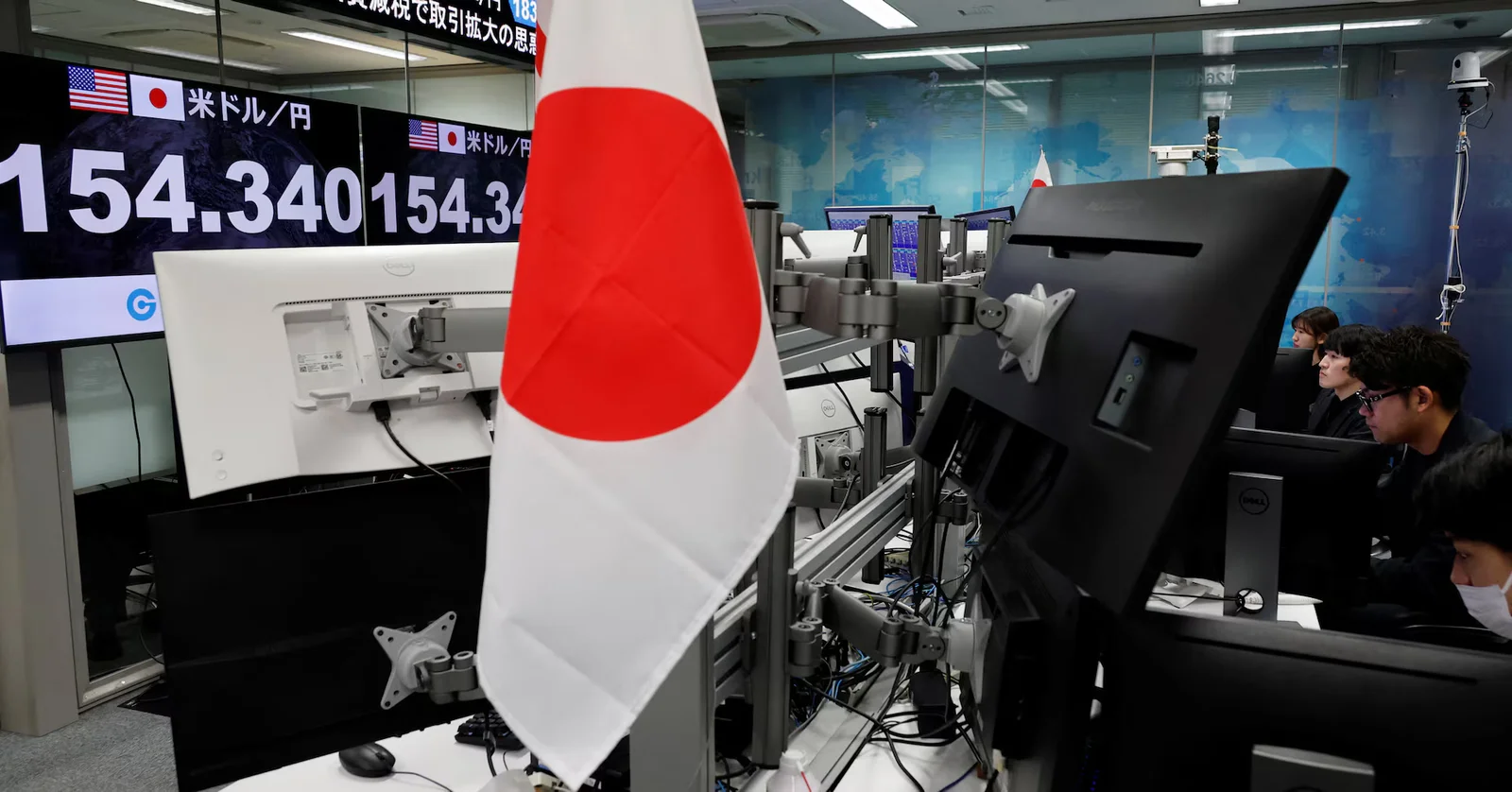
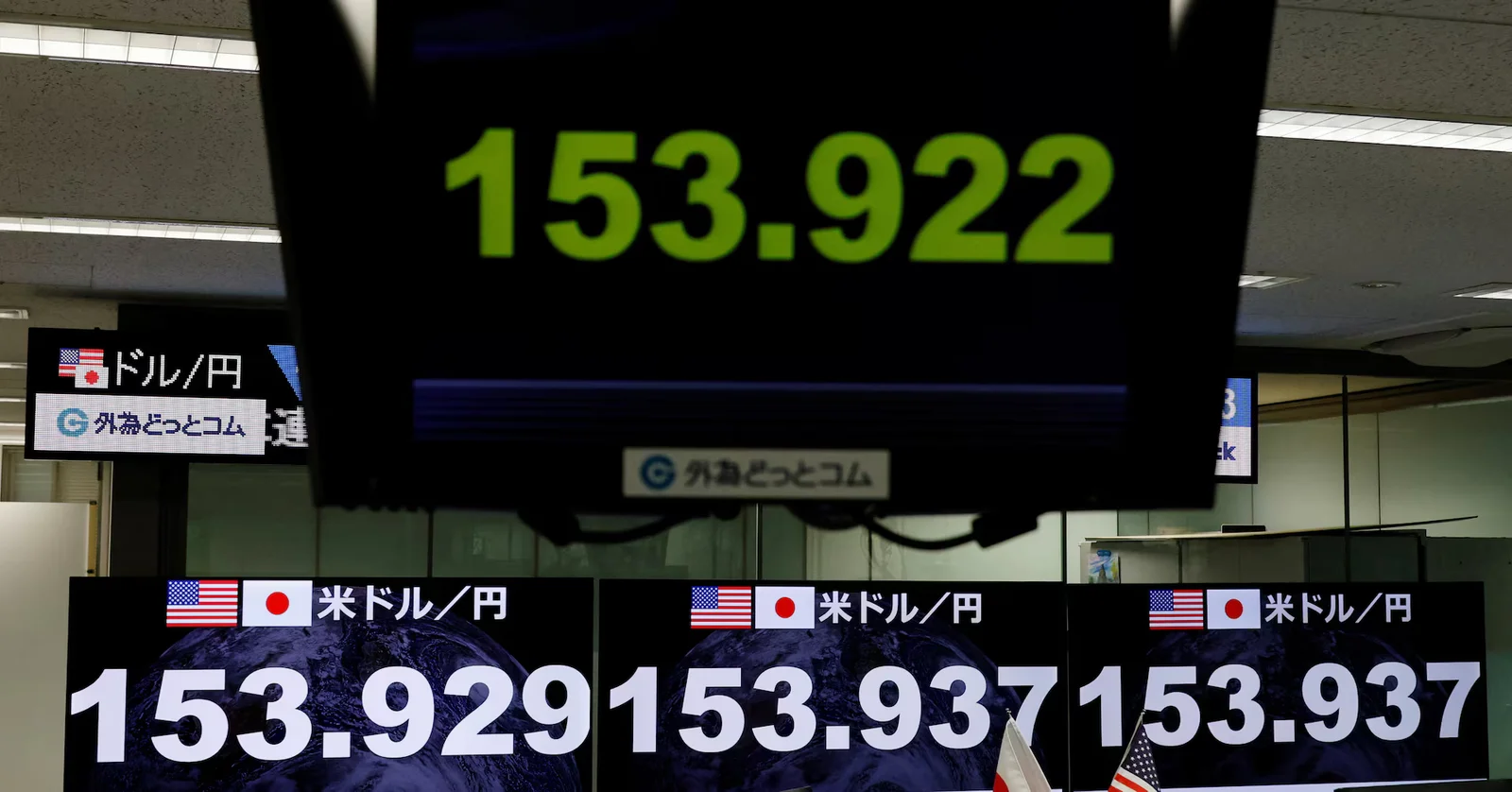
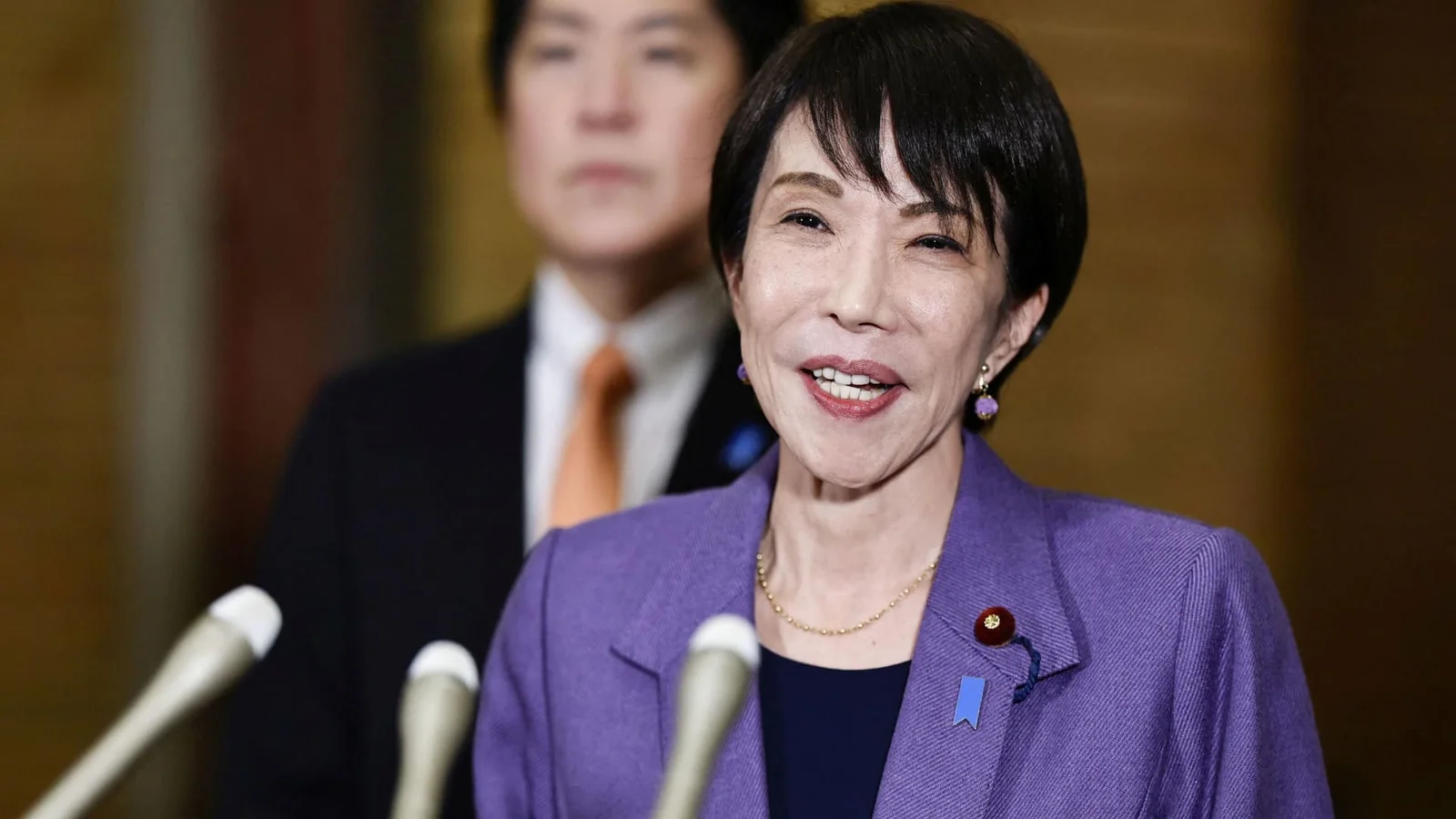
The Japanese yen fell after reports that Prime Minister Takaichi told BoJ Governor Ueda she was reluctant to pursue further rate hikes, placing pressure on the central bank and helping push USD/JPY toward the 156 area amid potential intervention risk from Japan’s finance ministry.
Former BOJ board member Makoto Sakurai says the central bank could raise rates as soon as March if the yen slides, with a potential 25 basis-point hike and possibly another in 2026–27 to push the policy rate toward 1.75%. He warns faster tightening could strain banks, though inflation remains above target and wage growth could justify action. Economists expect about 1% by end-June, and the next policy meetings are March 18–19 and April 27–28.
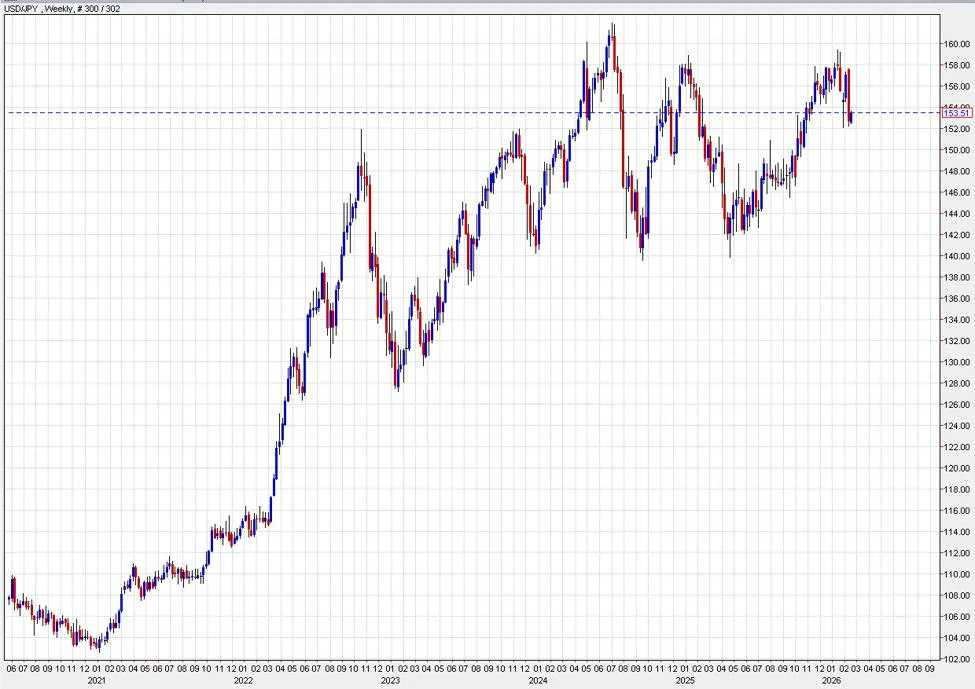
USD/JPY slid from around 159 to 152 after Japan’s election, fueling talk of a potential double-bottom near 152. A break below 152 could spark further downside, while 160 remains a key resistance with potential MOF intervention or jawboning. The weekly chart shows consolidation ahead of a possible test of 160, so traders should wait for a decisive breakout rather than chase moves.
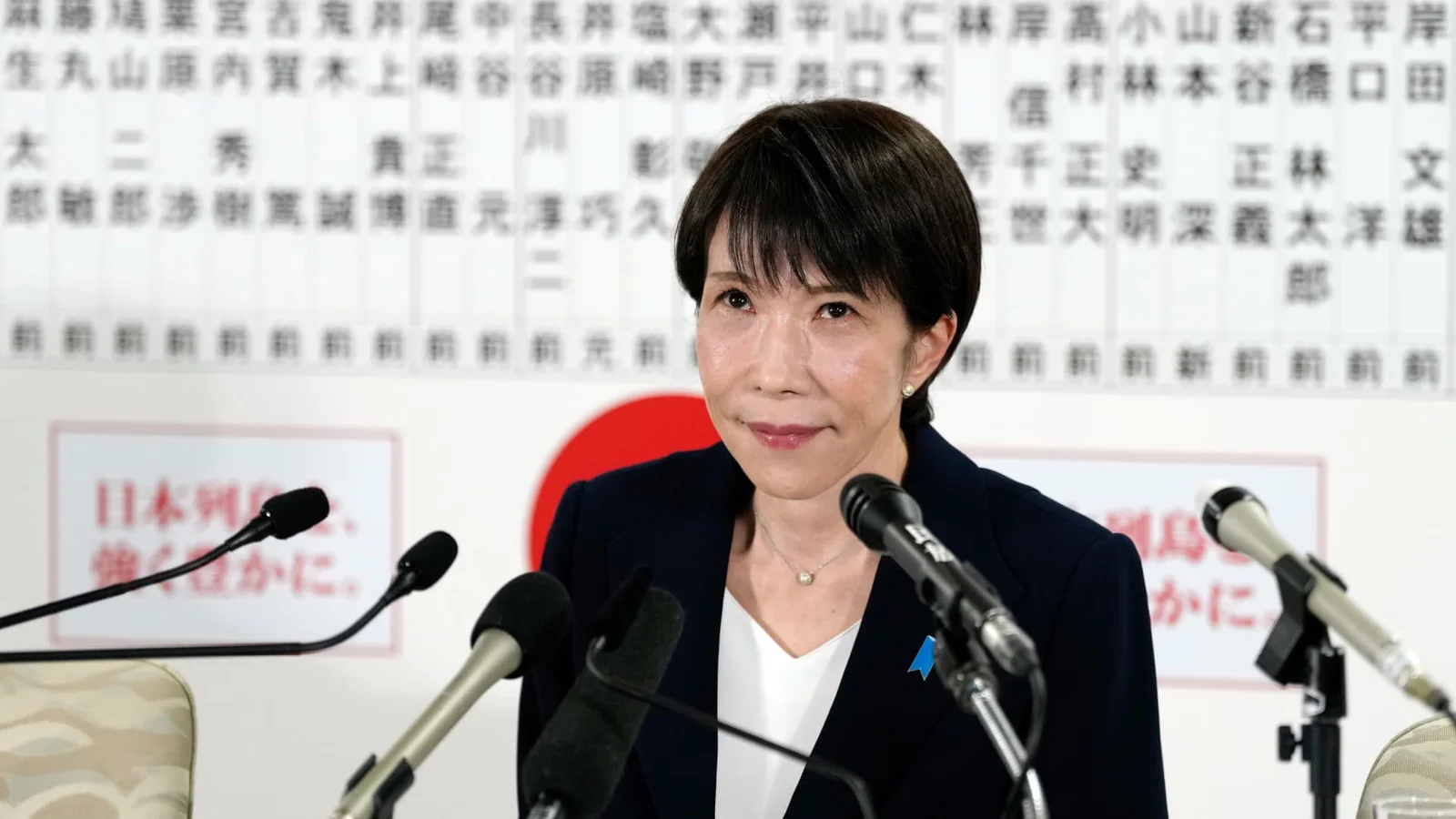
Sanae Takaichi’s landslide win gives her a strong House majority to push faster growth through more spending and tax cuts, but funding the plan risks higher debt and inflation as the Bank of Japan cools ultra-low rates. Markets reacted positively to the win, with stocks rising and the yen strengthening, yet analysts warn the path is delicate: Japan’s aging, shrinking workforce and constrained immigration complicate growth, so the government is likely to lean on automation and greater participation by women and older workers while balancing ties with the US and China to protect supply chains and energy costs.
Japan’s Sanae Takaichi-led LDP won a sweeping supermajority, giving her latitude to push defense spending and tax policy; the yen firmed to about 156.9 per dollar and Tokyo stocks hit records. In U.S. markets, futures were higher and the Dow closed above 50,000 for the first time, with the S&P 500 and Nasdaq rising as tech stocks rebounded after a week of big losses totaling more than $1 trillion in market value. Other notes include a U.S.–India trade framework with agricultural access friction, Trump’s removal of a 25% tariff on Indian oil from Russia, Luckin Coffee opening its first high-end Shenzhen store, and SpaceX/xAI shaping Elon Musk’s path to a potential trillionaire fortune.
Scott Bessent said the Trump administration remains committed to a strong-dollar policy and is not intervening in dollar–yen markets, fueling a dollar rally as traders reassessed intervention risk; he argued that sound fundamentals and policy will attract capital and strengthen the dollar over time, while speculation of official FX action has been denied.
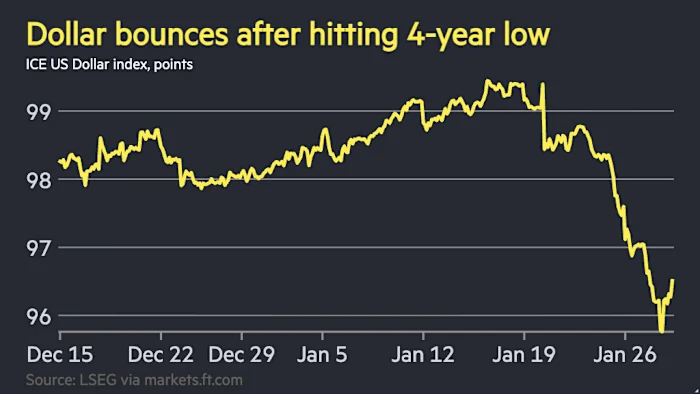
The U.S. dollar dropped toward a four-year low after President Trump downplayed its weakness, boosting the euro above $1.20 and lifting the yen and pound ahead of a Federal Reserve decision amid ongoing currency-intervention talk.
The New York Fed’s rate check aimed at stabilizing the yen signals closer U.S.-Japan coordination but a direct, joint intervention remains unlikely for now due to U.S. domestic considerations and the potential costs of Japan selling Treasuries; even as intervention thresholds ease, the BOJ’s cautious stance and political hurdles keep a lasting yen-rescue option uncertain, leaving markets watching for further signals.
Japan’s currency moves and a sharp sell-off in long‑dated bonds signal a turning point for its massive debt and the overseas investments it supports; if investors pull back, global capital could tighten, lifting long‑term rates, denting asset values, and triggering spillovers into U.S. markets as confidence in debt‑heavy economies wanes.
The dollar weakened to a four‑month low as reports of a coordinated move to bolster the yen surfaced, a development that could curb yen-carry trades and weigh on U.S. stocks, with the ICE dollar index around 96.85 and USD/JPY near 153–154 per dollar.
US policymakers deploy jawboning, a yen-rate check, and MBS buybacks to push down the 10-year yield and mortgage rates amid global bond-market stress linked to Japan’s turmoil; while these tactics provide a temporary pullback, inflation, deficits, and debt burdens suggest underlying risks remain and market volatility could persist.
The yen rose to its strongest level in over two months, gaining up to 1.5% to around 153.40 per dollar amid talk of coordinated intervention by Japan and the United States, as investors trim dollar exposure ahead of the Federal Reserve meeting and a possible new Fed chair, with broader dollar weakness lifting euro and sterling.
USD/JPY extended declines in thin liquidity, down about 120 pips intraday and roughly 500 pips from Friday’s 159.23 high, as markets price in potential intervention after BOJ signals and comments from Japanese officials ahead of February elections; a crowded trade prompts risk of further downside into the week.
The yen surged on Friday after New York Fed rate checks and Japan’s pledge to act against speculative moves, fueling bets on potential official intervention. The dollar weakened to around 154.5–155 per yen as markets brace for possible U.S.–Japan action in thin Asia trading, with analysts noting room for further yen gains if intervention proves credible and officials caution against speculative moves.
Japan's PM Sanae Takaichi pledges to curb speculative market moves after a yen spike tied to her expansionary fiscal plan, while proposing a two-year suspension of the 8% food sales tax; opposition talks of tapping the BOJ's ETF holdings or currency reserves to fund tax cuts, raising concerns over central-bank independence and market impact ahead of a snap election.