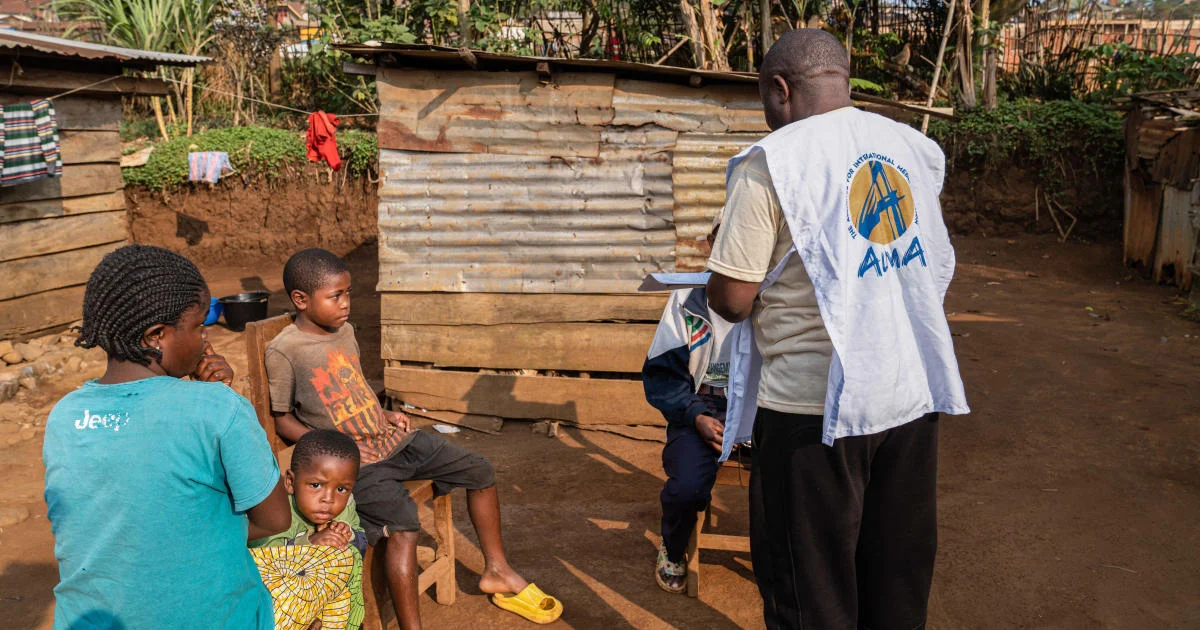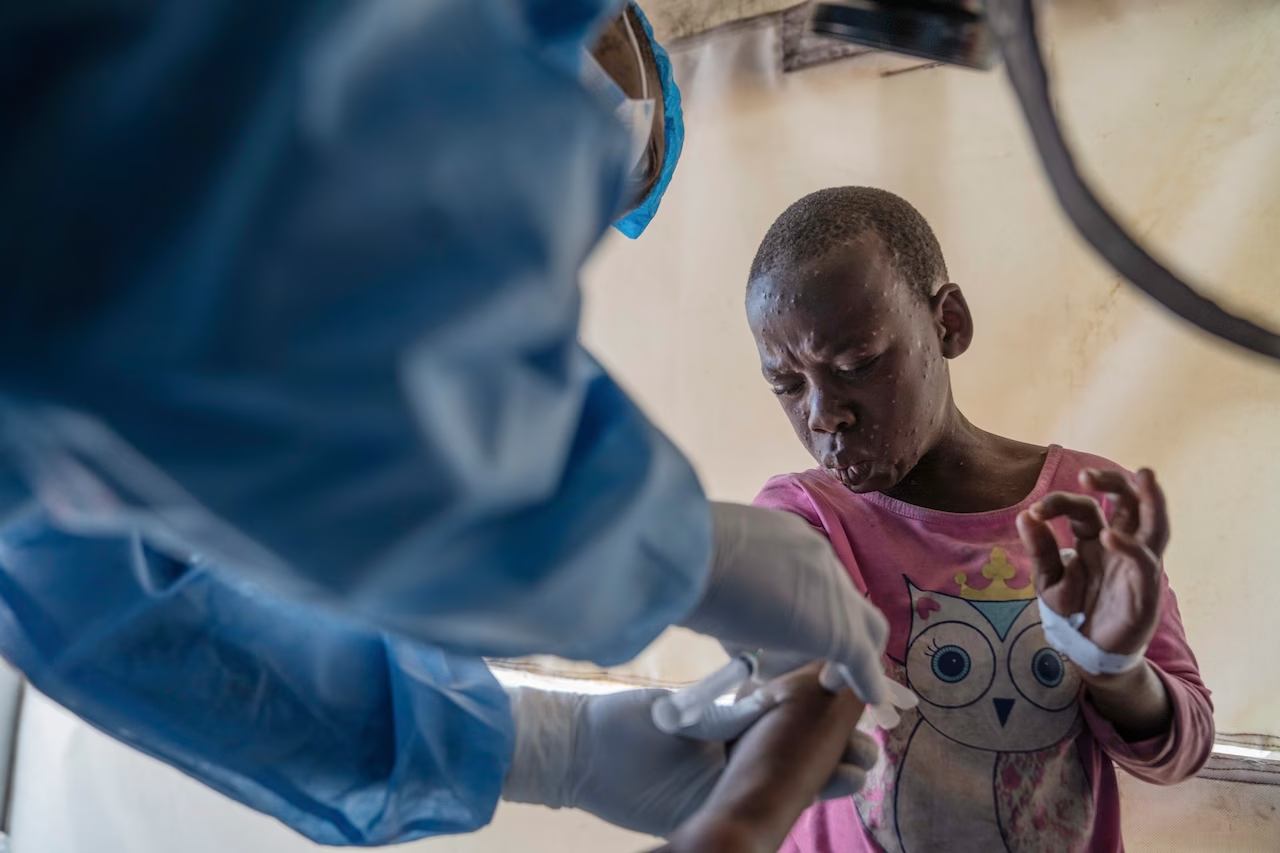
A mystery flu-like disease in Congo has killed 71 people, nearly half of whom were children, prompting the government to be on high alert. The disease, which presents symptoms such as fever, headache, cough, and anemia, has led to deaths primarily due to respiratory issues and lack of blood transfusions. Epidemiologists are investigating the outbreak in the southern Kwango province. This health crisis comes as Congo is already dealing with a significant mpox epidemic, with over 47,000 suspected cases and more than 1,000 deaths, leading to a vaccination campaign initiated in October.
A mysterious flu-like disease has killed at least 27 people in the Democratic Republic of Congo's Panzi region, with reports suggesting the death toll could be as high as 67. The illness, which causes fever, headaches, and cough, has affected 382 people since October 24. Health officials have dispatched a team of epidemiologists to investigate, and the World Health Organization is collaborating with local authorities to understand the situation. Residents are advised to limit movement and practice good hygiene to prevent further spread.
The Democratic Republic of Congo is investigating an outbreak of a mysterious flu-like illness in Kwango province, affecting at least 376 people and causing between 67 to 143 deaths since late October. Symptoms include fever, headache, runny nose, breathing problems, and anemia, with women and children being the most affected. The DRC has notified the World Health Organization, and the outbreak is particularly severe in rural areas with limited access to medications.
Health officials in southwestern Congo are investigating a mysterious flu-like disease that has resulted in 67 to 143 deaths in the Panzi health zone of Kwango province between November 10 and 25. Symptoms include fever, headache, cough, and anemia. A team of epidemiological experts is being dispatched to collect samples and identify the disease. The provincial health minister has urged caution and requested medical supplies from national and international partners. The World Health Organization is aware of the situation and is collaborating with local health services.
A mysterious disease has claimed at least 67 lives in the Panzi health zone of Kwango province, Congo, over a two-week period. The symptoms include fever, headache, cough, and anemia. Local authorities have called for caution and requested medical supplies from national and international partners. An epidemiological team is set to investigate the outbreak, which adds to the ongoing mpox epidemic in the country.
A 59-year-old man in Mexico died from a strain of bird flu called H5N2, which has never been found in humans before, according to the World Health Organization. The man had underlying health conditions and no known exposure to poultry. The WHO states the risk to the public is low, and no further human cases have been detected.
The World Health Organization and 500 experts have reached a landmark agreement on the definition of airborne diseases, aiming to prevent confusion similar to that experienced during the early stages of the COVID-19 pandemic. The consensus, outlined in a technical document, marks a significant step toward improving prevention of diseases transmitted through the air. The new definition moves away from past disagreements over whether infectious particles were "droplets" or "aerosols" based on size and emphasizes considering the risk of exposure and severity of disease. This agreement is expected to facilitate discussions on issues such as ventilation in various settings and improve preparedness for future pandemic threats.
The World Health Organization, in collaboration with major public health agencies and experts, has introduced updated terminology for pathogens that transmit through the air, including those causing respiratory infections like COVID-19 and influenza. The new descriptors aim to provide a common language for discussing the transmission of infectious respiratory particles and include terms such as "infectious respiratory particles" and "airborne transmission." This effort addresses the need for consistent terminology across scientific disciplines and will guide research agendas and public health interventions.
The Biden Administration has unveiled a new Global Health Security Strategy aimed at preventing, detecting, and responding to the spread of infectious diseases globally. The strategy includes expanding health security partnerships to 50 countries, improving coordination across the U.S. government, and seeking international commitments to pandemic preparedness. However, experts express concerns about gaps in the strategy, including insufficient funding and lack of focus on disinformation about vaccines and public health. The U.S. initiative comes as the World Health Organization works on its own pandemic accord, with negotiations ongoing about information sharing, vaccine distribution, and financing.
Nigeria has become the first country to introduce the new Men5CV vaccine against meningitis, a deadly disease prevalent in Africa. The World Health Organization (WHO) hailed this rollout as a significant step towards the goal of eliminating meningitis by 2030. The new vaccine protects against the five major strains of the disease, unlike the previous vaccine which only targeted one strain. Last year, there was a 50% increase in annual cases across 26 African countries considered meningitis hyperendemic.
Timor-Leste reported its first fatal human case of rabies, prompting a high-risk assessment by the World Health Organization. The 19-year-old female victim from Oecusse had a history of dog bite and died after exhibiting symptoms. A total of 29 suspected rabies cases in humans were reported in Oecusse Municipality this year. The public health response includes dog vaccination, risk communication, healthcare worker training, active surveillance, and ensuring the availability of rabies vaccines. WHO advises close coordination for rabies elimination, including risk communication, immunization, mass dog vaccination, and wildlife vaccination.
The World Health Organization faced criticism for claiming that vaping can cause seizures within 24 hours, with fact-checkers and experts questioning the evidence behind the assertion. While a recent study linked vaping to health effects like asthma and pneumonia, the connection between vaping and seizures remains inconclusive. Vaping has been promoted as a safer alternative to traditional cigarettes, but concerns about its appeal to young people and potential health risks persist.
The World Health Organization's 2024 Global Hepatitis Report reveals that viral hepatitis is claiming 3500 lives each day, with 1.3 million deaths per year. Despite better tools for diagnosis and treatment, testing and treatment coverage rates have stalled. The report emphasizes the need for swift action to achieve the WHO elimination goal by 2030. New data shows an increase in deaths from viral hepatitis, with 83% caused by hepatitis B and 17% by hepatitis C. The report outlines recommendations to accelerate progress towards ending the epidemic, including expanding access to testing and diagnostics, strengthening prevention efforts, and mobilizing innovative financing. Funding for viral hepatitis remains a challenge, and the report seeks to address these inequities and access affordable tools.
Measles, a highly contagious and potentially deadly disease, has seen a surge in cases globally, prompting health authorities to urge people to check their vaccination status. Despite being eliminated in Australia in 2014, the country has seen a rise in cases, with 28 reported so far this year. The World Health Organization attributes the increase to a decline in vaccination coverage, particularly during the pandemic, and warns of a resurgence in the Western Pacific region. Experts emphasize the importance of catching up on vaccinations and recommend checking immunization records before traveling, as measles can be brought back to Australia by returning citizens or tourists.
The release of 2022 cancer data reveals that global cancer cases could increase by 77% by 2050 due to population growth, with nearly 20 million new cases and 9.7 million deaths reported in 2022. Lung cancer, female breast cancer, colorectal cancer, prostate cancer, and stomach cancer are the most common types globally, with prevalence varying by region and human development level. The study emphasizes the need for targeted cancer control measures, including prevention efforts to address key risk factors such as smoking, obesity, and infections.